
If you're searching for antique rug cleaning in Birmingham, you may be looking at a rug that seems merely dusty, faded, or marked by a recent spill. The greater risk may be hidden below the pile. Fine grit can abrade aged fibers, older dyes can move when they're wetted, and a rug that feels dry on top can still hold moisture in its foundation.
A professional decision starts with condition, not a calendar. Rubber Ducky Rug Cleaning serves Birmingham, Hoover, Vestavia Hills, Mountain Brook, Homewood, Trussville, Pelham, Alabaster, Gardendale, and Helena with rug pickup, facility washing, stain and odor treatment, controlled drying, grooming, and return delivery. The right service may be gentle dust removal, a limited treatment, a full wash, or conservation-level care.
Why Antique Rug Cleaning Requires a Careful Plan
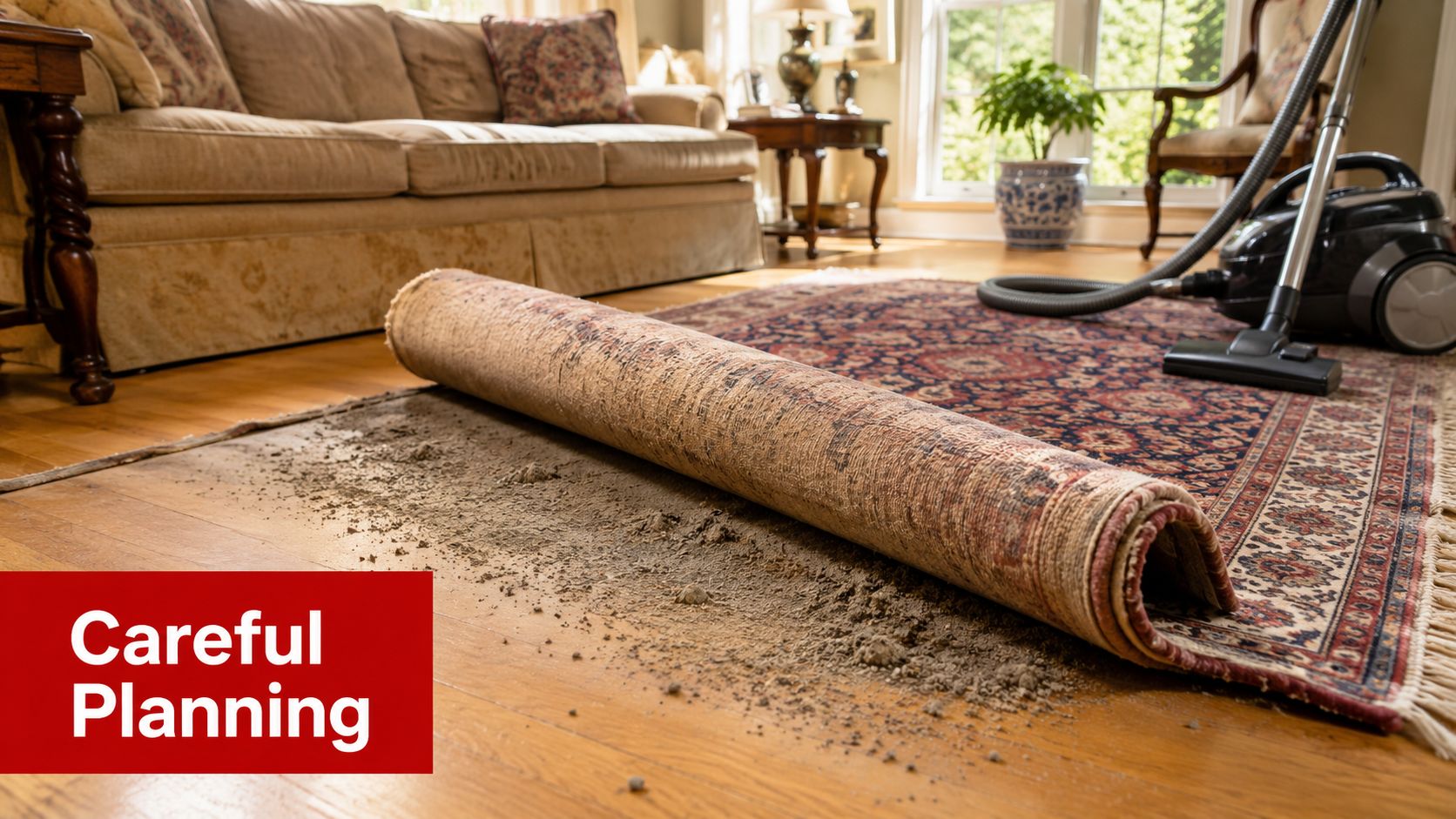
A homeowner in Birmingham might pull a 90-year-old Persian rug from the living room for spring cleaning, roll it back, and discover a layer of grit on the hardwood floor. A carpet cleaner is already booked for Saturday, and the natural assumption is that a thorough wash must be better than continued dust. With an antique rug, that assumption can create more risk than relief.
Antique rug conservation generally follows “stabilize, don't restore.” Professional washing is often considered only every 3–5 years for antique rugs used in low-traffic display areas, according to antique rug care guidance from Ahmadi Rug. That interval isn't a prescription for every Birmingham home. Regular service, pets, heavy traffic, soil load, previous repairs, and the rug's current condition can all change the decision.
Hidden grit changes the cleaning question
Foot traffic and humidity cycles work dry soil deeper into wool, silk, and cotton foundations. Carpet research has reported mite allergen concentrations in dust from carpeted floors at 6–14 times higher than in dust from smooth floors, as summarized by the Asthma and Allergy Foundation of America. An industry discussion also reports that an 8 ft x 10 ft rug can retain as much as 75 pounds of soil and debris before it looks visibly dirty, according to Gentle Genie Rug Care.
That soil isn't harmless. Particles move against fibers as people walk, furniture shifts, and the rug flexes. The initial question should therefore be, “How much embedded grit can this textile safely release?” It shouldn't be, “What machine can wash it fastest?”
Four possible treatment paths
The least aggressive effective option usually comes first:
- Dry dust removal for a structurally sound rug carrying embedded particulate matter.
- Controlled spot treatment for a fresh, localized spill where the dye test and fiber condition support limited moisture.
- Full professional washing when soil, allergens, pet contamination, or widespread residue require deeper removal.
- Conservation-level intervention when the rug shows dry rot, unstable dyes, foundation weakness, severe fringe loss, or fragile repairs.
Antique rugs may have wool pile, silk highlights, and a cotton foundation, each responding differently to moisture and agitation. A useful reference for understanding those differences is this guide to rug construction types. A Birmingham homeowner shouldn't treat a hand-knotted heirloom like a modern synthetic area rug.
Practical rule: Washing is an intervention. Choose it because the soil or contamination justifies the risk, not because the rug has reached an arbitrary cleaning date.
Inspecting Fibers Dyes and Existing Damage
Before moisture reaches an antique rug, inspect it on a clean floor under strong, even light. This doesn't turn a homeowner into a conservator, but it can reveal conditions that make a home wash unsafe and give a professional better information before pickup.
Start with a condition record
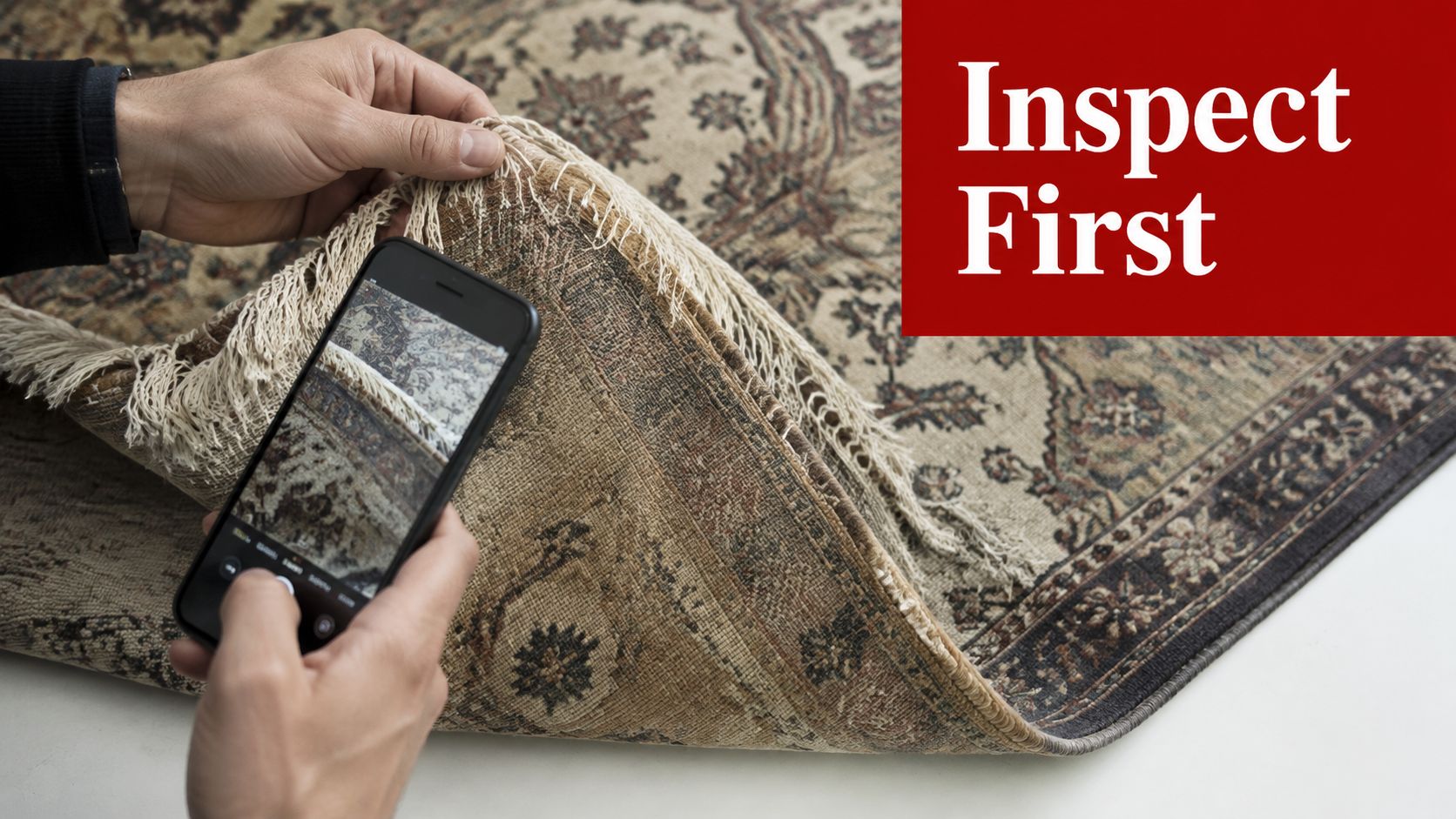
Photograph the front, back, corners, fringes, and any visible repairs. Include labels, dealer marks, handwritten notes, and areas where the pile looks thinner or more open. These images create a baseline and help separate old damage from changes that occur during handling.
Turn the rug carefully to inspect the knot side. Wool usually has a natural, subdued luster, silk can show a sharper sheen, and cotton may appear in the foundation or stitching. Surface gloss alone isn't proof of silk, especially if the pile has been worn, over-dyed, or treated with residue. A magnification loupe can help confirm suspicious highlights, but uncertainty is itself a reason to ask for a professional assessment.
Test colorfastness without flooding the rug
Choose a hidden area first, then press a damp white cotton swab against a deep red or navy motif for about thirty seconds. Look for color transfer on the cotton. A visible transfer means a wet cleaning process needs careful dye-management planning, and it rules out casual saturation with a household carpet machine.
The colorfastness testing guidance is useful for understanding why testing matters. Antique dyes can respond unpredictably when moisture, detergent, temperature, and agitation combine. A test isn't a guarantee that every color will behave safely, but skipping it removes an important control.
Record defects that change the recommendation
Write down findings rather than relying on memory:
- Dry rot or brittleness: Fibers that crack, split, or feel papery may need stabilization before washing.
- Side-cording loss: Open edges can worsen under handling and agitation.
- Fringe loss: Missing or weak fringe may indicate foundation stress.
- Pest activity: Moth evidence or other insect damage requires inspection before cleaning.
- Mildew odor: A musty smell can point to moisture retained in the pile or backing.
- Previous over-dyeing: Newer surface color may bleed or react differently from the original palette.
- Old repairs: Reinforced areas may not tolerate the same process as the surrounding weave.
Silk, fragile cotton foundations, active mildew, and structural weakness should send the rug directly to a specialist rather than into a bathtub or rented extractor. A professional can document the condition at pickup, discuss realistic results, and decide whether washing, repair, or conservation work comes first.
Choosing Safe DIY Care or Professional Help
DIY care has a place, but it should be limited to tasks that don't force water, heat, or aggressive movement into an uncertain textile. Suction-only vacuuming with the beater bar turned off is often suitable for a stable rug. Vacuum the pile gently and, when the construction permits, remove grit from the reverse side as well. Keep the vacuum head away from fragile fringe.
A fresh spill calls for white cotton towels, light pressure, and patience. Low-moisture pile refreshing may be reasonable when the rug is stable and the dye test is reassuring. Outdoor dry soil removal with a rug beater can help in appropriate circumstances, but an old foundation, loose knots, or brittle edges make even that handling questionable.
Use the warning signs, not guesswork
| Condition or Task | DIY Option | Professional Recommended |
|---|---|---|
| Stable surface dust | Gentle suction-only vacuuming | Schedule dust removal when grit is embedded |
| Fresh localized spill | Controlled blotting with white towels | Escalate if color transfers or moisture spreads |
| Possible dye bleed | Don't wet-clean | Dye testing and a controlled process |
| Dry rot or brittle fibers | Avoid handling beyond documentation | Stabilization or conservation assessment |
| Silk or silk highlights | Dry, minimal handling only | Fiber-specific cleaning |
| Pet contamination in backing | Blot the surface only | Professional washing and odor treatment |
| Mildew odor or moth activity | Isolate the rug | Inspection and treatment plan |
| Structural repairs or fringe loss | Don't scrub, fold, or soak | Restoration evaluation |
Homeowners often rent a carpet extractor because it is available, not because it matches the rug. Hot water, strong suction, rotating brushes, and incomplete drying can distort pile, move dyes, or leave residues. The room-by-room guidance on cleaning vintage rugs without damaging them reinforces the need to match treatment intensity to textile condition.
If the rug is older than you are, hand-knotted, or tied to meaningful resale or family value, treat it as a historic textile. Document it and request professional guidance before attempting a deep clean.
For Birmingham homes, this distinction matters during humid weather and after pet accidents. A stable wool rug may tolerate careful maintenance, while a silk-highlighted or previously repaired piece needs a documented professional process. Rubber Ducky Rug Cleaning Birmingham can collect the rug for inspection and facility cleaning, while owners of especially fragile or valuable textiles may also choose a conservation specialist when repair takes priority over washing.
Treating Spills Stains and Pet Accidents
A red wine spill on a Persian runner creates urgency, but panic causes many of the worst outcomes. Put a clean white cotton towel over the liquid and press gently. Replace the towel as it absorbs moisture, and never rub, because rubbing spreads the stain and works the liquid farther into the pile.
Use a second towel lightly dampened with cool water only if the first blotting stage leaves residue that can be lifted safely. Don't pour water, club soda, vinegar, or an enzyme spray directly onto an antique rug. Unstable dyes may move, and a liquid that seems mild on a modern carpet can carry chemistry into the foundation of an older weave.

Three Birmingham household scenarios
A tribal kilim with muddy paw prints needs a different response from a dense Persian pile. Let the surface soil dry enough to lift without grinding it in, then remove loose material gently. If the mud carries moisture or the dye test is uncertain, stop at surface removal and arrange an inspection rather than scrubbing the flat weave.
A coffee spill on a silk-fringed Heriz is more concerning because the silk detail and fringe may react differently from the wool field. Blot the coffee from the center outward, protect the fringe from wetting, and avoid a household spotter unless a professional has confirmed that its chemistry is appropriate.
Pet urine requires particular restraint. The pet-urine cleaning guidance describes blotting rather than scrubbing and recommends repeated towel changes until the affected area is dry. On an antique rug, surface blotting is only triage. If urine reached the backing, odor-causing compounds may remain below the pile, where a limited top-side treatment cannot remove them.
Know when the spot has become a washing problem
Isolate the affected area and keep furniture off it while you arrange help. Don't saturate the foundation in an attempt to neutralize odor, and don't seal a damp rug in plastic. A professional facility can determine whether controlled immersion washing, targeted treatment, or restoration is appropriate.
The stubborn stain removal service information can help Birmingham homeowners decide when a spill has moved beyond safe household blotting. A spot treatment may improve a fresh mark, but it won't substitute for full cleaning when hidden soil, dye instability, or pet contamination affects the wider rug.
Rubber Ducky's Professional Cleaning Process
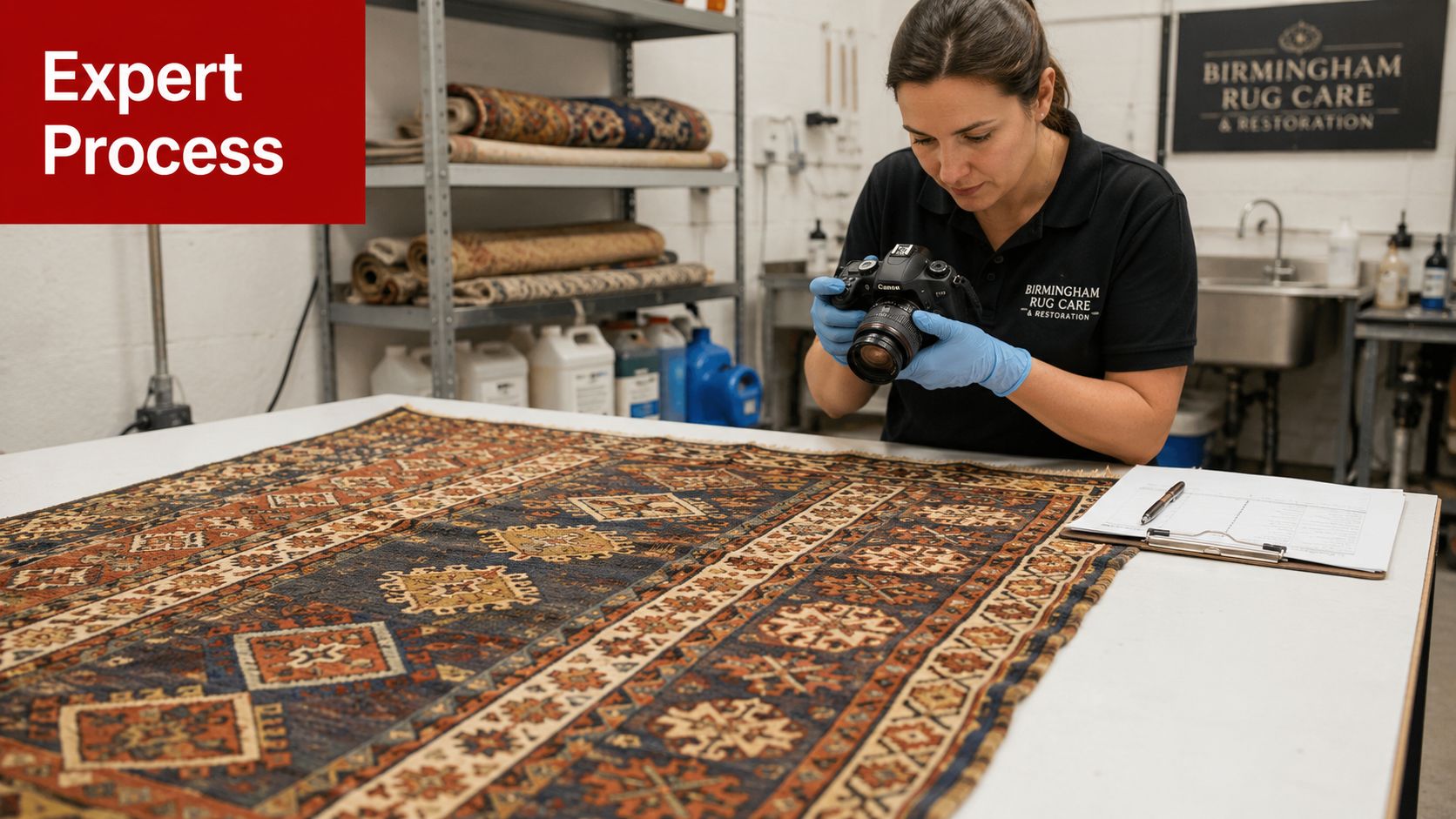
Professional antique rug cleaning should be traceable from pickup through return. The process begins with documentation, not a machine. At pickup, the rug can be photographed, measured, and reviewed for fiber type, dye behavior, fringe condition, repairs, stains, odors, and areas of structural concern.
1. Remove dry soil before adding moisture
Embedded grit needs mechanical removal before washing. Rubber Ducky Rug Cleaning Birmingham uses controlled dusting equipment, including mechanical dusting tumblers, to release sand, allergens, and dry particulate from the rug without treating the pile like a standard wall-to-wall carpet.
That sequence matters because wetting dirty fibers can turn loose particulate into residue that is harder to extract. Dry soil removal also gives the technician a clearer view of the actual pile, color, and condition before pre-conditioning begins.
2. Match chemistry and agitation to the textile
The technician selects a detergent appropriate for wool, cotton, silk, or a combination of fibers, then checks dye stability before proceeding. A wool antique and a silk-highlighted piece shouldn't receive identical detergent strength, water conditions, or agitation.
The wash bath uses controlled temperature, pH, and movement limits suited to the rug's fibers and condition. Antique rug cleaning isn't improved by maximum pressure. The useful target is enough action to release contamination while preserving aged knots, repairs, pile direction, and the foundation.
3. Rinse until residue is gone
After washing, the rug needs thorough rinsing and extraction. The facility uses mechanical rinsing, including an infusion rinse, to help remove loosened soil and surfactants that can otherwise remain in the textile and attract new soil.
This stage also exposes dye behavior and remaining stains. If a problem area requires additional attention, the technician can address it before drying rather than discovering it after the rug returns to the living room.
4. Extract moisture and dry under control
Controlled extraction removes water without treating the rug as a disposable carpet. The rug then moves to a climate-controlled drying room, where temperature and humidity are managed while the piece dries straight.
Drying is a major safety stage. Authoritative rug-care guidance warns that a rug can feel dry in the pile while its foundation remains wet, creating risks that include odor, mold, color bleed, and foundation damage. Guidance on rug shrinkage also connects shrinkage with excess water, poor drying, and temperature or humidity problems.
5. Groom, inspect, and return
Once dry, the team combs fringe, restores pile direction, checks for residual spotting, and reviews the finished rug against the pickup documentation. Final grooming improves how the rug lies and helps reveal issues that need discussion before delivery.
Homeowners receive the rug wrapped for transport, with the cleaning outcome and condition observations explained. Pickup and return service is available across Birmingham-area neighborhoods, including Hoover, Vestavia Hills, Mountain Brook, Homewood, Trussville, Pelham, Alabaster, Gardendale, and Helena. Turnaround depends on condition, soil, dye stability, drying requirements, and any restoration work, so a written estimate should set the expectation before service begins.
Drying Grooming and Storing the Finished Rug
A clean antique rug isn't ready for the room just because the top feels dry. The foundation, fringe, and dense areas must dry fully while the rug lies flat or is supported correctly. Controlled airflow on both sides helps remove retained moisture without relying on aggressive heat.
This matters in Alabama's humid conditions, especially when a rug is moved into a basement, placed over a questionable subfloor, or wrapped before the foundation has dried. Excess moisture can encourage odor and mildew, while uneven drying can contribute to dye migration, distortion, or shrinkage. Professional drying rooms control the environment instead of asking heat to solve every problem.
Grooming is part of quality control
After drying, the pile should be brushed in its natural direction. Fringe needs gentle combing so it lies evenly, and the edges should be checked for movement or stress. The technician also looks for residual spots, tide marks, dye changes, and any condition difference that wasn't visible before soil removal.
These finishing steps protect the handoff. A rug can be technically washed yet still need grooming or discussion before it returns to a high-traffic Birmingham room.
For a complementary visual reference when you're comparing neutral floor coverings for another space, you can find the perfect gray ivory rug from Gates Home Furnishings. An antique textile still needs its own fiber and condition assessment, regardless of the style of neighboring rugs.
Store the rug like a textile
Only store an antique rug when it is completely dry. Roll it rather than folding it, wrap it in a breathable cotton sheet instead of plastic, and keep it on a climate-stable floor or rack away from damp walls and subfloors.
Avoid leaning a wrapped rug against a basement wall, placing it directly on concrete, or sealing it in plastic. Those choices can trap moisture and create an environment where odor, mildew, and insect activity are harder to detect.
A simple Birmingham seasonal check can keep problems visible:
- Inspect the reverse: Look for new odors, dampness, moth evidence, or foundation changes.
- Review traffic areas: Check the pile, edges, and furniture contact points.
- Vacuum gently: Use suction-only equipment and avoid direct contact with fragile fringe.
- Rotate when appropriate: Change orientation when sunlight or foot traffic favors one side.
- Call early: Arrange professional inspection when the rug develops odor, dye transfer, new weakness, or embedded soil that routine suction can't remove.
Schedule Professional Antique Rug Care
The safest choice usually follows four actions. Document the rug, test its dyes, avoid home washing when the fibers or foundation are fragile, and request professional service when the piece has unstable color, pet contamination, deep soil, or persistent odor.
Before contacting a Birmingham rug-cleaning team, measure the rug and photograph the front, back, fringe, corners, stains, and repairs. Share what you know about its fiber, origin, age, previous washing, and any water or pet damage. Request a written estimate that explains pickup, inspection, cleaning, drying, restoration needs, and expected return timing.
Rubber Ducky's pickup and return process lets homeowners arrange service without transporting a large or delicate rug themselves. The rug is inspected, dusted, washed when appropriate, rinsed, dried under controlled conditions, groomed, and checked before it returns to its original location.
Between professional washes, rotate the rug when needed, vacuum without a beater bar, keep spills from sitting, and monitor hidden areas for odor or pests. Those habits can extend the useful interval before the next full cleaning, but they can't remove contamination that has entered the foundation or repair structural weakness.
If your antique rug is in Birmingham, Hoover, Homewood, Mountain Brook, or a nearby city, request a professional assessment rather than booking a routine carpet-cleaning visit. Share the condition details, arrange pickup or drop-off, and let the cleaning recommendation follow the textile's actual needs.
Rubber Ducky Rug Cleaning Birmingham provides antique, oriental, hand-woven, and area rug pickup, facility washing, stain and odor treatment, controlled drying, grooming, and restoration support. Visit Rubber Ducky Rug Cleaning Birmingham to request a rug cleaning estimate or schedule pickup for your Birmingham-area home.