A glass of tea tips over beside the coffee table, muddy shoes cross the entryway, or a pet accident sits unnoticed after a hot Alabama afternoon. In Birmingham homes, a rug can look clean on the surface while moisture, odor, and soil remain deeper in the pile or backing. For the best rug stain remover, the safest answer usually depends less on the strongest bottle and more on the rug's fiber, dye, backing, and stain type.
A careful home response can help with a fresh spot, but professional rug cleaning becomes important when the stain is old, the odor returns, or the rug is wool, silk, hand-woven, or valuable. The right process protects the rug while addressing deep soil, residue, and color stability across Birmingham, Hoover, Vestavia Hills, Mountain Brook, Homewood, Trussville, Pelham, Alabaster, Gardendale, and Helena.
Why the Best Rug Stain Remover Depends on Your Birmingham Home
A muddy footprint from the porch calls for a different approach than tea, cooking grease, or pet urine. Mud contains loose dry soil that can spread if treated while wet. Tea can leave a visible tannin mark, while a pet accident may send odor into the backing and pad. Treating all three with the same spray creates unnecessary risk.
Humidity and warm weather can also make moisture management more important in Alabama homes. A wet rug that doesn't dry evenly may develop lingering odor or backing problems, particularly when a homeowner applies too much solution and then covers the area with furniture.
Match the stain before choosing the bottle
The best rug stain remover isn't one universal product. It belongs to a remover class that suits both the soil and the fiber.
- Water-based spots, such as tea or other drinks, generally need controlled blotting and a compatible wetting solution.
- Grease and adhesive residues need chemistry that can release oily binders without spreading them through the pile.
- Pet accidents require attention to both visible discoloration and odor-causing contamination.
- Mud and tracked soil often need dry-soil removal before any wet treatment.
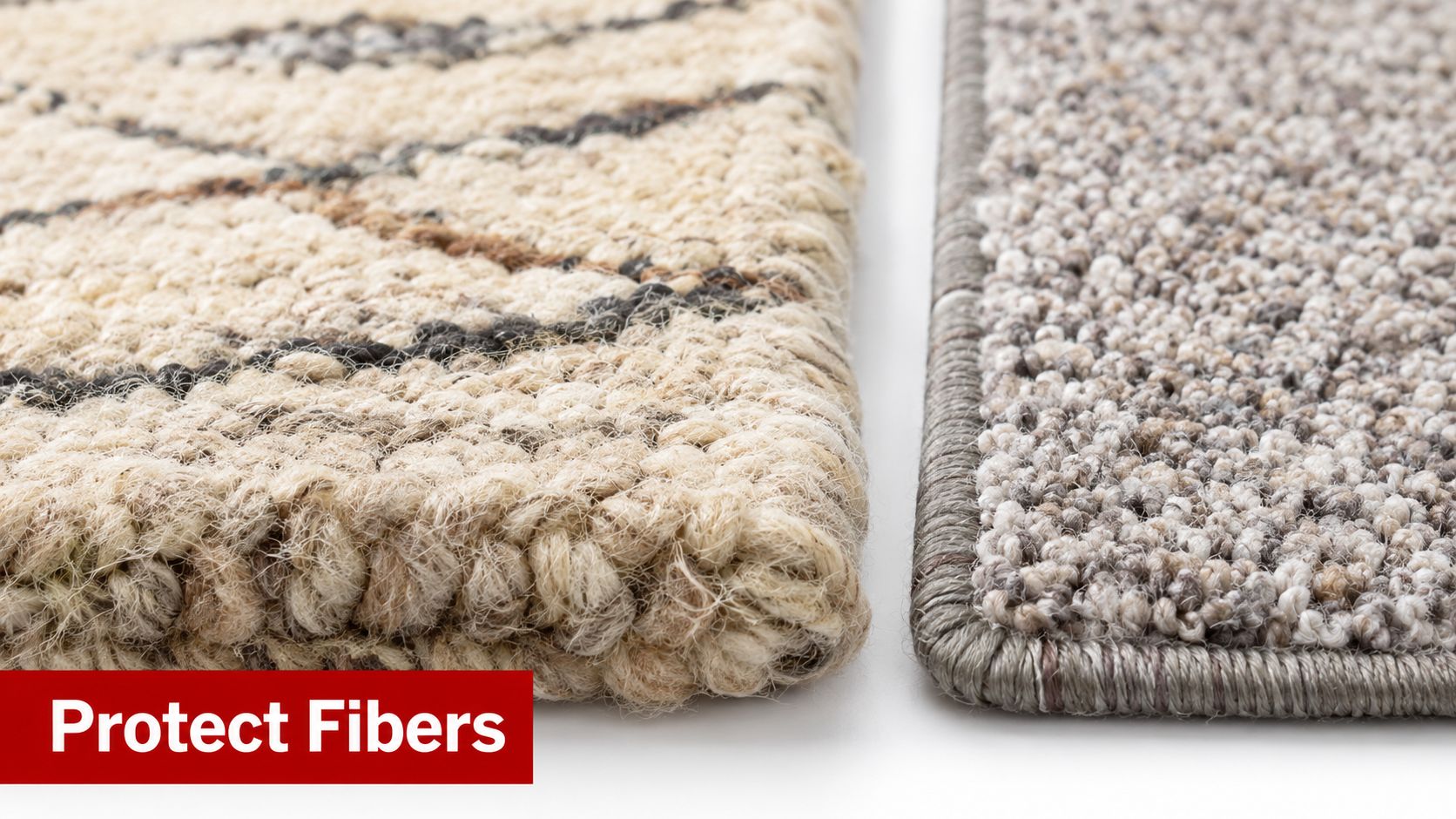
A wool rug in Mountain Brook shouldn't be treated like a synthetic entry rug in Trussville. The same product can behave differently on cotton, wool, synthetic, and blended constructions, and aggressive chemistry can affect dyes, texture, or backing.
Practical rule: Identify the fiber, identify the stain class, then select the remover that fits both.
That rule matters whether you're in Birmingham proper or calling from Pelham, Alabaster, Gardendale, or Helena. If you can't identify the fiber or the stain has reached the backing, stop experimenting and arrange professional rug cleaning.
How Rug Stain Removal Changed Over More Than 150 Years
Rug cleaning began with physical removal rather than specialized chemistry. Historical records show that by 1750, the common method was beating rugs with brooms to remove dust and soot, as documented in this history of carpet cleaning before the twentieth century. That approach could dislodge loose debris, but it couldn't selectively treat a deep stain or protect a sensitive dye.
By the 1830s, household remedies using soap, soda, lemon juice, and bread were already circulating. These ingredients represented an early attempt to match a remedy to a soil type, but homeowners still had limited control over concentration, dwell time, rinsing, and moisture.
From dust removal to targeted chemistry
The first documented on-location carpet-cleaning operation in Indianapolis opened in 1876, according to the same historical record. By the late nineteenth century, written instructions included spot-washing with ox-gall and cold water, showing a shift from merely beating out dust toward treating specific marks with targeted chemistry.
That history explains why modern rug stain removers must do more than lift surface dirt. Rugs now include wool, cotton, synthetic, and blended fibers, each with different reactions to moisture, solvents, alkalinity, oxidizers, and friction. A modern system must address deep-set spots and multiple soil types while reducing the chance of dye loss or backing damage.
The lesson for Birmingham homeowners is straightforward. Scrubbing harder isn't an evolution of rug care. Controlled chemistry, fiber testing, extraction, and drying exist because older methods couldn't safely solve every stain problem.
Types of Rug Stain Removers and When to Use Each
Different remover classes solve different problems. Enzymatic products target organic contamination, including protein-based soils, while solvent-based products are more suitable for greasy or adhesive residues. Oxygen-based chemistry can brighten some colorfast synthetic rugs, and surfactants help wet and penetrate the stain so other ingredients can work.
The choice still depends on stain type, dwell time, and fiber construction. A grease stain that has penetrated may require professional cleaning rather than repeated home applications.
| Remover Type | Best For | Caution Notes |
|---|---|---|
| Enzymatic | Organic soils and pet-related contamination | Protease enzymes can attack protein fibers such as wool |
| Solvent-based | Grease, adhesive, and oil-type residues | Use sparingly and apply to a cloth, not directly as a spray |
| Oxygen-based | Some colorfast synthetic rugs and controlled brightening | Can alter dyes and is unsuitable for many delicate natural fibers |
| Surfactant-based | Improving wetting and loosening general soil | Residue must be rinsed or extracted properly |
| Diluted vinegar | Certain compatible spot treatments | Use the documented mixture of 1 cup vinegar to 2 cups water, then rinse thoroughly |
For grease and adhesive-type stains, an industry guide recommends limited application of specialty products such as Carbona, Energine, K2R, or Goof-Off on a cloth rather than spraying directly onto the rug. It also advises repeated blotting with paper towels and several warm-water rinses for the diluted vinegar method in its rug and carpet stain guidance.
Before treating a difficult spot, review this Birmingham rug stain removal guide and stop if the rug's fiber or dye response is uncertain.
How Fiber Chemistry Changes Which Stain Remover Is Safe
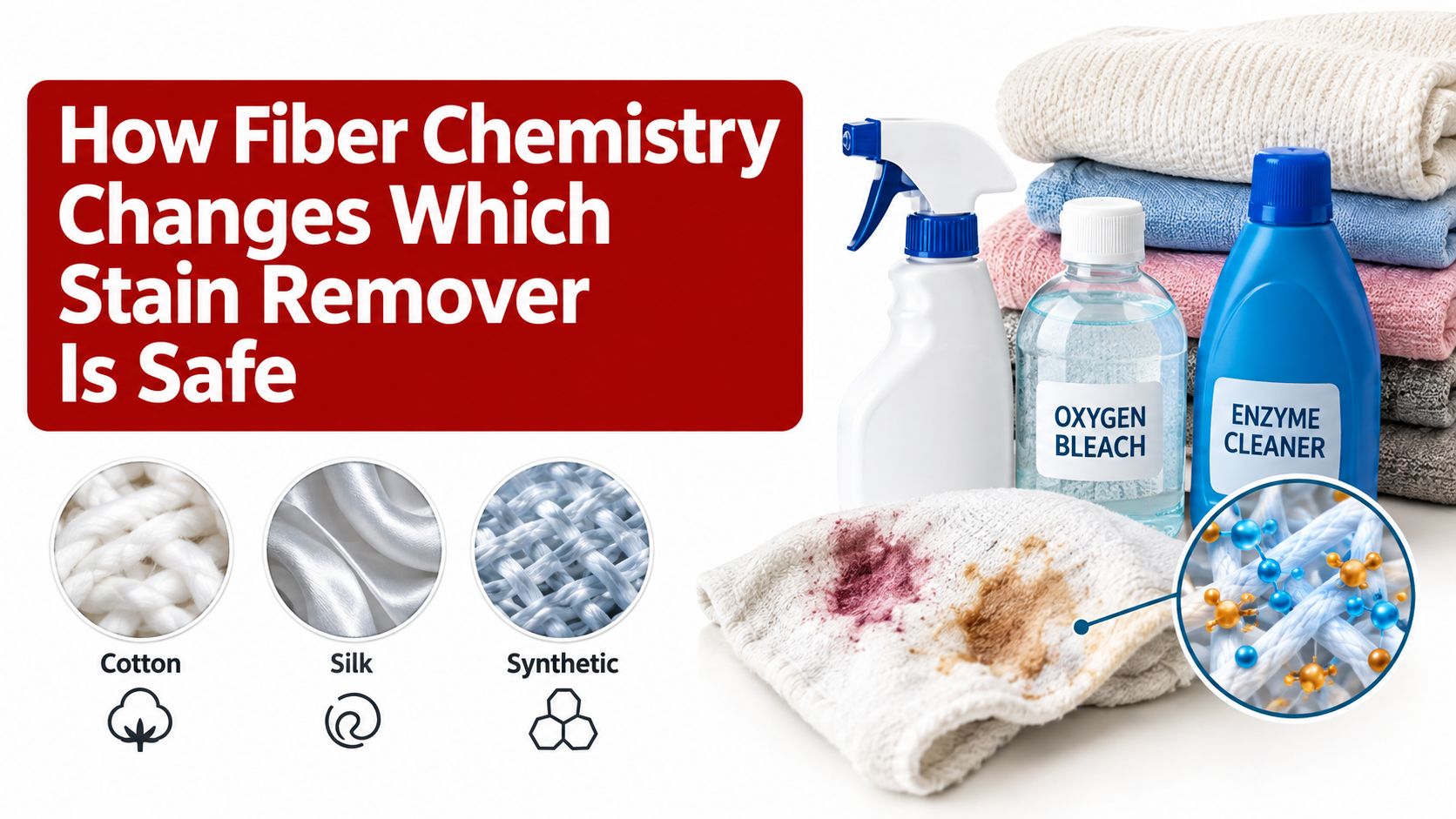
Wool and other protein fibers need a narrower chemical approach than many synthetic rugs. Independent rug-cleaning guidance places wool's safe working range at roughly pH 5 to 8, with many specialists favoring chemistry closer to neutral. An acid-side rinse around pH 4 to 6 may help neutralize residual alkalinity and tighten dyes, as explained in this guidance on carpet stain removers and fiber chemistry.
Alkaline products can damage the wool cuticle and increase dye loss. Even when the spot appears lighter, the treatment may leave permanent felting, fuzzing, or discoloration. Silk and delicate hand-woven rugs require the same caution, particularly when the label doesn't clearly identify the dyes or construction.
Synthetic rugs allow different combinations
Synthetic rugs and broadloom materials often tolerate combinations of wetting agents, solvents, and controlled oxidizing or reducing chemistry. That doesn't make every product safe, but it gives trained cleaners more options.
A professional red-stain system described for wool demonstrates why sequence matters. One stage uses wetting agents and a reducing bleach, another combines a wetting agent with solvent and water conditioner, and a final dye-stabilizing neutralizer helps reduce over-bleaching and dye loss. The system shows that successful treatment is a process, not a single chemical event.
Fiber boundary: Oxidizers and protease enzymes may help on suitable synthetic materials, but they can attack the structure of protein fibers.
At home, a hidden-area test and minimal moisture are reasonable safeguards for a clearly identified, colorfast synthetic rug. Wool, silk, antique, or valuable rugs should move directly to professional inspection.
Safe Testing and Application Steps Before You Spritz
Start with the rug itself, not the stain. Check the care label, identify the fiber if possible, and look for signs of hand-woven construction, loose dyes, latex, or a separate backing. If the material is unknown, a spray labeled for carpets isn't automatically safe for the rug in front of you.
Test a small hidden area and allow it to respond before treating the visible mark. This colorfastness testing guidance is especially relevant to oriental, wool, silk, and hand-dyed rugs.
A controlled spot routine
Use a clean white cloth or paper towel and blot from the outside edge toward the center. Don't scrub, because friction can spread the stain and roughen the pile. Apply the solution to the cloth rather than flooding the rug, then blot again and remove loosened residue with clean water when the fiber permits it.
Avoid oversaturation. Excess liquid can migrate into the backing, adhesives, or pad, where it may dry slowly and leave odor. The practical difference between a home remedy and a professional-grade rug stain remover is often residue control without over-wetting or backing damage, not merely greater chemical strength.
Before proceeding, check:
- Fiber: Is it synthetic, cotton, wool, silk, or blended?
- Dye: Did the hidden test transfer color?
- Moisture: Can you remove what you apply?
- Residue: Can you rinse or extract the product fully?
- Escalation: Is the stain old, broad, odorous, or close to the backing?
Some commercial stain removers specifically warn against use on wool, leather, or silk, reinforcing the need for fabric-specific handling rather than a universal spray.
DIY Remedies, Common Mistakes, and When to Call Pros
Vinegar solutions and careful blotting can have a place in spot response, especially when a compatible rug has a fresh, limited spill. The industry guidance cited earlier recommends 1 cup vinegar to 2 cups water, repeated blotting, and several warm-water rinses. That process still doesn't guarantee that odor, dissolved soil, or sticky product residue has left the backing.
Pet accidents expose the limitation most clearly. A rug may look improved while odor-causing contamination remains below the visible pile. Current market coverage describes growing demand for enzyme-based, low-residue, pet-safe, and multi-surface cleaners, suggesting that homeowners want odor and re-soiling addressed, not just color removed, as discussed in this overview of stain-remover market demand.
What professional cleaning adds
Birmingham-area rug cleaners describe a fuller process that can include dry-soil dusting, dye color testing, and pre-treatment of traffic lanes and pet spots. Another Birmingham specialty cleaner describes dedicated equipment, including a rug duster and an automated rug tumbler that can hold 5 to 10 rugs at a time, before wet washing begins, as detailed in its area rug cleaning process.
That order matters. Embedded grit can act like abrasive material inside the pile, so removing it mechanically before washing gives the cleaner better control over the remaining soil and stain. Professional treatment also provides a path for flushing residue instead of leaving detergent or solvent behind.
Homeowners comparing cleaning decisions often benefit from the same risk-based thinking used in other home services. This practical resource on how to compare DIY and professional pest control offers a useful framework for weighing the apparent convenience of DIY against the consequences of an incomplete result.
Call a rug professional when odor persists, dyes bleed, the stain is large or set in, the rug is delicate, or the piece has meaningful value. Rubber Ducky Rug Cleaning Birmingham can inspect the fiber and stain class, remove dry soil, apply targeted treatment, wash or flush the rug, and control the drying stage.
Rubber Ducky Rug Cleaning Offers Local Pickup and Controlled Drying
A stain that returns after repeated spraying usually needs more than another household product. Rubber Ducky Rug Cleaning Birmingham lets homeowners choose pickup and delivery, or drop off a rug at the cleaning center, with details in its Birmingham pickup and delivery service information and rug delivery service details.
At the facility, staff can inspect the rug, remove dry soil, and match treatment to the fiber and stain. That approach suits a tea mark on synthetic pile, pet odor in the backing, or a delicate hand-woven rug that could react poorly to an aggressive spray.

Rugs are dried in a climate-controlled room. Controlled drying helps limit mildew, shrinkage, and color run, as described in Rubber Ducky's rug cleaning pickup and delivery information. Grooming and restoration can follow before return delivery.
Service covers Birmingham, Hoover, Vestavia Hills, Mountain Brook, Homewood, Trussville, Pelham, Alabaster, Gardendale, and Helena. Visit Rubber Ducky Rug Cleaning Birmingham to arrange pickup or request an estimate when a stain extends beyond a surface spot.