
A glass of red wine tips onto the living-room rug during an evening in Birmingham. Someone grabs a towel, rubs hard at the centre, then adds cleaner until the pile feels wet. The mark may look lighter, but the dye can spread, soap can remain in the fibres, and moisture can carry the stain back to the surface as the rug dries.
If you're searching for how to get stains out of rugs, the safest answer starts with the rug itself. A synthetic area rug, a wool hand-knotted piece, a silk rug, and a sisal rug don't tolerate the same products or amount of moisture. Alabama humidity, tracked red clay, pets, and daily foot traffic also make drying and residue removal just as important as lifting the visible spot.
This guide gives Birmingham homeowners a practical first response, stain-specific options, fibre warnings, and clear limits for DIY treatment. The aim isn't to fade a mark. It's to remove the contaminant without stripping dye, damaging the pile, driving liquid into the backing, or leaving an odour that returns later. When the risk becomes greater than the likely benefit, Rubber Ducky Rug Cleaning provides a professional option for homes across Birmingham and nearby communities.
How to Get Stains Out of Rugs Safely in Birmingham Homes
A fresh spill creates two problems at once. The liquid sits on the surface, while some of it begins moving into the pile and backing. The first few actions determine whether you're lifting the spill or distributing it.
Start with the rug, not the product
Check the fibre, construction, and care label before applying anything. A modern synthetic rug usually gives you more tolerance for controlled moisture, but a dyed wool, silk, sisal, or hand-woven rug needs a far more conservative approach. Silk is especially unsuitable for home treatment with water, vinegar, soap, or solvents, according to independent rug-care guidance on cleaning rugs.
Practical rule: If you can't identify the fibre or the rug has significant value, limit your response to careful absorption and arrange an assessment.
For any fresh spill, use a clean white cloth or plain white paper towel. Coloured cloths can transfer dye, and a rough towel can disturb delicate fibres. Press down, lift, and replace the cloth as it becomes wet. Don't scrub across the spot.
Birmingham conditions make drying part of the job
A rug that stays damp can develop a musty smell, particularly when moisture reaches natural fibres such as wool or cotton. Professional rug guidance warns that overwetting pushes liquid deeper into the pile, extends drying time, and increases the risk of mould or mildew on those fibres (KAPETTO Design's area-rug stain guidance).
That matters in Birmingham homes where a rug may sit in a busy living room with limited airflow. Keep furniture off the treated area, improve air movement, and don't return the rug to normal use until it's fully dry. If the spot spreads, the backing feels wet, the colour transfers to the cloth, or an odour develops, stop adding products. More moisture won't correct a fibre or dye problem that has already started.
A professional cleaner can inspect the rug before treatment, identify whether the mark is a surface spill or a backing-level contamination, and choose a wash-and-rinse process suited to the construction. That distinction is central to safe rug cleaning in Birmingham, especially for oriental, wool, and hand-woven rugs.
First Response That Prevents Permanent Rug Stains
The universal response is simple, but each step has a purpose. Speed reduces how much liquid enters the rug, while controlled moisture limits the chance of spreading it further.
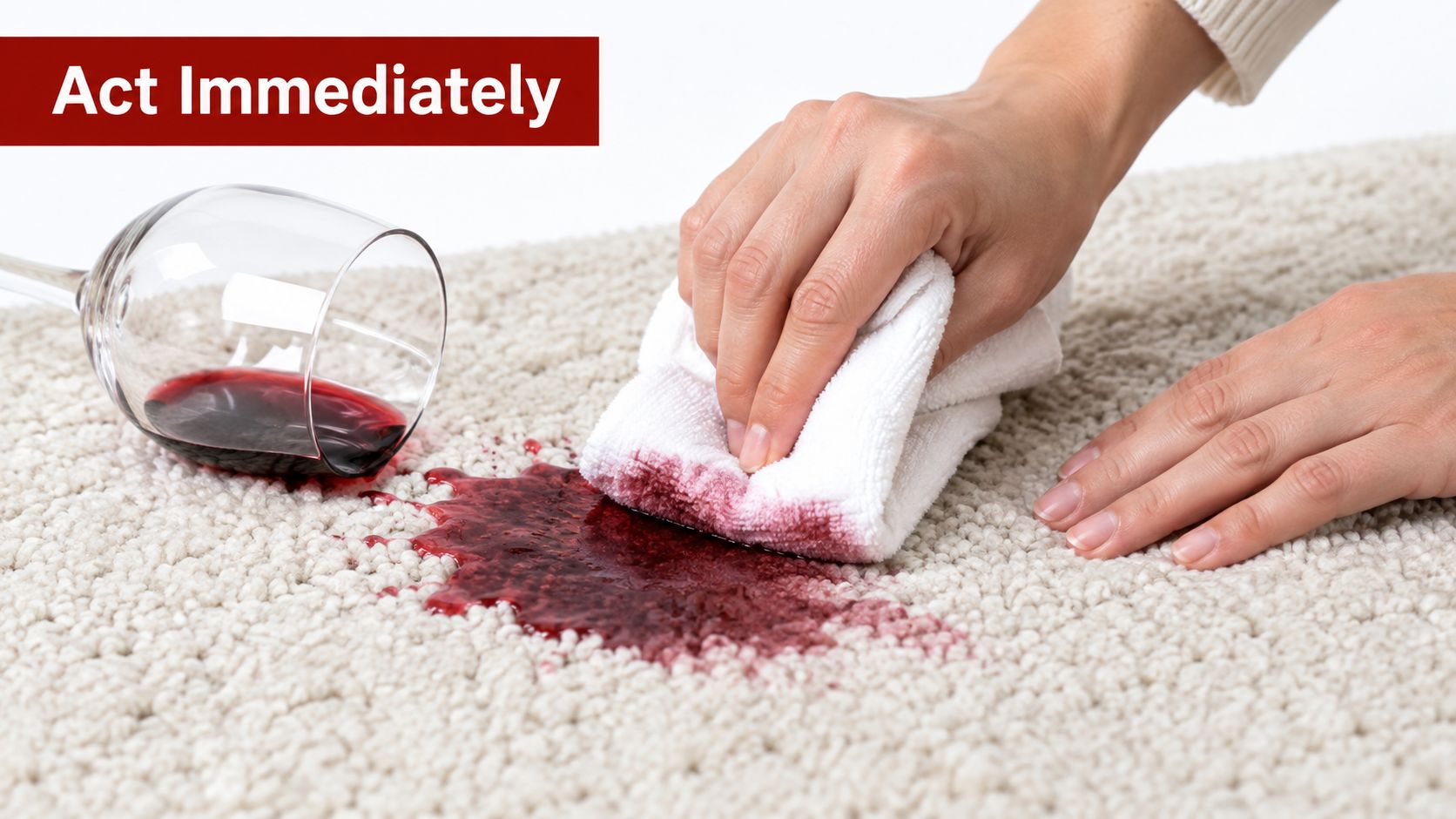
Follow this order for a fresh spill
Remove solids carefully. Lift food, mud clumps, or other material with a spoon or dull edge. Don't grind it into the pile.
Blot from the outside inward. Use a clean white cloth or paper towel and press vertically. Working from the edge toward the centre helps keep the spill contained. Rubbing can spread the stain and damage fibres, while immediate blotting gives you the best chance of removing liquid before it sets. This approach is consistent with professional area-rug stain guidance.
Use a mild solution sparingly. Mix a small amount of mild dish soap with cold water. Apply the solution to the cloth, not directly to the rug. The cloth should be damp rather than dripping.
Blot the affected area. Lift the stain with repeated presses, moving to a clean section of cloth as colour or soil transfers. Avoid aggressive agitation, particularly on wool, looped piles, and hand-woven rugs.
Rinse by blotting with plain cold water. This step removes loosened soap and dissolved soil. Skipping it leaves residue in the fibres, which can attract new dirt and create a dull halo around the treated area. Ruggable's stain-removal guidance also cautions against heat, oversaturation, and incomplete rinsing.
Extract and dry fully. Press dry towels over the spot until they stop picking up moisture. Improve ventilation with fans, but don't use a hairdryer, radiator, iron, or other direct heat. Heat can set some pigments and may damage fibres or backing.
Test before using anything stronger
A hidden-spot test is essential before peroxide, enzyme products, solvents, or commercial stain removers. Test a small area in an inconspicuous place, blot it, and watch for colour transfer, fading, texture change, or a sticky finish. A cleaner may appear safe at first while delayed colourfastness problems become visible later.
Birmingham's humidity can slow evaporation, so drying needs active attention. Lift the rug from a damp floor if possible, use absorbent layers beneath and above the area, and keep air moving around the rug. Natural fibres hold moisture longer than many synthetic piles, and the rug should remain out of service until it's completely dry.
Remember: The rinse and drying stages aren't finishing touches. They're part of stain removal.
If the stain covers a large area, has reached the backing, or comes from urine, floodwater, or another contaminant, home blotting may only remove the surface portion. Repeated wetting can make the eventual professional treatment more difficult, so arrange rug cleaning rather than continuing to saturate the same section.
Removing Food Drink Oil Ink and Pet Stains From Rugs
A splash of coffee, a greasy food mark, a pen leak, and pet urine each create a different cleaning problem. Food and drink usually leave water-soluble colour and residue. Oil needs detergent contact, ink can migrate rapidly, and urine may travel below the visible mark. The rug's fibre and backing should determine the method, not the stain label alone.
Match the stain to a cautious first method
| Stain Category | Recommended DIY Method | Key Caution |
|---|---|---|
| Food and drink | Blot promptly, then use mild dish soap solution on a cloth and rinse with cold water | Avoid heat and remove all soap from the pile |
| Older food or drink | Rehydrate lightly with cold water, apply the mild solution, allow a controlled dwell of 15 to 20 minutes, then blot and rinse | Do not soak the backing |
| Oil and grease | Lift solids, use a small amount of suitable absorbent powder, then apply mild detergent to a cloth | Excess detergent leaves a sticky, soil-attracting film |
| Ink | Use minimal moisture and blot with a fresh white-cloth section | Stop if dye transfers, since solvents can alter colour and finish |
| Pet urine | Press absorbent towels into the area, replacing them as they saturate, then extract until the liquid runs clear | Surface treatment may not reach the backing or pad |
For a dried coffee, wine, or food mark, apply a small amount of cold water to rehydrate the residue before another cleaning cycle. A controlled dwell of 15 to 20 minutes may loosen older contamination, but only if the rug can tolerate the moisture. Keep the solution on the cloth, blot it out, rinse with plain cold water, and dry the area fully. Chocolate contains more than a simple liquid residue, so the chocolate stain removal guide for Birmingham rugs addresses that type of mark separately.
Oil requires a different sequence. Remove solids without grinding them into the pile, then use absorbent powder only when it suits the fibre and dye. Vacuum or lift the powder carefully before applying a small amount of mild detergent to a cloth. Too much water can spread grease toward the backing, while too much detergent leaves residue that attracts fresh soil.
Ink is a point where restraint matters. Use very little moisture, work with clean sections of a white cloth, and stop immediately if colour begins transferring. A solvent that works on a synthetic rug may strip or shift dye on wool, silk, or a hand-woven piece. Persistent migration calls for professional assessment rather than repeated applications.
Pet urine needs extraction, not just deodorising
Press towels firmly over fresh urine and replace them as soon as they become saturated. Continue until the extracted liquid runs clear, following the practical method in BISSELL's guidance for dog urine on rugs. Rubbing drives contamination farther into the pile, while a surface spray can leave the deeper source untouched.
An enzyme cleaner may suit some pet stains, but test it first and confirm compatibility with the fibre. A product intended for synthetic carpet is not automatically safe for wool or a dyed hand-woven rug. Recurring accidents or persistent odour usually need professional flushing, because repeated household treatments can wet the backing without removing the source.
Use oxidisers and bleach alternatives carefully
A controlled 3% hydrogen peroxide treatment may suit certain organic stains after a hidden colourfastness test. It can lighten dyes, so use only a small amount and stop if the test area changes. Oxygenated products are different from chlorine bleach. Read how OxiClean compares to chlorine bleach before choosing a product, and do not assume either option is safe for every rug.
DIY should stop when ink keeps spreading, oil has reached the backing, urine odour persists, or the mark returns after drying. A professional wash-and-rinse service can remove contamination below the surface through controlled cleaning, dusting, extraction, and drying, without repeatedly saturating a vulnerable rug.
Fiber Specific Cautions for Wool Silk and Synthetic Rugs
The same stain can require completely different treatment depending on the rug's fibre and construction. Fibre strength, dye stability, pile density, backing materials, and moisture tolerance all change the risk. A method that works on a synthetic hallway rug can cause shrinkage, dye migration, felting, or texture loss on a wool or silk piece.
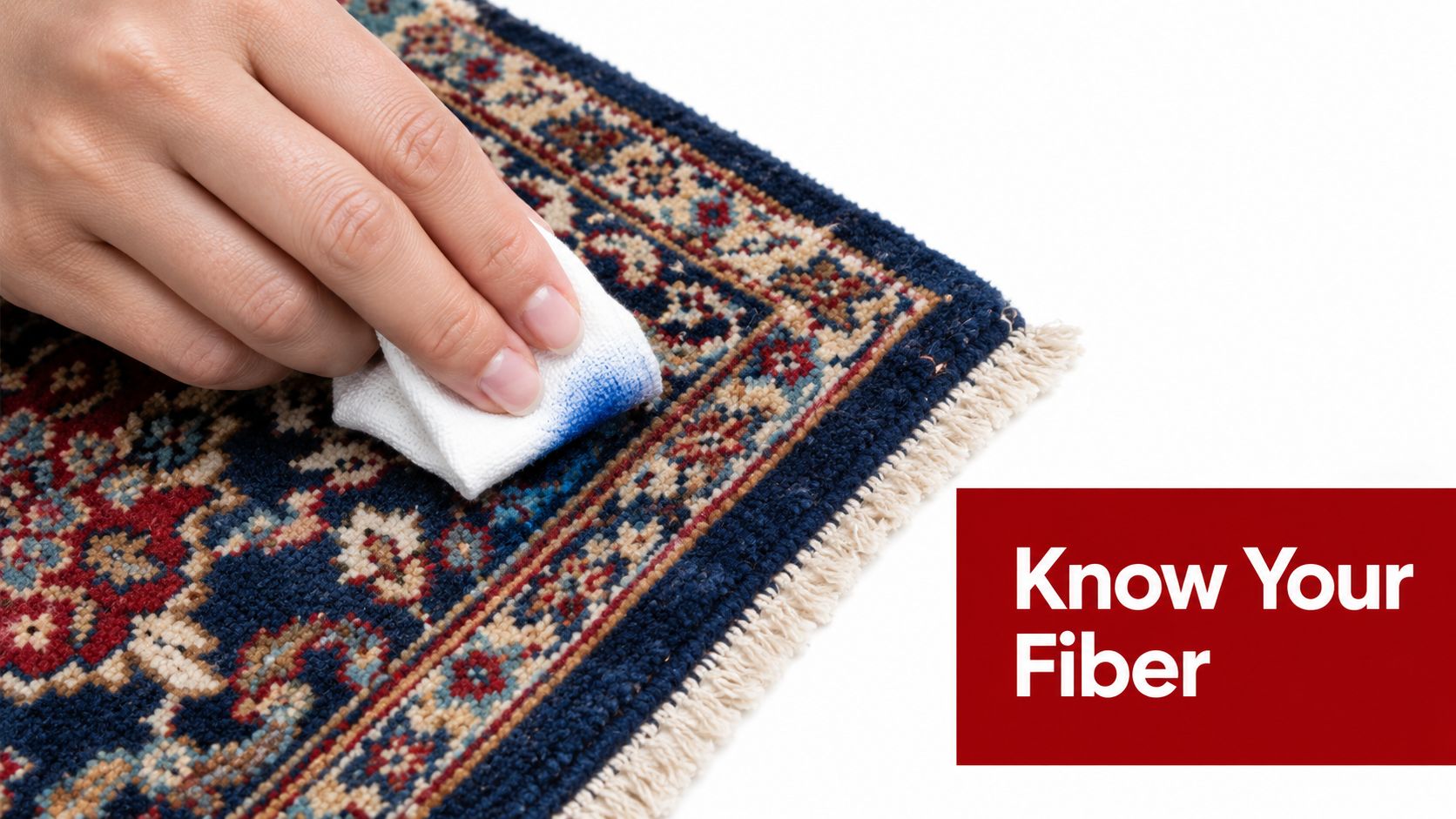
Wool needs low friction and controlled moisture
Wool can hold soil deep in the pile and may respond poorly to aggressive rubbing or excessive water. Use minimal moisture for an emergency blot, keep the solution on the cloth, and avoid heat. A wool rug with a large stain, colour transfer, urine contamination, or an unknown dye should move quickly to professional assessment. Homeowners looking for a narrower method can review how to spot clean a wool rug, but spot cleaning isn't a substitute for washing when contamination has travelled below the surface.
Silk is a professional-cleaning decision
Silk deserves a separate rule. Independent rug-care advice warns against treating silk at home with water, vinegar, soap, or solvent. Even a careful-looking application can create a visible tide mark, disturb the sheen, or damage fragile fibres. Blot excess liquid with a dry white cloth, avoid further chemistry, and arrange a professional evaluation.
Sisal and other plant-based fibres also need strict moisture control. Liquid can spread through the construction and produce browning, edge distortion, or a mark larger than the original spill. Don't spray directly onto sisal, and don't keep rewetting a section that hasn't dried.
Synthetic rugs offer tolerance, not immunity
Synthetic fibres are generally more forgiving, but pre-testing remains necessary. Printed designs, backing adhesives, and mixed-fibre constructions can still react to a cleaner. A technical stain-remover sheet describes a near-neutral-to-alkaline product at approximately pH 8 and recommends a colourfastness pre-test one day before full treatment, because results may take 24 hours to appear (technical stain-remover guidance).
A safe workflow is therefore:
- Pre-test: Check an unseen area for dye and texture change.
- Target: Apply the smallest suitable amount to the contaminated area.
- Dwell: Allow the product time to work without adding more moisture.
- Extract: Blot or rinse out the loosened residue.
- Verify later: Recheck after drying, not only while the rug is wet.
Hand-woven and heirloom rugs combine fibre, dye, knotting, and backing risks. If the piece matters financially or personally, a Birmingham rug specialist should handle the stain before experimentation makes the damage permanent.
Why Rug Stains Reappear and How to Fix Residue and Wicking
A stain that disappears while wet may return as the rug dries. That doesn't always mean the first treatment failed. It can mean dissolved soil moved upward with evaporating moisture, or that soap and stain residue remained below the visible surface.
Three signs the problem is moisture management
A sticky feel indicates that cleaner may still be present. A dark ring or halo often points to uneven wetting or residue at the boundary. A mark that fades and then returns as the rug dries can be wicking, where dissolved contamination travels back toward the surface.
Non-extraction cleaning can leave soil-attracting residue behind, according to Bane-Clene's explanation of resoiling after cleaning. That residue gives fresh dust a surface to cling to, so adding more soap can worsen the cycle. Use absorbent layers, pressure, and moving air to draw moisture out rather than scrubbing the area again.
The visible mark is only one part of the problem. The backing, pad, and drying process can decide whether the stain stays gone.
Pet odour can reactivate after drying
Urine crystals may remain in the fibres after the rug appears dry. When humidity or new moisture returns, those crystals can reactivate and release odour again, a problem described in professional rug-care information on pet urine contamination. In Birmingham, a recurring smell after a humid spell is a strong reason to stop home treatment and arrange professional extraction or washing.
Some recent rug-care guidance discusses a light mist of 3% hydrogen peroxide for an old spot, but that option still requires a hidden test and careful dye monitoring (rug stain-removal guidance). It isn't a universal answer for wool, silk, dark dyes, or backing contamination, and it doesn't replace rinsing.
Use this escalation checklist
- Halo remains: Stop adding detergent. The area may need controlled rinsing and extraction.
- Spot returns while drying: Use absorbent towels and airflow, then reassess after complete drying.
- Surface feels stiff or sticky: Residue is likely. A professional wash can remove what blotting leaves behind.
- Odour returns: Assume contamination may have reached the backing or pad.
- Colour keeps moving: Stop immediately. Continued moisture can increase dye migration.
Professional rug washing addresses these issues through full extraction, appropriate rinsing, and controlled drying. That's different from repeatedly wetting one small patch on the floor.
When Birmingham Homeowners Should Choose Professional Rug Washing
DIY spot treatment has a legitimate role for a fresh, small spill on a known, colourfast synthetic rug. It becomes a poor trade-off when the stain is old, the rug is delicate, the smell keeps returning, or moisture has reached the backing. At that point, you're not only trying to remove colour. You're managing soil, residue, dye stability, drying, and construction.
Rubber Ducky Rug Cleaning Birmingham starts with pickup from the home, inspection, and mechanical dusting before washing. Their rug-care information reports that high-frequency tumbling can remove up to 80% of dry dust and particulate matter before wet cleaning, which reduces the dry soil that would otherwise become muddy during washing (rug dusting and allergen guidance).

The facility process reaches beyond the spot
At the facility, the rug can be treated according to its fibre and construction rather than flooded on a living-room floor. The process includes:
- Mechanical dusting: Releases embedded grit, sand, and dry particulate soil before washing.
- Targeted treatment: Addresses food, wine, ink, pet urine, odour, mould, or water-related contamination according to the rug's needs.
- Immersion washing: Uses custom wash tanks and fibre-safe detergents to clean beyond the visible patch.
- Controlled rinsing: Mechanical rinsing, including a patented infusion rinse, helps remove detergent and loosened residue.
- Climate-controlled drying: Balances temperature and humidity while the rug hangs straight to reduce shrinkage and distortion.
- Grooming and restoration: Brushes the pile and identifies issues such as fraying edges or moth damage before return.
The rug is then delivered back to its original location, so homeowners in Birmingham, Hoover, Vestavia Hills, Mountain Brook, Homewood, Trussville, Pelham, Alabaster, Gardendale, and Helena don't need to manage transport themselves. The professional rug-cleaning process in Birmingham is particularly appropriate for oriental, wool, hand-woven, pet-affected, or water-damaged rugs.
Rubber Ducky Rug Cleaning Birmingham offers home pickup, professional rug washing, deep stain and odour removal, fibre-safe treatment, controlled drying, grooming, restoration, and return delivery. If a Birmingham-area rug still shows a stain, halo, or recurring pet smell after careful blotting, visit Rubber Ducky Rug Cleaning Birmingham to request an estimate and schedule your rug pickup.