
Thinking about steam cleaning your area rug? It can work wonders, but it is not a one-size-fits-all solution. The secret to success and avoiding a disaster comes down to what your rug is made of. This method is built for synthetic rugs, which are tough enough to handle the heat and moisture.
Know When Steam Cleaning Is the Right Call
A steam cleaner works by using hot water vapor to penetrate deep into a rug's fibers. This process is effective for loosening stubborn, embedded dirt, cutting through grime, and reducing bacteria and allergens. For the right rug, it delivers a deep clean that vacuuming cannot match, bringing back its fresh look and feel while making your home healthier.
The high heat and moisture can be a problem for the wrong materials. That is why identifying your rug's fiber content is the most important step before plugging in a machine.
Synthetic vs. Natural Fibers: A Tale of Two Rugs
Rugs made from synthetic fibers like polyester, nylon, and olefin are generally prime candidates for steam cleaning. These materials are engineered for durability. They are not as absorbent as natural fibers, so they can take the heat without shrinking, bleeding colors, or becoming damaged.
Natural fibers, on the other hand, need a much gentler approach.
- Wool Rugs: High heat is the enemy of wool. It can strip the fibers of their natural lanolin oils, leaving them brittle and coarse. It can also cause the whole rug to shrink.
- Silk Rugs: Silk is beautiful but incredibly fragile. Steam will almost certainly leave behind permanent water spots and weaken the delicate fibers.
- Cotton and Jute Rugs: These plant-based fibers are very absorbent. Getting them too wet with a steam cleaner invites browning, mildew, and a musty smell that will not quit.
For rugs made from natural fibers, a DIY steam cleaning is not a safe option. The risk of ruining your rug for good is just too high.
Why Calling a Pro Is Often the Smartest Move
When you are dealing with delicate, antique, or natural-fiber rugs, professional rug washing is the only way to go. Experts like Rubber Ducky Rugs, who serve customers throughout the United States, use specialized washing methods designed for each rug's unique needs. Our trained rug specialists know the ins and outs of different fibers and dyes, guaranteeing a deep clean that protects the beauty and integrity of your investment.
As Rubber Ducky Rugs brings its local service to more cities like Chicago, Austin, and San Diego, expert care is becoming more accessible. Our growing national footprint means you can rely on our rug-only expertise, whether you have a modern synthetic piece or a treasured family heirloom. Before you jump into a DIY project, consider if calling a professional is the better choice for your rug's health.
How to Prepare Your Rug for a Deep Clean
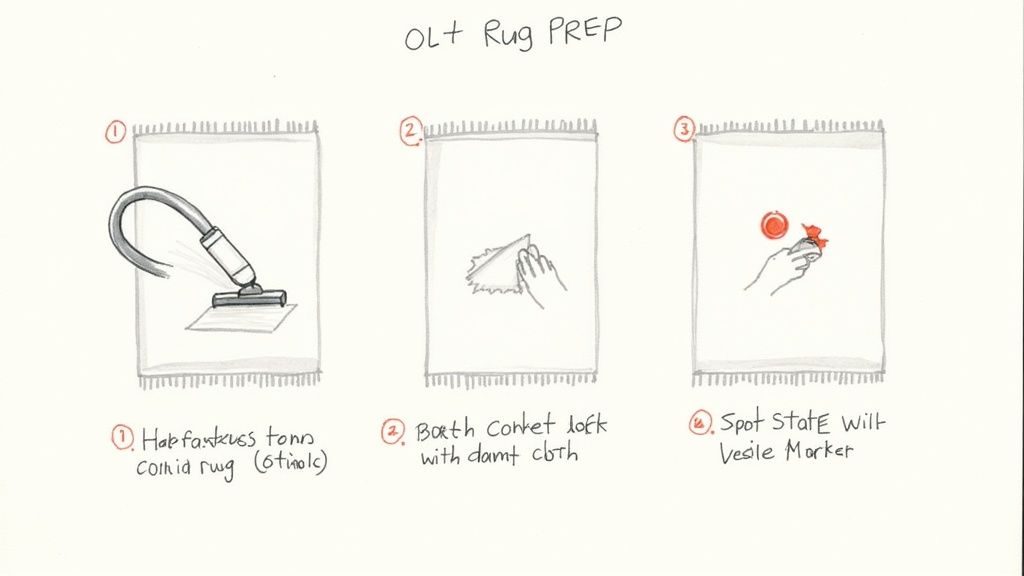
Jumping straight into steam cleaning without proper prep work is a classic DIY mistake. What you do beforehand is just as important as the cleaning itself. Taking a few minutes to get things ready is the difference between a fantastic result and a soggy, damaged mess.
First, you must vacuum thoroughly. A quick pass is not enough. Your goal is to pull out all the dry, gritty soil that has been ground into the fibers.
Start by flipping the rug over and vacuuming the back. This might sound odd, but the vibrations from the vacuum's beater bar work wonders, shaking loose deeply embedded dirt and pushing it up toward the front of the pile.
Once you have done the back, flip the rug right-side-up and go over the front slowly. Overlap your passes to make sure you get everything. If you skip this, the steam cleaner will just turn that dirt into mud, leaving you with a bigger mess than when you started.
First, Know Your Rug's Material
Before a drop of water touches that rug, you need to know exactly what it is made of. This is non-negotiable. Steam cleaning is only safe for most synthetic rugs like polyester, nylon, and olefin. If you have natural fibers, you are looking at a completely different process.
- Wool & Silk: These are beautiful but delicate. The high heat from a steam cleaner can cause them to shrink, their colors to bleed, or the fibers to become brittle and break. They need a professional hand.
- Jute & Cotton: These plant-based fibers are like sponges. They soak up a ton of water, which makes them incredibly difficult to dry properly. That can lead to browning, water stains, or even mildew growth.
If the tag is missing or you are not sure, the safest bet is to call in a professional. Do not guess. Specialists at Rubber Ducky Rugs, which serves cities from Miami to Seattle, are trained to identify fibers on sight and use the correct washing method. It is no surprise that the professional area rug cleaning market is projected to grow significantly through 2031 as more people realize it is worth protecting their investment. You can read more about the growth in professional rug care and see why so many homeowners are choosing to go with the experts.
Next, Run a Quick Colorfastness Test
Okay, you have confirmed your rug is synthetic. You are not out of the woods yet. You still need to check if the dyes are stable, or "colorfast." Sometimes, even on synthetic rugs, the dyes can run when hit with heat and moisture.
Find a hidden spot on your rug, perhaps a corner that lives under the couch. Dampen a clean, white towel with a little hot water and press it firmly onto that spot for about 30 seconds. Now, lift it up. Do you see any color on the towel? If there is even a hint of dye transfer, stop right there. Your rug is not colorfast, and steam cleaning will cause the colors to bleed all over.
Key Takeaway: A simple colorfastness test takes less than a minute but can save you from irreversible color bleeding that ruins the entire look of your rug.
Finally, Spot Treat Any Existing Stains
With the safety checks out of the way, your last prep step is to tackle any obvious stains. Applying a bit of pre-treatment gives the steam cleaner a head start.
Use a spot cleaner made specifically for synthetic rugs. Follow the directions on the bottle, but be gentle. Never scrub a stain aggressively; you can easily damage the rug's pile and make the spot look worse. Instead, blot gently from the outside of the stain toward the center with a clean cloth. This effort helps ensure a clean, uniform finish across the entire rug.
Mastering Your Steam Cleaning Technique
Now that your rug is prepped and ready, it is time for the main event. Getting the technique right is what separates a decent DIY job from a potential disaster. A great clean comes down to methodical work and the right machine settings, not just elbow grease.
First, let's talk settings. Before you pull the trigger, set your steam cleaner to a low moisture and moderate heat level. This is non-negotiable. More DIY rug cleanings go wrong from too much water than anything else. Overwetting a rug is a fast track to mildew, musty smells, and a breakdown of the backing over time. You can always increase the settings later, but you cannot undo a soaking.
The Grid Method: Clean Like a Pro
The secret to a perfectly even clean? Do not just wander around randomly. Pros use what we call the "grid method," and you should too. Imagine your rug is a piece of graph paper. Your job is to clean one square at a time before moving to the adjacent one. It is simple, but it guarantees you cover every single inch without missing spots or over-cleaning others.
Your movements should be slow, deliberate, and straight. Overlap each pass by about an inch or two. Rushing is your enemy here; it leaves dirt behind and, more importantly, it leaves too much water in the rug. A steady hand allows the steam to work and gives the machine’s vacuum the time it needs to suck all that grime and moisture back out.
A Pro Tip: The One-Two Pass
Here’s a rule of thumb we use in the field: for every pass forward, make two passes back.
- The "Wet" Pass: Move forward slowly, depressing the trigger to release the steam and cleaning solution.
- The "Dry" Passes: Immediately pull the machine backward over that same strip without pressing the trigger. Then do it again. These dry passes are all about suction, pulling as much water out as possible.
Remember, the goal is a damp rug, not a soaking wet one. Those dry passes are what get you there.
Before you start, it is a good idea to know what settings are safest for your specific rug type. Synthetic fibers can generally handle steam, but the settings matter.
Here is a quick reference guide for common synthetic materials.
Steam Cleaner Settings for Different Rug Fibers
| Rug Fiber Type | Recommended Heat Setting | Recommended Moisture Level | Key Considerations |
|---|---|---|---|
| Nylon | Medium | Low | Very durable and resilient. Can handle slightly higher heat but always start low. |
| Polyester | Low to Medium | Low | Resistant to water-based stains but can be damaged by high heat. Keep it moderate. |
| Olefin (Polypropylene) | Low | Low | Very sensitive to heat, which can cause fibers to melt or mat. Low and slow is key. |
| Acrylic | Low | Low | Can be prone to browning if overwet. Excellent moisture extraction is critical. |
Always test an inconspicuous spot first, like under a sofa, before cleaning the entire rug. And never use a steam cleaner on natural fibers like wool, silk, or jute, that is a job for a specialist.
Tackling High-Traffic Areas and Stubborn Spots
Some parts of your rug work harder than others. Those well-worn paths from the couch to the kitchen are going to need a little extra attention. For these high-traffic lanes, you can make an extra set of wet and dry passes, but always be sure to finish with a thorough dry pass.
What about those stubborn stains that did not quite come out during pre-treatment? It is tempting to just blast them repeatedly, but do not. Soaking a single spot over and over can weaken the rug's fibers and damage the backing. Instead, give it one extra, slow cleaning pass. The goal of a deep steam clean is to lift the overall appearance, not to perform spot-removal surgery.
A true deep clean revitalizes a rug from its very foundation. If you're curious about what goes into a professional-grade cleaning, you can learn more about the deep cleaning process for rugs.
And of course, if you decide the job is bigger than you want to handle, Rubber Ducky Rugs is here to help. We offer professional, rug-only washing services across the United States. With teams in cities from Phoenix to Philadelphia, we bring national expertise right to your local area to give your rug the best care possible.
Don't Skip The Final Step: Drying Your Rug Properly
Your work is not over just because you have switched off the steam cleaner. The final drying stage is every bit as critical as the cleaning itself. If you get this part wrong, you could end up with a musty-smelling rug, mildew growth, or even damaged floors, completely undoing all your hard work.
The secret to success here is all about promoting maximum airflow. Ventilation is your absolute best friend at this point. Open the windows, position a few box fans to blow across the rug's surface, and run a dehumidifier if you have one. Your goal is to keep air moving constantly, which can drastically cut down the drying time. A rug can take anywhere from 8 to 24 hours to dry completely, depending on how thick it is and the humidity in your home.
Get It Off The Floor
Do not leave a damp rug lying flat on your hardwood or laminate flooring. That is a recipe for disaster. Trapped moisture can warp, stain, or permanently discolor the floor underneath. The key is to get the rug elevated so air can circulate all around it.
An easy way to do this is by propping the rug up on a few sturdy, non-staining objects. Think plastic storage bin lids, or even a couple of folding chairs laid on their sides. This lifts the rug off the floor and allows air to flow freely underneath, ensuring the top and bottom dry evenly. This is one of the most common pitfalls people run into, which you can learn more about in our guide on the rug cleaning mistake most homeowners make.
The diagram below gives you a quick visual of the cleaning process itself.
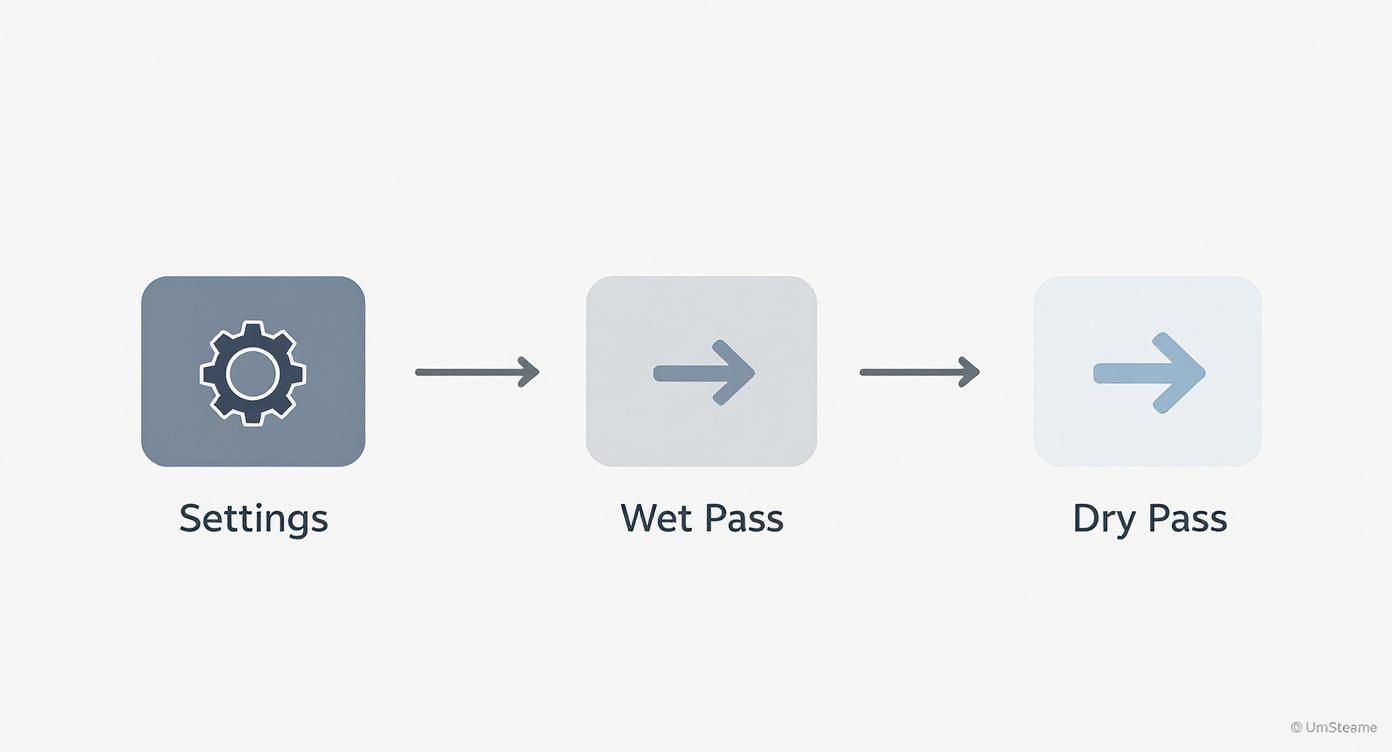
As you can see, using the right settings and performing a thorough "dry pass" with the machine is vital. It pulls out as much water as possible from the start, making this final air-drying step much faster and more effective.
Groom The Pile For That Professional Finish
Here is a pro tip: while the rug is still just slightly damp, take a minute to groom the pile. Grab a soft-bristled brush and gently sweep the fibers all in the same direction. It seems like a small thing, but the results are dramatic.
Grooming the pile prevents the fibers from matting down as they dry. This simple step helps restore that plush, uniform look and feel your rug had when it was new.
It is no surprise that people are investing more in home cleaning tools. With a growing focus on healthier indoor spaces, steam cleaners have become the fastest-growing segment in the market. Their ability to sanitize is a huge draw for households, keeping them a top choice for deep-cleaning area rugs.
When You Should Always Call a Rug Cleaning Pro
https://www.youtube.com/embed/zZt32Q54Duo
Knowing the limits of a DIY steam cleaner is the most important part of protecting your valuable rugs. While a home machine can be a great tool for durable synthetic rugs, there are certain situations where it is an absolute no-go. Pushing forward can cause irreversible damage, and that is a costly mistake.
The number one rule is this: Never use a home steam cleaner on natural-fiber rugs. The combination of high heat and moisture is a recipe for disaster for materials like wool, silk, and jute. The aftermath is not pretty.
- Wool Rugs: High heat does not just clean wool; it strips away the natural lanolin oils that keep the fibers soft and resilient. This can leave them brittle and almost always leads to shrinkage.
- Silk Rugs: These are incredibly delicate, and steam is their enemy. You will likely end up with permanent water spots, and the fragile fibers can easily weaken or break.
- Jute & Sisal Rugs: These plant-based fibers absorb a huge amount of water, which often leads to browning, mildew, and a musty smell you will never get out.
For these sensitive materials, a professional hand-washing service is truly the only safe and effective route.
When to Skip the DIY and Call an Expert
Beyond natural fibers, a few other red flags mean you should put down the steam cleaner and pick up the phone. For instance, antique or hand-knotted rugs have delicate dyes and a construction that can be completely destroyed by the aggressive heat and suction of a home machine. You can see the careful techniques we use in our guide to professional Oriental and specialty rug cleaning.
Heavy pet urine saturation is another major issue. The heat from a steam cleaner can actually cook the uric acid crystals into the rug fibers, permanently setting the stain and locking in the odor forever. Professionals use specialized enzymatic treatments that break down the smell at a molecular level, something a rental machine cannot do.
Key Takeaway: If you have any doubt at all about your rug's material or how bad a stain really is, calling a professional is always the smartest, safest, and most cost-effective choice in the long run.
The growing demand for deep cleaning solutions has fueled market expansion. In fact, projections show the global market for steam cleaners could hit nearly $742 million by 2025. This shows people are more focused on home hygiene, but it also underscores how crucial it is to use these powerful tools correctly. You can discover more insights about this growing market trend and see why proper use is so important.
For these delicate and difficult jobs, Rubber Ducky Rugs provides professional, rug-only washing services across the United States. With a growing footprint in cities from New York to Los Angeles, our trained specialists use customized, safe methods for each and every rug. We make sure your investment is protected while getting the deepest clean possible. Call, text, or book online for expert care you can trust.
Your Top Steam Cleaning Questions Answered
Even with the best instructions, you probably still have a few questions before you tackle steam cleaning your rug. That is smart. A little extra knowledge now can save you a big headache and a ruined rug later. Here are some of the most common things people ask.
Can I Steam Clean My Wool or Silk Rug?
Absolutely not. We cannot stress this enough: never use a home steam cleaner on wool, silk, or any other natural fiber rug. The high heat and intense moisture are a recipe for disaster. You are looking at irreversible damage like shrinking, colors bleeding, and fibers that become dry and brittle.
These beautiful, delicate rugs need a completely different approach. They require a specialized, professional washing from experts who know exactly how to treat them. For something that valuable, your only safe bet is a dedicated rug cleaning company like Rubber Ducky Rugs, which has teams of specialists in major cities across the country.
How Long Until My Rug Is Dry?
For a typical synthetic rug, you should plan on it taking anywhere from 8 to 24 hours to dry completely. The exact time depends on a few things: how thick the pile is, the humidity in your home, and the amount of air circulating in the room.
To speed things up, get some fans blowing across the rug’s surface and, if you have one, run a dehumidifier in the room. The most important thing is to make sure the rug is 100% dry before you think about moving furniture back onto it. If you do not, you are inviting mildew to set up camp underneath.
Will Steam Cleaning Get Rid of Pet Urine Smell?
While a steam cleaner might seem like the perfect weapon against pet accidents, it usually does more harm than good. For a very fresh, minor spot on the surface, maybe. But for anything more, the heat from the steam can "cook" the uric acid crystals in the urine, permanently bonding the stain and the smell to the rug fibers.
When you are dealing with serious pet odors, a professional deep washing is the only way to truly solve the problem. A specialist company uses specific enzymatic treatments that break down and completely flush out the bacteria causing the smell. A home steam cleaner cannot do that.
How Often Should I Be Steam Cleaning My Synthetic Rug?
For most synthetic area rugs in a home with normal foot traffic, cleaning it every 12 to 18 months is a solid schedule. This keeps it looking fresh and prevents dirt from getting ground in too deep.
If that rug is in a high-traffic zone like an entryway, or if you have kids and pets, you will want to be more proactive. In that case, we recommend cleaning it every 6 to 12 months. Regular maintenance is the key to making your rug last as long as possible. If you need a pro to handle it, you can always find a trusted specialist to come to you, whether you're in Atlanta or Portland.
For a professional, fiber-safe cleaning that protects your investment, trust the experts. The team at Rubber Ducky Rugs uses specialized techniques to safely and effectively clean all types of rugs. Call, text, or book online today at https://rubberduckyrugs.com.