

Before you begin cleaning an area rug, a careful inspection is the most important step. Taking the time to prepare properly prevents common mistakes like bleeding colors or frayed fibers. The secret to success is in the preparation, not just the scrubbing.
Your Essential Pre-Cleaning Rug Inspection
A few minutes of inspection will tell you exactly what your rug can handle. This step can be the difference between a refreshed rug and an expensive mistake. Every rug is unique, especially when it comes to cleaning. What works for a durable synthetic rug can ruin a delicate silk one.
First, What’s Your Rug Made Of?
The first step is identifying the fiber type. Flip the rug over and look for a manufacturer's label for the most accurate information.
If there is no label, you can often identify the material by touch. Synthetic fibers like nylon or polypropylene often feel coarse or plastic-like and have a stiff, grid-like backing. Natural fibers like wool feel softer and more substantial, with a more flexible backing.
Understanding the material is critical. Wool, for example, has natural oils that repel dirt, and an improper cleaning solution can strip them away, leaving the fibers dry and brittle. Silk is strong when dry but becomes extremely fragile when wet, so aggressive cleaning methods must be avoided. This quick guide will help you identify your rug's material and choose the right cleaning method.
Rug Fiber Identification and Recommended Cleaning
| Rug Fiber Type | Key Characteristics | Recommended DIY Approach |
|---|---|---|
| Wool | Soft, resilient, slightly oily feel. Often has a woven cotton or jute backing. | Use a pH-neutral, wool-safe solution. Avoid hot water and aggressive scrubbing. |
| Silk | Very soft, smooth with a high sheen. Fibers are delicate and thin. | Extremely delicate when wet. Spot cleaning only with extreme care. Professional rug washing highly recommended. |
| Cotton | Soft, absorbent, feels like a thick towel. Prone to shrinking and browning. | Clean with minimal water and ensure rapid drying. Color bleeding is a high risk. |
| Synthetics (Nylon, Polyester) | Can feel coarse or soft, often has a plastic-like sheen. Backing is typically stiff. | Highly durable and stain-resistant. Can handle gentle, purpose-made rug washing solutions. |
| Natural Fibers (Jute, Sisal) | Rough, fibrous, and plant-like texture. Earthy, natural appearance. | Water can cause browning and damage. Dry cleaning methods or professional help is best. |
Knowing the fiber type is half the battle won. It informs every decision in the cleaning process.
Next, The All-Important Colorfastness Test
This step prevents turning a beautiful, multi-colored rug into a blurry, muddy mess. Do not skip it, especially with brightly colored or hand-dyed rugs.
- Find a small, hidden spot, like a corner that is usually under a sofa.
- Dampen a small corner of a clean white towel with your cleaning solution.
- Gently press the towel onto the spot on the rug for about 30 seconds. Do not rub.
- Check the towel. If you see any color transfer, stop. The dyes are unstable, and wet cleaning will make them run.
Finally, A Thorough Vacuuming
This is one of the most important steps. Your rug holds pounds of sharp, gritty dirt deep in its foundation that you cannot see. To understand just how much can be lurking in there, check out our guide on the hidden life inside your rug.
When that hidden grit gets wet, it turns into an abrasive paste. As you clean, you grind this paste into the fibers, causing them to wear down and look dull.
Start by vacuuming the top of the rug several times. Then, flip the entire rug over and vacuum the back. The vibrations will dislodge deep-down dirt. Flip it back over and vacuum the top one last time. You will be surprised by what comes out.
Once you have identified your material, confirmed the dyes are stable, and removed all the dry soil, you are ready to start cleaning safely and effectively.
Cleaning Your Synthetic and Cotton Rugs
Synthetic and cotton rugs are the workhorses of our homes. You find them in hallways, living rooms, and under dining tables. Because they are built for durability, they are good candidates for at-home cleaning. With the right technique, you can wash these rugs and make them look fresh again.
Unlike delicate wool or silk, synthetic fibers like polypropylene, nylon, and polyester are designed to resist stains and handle a more thorough cleaning. Cotton rugs are soft but can be tricky; they absorb a lot of water and need a gentle touch to prevent color bleeding or shrinking. This guide will walk you through a deep rug cleaning method that is safe and effective for both.
Mixing a Gentle Cleaning Solution
You do not need harsh solutions to get a fantastic result. A simple homemade solution is often safer for your rug's fibers and your home environment.
Grab a bucket and mix this simple, effective cleaning solution:
- Two gallons of cold water: Never use hot water. It can cause cotton to shrink and may damage the rug's backing.
- One-quarter cup of a clear, mild dish soap: Choose a soap without extra dyes, heavy perfumes, or moisturizers. Additives can leave behind a sticky residue that attracts more dirt.
- One cup of white vinegar (optional): Vinegar can help cut through greasy buildup and neutralize odors. For cotton rugs, perform a spot test in an inconspicuous area first, as vinegar can sometimes affect certain dyes.
Stir the mixture gently until the soap dissolves. Avoid creating too many suds, as this will make rinsing more difficult. This recipe provides enough cleaning power to break down grime without being too aggressive.
How to Apply the Solution Correctly
The key is to clean the rug's fibers without completely saturating the foundation. Ovetwetting a rug is a common mistake that can lead to mildew, rot, and a persistent musty smell.
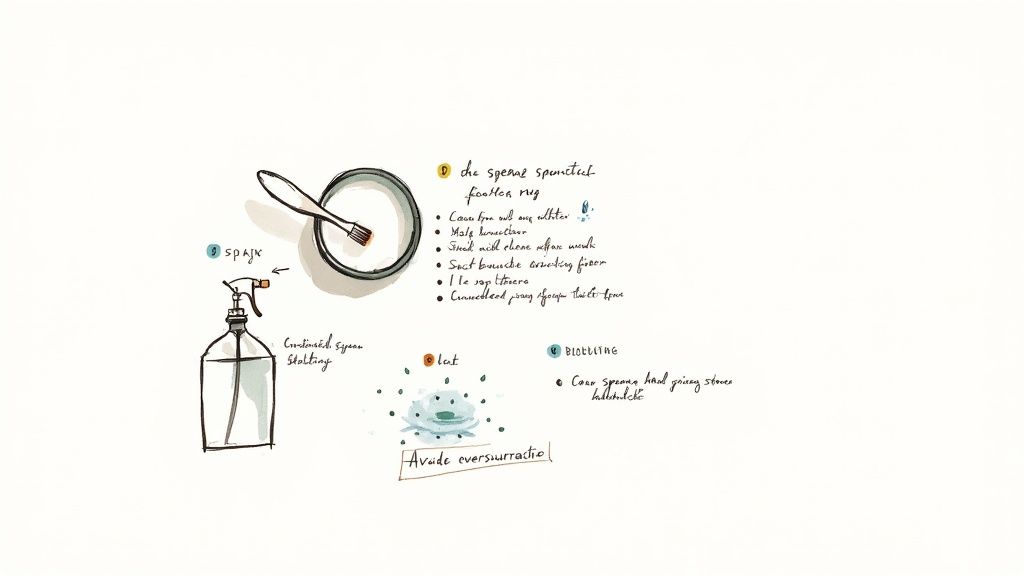
Pour your cleaning solution into a spray bottle for better control. Work in small, manageable sections of about 3×3 feet. Lightly mist the surface of the rug in your working area. The goal is for the fibers to be damp, not dripping wet.
Once a section is misted, take a soft-bristled brush and gently work the solution into the fibers. Always brush in the direction of the rug's pile with light, overlapping strokes. Do not scrub aggressively, as this can cause frayed, fuzzy-looking fibers. The goal is to gently lift dirt out.
For heavily soiled spots, let the solution sit for about 5 to 10 minutes before brushing. This dwell time allows the cleaner to break down the grime, which means less effort for you.
Rinsing and Removing Residue
This step is as important as the washing itself. Leftover soapy residue will make your rug feel stiff and act as a magnet for new dirt.
You will need a bucket of clean, cold water and a clean sponge or absorbent towels. Dip the sponge into the fresh water, wring it out well, and use it to rinse the section you just cleaned. Gently blot and wipe the fibers to lift out both the soap and the loosened dirt.
Rinse your sponge often. You may need to refill your rinse water a few times, especially for a large or particularly dirty rug. Continue until you no longer see suds and the fibers do not feel soapy. For some rug types, specialized tools can improve the process. To learn more, see our guide on steam cleaning an area rug for alternative techniques.
After rinsing with the sponge, take a dry, clean towel. Press it firmly into the damp section to absorb as much moisture as possible. The more water you remove now, the faster your rug will dry. Work your way across the entire rug, section by section, until you are finished.
Special Handling for Wool and Silk Rugs
Natural fiber rugs like wool and silk require a more delicate and informed cleaning approach. One wrong move can lead to irreversible damage, so caution is your most important tool.
Wool rugs are resilient, but their unique structure also makes them sensitive. The fibers contain a natural oil called lanolin, which acts as a built-in dirt and moisture repellent. Harsh cleaning methods can strip this protective layer, leaving the fibers dull, dry, and brittle.
Silk is even less forgiving. It is known for its incredible sheen and soft feel, but the fiber loses up to 20% of its strength when wet. This makes it extremely prone to damage from even the slightest scrubbing while damp. For silk, a minimalist philosophy is essential.
Why Wool Rugs Need a Different Touch
Cleaning a wool rug at home is a high-stakes job. The fibers are highly absorbent and can soak up a lot of water quickly. If you cannot get it dried completely and rapidly, you risk mildew, dye bleed, and structural weakening.
Additionally, wool can shrink and fade when exposed to heat or high-pH cleaners. This is why cold water and pH-neutral solutions are non-negotiable. Any aggressive rubbing while the fibers are wet can cause them to felt or mat together, permanently ruining the rug's texture.
Treating a wool rug like a synthetic one is a significant mistake. The aggressive scrubbing and hot water that might work on nylon will destroy wool, causing colors to run and fibers to become matted and stiff.
The Gentle Approach for Wool Rugs
If you decide to proceed with a small spot treatment on a wool rug, your technique must be exceptionally gentle. This is all about blotting, not scrubbing.
- Mix a Safe Solution: Mix a tiny amount of clear, pH-neutral dish soap into cold water. Avoid any products with added dyes, fragrances, or harsh alkaline ingredients.
- Apply Lightly: Use a clean white cloth to barely dampen the stained area. Never pour liquid directly onto the rug. The goal is to treat the surface fibers without soaking the foundation.
- Blot, Don't Rub: Press another clean, dry cloth onto the spot to absorb the moisture and the stain. Repeat this with light, gentle pressure.
- Rinse with Care: To rinse the spot, lightly dampen a new cloth with plain cold water and blot the area again. You must remove any soap residue, as it will attract dirt.
A Minimalist Cleaning Strategy for Silk Rugs
For cleaning silk rugs at home, the safest advice is often not to do it. They are so fragile when wet that the risk of permanent damage is very high. Even plain water can leave spots or rings on the delicate fibers.
If you must deal with a small, fresh spill, the approach needs to be almost entirely dry.
- Blot Immediately: Use a clean, dry, white absorbent cloth to blot up as much of the spill as possible. Press down firmly but do not rub.
- Use a Barely Damp Cloth: If a faint mark remains, you can very lightly dampen a cloth with a 50/50 mix of cold water and white vinegar. The cloth should feel almost dry.
- Blot from the Outside In: Gently blot the spot, working from the edges toward the center. This helps prevent the stain from spreading.
- Dry Right Away: Use a hairdryer on a cool setting or aim a fan at the spot to dry it immediately. Never let moisture sit on a silk rug.
When the Risk Isn't Worth the Reward
While these tips can help in an emergency, trying to deep clean a wool or silk rug at home is a major risk. Problems like color bleeding, fiber distortion, and incomplete drying are common and usually irreversible.
The intricate weaves of Oriental and hand-knotted rugs hide dirt deep within their foundations, far beyond what surface cleaning can reach. Only a professional, full-immersion washing process can safely and effectively flush out embedded grit without damaging the delicate fibers. For these treasured pieces, professional rug cleaning is essential to preserving their beauty and value.
How to Tackle Tough Stains and Pet Odors
Stains are a part of life in a busy home. A spilled glass of red wine or muddy paw prints are often why we decide a rug needs a deep clean. This is where you learn to treat spots with effective, targeted methods.
Tackling any stain requires two things: acting fast and using the right approach for the specific spill. A fresh stain is always easier to remove than one that has had time to set into the fibers.
The Golden Rule of Stain Removal: Act Fast
When a spill happens, your job is to absorb as much of it as possible before it sinks in. Grab a clean, dry, white cloth and start blotting. A white cloth prevents accidental dye transfer from a colored towel to your rug.
Do not scrub a fresh spill. Scrubbing grinds the stain deeper into the rug's foundation and can fray the fibers, leaving a permanently damaged patch. Blot gently, working from the outside edge of the stain toward the center to keep it from spreading.
Simple Solutions for Common Spills
For most everyday messes, you do not need a heavy-duty chemical cleaner. A simple, gentle solution is often the best first step for durable synthetic or cotton rugs.
- Red Wine: After blotting the excess, mix a solution of one part white vinegar to two parts water. Lightly dampen a cloth with this mix and continue blotting the stain.
- Coffee or Tea: A few drops of a clear, mild dish soap mixed with cool water usually works. Apply it sparingly with a cloth and blot until the stain is gone.
- Mud: Let the mud dry completely. Cleaning it while wet will smear it into a larger mess. Once it is dry, scrape off the solids and vacuum the area thoroughly.
Always rinse the spot after treatment. Lightly dampen a fresh cloth with plain water and blot the area to pick up leftover cleaning solution. Soap residue is sticky and will attract more dirt over time.
The Unrivaled Power of Enzyme Cleaners for Pet Accidents
For pet urine, standard cleaners are not enough. The lingering smell that returns on humid days is caused by uric acid crystals, which are not water-soluble. They remain locked in the rug fibers long after the visible stain is gone.
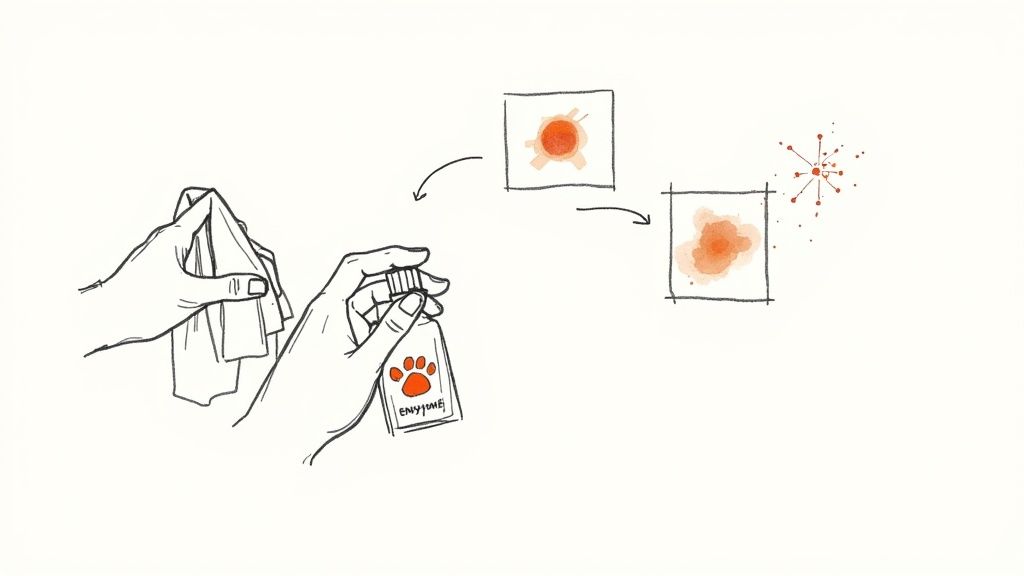
An enzyme-based cleaner is essential for pet stain and odor removal. These products contain beneficial bacteria that produce enzymes designed to break down and digest the organic proteins in pet waste, eliminating the source of the odor.
To use an enzyme cleaner effectively, you must be generous. Saturate the spot completely, letting the solution soak as deep as the urine did. Follow the product’s instructions on dwell time. After it has sat, blot up the excess with a clean towel and let the area air dry completely.
Dealing with Old, Set-In Stains
Old stains are a different challenge. They have had time to chemically bond with the rug fibers, making them stubborn. You can try the methods for fresh stains, but you may need to repeat the process.
For a set-in, non-greasy stain, you can try a paste of equal parts white vinegar and baking soda. Apply it to the stain, let it fizz and dry completely, then vacuum it up. This can sometimes break down older stains.
It is important to have realistic expectations. Some old stains, particularly those from drinks with artificial dyes or on delicate fibers like wool, may be permanent. Frantic scrubbing will only damage the rug.
If your best efforts are not working, or if you have a widespread pet odor problem, it is time to call professionals. Deep-set stains and odors often require a full-immersion rug washing for complete removal, a process that cleans the entire rug without damaging its structure.
Knowing When to Call a Professional Rug Cleaner
DIY methods are great for maintenance, but an important part of caring for your rug is knowing when a job is too big, delicate, or risky to handle yourself. Making that call can be the difference between a clean rug and a ruined one.
Some situations are clear signs that it is time for a specialist. Not every stain or odor can be solved with a spray bottle and a cloth, and pushing a home remedy too far often makes the problem worse.
Signs Your Rug Needs Professional Help
Think of professional rug washing as a necessary deep cleaning treatment. While home methods tidy the surface, specialists clean the entire rug, inside and out. This is critical for valuable, delicate, or heavily soiled rugs that need a carefully controlled process.
You should call a professional rug cleaning service when you face these issues:
- Deeply Embedded Pet Odors: If a pet smell returns after cleaning, the source is buried deep in the rug's foundation. Only professional full-immersion washing can flush out the uric acid crystals causing the persistent odor.
- Delicate, Antique, or Hand-Knotted Rugs: Materials like silk, wool, and those with natural vegetable dyes are very sensitive. The risk of colors bleeding, fibers distorting, or the rug shrinking is high with DIY methods.
- Stubborn Stains: If a stain from wine, coffee, or ink does not lift with gentle blotting, stop. Aggressive scrubbing will fray the fibers and permanently set the stain.
- The Rug Has Been in Storage: Rugs stored in a garage or attic can develop mildew, attract pests, or become brittle. A professional assessment and cleaning is the safest way to restore them.
The Value of Specialized Rug Washing
A dedicated rug cleaning company like Rubber Ducky Rugs offers a level of clean that is impossible to replicate at home. We use controlled, full-immersion washing techniques to safely and thoroughly remove years of packed-in grit, allergens, and grime from deep within the rug's foundation. You can learn more about the truth behind professional rug cleaning methods in our detailed article.
Professionals use climate-controlled drying rooms to ensure the rug dries completely and evenly. This step is critical, as improper drying at home is a leading cause of mildew, fiber rot, and foundation warping.
This expert-led process is why more homeowners turn to specialists. The global area rug cleaning services market is growing and projected to reach USD 1.8 billion by 2033. This trend shows people recognize that protecting valuable rugs requires specialized knowledge. You can find more insights on this market from Verified Market Reports.
Rubber Ducky Rugs is a national leader in specialized, rug-only cleaning. As we expand, new locations are opening in major cities from New York to San Diego, offering coast to coast rug cleaning solutions for homeowners. With a growing national footprint and local service in cities large and small across the country, our trained rug specialists are ready to help.
If you are unsure whether your rug needs professional care, do not risk it. Call or text us for a fast, transparent quote.
Your Top Questions About At-Home Rug Cleaning, Answered
Even with instructions, a rug cleaning project can feel daunting. A few specific questions always arise. Getting them answered can mean the difference between a clean rug and a costly mistake. Let's cover some of the most common concerns.
How Often Should I Deep Clean My Rug?
It depends on your lifestyle. For a rug in a busy area like a family room or main hallway, a deep clean every 12 to 18 months is a good rule of thumb. This removes the deep-down grit that vacuums cannot reach.
If the rug is in a quieter space, like a formal dining room, you can likely extend that to every two or three years. The main exceptions are homes with pets or allergies. In those cases, you will want to clean more often to manage dander, dust mites, and other trapped allergens.
Can I Use a Carpet Cleaner on an Area Rug?
My answer is always a firm no. Using a standard carpet cleaning machine on an area rug is one of the riskiest things you can do, especially for natural fibers like wool or silk.
Those machines are built for wall-to-wall synthetic flooring. They often use hot water, which can cause natural fibers to shrink, warp, or bleed color. They also lack sufficient suction to extract all the water from a dense rug. This leaves the foundation wet, creating a perfect environment for mildew, rot, and permanent damage.
An area rug has a distinct backing and foundation. Wall-to-wall flooring is attached to a subfloor. They require completely different cleaning methods.
What's the Best Way to Dry a Rug After Cleaning?
Drying your rug correctly is as important as washing it. The number one rule is to never hang a wet rug. The weight of the water will stretch the foundation, leaving you with a saggy, rippled rug that cannot be fixed.
The right way is to lay it completely flat on a raised surface that allows air to circulate underneath. You can use plastic sawhorses, sturdy patio chairs, or anything that will lift it off the floor.
To speed up drying, place fans to blow air across the rug’s surface and run a dehumidifier in the room. Your rug must be 100% dry on both the front and back before it goes back on the floor. This can take 24 to 48 hours.
How Can I Tell if My Rug's Colors Will Bleed?
Before any cleaning solution touches the front of your rug, you must perform a colorfastness test. It takes less than a minute and can prevent a disaster.
- Pick a hidden spot. Find a small corner that is usually under a sofa.
- Dampen a white cloth. Get a clean, white cloth slightly damp with your intended cleaning solution. Do not pour the solution directly on the rug.
- Blot the spot. Press the damp cloth onto the test area and hold it there for about 30 seconds. Do not rub.
- Check the cloth. Lift the cloth and look at it. If you see even the faintest hint of color, the dyes are not stable.
If you see any dye transfer, stop. Do not attempt a wet cleaning. This is common with handmade and Oriental rugs that use natural dyes. They need a professional's touch to be cleaned safely.
While DIY cleaning is useful for light maintenance, nothing beats a professional wash for protecting your investment and truly reviving your rug. Rubber Ducky Rugs provides specialized, rug-only cleaning in cities across the country, giving your treasured pieces the expert care they need. To book a professional rug washing, you can call, text, or find us online at https://rubberduckyrugs.com.