Cat urine smells so bad because bacteria break down urea into ammonia, while uric acid forms crystals that bind to rugs and make the odor extremely persistent. As the urine ages, sulfur-containing compounds add a sharp, penetrating smell that ordinary surface cleaning often can't remove.
If you need professional rug cleaning in Birmingham, you may be dealing with exactly that problem. A cat has an accident on an area rug, the visible dampness disappears, and the room seems fresh again. Then the smell returns when the rug becomes humid, the air conditioner runs, or someone walks across the affected area.
That cycle frustrates homeowners in Birmingham, Hoover, Vestavia Hills, Mountain Brook, Homewood, Trussville, Pelham, Alabaster, Gardendale, and Helena. The issue isn't just that the rug needs more fragrance. Cat urine can move through the pile, backing, and sometimes the underlying floor, so successful treatment requires more than wiping the surface.
The Lingering Odor That Won't Go Away
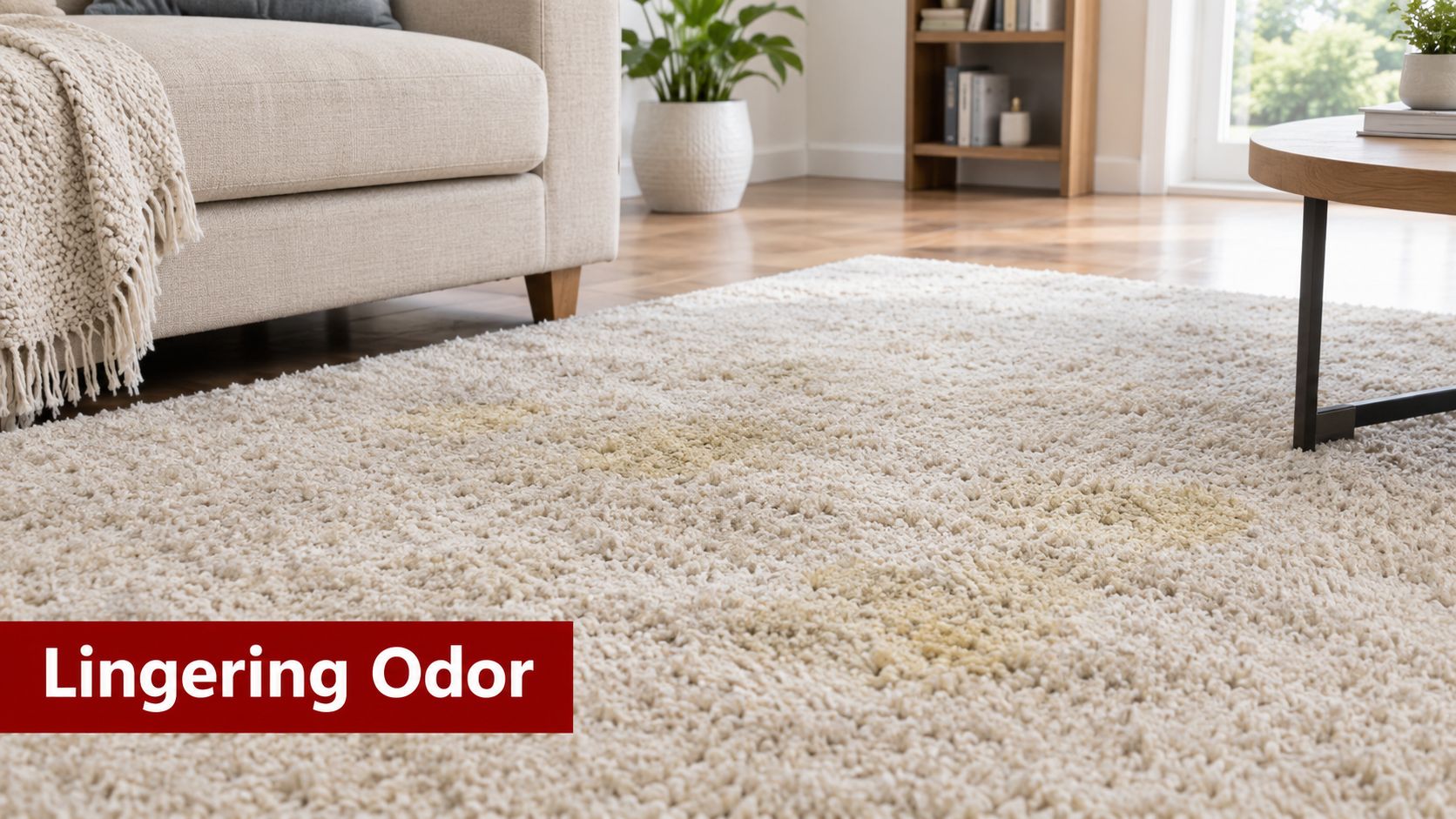
A homeowner in Homewood may first notice the odor near an area rug after coming home from work. The rug looks almost normal, but the room smells unmistakably sour and animal-like. A quick pass with a household spray seems to help, yet the odor is back the next morning.
That pattern is common with pet accidents. A surface product may reduce what your nose detects for a short time without reaching the material where urine dried. Rugs are particularly difficult because liquid can spread sideways through the fibers and downward into the foundation. A small visible mark can therefore represent a larger contaminated area.
Why the smell seems to return
Many homeowners interpret a returning odor as evidence that the cat has urinated again. Sometimes that is true, but an older stain can also become noticeable again after moisture reaches dried residue. Uric acid deposits can remain attached to porous rug materials, and a damp Birmingham day may make the smell more obvious.
Fragrance sprays create another misleading result. They add a stronger scent to the room, but they don't necessarily break down the organic residue. Once the fragrance fades, the original odor remains. Scrubbing can make matters worse by pushing liquid farther into the pile or disturbing dyes in a delicate oriental or hand-woven rug.
Practical rule: If the smell returns after a rug dries, treat the problem as contamination below the surface, not as a lack of deodorizer.
The rug itself changes the challenge
A synthetic low-pile rug may respond differently from a wool, hand-knotted, or shag rug. Fiber type, dye stability, backing construction, and the depth of the accident all affect what can be done safely. A rental carpet machine may wet the rug without extracting enough liquid, while excess moisture can create additional drying and browning concerns.
For Birmingham homeowners, the sensible next step is to identify whether the rug needs a controlled professional wash rather than another round of household products. A rug cleaning specialist can inspect the face, backing, fringe, and affected zone before selecting treatment.
The Science Behind the Stench
Cat urine is chemically complex. Bacteria break down urea as urine sits, releasing ammonia, but ammonia alone doesn't explain the characteristic intensity. Research summarized by RIKEN's explanation of felinine breakdown describes felinine as an odorless precursor that breaks down at room temperature into volatile sulfur compounds, including 3-methyl-3-sulfanylbutan-1-ol, also called MMB, and cat ketone.
A 2024 peer-reviewed study found that the typical odor profile reaches peak intensity roughly 12 to 24 hours after urine is deposited. The same study linked stronger odor chemistry with mature intact male cats, which had higher levels of MMB. That doesn't mean every male cat produces an obvious odor or that every female cat produces a mild one, but it explains why individual accidents can smell dramatically different.
More than an ammonia problem
The odorants include sulfur-containing compounds such as 4-methyl-4-sulfanyl-pentan-2-one, MMB, and 3-methyl-3-sulfanyl-1-butyl formate. Older urine can also accumulate indole and p-cresol. Together, these compounds create the penetrating, skunk-like character that homeowners often describe as much worse than ordinary ammonia.
This is why a cleaner designed only to neutralize ammonia may provide an incomplete result. The stain isn't one chemical with one simple remedy. It's a mixture that changes as microbes act on the urine and as residue dries into porous material.
The biological pathway matters too. Historical chemical research traced felinine formation through cauxin, an enzyme that converts 3-MBCG into felinine and glycine. A separate analysis identified 13 branched-chain fatty acids in cat urine, with proportions that varied between cats but remained stable within the same animal over at least 24 hours in urine-soaked samples kept at about 77°F. This supports a practical conclusion: the odor comes from a persistent chemical mixture, not from one removable surface film. The science of related pet urine odors also helps explain why different animals leave different odor profiles.
Why porous rugs hold the evidence
Uric acid can form crystals that bind to porous surfaces. Water or a general household spray may move some residue without removing it, leaving deposits in the pile, backing, or pad. When humidity rises, those deposits can become noticeable again.
Professional rug washing addresses this differently. The technician needs to identify how far the urine traveled, choose a fiber-safe chemistry, and use enough controlled rinsing to remove dissolved residue. A delicate rug can't be treated like a washable synthetic mat, so the cleaning method must account for construction as well as odor.
Immediate Steps for Homeowners
Fresh urine is easier to manage before it dries into the rug. Birmingham homeowners should act carefully, because the wrong technique can spread the accident or damage the fibers.
Blot the liquid. Use absorbent towels and press down firmly. Don't rub, since rubbing can work urine deeper into the pile and widen the affected zone.
Map the area. Check beyond the visible mark. Urine can travel through the face yarns and backing, so treat the surrounding area rather than only the darkest spot.
Choose a product made for pet urine. Enzyme-based cleaners are intended to break down organic compounds instead of merely covering them with fragrance. Guidance reviewed by Good Housekeeping's enzyme cleaner recommendations notes that dwell times can range from 12 to 72 hours, depending on the product and surface.
Saturate where the urine reached. A light mist usually won't contact dried residue below the surface. Follow the product directions and allow the required dwell time before blotting or rinsing.
Test first. Apply any cleaning solution to an inconspicuous section to check for dye bleeding, discoloration, or texture changes. This matters especially for wool, silk, viscose, and hand-dyed rugs.
Don't add heat. Steam, hot air, or a heated carpet machine can create problems for sensitive fibers and may set staining or odor. Ventilation helps the room, but airflow alone can't remove crystals embedded in the rug.
For broader home odor guidance, targeted cleaning for odor elimination can help you think about the difference between removing a source and masking a smell. That distinction is important with cat urine. Perfumed products may make the room smell different, but they don't replace extraction and residue removal.
The limits of home treatment become clear when the rug is valuable, the stain is old, or the urine reached the backing. A homeowner may not know how much liquid to use, whether the dye will bleed, or how to dry the rug without shrinkage. Rubber Ducky's guide to cleaning pet urine from carpet provides related guidance, but an affected area rug often needs a rug-specific process rather than a carpet-machine approach.
Why DIY Methods Often Fail
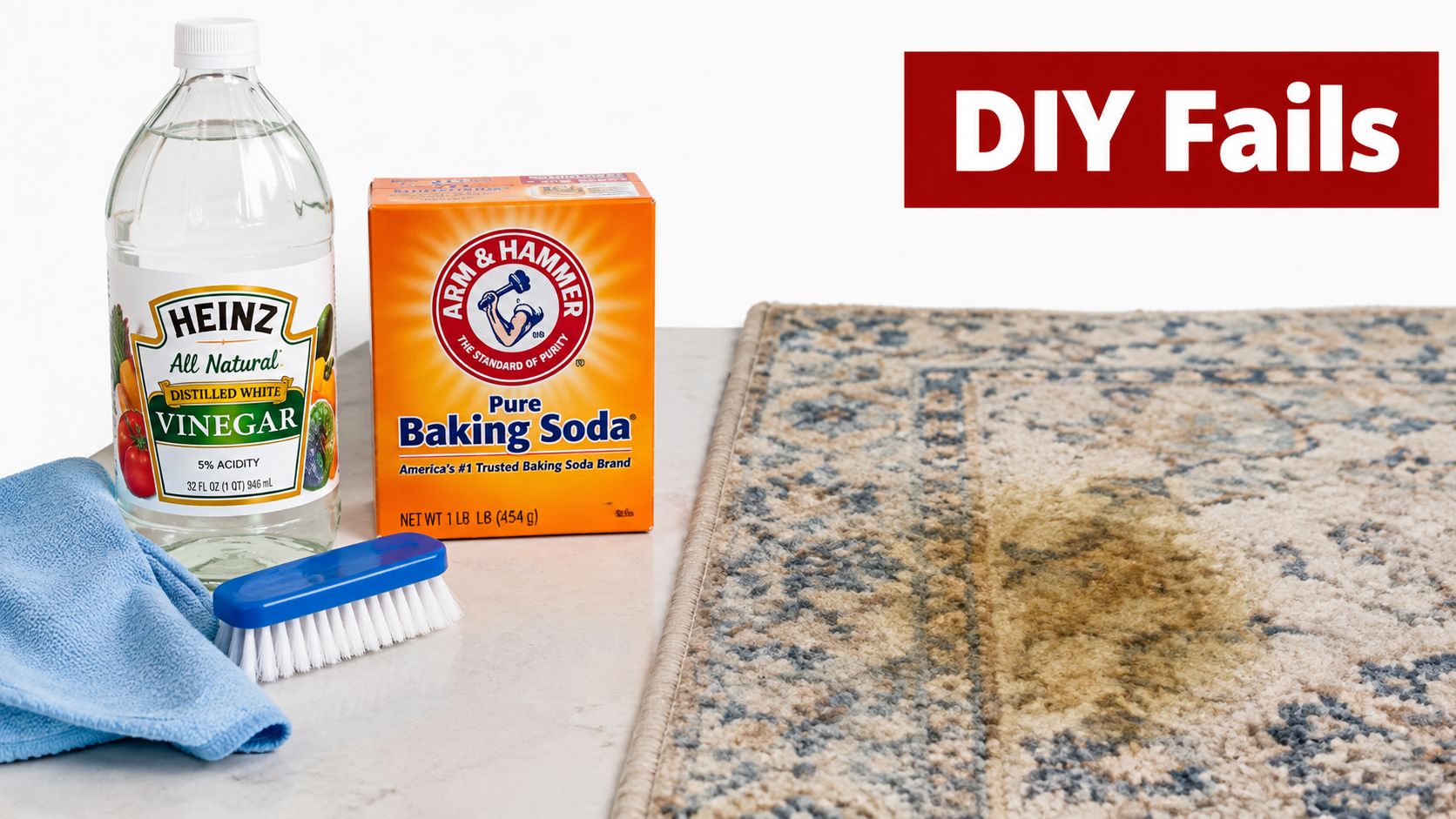
DIY cleaning fails most often because it treats the visible stain instead of the full contamination path. Vinegar, baking soda, and scented sprays can change the immediate smell, but they don't guarantee that residue has left the pile and backing. A scrub brush can also spread urine laterally and roughen delicate fibers.
Homeowners may then apply more product, more water, and more pressure. That creates a wet rug with diluted contamination but no reliable way to extract it. If the rug dries slowly, moisture can remain in the foundation, and a formerly localized accident can become a larger restoration problem.
Common shortcuts and their trade-offs
Vinegar solutions: They may help with a fresh surface odor, but acidity alone doesn't remove every sulfur compound or uric acid deposit. Excess moisture can also push contamination deeper.
Baking soda: It can absorb some surface moisture and scent, but vacuuming powder from a rug isn't the same as flushing dissolved residue from its construction. Advice about baking soda for pet stains should be applied cautiously to delicate rugs.
Scented deodorizers: They mask odor temporarily. Once the fragrance fades, the source remains.
Rental carpet machines: These machines aren't designed for every area-rug structure. They may overwet the rug, leave detergent behind, or fail to extract contamination from the backing.
A rug can look clean and still contain the material responsible for the odor. Appearance is not a reliable test of complete urine removal.
Professional cleaning earns its place when the accident is old, the odor returns, or the rug has financial or sentimental value. A specialist can inspect the construction, test the dyes, use targeted treatment, and control the rinse and drying stages. That reduces the risk of trading a pet odor for dye bleeding, shrinkage, browning, or a permanently distorted pile.
The Rubber Ducky Difference in Birmingham
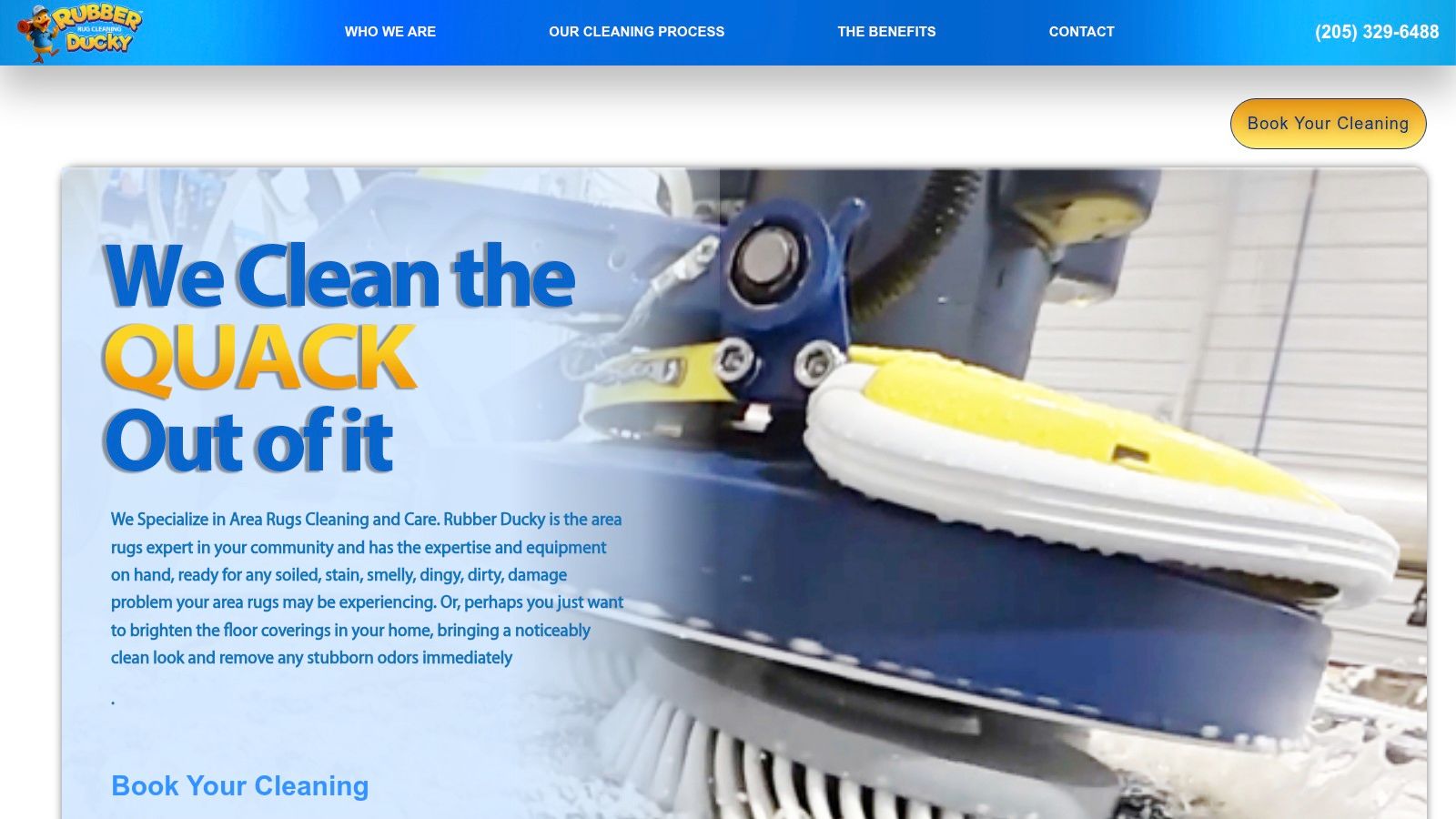
Rubber Ducky Rug Cleaning Birmingham handles pet-stained rugs through a facility-based process rather than a quick surface treatment. The service can include home pickup, inspection, professional rug washing, controlled drying, grooming, and return delivery to the rug's original location.
The first useful distinction is dust removal. Mechanical dusting equipment releases embedded grit, sand, and allergens before washing. Removing that dry soil first helps prevent abrasive particles from circulating through the fibers during wet cleaning.
A controlled rug-washing sequence
After inspection and dusting, the rug enters a custom wash process selected for its construction. Specialized detergents lift soil while the technician accounts for fiber and dye behavior. For pet accidents, targeted enzyme treatment can address organic material associated with urine rather than relying on fragrance.
Mechanical rinsing then removes suspended soil and cleaning residue. The process includes a patented infusion rinse, which is intended to reduce the residue that can attract fresh soil. Full-immersion washing is particularly relevant when urine has traveled beyond the visible face and into the rug's structure.
The final stage is not an afterthought. Climate-controlled drying rooms balance temperature and humidity, while rugs hang straight to dry. Once dry, the team brushes and grooms the rug to restore softness, alignment, and luster. This controlled approach is safer than leaving a heavily saturated rug to dry on a Birmingham floor.
Why pickup and return matters locally
Large rugs are awkward to transport, and many homeowners don't have a suitable place to wash or dry them. Pickup removes that logistical barrier for homes in Birmingham and nearby communities such as Hoover, Vestavia Hills, Mountain Brook, Homewood, Trussville, Pelham, Alabaster, Gardendale, and Helena.
The service handles delicate hand-woven and oriental rugs, wool pieces, modern synthetics, and outdoor rugs, with the method adapted to the material. After cleaning and inspection, the rug can be returned to its original place in the home, ready for normal use.
Professional Restoration vs. Home Cleaning
The right choice depends on the rug's construction, the age of the accident, and whether the smell returns after drying. A washable synthetic mat with a fresh, localized spot may be manageable with careful first response. A wool oriental rug with recurring odor needs a different level of control.
| Aspect | DIY Methods | Professional Rug Cleaning |
|---|---|---|
| Odor source | Often treats the visible surface or masks the smell | Targets organic residue and flushes contamination through controlled washing |
| Fiber safety | Results depend on product choice, pressure, and moisture control | Uses inspection and fiber-specific cleaning methods |
| Rug structure | Household machines may not reach backing or foundation effectively | Facility equipment is designed for complete rug washing and rinsing |
| Drying | Rugs may dry slowly on the floor or in open air | Climate-controlled drying helps manage moisture and shape |
| Stain handling | Repeated attempts can spread the mark or affect dyes | Technicians can select treatment after examining fibers and color stability |
| Convenience | Homeowners move, wet, clean, and dry the rug themselves | Pickup, facility cleaning, grooming, and return delivery reduce the workload |
Professional restoration also covers problems that ordinary cleaning can't correct, such as fraying edges, moth damage, water damage, or a pile that has lost its alignment. If urine treatment reveals dye migration or structural weakness, restoration decisions should follow inspection rather than trial and error.
For Birmingham homeowners, the value is not just a stronger cleaning product. It's the combination of rug-specific assessment, thorough washing, residue removal, and controlled drying.
Restoring Your Birmingham Home's Freshness
Cat urine has a persistent odor because bacterial decomposition, sulfur chemistry, and uric acid residue work together. A quick spray may change the smell briefly, but a rug with recurring odor needs careful inspection and deep, fiber-safe cleaning.
Rubber Ducky Rug Cleaning offers pickup, professional washing, targeted stain and odor treatment, controlled drying, grooming, and return delivery for Birmingham-area homeowners. Schedule a rug pickup or request a cleaning estimate before repeated DIY attempts create additional fiber or dye problems.
Rubber Ducky Rug Cleaning Birmingham provides professional area rug washing, pet stain and odor removal, rug restoration, controlled drying, and convenient pickup and return service. Visit Rubber Ducky Rug Cleaning Birmingham to request an estimate and arrange service for your cat-affected rug.