If you're searching for professional rug cleaning in Birmingham because a clean-looking area rug still smells like dog urine, you're dealing with more than a surface stain. A rug can look spotless while urine residue remains in the pile, backing, or pad beneath it. On a humid morning, after rain, or when indoor air begins moving through the room, that hidden residue can release the smell again.
So, what does dog pee smell like? Fresh urine may seem mild, slightly chemical, or ammonia-like. Older urine can become sharper, more pungent, sulfurous, and musty. For Birmingham homeowners, the important point is that the smell changes as urine ages, and removing it usually requires more than spraying the visible spot.
Why Birmingham Rugs Hold Onto Dog Pee Smell
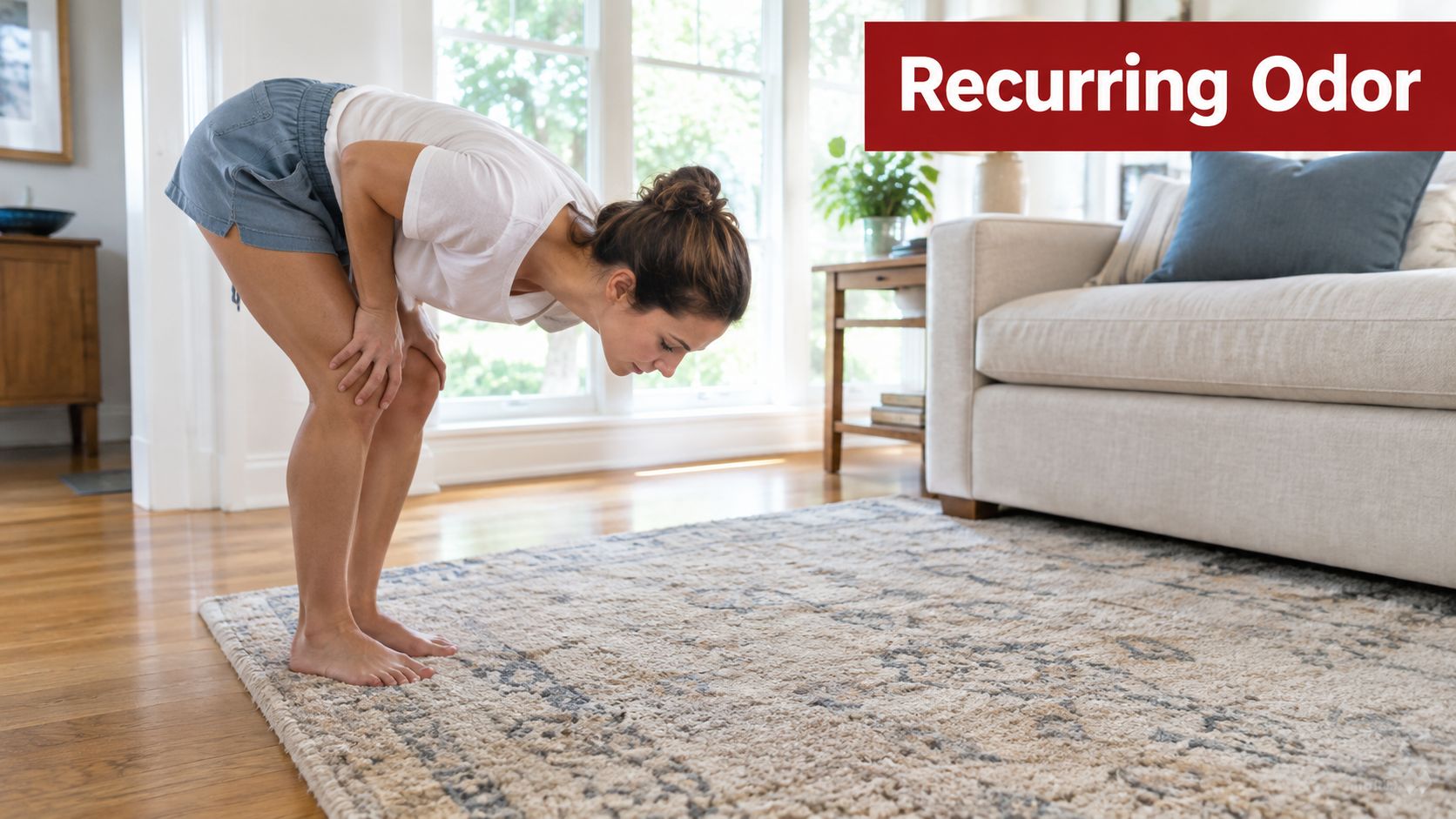
A Birmingham homeowner notices the problem on a humid morning. The living-room rug looks clean, with no yellow mark, damp patch, or recent accident in sight. After rain, however, or when the HVAC moves air across the floor, a sharp odor returns.
The source is often below the visible surface. Humid Birmingham conditions slow drying, while red clay and fine dust carried indoors on paws can settle between the fibers. Wool, cotton, and synthetic rugs are porous, so urine can move into the pile, backing, and pad rather than remaining on the face of the rug.
The clean surface can be misleading
Fresh urine may have a mild ammonia-like scent because bacteria convert nitrogen waste into ammonia. Bacterial activity can begin within 12–24 hours, and the change often becomes clearer by 24–48 hours. A chemistry reference describes fresh urine as having a pH of roughly 6.0–6.5, which can move toward alkaline levels around 8.0–9.0 as it ages. The chemistry of canine urine odor explains why an older accident can smell harsher than a fresh one.
A surface treatment may remove what is visible while leaving this chemical change in lower layers. Once moisture reaches those layers again, the odor can become noticeable from the room above.
Rug construction affects the route urine takes. A tightly woven rug may hold residue near the upper pile. A thicker hand-woven, wool, or tufted rug can let liquid travel into backing materials. Homeowners can compare rug construction types before choosing a cleaning approach, since the fiber and backing determine how far down a professional must work.
Why odor seems to return
Humidity does not create the accident, but it can rehydrate dried residue. Uric-acid salts remain in porous materials and release odor compounds as surrounding air becomes damp. A rug may smell acceptable after a quick clean, then turn pungent during a muggy spell.
Owners tracking where accidents cluster indoors can compare that pattern with outdoor routines using a dog running route map, which helps separate exercise-related marking from a rug that is merely holding old residue. When urine has reached the backing or pad, repeated face-fiber treatments rarely address the full problem. A professional inspection followed by facility cleaning can reach and rinse those structural layers more effectively.
What Fresh and Old Dog Urine Actually Smells Like
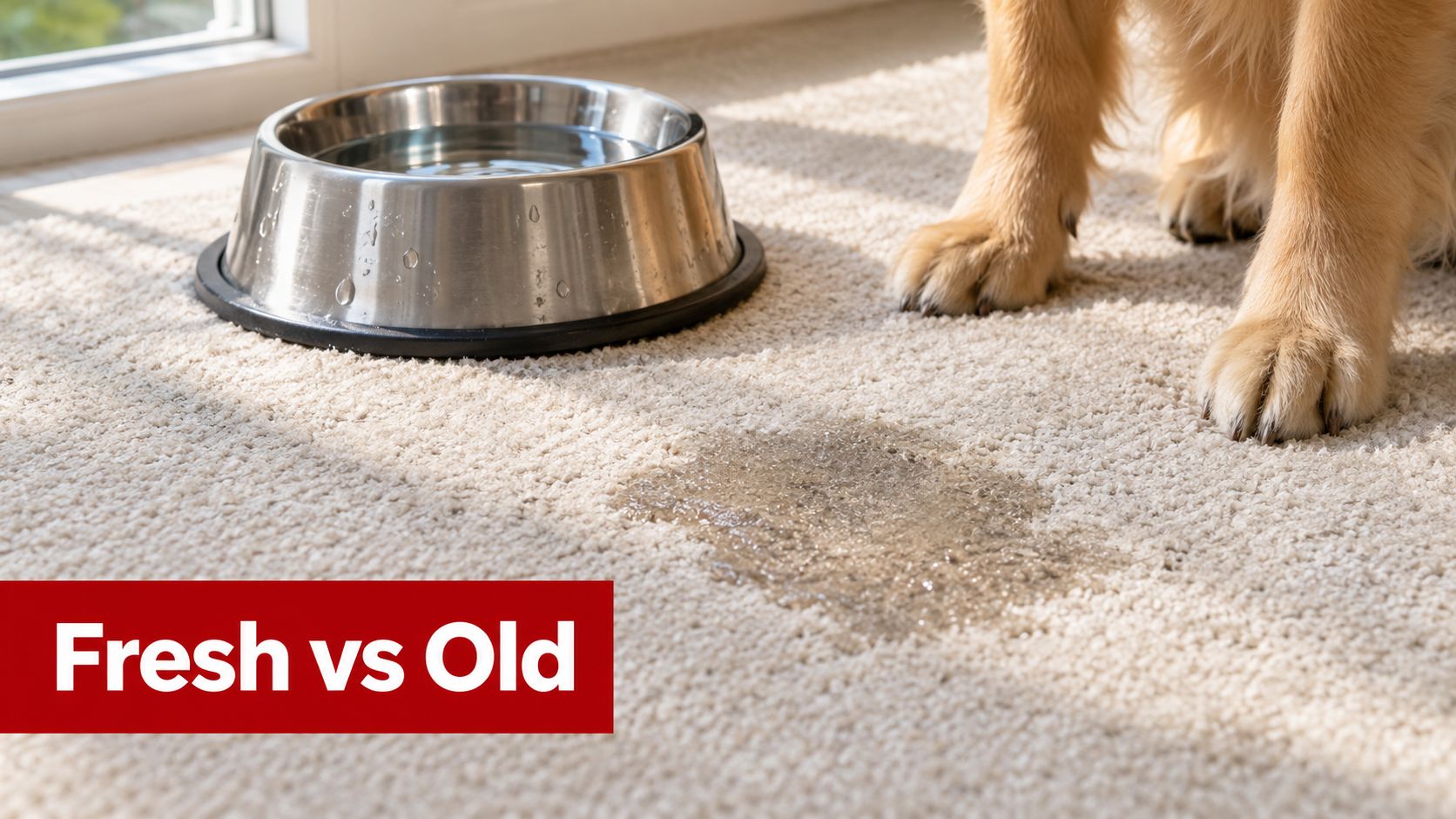
The answer to what does dog pee smell like depends on when you smell it and where the urine has settled. A fresh accident may have a mild, warm, slightly sour scent with a faint chemical edge. It may not immediately resemble the strong odor homeowners associate with an old pet stain.
As bacteria break down urea, the smell changes. The process can begin within 12–24 hours and become more apparent by 24–48 hours, according to a chemistry summary of canine urine odor. That explains why a rug can seem manageable immediately after an accident but become much more unpleasant after it has remained damp or partially dried. This explanation of fresh and aged urine connects the timing to the changing chemistry.
A practical smell guide
- Fresh accident: The odor may be mild, warm, sour, or faintly chemical. You may notice damp fabric more than a strong ammonia smell.
- Aging accident: The scent becomes sharper as urea breaks down and ammonia develops. Some homeowners compare it to a steamy bathroom where the air feels harsh in the nose.
- Older residue: The odor can become more pungent and develop a sulfurous or skunky edge. Sulfur-containing compounds, including reported thiols and methanethiol, contribute to this lingering character. Hill's overview of dog urine odor in carpet describes why the odor profile changes rather than staying the same.
- Dampened old spot: The smell may seem to appear suddenly after humidity rises, even though no new accident occurred. Moisture can reactivate residue held in the rug structure.
Smell isn't a reliable depth test
A strong odor doesn't always mean the visible mark is large. A small accident can wick downward, while a larger surface mark may be easier to remove if it hasn't reached the backing. Conversely, a rug can carry a persistent odor without obvious discoloration.
That uncertainty matters for Birmingham rugs because homeowners often clean the place they can see. Professional rug washing evaluates the whole textile, not just the visible circle. The wash method must account for the fiber, dyes, backing, and the possibility that odor-causing material has travelled below the surface.
The Chemistry Behind the Odor You Keep Noticing
Dog urine odor isn't one chemical with one smell. Urea is an important precursor. Bacteria use urease activity to convert urea into ammonia, which creates the sharp, eye-watering character many homeowners notice as urine ages. One guide reports canine urine containing urea in a range of 9–23 g/L, showing that a substantial odor precursor can be present before breakdown begins. The canine urine chemistry summary explains this transition from relatively mild fresh urine to stronger aged odor.
Uric acid creates a different cleaning challenge. It can form insoluble crystalline residue that bonds to rug fibers and backing. When humidity rises, hygroscopic salts can take up moisture and release volatile odor compounds again. Surface deodorizing may reduce what you smell temporarily, but it may not remove the material that causes the reaction.
A closer look at the odor compounds
| Compound | Smell descriptor | Odor stage | Why it persists |
|---|---|---|---|
| Urea | Little odor before breakdown | Fresh urine | It provides the precursor that bacteria convert into ammonia |
| Ammonia | Sharp, pungent, eye-watering | Aging urine | Bacterial breakdown increases the alkaline, chemical character |
| Uric acid residue | Musty or reactivated urine odor | Dried and older deposits | Crystals can remain attached to fibers and respond to moisture |
| Thiols and mercaptans | Sulfurous, skunky, strongly pungent | Older urine | These compounds add odor notes beyond ammonia |
| Other volatile families | Complex, lingering odor | Aged residue | Analysis has identified sulfides, lactones, pyrazines, and anthranilic acids in urine odor mixtures |
A public patent document summarises analysis identifying several volatile families beyond ammonia, while another pet-science explanation describes dog urine as containing over 100 volatile organic compounds and links recurring odor to uric-acid crystals. The odor-compound analysis shows why treating urine as a simple ammonia problem can lead to incomplete cleaning.
Practical rule: If a rug smells clean only until the room becomes damp, the cleaner probably reduced the surface odor without removing all of the residue below it.
That's why professional dog urine odor treatment should focus on flushing and breaking down residue throughout the rug rather than covering the smell with fragrance.
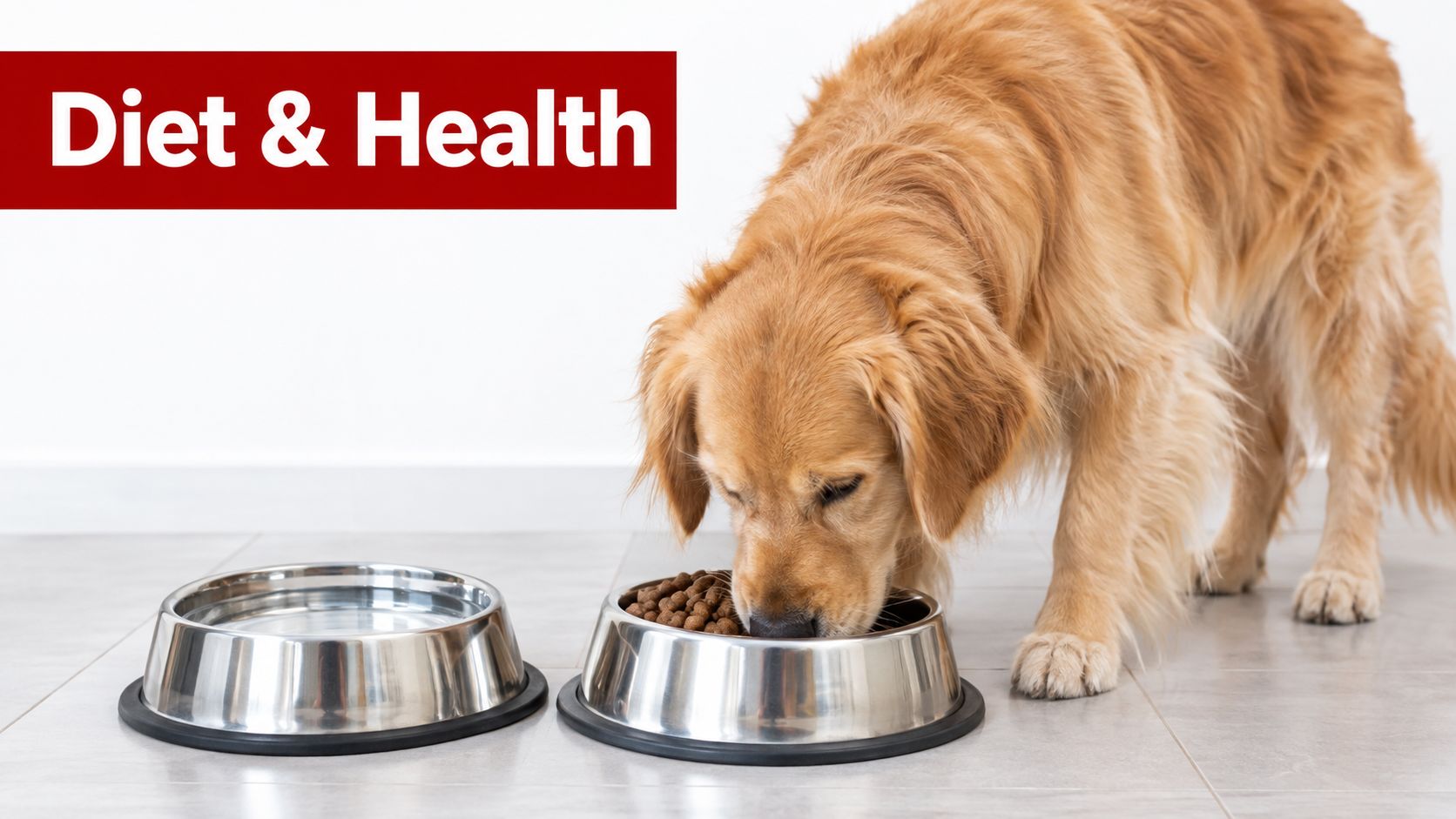
Diet, Hydration, and Health Clues in the Smell
A rug cleaner can remove odor from a textile, but the dog's urine may still smell different from one day to the next. Food, water intake, and health can all affect what a Birmingham pet owner notices. Those changes are useful observations, but they shouldn't be treated as a diagnosis based on smell alone.
Some owners notice a sharper ammonia character when their dog's urine is more concentrated or when the dog eats a protein-heavy diet. Changes in table food can also alter the odor, and sulfurous foods may make the smell seem more pronounced. Darker, concentrated urine may have a stronger medicinal impression than pale, dilute urine.
Smells that deserve attention
A new odor may reflect a recent diet change, but some patterns deserve a veterinary conversation, particularly when the smell appears alongside changes in behaviour or toileting.
- Sweet or fruity odor: A chemical or acetone-like smell should be discussed with a veterinarian, especially if your dog seems unwell.
- Foul fish-like odor: A notably fishy smell, frequent urination, discomfort, or repeated accidents warrants veterinary advice. A practical guide to signs of urinary infection in pets can help owners organise questions before calling a clinic.
- Bloody or coppery appearance: Visible blood or a distinctly copper-like smell shouldn't be explained away as a rug problem.
- New accidents: An older dog that suddenly urinates indoors may need a health assessment rather than punishment or stronger cleaning products.
The rug still needs cleaning, but treating the textile won't address an underlying health issue. Note when the smell changed, where accidents occur, and whether your dog is drinking, urinating, or behaving differently. That information can help a veterinarian while also helping a rug specialist identify which areas require inspection.
Keep the two problems separate
If the dog is healthy and the issue is an old accident, the rug may be the source of the room's odor. If the dog continues to have accidents, even a successfully washed rug can become contaminated again. Birmingham homeowners should arrange veterinary advice for unusual symptoms and professional rug cleaning for residue already held in the textile.
That distinction saves time. You don't want to keep re-cleaning a rug while a medical concern goes unaddressed, and you don't want to assume a dog is ill when the actual issue is a damp, urine-contaminated rug releasing odor from its backing.
How Rugs Trap and Re-Refresh Dog Urine Odor
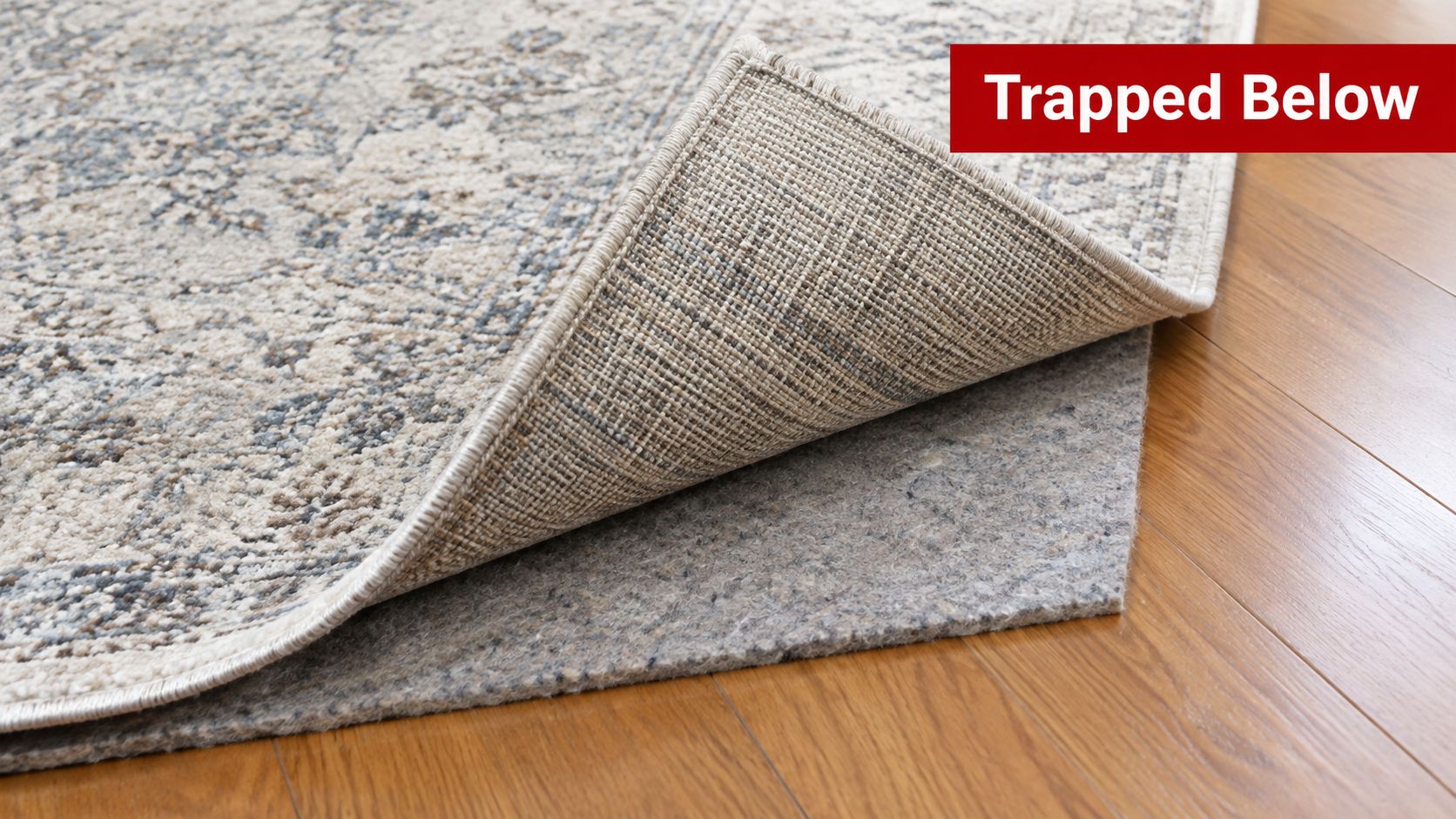
Hard flooring gives liquid fewer places to hide. A porous rug has a pile, foundation, backing, and sometimes a separate pad. When a dog urinates, liquid can wick sideways and downward through those layers. The visible mark may represent only the part that reached the upper surface.
Wool and cotton can absorb moisture into their structure, while synthetic fibres can hold liquid between filaments and against the backing. Dirt makes the situation harder because red clay and fine household dust can combine with moisture and create a dense, soiled environment inside the rug. A homeowner may clean the top and still leave contaminated material underneath.
The reactivation cycle
The recurring pattern is easy to recognise:
- An accident wets the pile. Liquid begins travelling through the fibres and may reach the backing or pad.
- The rug appears dry. Air removes moisture from the surface, but residues remain below.
- Crystalline material stays behind. Standard surface cleaning may remove visible soil without fully removing uric-acid residue.
- Damp air reaches the rug. Humidity, nearby wet cleaning, or moisture in the room can make the residue release odor again.
- The homeowner smells the accident again. The timing makes it seem as though the rug has developed a new problem.
A rug can also smell worse when warm air from an HVAC system passes across it. Air movement distributes volatile compounds through the room, making a previously unnoticed source easier to detect.
Why spot cleaning misses the structure
A spray applied to the face of a rug may not reach the same depth as the original urine. If the accident travelled into the backing, the treatment must travel there too, and the resulting moisture must then be removed safely. Repeatedly wetting only the surface can spread residue or leave the rug damp without solving the source.
Used rugs can also harbour dust-mite allergens. A PubMed-indexed study found that vacuum cleaning, wet cleaning, and shampooing reduced allergen content in rugs, with autoclaving producing the strongest results across its measured outcomes. The rug allergen study reinforces a broader point for pet homes: cleaning needs to reach the material where contaminants are held.
Home Cleaning Methods and Where They Fall Short
A quick home treatment can improve a fresh surface accident, especially when the affected area is small. Birmingham rugs create a harder problem. Humidity can reactivate residue, red clay can add soil that holds organic material, and porous fibres or backing can retain urine below the visible pile. A product may improve the smell at nose level while leaving the source underneath.
Enzymatic sprays are intended to break down organic residue, but a light application may not cover the full affected area. The spray also needs suitable contact time and thorough drying. Controlling both is difficult inside a thick rug, particularly in humid conditions. Repeated surface treatment can therefore produce a cleaner-smelling rug without resolving the contamination held deeper in its construction.
Comparing common approaches
| Home method | What it can do | Where it falls short |
|---|---|---|
| Enzymatic spray | Can help with a fresh, localised accident when applied across the affected area | May not reach deep backing, pad, or widespread old residue |
| Vinegar | Can alter the immediate surface smell | Doesn't reliably remove crystalline residue throughout a rug |
| Baking soda | Can absorb some surface moisture and odor | Doesn't flush contaminated backing or pad |
| Steam cleaning | Adds heat and moisture while extracting some soil | Can drive moisture deeper and may be unsuitable for delicate rug fibres |
| Rental carpet shampooer | Can loosen and remove some surface soil | Often has limited control over rug construction, dyes, backing, and drying |
Baking soda has a limited surface role. Our guide to baking soda for pet stains explains what it can and cannot do when the backing or pad remains affected.
Research on urine-contaminated carpet materials found that cleaning products could mask strong odors at first, while fish-like and mold-like odors later returned in treated carpet and subfloor materials. The carpet odor study helps explain why a Birmingham room may smell better briefly, then worsen after humid air reaches the rug.
A PubMed comparison of 11 products for cat urine odor in carpet, a close but not identical case, found that newer urine-odor products performed better on fresh and old spots and were more effective at preventing odor return. Some products offered little value. The product comparison does not make every treatment suitable for every dog-affected rug, but it supports careful product selection and odor-return testing.
Recurring odor usually requires a structural solution. A controlled facility wash can treat the pile and backing more thoroughly than a face-only application, then remove moisture under managed drying conditions.
How Rubber Ducky Eliminates Dog Pee Smell From Rugs
The practical answer begins with an estimate and a plan, not another random spray. Rubber Ducky Rug Cleaning Birmingham provides pet stain and odor treatment through a rug-specific process that includes pickup, facility washing, controlled drying, inspection, and return delivery.
Pickup protects the home
The service starts when the homeowner schedules a pickup window or requests an in-home quote. The team collects the rug from the Birmingham-area home, including households in Hoover, Vestavia Hills, Mountain Brook, Homewood, Trussville, Pelham, Alabaster, Gardendale, and Helena.
At the door, the rug can be wrapped in plastic to help protect hallways, stairs, and other areas during removal. This matters when a rug is damp, heavily soiled, or carrying a strong odor. The rug then travels to a facility designed for washing and drying rather than being treated in place with a small consumer machine.
Washing addresses more than the face
At the facility, the rug is inspected for fibre type, construction, colour stability, backing condition, and the extent of the pet contamination. Mechanical dusting can release embedded grit, red clay, pet hair, and allergens before washing begins.
The rug is then immersed in controlled, pet-safe cleaning solutions. A targeted enzyme-based deodorizing stage is used to address organic pet residue, while thorough rinsing helps pull loosened material away from the fibres and backing. The objective isn't to perfume the rug. It's to remove the residue that allows the odor to return.
A rug that smells clean only while it's dry needs residue removal and controlled drying, not a stronger fragrance.
Controlled drying completes the work
Drying is part of odor treatment. A rug that remains damp can develop renewed odor, especially in a humid Birmingham home. Climate-controlled drying allows the rug to dry more evenly, while careful positioning helps protect its shape and reduce stress on the fibres.
After drying, the rug is inspected, groomed, and vacuumed before wrapping. Restoration-related attention may include grooming the pile or identifying issues such as worn edges, fraying, or backing damage. The cleaned rug is then returned to its original location, with placement guidance where needed.
A professional facility wash won't replace veterinary care if a dog has a health issue, and it can't prevent a new accident. It can, however, address the contaminated rug itself at a depth that household spot cleaning often can't reach.
Rubber Ducky Rug Cleaning Birmingham offers home pickup, facility rug washing, pet odor treatment, controlled drying, grooming, and return delivery for Birmingham-area homeowners dealing with recurring dog urine smell. Visit Rubber Ducky Rug Cleaning Birmingham to request a rug cleaning estimate and schedule your pickup.