

If you're in Birmingham looking at a hand woven silk rug and wondering whether it needs simple care or professional cleaning, you're in the right place. This is a common situation in local homes. A beautiful silk rug sits in a living room or bedroom, then everyday life starts catching up with it. Red-clay soil at the entry, summer humidity, pet traffic, and regular foot traffic all leave their mark faster on silk than most homeowners expect.
Silk rugs confuse people because they can look sturdy and delicate at the same time. That's true. A hand woven silk rug can hold astonishing detail and still need gentler handling than wool or synthetic rugs. Once dirt settles into the pile, or a spill reaches the foundation, the wrong cleaning method can do more harm than the original problem.
Homeowners across Birmingham, Hoover, Vestavia Hills, Mountain Brook, Homewood, Trussville, Pelham, Alabaster, Gardendale, and Helena usually want the same answers. Is this rug real silk. Is it safe to clean at home. What should I do after a spill. When is pickup and professional washing the smarter move. Those are the questions that protect both appearance and value.
Why Birmingham Homeowners Choose a Hand Woven Silk Rug
A lot of Birmingham homeowners first fall for silk the same way. They see one rug in angled light, notice the pattern sharpen and soften as they walk past it, and realize it doesn't look anything like a machine-made rug from a big store. Then real life steps in. Shoes come in from the yard, the dog claims a favorite corner, and the rug that looked like art starts collecting the habits of the household.
That's where silk becomes a different kind of ownership decision. In Birmingham homes, rugs often deal with a mix of tracked soil, humid air, and uneven use from room to room. A hand woven silk rug doesn't hide that wear as easily as heavier wool. It tends to show traffic paths, light soiling, and dullness sooner. That isn't a flaw. It's part of owning a finer textile.
Why silk stands apart in busy Southern homes
Silk reflects light differently from wool and synthetics, so homeowners often notice changes before a rug is badly damaged. A hallway runner may start looking flat in one lane. A dining room rug may lose some luster near chair movement. In Mountain Brook or Vestavia Hills, large windows can also make one side of the rug look different from the other during the day.
Practical rule: If a silk rug looks dull, sticky, stiff, or uneven after routine vacuuming, don't assume it just needs stronger cleaning. Those are often signs that the wrong home method could make the problem worse.
Many Birmingham homeowners choose silk because they want detail, softness, and a more refined finish underfoot. They keep it in lower-traffic rooms, formal spaces, primary bedrooms, or carefully used sitting rooms. Others inherit one and need to learn quickly what it's made of and how to care for it without risking the pile or dyes.
The questions careful owners usually ask
Before any cleaning decision, a simple framework is needed:
- Material questions matter first. Is it all silk, silk pile on cotton foundation, or a silk-look substitute.
- Condition questions come next. Is the issue loose dust, surface spotting, deep soil, odor, or moisture exposure.
- Service questions follow. Can gentle home care help, or is pickup and professional washing the safer choice.
For homeowners in Birmingham, the goal isn't just keeping a silk rug pretty. It's avoiding the kind of avoidable damage that turns a cleanable rug into a restoration problem.
What Makes a Hand Woven Silk Rug Different
A hand woven silk rug behaves less like a standard room rug and more like a finely made fabric laid on the floor. That is the point many Birmingham homeowners miss at first. It can look strong because the pattern is dense and the surface shines, yet the fiber itself is far less forgiving than wool or a synthetic blend.
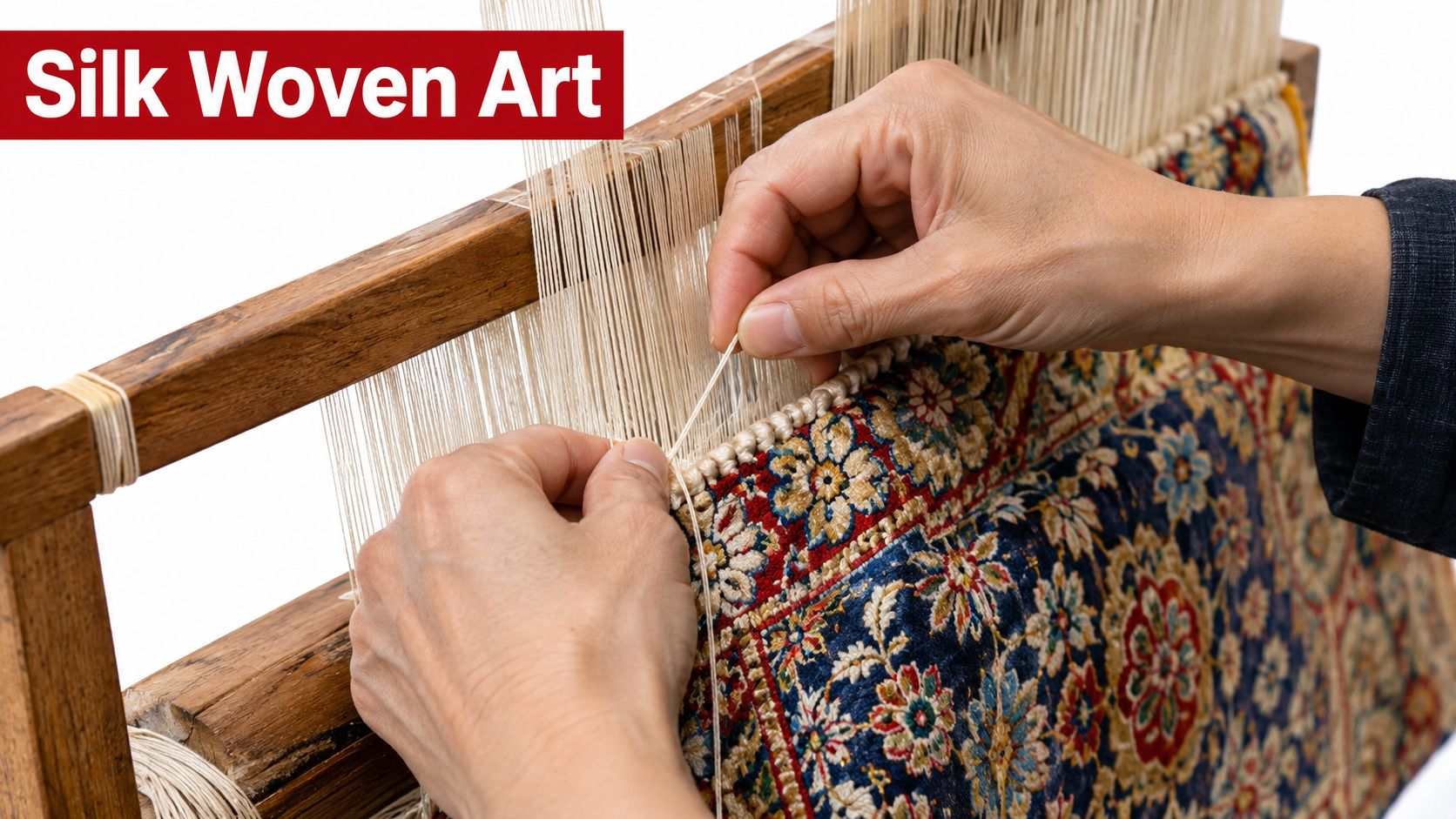
Silk fiber changes what a weaver can do
Silk is extremely fine, and that fine fiber lets a weaver draw detail the way a sharp pencil draws a cleaner line than a thick marker. Small curves, narrow borders, and tight floral elements can be rendered with unusual precision. That is why silk rugs often look almost illuminated from one angle, then quieter from another.
Silk also reflects light differently from other fibers. The sheen shifts as the pile leans in different directions. Owners often read that as beauty first, which is fair, but it also means traffic marks, residue, and pile distortion can show sooner. In a Birmingham home with red clay dust at the entry or summer humidity working into the base of the rug, that sensitivity matters because soil and moisture tend to announce themselves earlier on silk.
Pile, foundation, and the part owners need to know before cleaning
A hand woven silk rug may be all silk, or it may use silk in the pile with cotton in the foundation. The pile is the visible face. The foundation is the grid underneath that gives the rug its shape and holds each knot in place.
That construction affects what happens during cleaning. A cotton foundation can react to moisture differently from silk pile. Silk can lose luster or texture if handled too aggressively. If the rug picks up Birmingham soil near doors, pet residue, or dampness from our humid months, the problem is not only what sits on top. It can travel down into the structure.
If you want a clearer picture of how these builds differ, this rug construction types overview explains the main hand-made structures. For a broader explanation of how knotting creates the rug itself, this hand knotted rug craftsmanship guide gives useful background in plain language.
Why craftsmanship affects value and risk
Silk rugs carry value because fine materials and hand work are slow to produce. Historical silk weaving traditions in China, Persia, Turkey, and India developed around precision, not speed, as noted in this historical silk weaving record. That helps explain why an authentic hand woven silk rug should be treated as a crafted textile with a floor function, not as a routine household rug.
For a homeowner, that changes the decision process. If you are dealing with loose surface dust, careful low-suction vacuuming may be enough. If you are dealing with stickiness, odor, a spill that has wicked into the base, or stiffness after a home spot treatment, the risk shifts. At that point, trying to clean harder at home can lower appearance and value faster than the original soil did.
A practical comparison
| Feature | Hand woven silk rug | Typical synthetic rug | What this means for cleaning decisions |
|---|---|---|---|
| Fiber character | Fine, smooth, reflective | Thicker, more uniform | Silk shows change sooner, so dullness or streaking should be treated as a warning sign, not a cue to scrub harder |
| Design structure | Dense hand detail and precise knot work | Machine-made or less intricate patterning | Deep soil can hide inside detailed areas, where rough brushing can distort the pattern edges |
| Base materials | Often silk pile, sometimes cotton foundation underneath | Usually more moisture-tolerant man-made materials | Water use has to be controlled carefully because the face and the base may react differently |
| Tolerance for home cleaning | Low | Higher | DIY care is best kept to dry soil removal and immediate blotting, not heavy wet cleaning |
A simple rule helps. The more a rug's beauty depends on fine silk, sharp detail, and changing sheen, the less room there is for trial-and-error cleaning. In Birmingham, where clay soil, window light, and humid weather all work against delicate fibers, professional washing becomes the safer choice sooner than many owners expect.
How to Identify Quality and Spot Common Issues in Birmingham
A Birmingham homeowner usually sees the top of a rug first. The better test is to slow down and inspect what the rug is telling you from several angles. Silk gives clues if you know where to look.

What real silk quality looks like
High-quality silk rugs usually show a crisp, legible pattern on the back, not a muddy outline. Knots look small and dense. The surface sheen changes as you move around the rug. That shifting appearance is often what owners love, but it's also what can make wear, residue, and crushing stand out.
Independent rug guidance notes that high-end silk rugs may reach roughly 1,500 to 3,000 knots per square inch, a level associated with sharper motif definition and smoother surface rendering, according to this silk rug knot density reference.
A practical authenticity check
If you're buying, inheriting, or deciding how to clean a rug, use this compact checklist:
- Back pattern clarity means more than shine. A sharp pattern on the reverse side usually signals finer hand work.
- Angle-changing sheen is a good sign. Real silk tends to shift visually rather than look flat or metallic.
- Fringe construction deserves a close look. Original fringe is part of the rug's structure. Sewn-on fringe can be a warning that you're looking at repair, replacement, or decorative finishing rather than original construction.
- Fiber description should be specific. "Silk rug" can mean all silk, silk pile on cotton foundation, or a blend.
A rug that glitters under overhead light isn't automatically valuable. Birmingham buyers do better when they pay for density, design clarity, and verified materials, not just surface shine.
Common local issues that show up fast
Silk tends to reveal household problems quickly. In Birmingham homes, these are the issues owners often notice first:
| Local issue | What it may look like on silk |
|---|---|
| Entry soil and red-clay residue | Dull traffic lanes or gritty feel |
| Humid conditions | Slight waviness, odor retention, slower drying after spills |
| Pet use | Repeated spotting, odor pockets, texture changes |
| Sun exposure | Uneven fading or side-to-side color difference |
| Foot traffic | Flattened pile and loss of crisp surface definition |
If one part of the rug looks darker, flatter, or shinier than the surrounding field, inspect before cleaning. On silk, visual change often shows up before structural damage becomes obvious.
A homeowner in Homewood or Hoover might assume these are cosmetic issues. Sometimes they are. Sometimes they signal that dry soil has worked downward or that past spot cleaning left residue in the pile. Silk doesn't hide those mistakes for long.
Routine Care That Protects Delicate Silk Fibers
Routine care for silk should feel gentle, not aggressive. That's the right instinct. Most damage doesn't come from neglect alone. It comes from using the wrong tool, too much moisture, or a cleaner that leaves the rug worse than the stain.
Safe care versus common mistakes
Here's the basic comparison Birmingham homeowners need:
- Use suction-only vacuuming when possible. Avoid a beater bar or power head.
- Rotate the rug periodically if one side gets stronger window light or more foot traffic.
- Use a pad underneath to reduce stress from movement and compression.
- Keep humidity stable indoors as much as your home allows.
On the other side of that comparison, there are habits that frequently hurt silk:
- Scrubbing spots roughs up the pile and can blur the surface.
- Heat-based cleaning can stress fibers and dyes.
- Overwetting raises the risk of distortion, dye movement, and lingering odor.
- Hanging a damp rug casually can pull the structure out of shape.
Why moisture changes the rules
Silk is a protein fiber, and it behaves differently from many homeowners expect. Care guidance notes that silk can be about 3× weaker in a wet state and is prone to distortion under its own weight, which is why recommendations avoid heat, scrubbing, and hanging a damp silk rug, as explained in this silk rug cleaning care guide.
That one fact explains a lot of problems seen after home cleanup attempts. A spill happens. Someone blots, then scrubs harder, then brings in warm water or a household machine. The rug may look better for an hour, but the pile can bloom, the shape can shift, and hidden residue can stay behind.
Gentle maintenance protects silk because it removes loose dust without forcing moisture or friction deeper into the rug.
A routine that works in Birmingham homes
A realistic care rhythm is simple:
- Vacuum lightly and carefully, especially near the edges and fringe.
- Address dry soil early, before it gets pressed in by regular traffic.
- Watch for dampness after spills or pet accidents and don't assume the surface tells the whole story.
- Pause if the rug feels stiff or looks uneven after cleaning, because that's often the moment to stop home care.
This kind of maintenance won't replace washing when a rug is soiled. It does reduce the chance that everyday Birmingham conditions turn a fine silk rug into a restoration project.
Spot Treatment Storage and Stain Prevention for Silk Rugs
A common Birmingham scene goes like this. Rainy shoes come in through the back door, a cup tips on the rug, and someone reaches for the nearest cleaner under the sink. On wool, that choice can already be risky. On silk, it can change the pile, set residue into the foundation, or spread dye before the spot even looks serious.
The safest first response is calm, quick, and limited.
What to do in the first minutes
Blot with a clean white cloth or plain towel. Press straight down, lift, switch to a dry area, and repeat. That motion works like using kitchen paper on a spill. You are drawing liquid up, not pushing it sideways through the fibres.
If you feel tempted to add a product, pause first. A very small amount of cold water may be appropriate for a minor fresh spot, but only if you are confident the dyes are stable and the spill has stayed near the surface. If you are not sure, stop there. This guide to silk rug colorfastness testing before spot cleaning explains why that check matters.
One careful round of blotting is often the limit for safe DIY silk care.
What usually makes the problem worse
These home remedies cause trouble more often than they solve it:
- Hot water, which can disturb dyes and leave the area looking uneven
- Household carpet shampoos, which often leave residue in fine silk pile
- Scrubbing or brushing, which can roughen the surface and change the light reflection
- Portable carpet machines, which may wet the face yarns without properly flushing or drying the inner structure
- Powders and deodorisers, which can settle into the rug and mute the sheen
Pet accidents are a good example of hidden risk. The surface may feel nearly dry, but moisture can stay lower down where odour develops later. Birmingham's humidity makes that harder, because dampness does not always leave a silk rug as quickly as homeowners expect.
Why prevention saves money on silk
Silk rewards prevention more than rescue. A hand woven silk rug carries its value in fine fibres, skilled weaving, and clean definition of pattern. Once a spill is driven deeper by scrubbing, soap, or repeated wetting, the fix is rarely simple.
That is why entry control matters in Birmingham homes. Red-clay soil acts like fine grit. It looks harmless at first, but under foot traffic it works into the pile like a mild abrasive. Add indoor humidity, occasional damp shoes, or a pet area near an exterior door, and a small cleaning mistake can turn into colour, odour, or texture trouble.
A useful rule is simple. If the problem involves more than surface spotting, DIY care should stop and value protection should take over.
Smart storage and local prevention steps
For homes in Hoover, Vestavia Hills, Mountain Brook, and nearby areas, these habits do steady protective work:
- Use walk-off mats at entrances to catch clay soil and street grime before it reaches the silk
- Keep food, plant watering, and pet bowls away from the rug when possible
- Use furniture pads to spread weight and reduce pressure marks
- Store only after proper cleaning, because hidden soil attracts more wear during storage
- Roll the rug instead of folding it, which helps prevent sharp creases
- Wrap in breathable material such as cotton or another air-permeable covering
- Choose a dry indoor space, not a garage, loft, or basement where Birmingham moisture swings can stress the fibres
Storage works like putting a good suit away clean and dry. Fold it damp or dirty, and the problem waits for you. Roll a silk rug properly, keep air moving around it, and you lower the chance of mildew, yellowing, and hard-set creases.
Careful restraint protects silk. Quick DIY stain removal often feels productive, but knowing when to stop is usually what preserves the rug's condition and resale value.
When Your Silk Rug Needs Professional Cleaning and Repair
The hardest decision for many homeowners isn't how to care for silk day to day. It's knowing when home care has reached its limit. With silk, that line comes sooner than people think.

Signs it's time to stop DIY care
Professional attention is usually the safer move when you notice any of the following:
- Persistent odor after blotting or surface drying
- Deep soil that leaves the rug dull even after careful vacuuming
- Color change or dye movement
- Fringe fraying or edge weakness
- Water exposure
- Texture change after a spill
- Repeated pet incidents in the same area
A current rug-industry guide points out that maintenance and restoration risk is often underexplained, especially for owners dealing with pet accidents and high foot traffic, in this handmade silk rug care discussion. That's exactly the point where many Birmingham homeowners need a clearer answer. If the issue has moved beyond surface dust, home equipment often isn't precise enough for silk.
Why home carpet cleaners fall short
Wall-to-wall carpet machines are designed for installed carpet, not fine hand woven textiles. They typically don't remove heavy embedded dry soil first. They may leave detergent behind. They also don't give you controlled drying for a delicate rug that can react badly to lingering moisture.
Professional rug washing is different because the rug is treated as a textile, not just a floor surface. One local option homeowners use for this type of work is silk rug cleaning service, where the process is built around fiber identification, washing, rinsing, and drying for delicate construction.
What the Birmingham service process should include
For silk, the right process matters more than the marketing. Homeowners should look for a service that includes:
- Pickup from the home, so the rug isn't dragged, folded badly, or handled roughly
- Inspection before washing, including attention to pile, fringe, foundation, and dye concerns
- Mechanical dusting tumblers to release embedded grit before wet cleaning
- Wash tanks with specialized detergents chosen for the rug's fibers and condition
- Thorough rinsing, because residue attracts new soil
- Climate-controlled drying, with the rug hung straight
- Final grooming and return placement back in the home
That process fits the realities of Birmingham, Homewood, Trussville, Pelham, and nearby areas where rugs collect outdoor soil, household moisture, and daily wear in ways spot treatment can't fully solve.
If a silk rug has odor, deep grit, or moisture in the foundation, cleaning isn't just about appearance. It's about preventing more damage during the next month of use.
Choosing the Right Rug Cleaning Service in Birmingham
A good silk rug decision usually comes down to four things. Know what the rug is. Notice problems early. Use gentle routine care. Bring in professional washing before dirt, odor, or moisture become structural issues.
For Birmingham homeowners, the right cleaning company shouldn't treat a hand woven silk rug like standard carpet. You want fiber-specific inspection, safe detergents, complete rinsing, controlled drying, and a process that includes pickup and return. Convenience matters, but silk care matters more.
What to ask before you hand over a silk rug
Use these questions when comparing services:
| Ask this | Why it matters |
|---|---|
| Do you clean rugs in a rug washing facility? | Silk needs more control than in-home carpet cleaning |
| Do you inspect fiber type before washing? | Silk, blends, and substitutes need different handling |
| How do you dry the rug? | Drying affects shape, finish, and odor outcome |
| Can you handle fringe, edge, or minor restoration issues? | Cleaning often reveals repair needs |
| Do you offer pickup and return? | Less handling risk for a delicate rug |
A careful homeowner in Birmingham doesn't need flashy promises. You need a process that respects how silk is made and how easily avoidable damage happens.
If your rug still looks bright, stable, and dry after gentle maintenance, keep caring for it cautiously. If it smells off, feels gritty, looks uneven, or has taken a spill that went deeper than the surface, professional washing is usually the safer financial decision.
Rubber Ducky Rug Cleaning Birmingham provides pickup, rug washing at a dedicated facility, controlled drying, grooming, and return delivery for delicate rugs in Birmingham-area homes. If your hand woven silk rug has trapped soil, odor, spill damage, or needs careful washing that protects its fibers and finish, visit Rubber Ducky Rug Cleaning Birmingham to request an estimate or schedule pickup.