If you're searching for a rug edge protector in Birmingham, you may be dealing with a small fray that looks harmless but is already exposing the rug's foundation. A loose corner, separated binding, or broken side stitch can collect grit, catch on a vacuum, and worsen each time someone walks across the rug.
The right response depends on what the rug is made of and how the edge failed. A low-value machine-made synthetic rug may tolerate a simple protective strip, while a hand-knotted wool or antique rug may need professional stabilization, binding, or restoration. The difference matters because an adhesive shortcut can hide damage while making later repair more difficult.
The Frayed Edge That Started It
A Homewood homeowner noticed a short fray along a wool runner after the family dog charged through the hallway for the day's usual indoor sprint. Afternoon light fell across the old hardwood, and a throw blanket partly covered the loose edge. The damage looked minor, so the homeowner reached for a hardware-store edge strip.
That instinct is understandable. A store-bought strip appears to hold everything in place, and on a modern synthetic rug with a clean, stable backing, it may provide temporary containment. But the runner in this example was a valuable hand-knotted Persian with loose foundation threads visible near one corner. Sticking a rigid strip over that area wouldn't restore the damaged structure. It would just press the problem flat and make the foundation harder to inspect.
A different rug in the same home might have presented a different decision. A machine-made polypropylene rug with light surface fraying, intact backing, and no exposed foundation is more forgiving. Its edge can sometimes accept a compatible tape or strip after careful cleaning and drying, provided the protector doesn't compress the pile or leave gaps where grit can collect.
The construction determines the risk
The edge isn't just the part that makes a rug look finished. It contains the perimeter, protects the backing and pile, and absorbs abuse from walking, vacuuming, moving furniture, and repeated handling. The U.S. National Park Service textile-care guidance also warns that textile edges and corners are vulnerable to stretching and tearing, and recommends supporting the entire textile rather than lifting it by an edge.
That leaves the homeowner with a practical question. Which intervention matches this rug's construction, value, and the way the edge failed?
What Rug Edge Protection Actually Does
A rug edge protector should perform a structural job. Binding, edging, and serging wrap or stitch over an exposed perimeter to limit unraveling, contain the backing and pile, and reduce damage caused by daily use.
The perimeter carries tension between the rug's main body and its outer finish. In a woven rug, the warp runs lengthwise and the weft runs across it. Fringe may be the continuation of warp threads beyond the woven body, while a selvedge is the finished side edge that helps keep the woven structure stable. Serging is an overlock-style stitch that wraps around a cut edge, while binding uses fabric or another suitable material to cover and secure that edge.
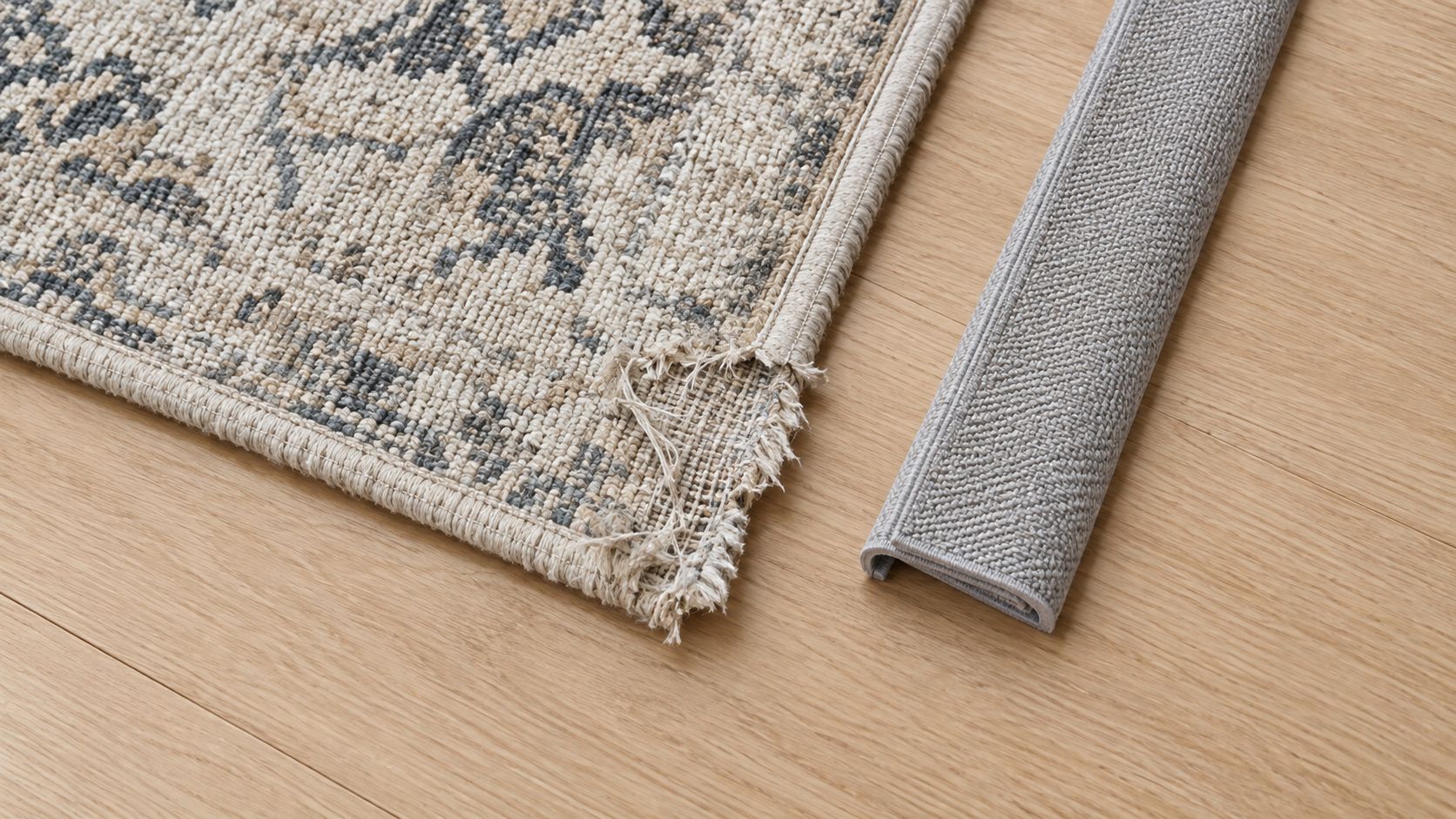
A sound intervention needs to do more than conceal loose fibers:
- Contain the perimeter: It should stop existing fibers from spreading or pulling farther into the rug.
- Support the structure: It should preserve suitable tension without making the edge rigid.
- Limit soil entry: It should reduce the spaces where grit can lodge between the backing, pile, and edge finish.
- Withstand use: It needs to remain secure through foot traffic, vacuuming, furniture movement, and appropriate professional cleaning.
Practical rule: If the edge is actively unraveling, protection comes after stabilization. A strip placed over an unstable foundation is a cover, not a repair.
This is why edge work belongs inside a professional rug-care decision, especially for wool, silk, handwoven, or older rugs. Owners who want a broader explanation of how fabric edges are secured can also review this finish quilt edges guide, although rug construction requires a more specialized assessment than ordinary fabric finishing.
Edge Fix Methods Birmingham Owners Try
Birmingham homeowners usually encounter four choices: sewn binding, serging, fabric edge tape, and peel-and-stick plastic or metal strips. They don't behave the same way because they attach to the rug differently.
Binding wraps the exposed edge with fabric and secures that wrap by stitching. It can replace a failed outer finish and provide a neat, flexible perimeter when the material, color, width, and tension suit the rug. Professional binding is generally the stronger choice for a machine-made rug that has been cut, a runner requiring a new finished side, or a synthetic rug with stable backing.
Serging uses yarn and overlock stitching to cover the edge. It works well on many machine-made rugs and can suit some hand-tufted rugs where the canvas backing and yarn structure allow the stitches to hold securely. It's less appropriate when the foundation itself is breaking apart or when the edge requires hand-matched finishing.
Fabric edge tape can be useful on a modest synthetic rug with light fraying and a clean, sound backing. It's less dependable on wool, hand-knotted rugs, and areas exposed to frequent washing. Tape may sit on top of the damage without restoring the missing side structure.
Peel-and-stick plastic or metal strips are rigid protective products. Commercial PVC profiles may be designed for floor coverings up to approximately 6 mm thick, with example profiles around 18 mm wide at the top and 30 mm at the base. Those specifications come from a product example, not a universal fit, so a thick pile or uneven backing can create a poor channel fit and premature failure. See the practical distinction between repair and replacement in this guide to repairing frayed rug edges.
| Method | Best Rug Type | Expected Lifespan | Risk to Foundation |
|---|---|---|---|
| Sewn binding | Stable machine-made or synthetic rugs needing a finished edge | Long-term when correctly matched and maintained | Low when professionally tensioned |
| Serging | Machine-made rugs and suitable tufted constructions | Long-term with compatible yarn and secure backing | Moderate if the backing is weak |
| Fabric edge tape | Minor fraying on stable, lower-value synthetic rugs | Temporary to medium-term | Moderate, especially with poor adhesion |
| Adhesive plastic or metal strip | Low-pile synthetic edges with compatible thickness | Often temporary in active traffic or cleaning zones | High on delicate or foundation-exposed rugs |
The hidden variable is rug construction. A product that grips a polypropylene flatweave may shear against a wool foundation, lift after cleaning, or trap grit beneath the edge.
Matching the Right Fix to Your Rug
Start with the rug, not the product package. A machine-made synthetic rug with light fraying, intact backing, and no exposed foundation can often accept compatible iron-on or fabric binding tape as a limited protective measure. The attachment surface must be clean, dry, and free from detergent residue, and the tape must fit without folding the pile.
A hand-tufted wool rug needs more care. Its yarns pass through a backing, commonly a canvas-like structure, so serging may provide better containment than a superficial adhesive strip when the backing is sound. If the canvas has separated or the edge has begun to deform, the rug needs assessment before stitching.
Hand-knotted and antique rugs are a different category. Their exposed cotton or silk warp and weft form part of the foundation, and the side wrapping may be essential to keeping that foundation stable. Re-wrapping, custom wool binding, or hand finishing that matches the original edge is more appropriate than a generic protector. The Institute of Conservation advises against adhesives and adhesive tape for carpets and rugs because they can alter fibers, leave residue, complicate later conservation, and create a stiff repair zone. Its guidance on carpets and rugs conservation care supports a minimal, reversible approach.
Use age and traffic as decision filters
Age alone doesn't determine the method, but it changes how cautious the assessment should be. A newer synthetic rug with minor edge wear is usually easier to stabilize than an older handwoven piece with brittle foundation threads. A hallway runner, doorway edge, or sofa front receives more concentrated abrasion than a bedroom rug, and pet traffic adds repeated pulling, soil, and moisture exposure.
Industry-reported estimates have associated properly bound carpets with service-life improvements of up to 25% and up to 30%, as reported in a published account referencing the Carpet and Rug Institute and Flooring America estimates (published discussion of carpet binding). Those figures aren't universal laboratory results. They only make practical sense when the reinforcement suits the fiber, backing, traffic, cleaning method, and edge condition.
| Rug Construction | Damage Level | Recommended Edge Fix | Expected Durability |
|---|---|---|---|
| Machine-made synthetic | Light loose fibers, stable backing | Compatible fabric tape or machine binding | Medium to long-term with proper installation |
| Machine-made synthetic | Open cut edge or separated binding | Professional binding or serging | Long-term when tension is even |
| Hand-tufted wool | Loose outer yarn, intact canvas | Compatible serging after inspection | Medium to long-term |
| Hand-knotted wool | Exposed foundation or failed side wrap | Custom re-wrapping or hand binding | Long-term when matched to the original structure |
| Antique or silk rug | Active unraveling, brittle edge, dye concern | Conservation-led stabilization and restoration | Determined by condition, not product type |
For a deeper explanation of the terminology and process, homeowners can read what rug binding involves. The important decision comes first: protect a stable edge, or restore an unstable one.
When Edge Protectors Can Damage a Rug
Adhesive-backed edge tape, glue-on corner guards, and peel-and-stick binding strips look clean because they hide loose material immediately. That visual improvement can be misleading. Adhesive may bond to fibers, leave residue, stiffen a repair area, and interfere with later washing or conservation.
The risk is highest on wool, silk, hand-knotted, antique, and foundation-exposed rugs. The Institute of Conservation specifically cautions against adhesive products, including temporary adhesive tape, because removal can pull fibers and residues can attract soil. A rigid bonded strip can also prevent a hand-knotted side edge from flexing naturally, transferring stress inward instead of allowing the perimeter to move with the rug.
Glue creates another problem. Household glue, cyanoacrylate, and heat can produce localized stiffening, staining, embrittlement, irreversible fiber bonding, or melting. Natural dyes may react unpredictably, and a residue line can remain visible even after professional cleaning. These aren't cosmetic concerns. They can change how the edge responds to tension and moisture.
If you can see the foundation, stop shopping for a peel-and-stick fix and arrange an assessment.
Birmingham rugs also encounter tracked grit, pet debris, and changing indoor moisture conditions. An adhesive edge can seal contamination against the perimeter, while a gap beneath a poorly fitted strip can collect abrasive soil. Moisture or residue on the attachment surface can prevent bonding in the first place, and later cleaning may cause lifting, channel distortion, or adhesive creep.
A damaged edge should be documented before anyone applies a product. Look for loose warp threads, missing side cords, failed overcast stitching, detached fringe, exposed backing, and curling corners. Research on stitched textile edges supports stitching as a dependable way to control fraying, while conservation practice favors removing only unstable loose material and using compatible stabilization rather than adding a hard cover.
The simple rule is clear. Don't apply adhesive edge products when the foundation is visible, the rug is delicate or old, or the fibers are wool, silk, or undyed cotton. A professional restoration decision costs less risk than removing a failed adhesive repair from a valuable rug.
Applying and Verifying an Edge Fix
A successful edge job starts with inspection and preparation. The application itself is only one part of the work.
Document the failure first
Photograph the edge in close detail, preferably with light coming across the surface so lifted fibers and gaps show clearly. Measure the exposed area, note whether the foundation threads are intact or broken, and identify whether the defect is loose weft, exposed warp, failed stitching, detached fringe, or simple surface abrasion.
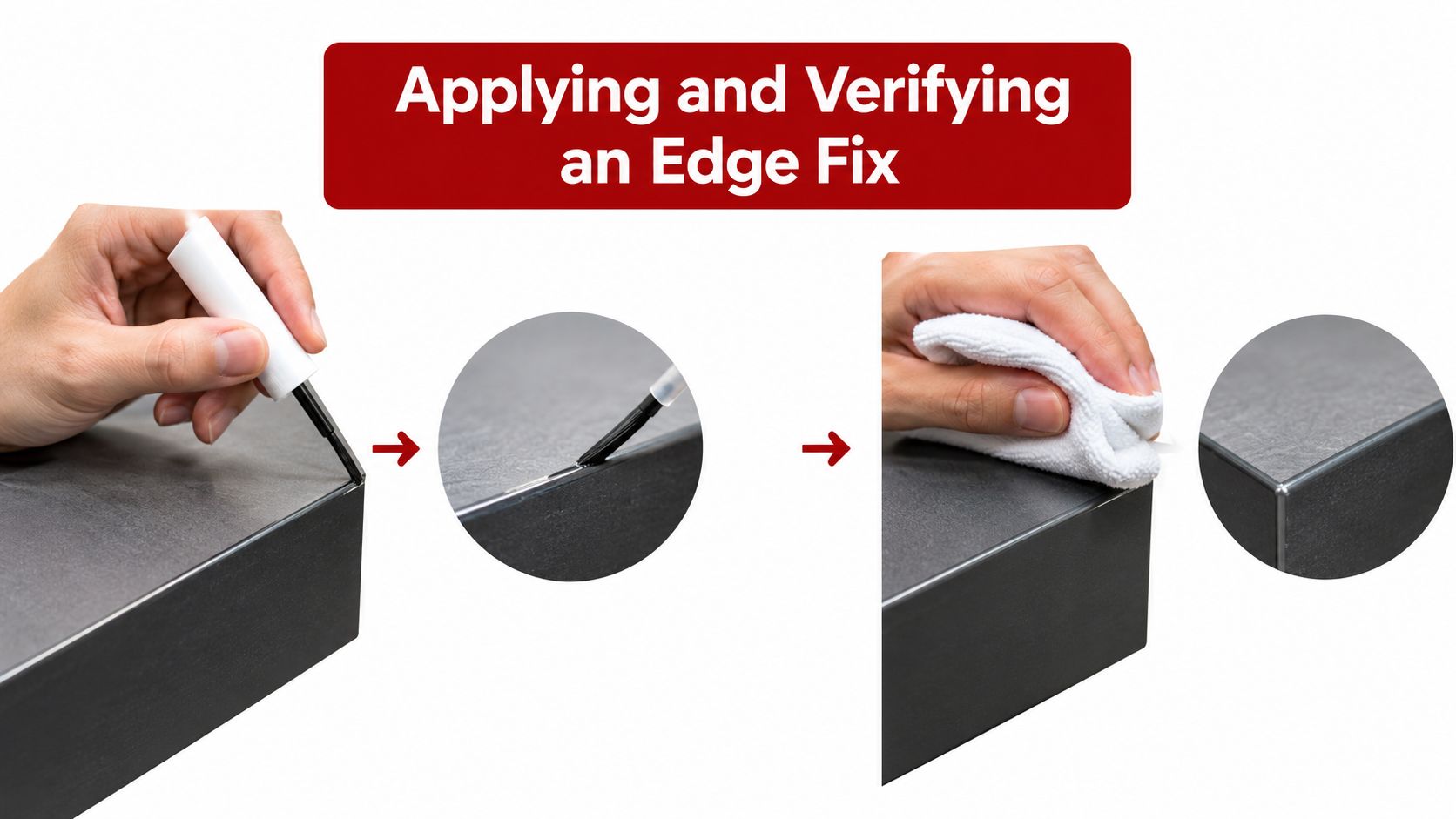
For a low-pile synthetic edge, the practical sequence is straightforward:
- Measure the exposed edge and check the protector's channel or tape width against the pile and backing.
- Remove dust, oil, and detergent residue from the attachment area.
- Allow the edge to dry fully before applying any pressure-sensitive product.
- Align the protector carefully so it supports the perimeter without folding or compressing the pile.
- Apply firm, even pressure along the full length rather than pressing only at corners.
- Inspect the result after initial foot traffic and again after professional cleaning.
The product guidance for a self-adhesive edge trim also identifies moisture, contamination, gaps, and an oversized pile as common failure points (example of a PVC rug edge trim).
Verify flexibility, fit, and color
Binding and serging should usually be completed in a workshop, where the rug can be kept flat and the stitching tension can remain consistent. On a valuable wool or hand-knotted rug, don't use heat, cyanoacrylate, household glue, or aggressive tape.
If a compatible tape or strip is appropriate for a low-value synthetic rug, use a roller for even pressure. Don't press an iron directly onto wool or synthetic fibers, and use a fresh blade when trimming so adjacent knots or loops aren't pulled.
The finished edge should flex with the rug, sit flush, and show no open channel, bleed-through, discoloration, or stiffened section. If it lifts, creeps, distorts, or changes the surface, stop using the rug and have a restorer remove the failed product before it bonds more firmly.
Why Birmingham Homes Need Professional Rug Restoration
Edge protection works better when it's addressed as part of complete rug care rather than added after a failed DIY repair. Rugs in Birmingham homes collect grit from entryways, pet debris, food residue, and ordinary household dust. The EPA identifies indoor dust as a reservoir for pollen, mold spores, pet dander, dust-mite material, cockroach droppings, and human skin cells. It recommends vacuuming carpets and furniture weekly or more often, and notes that HEPA-filter vacuums can reduce dust escaping back into the room (EPA guidance on indoor particulate matter).
Vacuuming still has limits. Embedded soil can remain beneath the pile and near the perimeter, where it abrades fibers as the rug flexes. The EPA also notes that vacuuming can temporarily increase airborne mite allergens and other biological contaminants, which is one reason controlled professional cleaning can be useful for households managing pet debris or allergy-related dust (EPA indoor air-quality guidance).
A thorough facility process gives the edge a better chance of being cleaned without being pulled apart. The service flow includes:
- Home pickup: The rug is collected from the Birmingham-area home, including service requests from Hoover, Vestavia Hills, Mountain Brook, Homewood, Trussville, Pelham, Alabaster, Gardendale, and Helena.
- Inspection and dust removal: The rug is assessed for fraying, dye instability, pet contamination, backing problems, and foundation exposure before washing.
- Rug-specific washing: Mechanical dusting and a controlled wash remove embedded soil, stains, odors, and residue without treating every construction as if it were the same.
- Controlled drying: Climate-controlled drying helps keep the rug straight and reduces the risk of avoidable shrinkage or distortion.
- Edge restoration: Binding, stitching, foundation stabilization, material matching, color matching, and hand finishing can be considered when the perimeter needs more than surface protection.
- Grooming and return: The rug is groomed and returned to its original location once cleaning and restoration work are complete.
Water damage requires faster action. The CDC advises removing standing water and wet materials, using a wet vacuum on floors and carpets, and drying the home and contents as quickly as possible, within 24 to 48 hours when feasible (CDC homeowner water-damage guidance). Its mold guidance also treats carpet and padding that remain wet beyond 48 hours and cannot be thoroughly cleaned and dried as materials that may need removal (CDC mold and asthma guidance).
Professional restoration isn't a last resort. For a frayed runner, stained area rug, pet-affected carpet, or water-damaged floor covering, it's preventive maintenance that addresses soil, odor, moisture, and edge stability in one coordinated service.
Rubber Ducky Rug Cleaning Birmingham provides home pickup, professional facility washing, controlled drying, stain and odor removal, and rug edge restoration for Birmingham-area homes. Schedule a rug pickup or request an assessment through Rubber Ducky Rug Cleaning Birmingham before a loose edge becomes foundation damage.