If you're searching for how to clean a throw rug in Birmingham, you're probably looking at one that seemed fine after vacuuming but now feels flat, dusty, or faintly sour. Coffee, pet tracks, pollen, red clay, and everyday foot traffic work their way below the visible surface. A proper rug cleaning doesn't start with soap. It starts with dry soil removal, continues with fiber-aware washing, and ends with controlled drying that gets moisture out of the backing.
Home cleaning can refresh a small, washable synthetic rug, but it has limits. Wool, jute, sisal, oriental rugs, rubber-backed rugs, older textiles, and rugs with recurring pet odor need more careful handling. Rubber Ducky Rug Cleaning serves Birmingham homeowners with pickup, professional rug washing, stain and odor treatment, restoration, controlled drying, grooming, and return delivery.
Why Your Birmingham Throw Rug Looks Worn No Matter How Often You Vacuum
The throw rug under your coffee table looked acceptable after Tuesday's vacuuming. By Friday, the traffic lanes were dull again, the pile had flattened, and one corner had started curling. That doesn't mean you're neglecting it. It means the vacuum has removed much of what's loose on top while fine grit remains lower in the pile and within the backing weave.
For centuries, people took rugs outside, hung them up, and beat them with carpet beaters or brooms because physical impact released embedded sand, dust, and soot that ordinary sweeping couldn't reach. By the mid-1750s, this was described as the most common carpet-cleaning technique, and the method remained standard for hundreds of years before powered vacuums became common, as documented in this history of carpet cleaning. The lesson still applies to a Birmingham throw rug. Dry grit has to come out before water touches the fibers.
Practical rule: A rug that's still full of dry soil will turn that soil into abrasive mud during washing.
What the surface doesn't reveal
Cotton and wool rugs can hold fine particles at the base of the pile. Each step presses those particles against the fibers, gradually dulling color and making high-traffic areas look tired. Pollen, pet dander, and spilled drinks add residue that a quick surface pass can't resolve.
Modern rug care developed through the carpet sweeper, suction-based machines, motorized vacuums, and eventually hot water extraction. Historical accounts identify Daniel Hess's 1860 carpet sweeper, Ives McGaffey's 1868 sweeping machine, Hubert Cecil Booth's 1901 motorized vacuum, and the introduction of hot water extraction in 1947, which remains a major cleaning method for carpeted floor coverings, according to this history of vacuum and extraction cleaning.
A professional rug plant follows that same logic in a controlled sequence: mechanical dusting first, fiber-specific washing second, and thorough drying last. Skipping the first phase is why a rug can look brighter after a DIY wash yet still feel gritty or become soiled again quickly.
Reading Your Rug Before You Clean It
Before using water, detergent, or a brush, identify the rug's construction. Find the care label sewn into a back corner and note the fiber content, washing instructions, and warnings. A label that permits machine washing is not the same as a label that permits hot water, high spin, or aggressive agitation.
You can also look for physical clues. Cotton often has a cool, matte appearance. Wool generally feels soft and slightly springy when compressed. Polyester and other synthetics may feel smoother or show a light sheen. These clues help, but they aren't a substitute for the manufacturer's instructions or a professional inspection.
Inspect the backing
Turn the rug over and examine the underside for latex, rubber, adhesive, loose threads, cracking, or separation. Rubber and latex backings can deteriorate when exposed to excess water, heat, or harsh agitation. A backing that already feels brittle or flakes when touched shouldn't be submerged at home.
Check the edges and fringe as well. Fraying, yellowing, rippling, or a backing that no longer lies flat are signs that the rug needs more than routine washing.
Test the dyes
Choose an inconspicuous corner. Dampen a clean white cloth with cool water and a small amount of mild detergent, then press it against the rug for ten seconds. Don't rub. If color transfers to the cloth, stop before washing the entire piece.
Printed designs and strongly contrasting colors deserve extra caution because dye migration can change the pattern permanently. Bleeding, shrinkage, and backing separation are among the most expensive DIY mistakes because they can't always be reversed. When the fiber, dye, or backing is uncertain, professional assessment is safer than guessing.
Getting the Dry Soil Out First
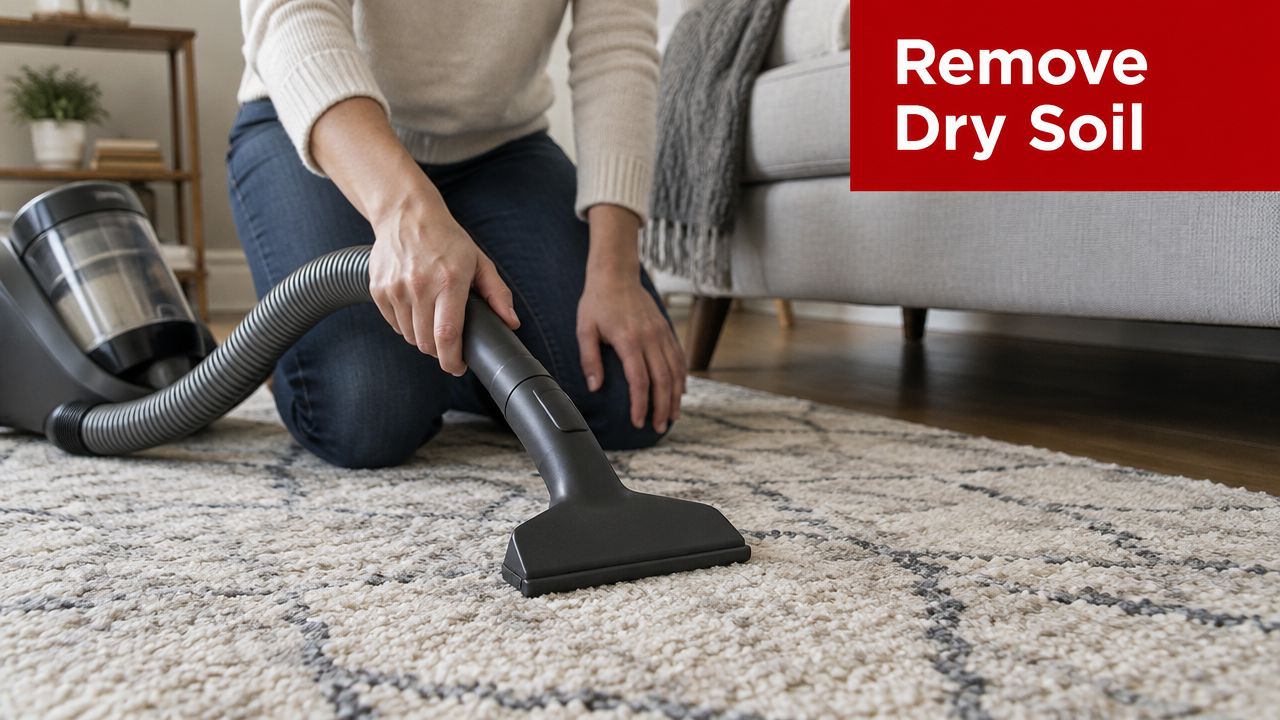
Dry soil removal is the step most homeowners rush, even though it determines how well every wet step works. If the throw rug is small enough to handle, take it outside and shake it firmly. A light beat against a suitable railing can release loose grit, but avoid striking delicate fringe, brittle backing, or an antique textile.
Back indoors, vacuum both sides. Start with the underside, moving slowly so suction pulls embedded particles back through the construction. Flip the rug over and vacuum the face in the direction of the pile. For wool or high-pile rugs, use suction without a rotating brush. Synthetic, low-pile rugs may tolerate a gentle beater bar, but only when the care instructions allow it.
The slower pass is usually the more useful pass. Fast vacuuming skims the surface, while steady overlapping rows give suction time to lift soil.
Use an upholstery tool or brush attachment around fringe. A rotating brush can catch and break loose strands. On thicker wool, a pile brush or a stiff-bristled push broom moved lightly across the surface can loosen particles that suction leaves behind. Work high-traffic lanes more than once, particularly around entrances and sofas.
A practical maintenance pattern is one to two vacuumings per week, with wool rugs receiving deeper cleaning every six to twelve months, according to this throw rug care guide. These figures are maintenance benchmarks, not a substitute for inspection. Homes with pets, children, outdoor access, or visible grit may need attention sooner.
For more detail on choosing the right equipment and avoiding unsuitable rotating brushes, see this guide to vacuum and carpet cleaners.
Spot Treatment and Hand Washing Done Right
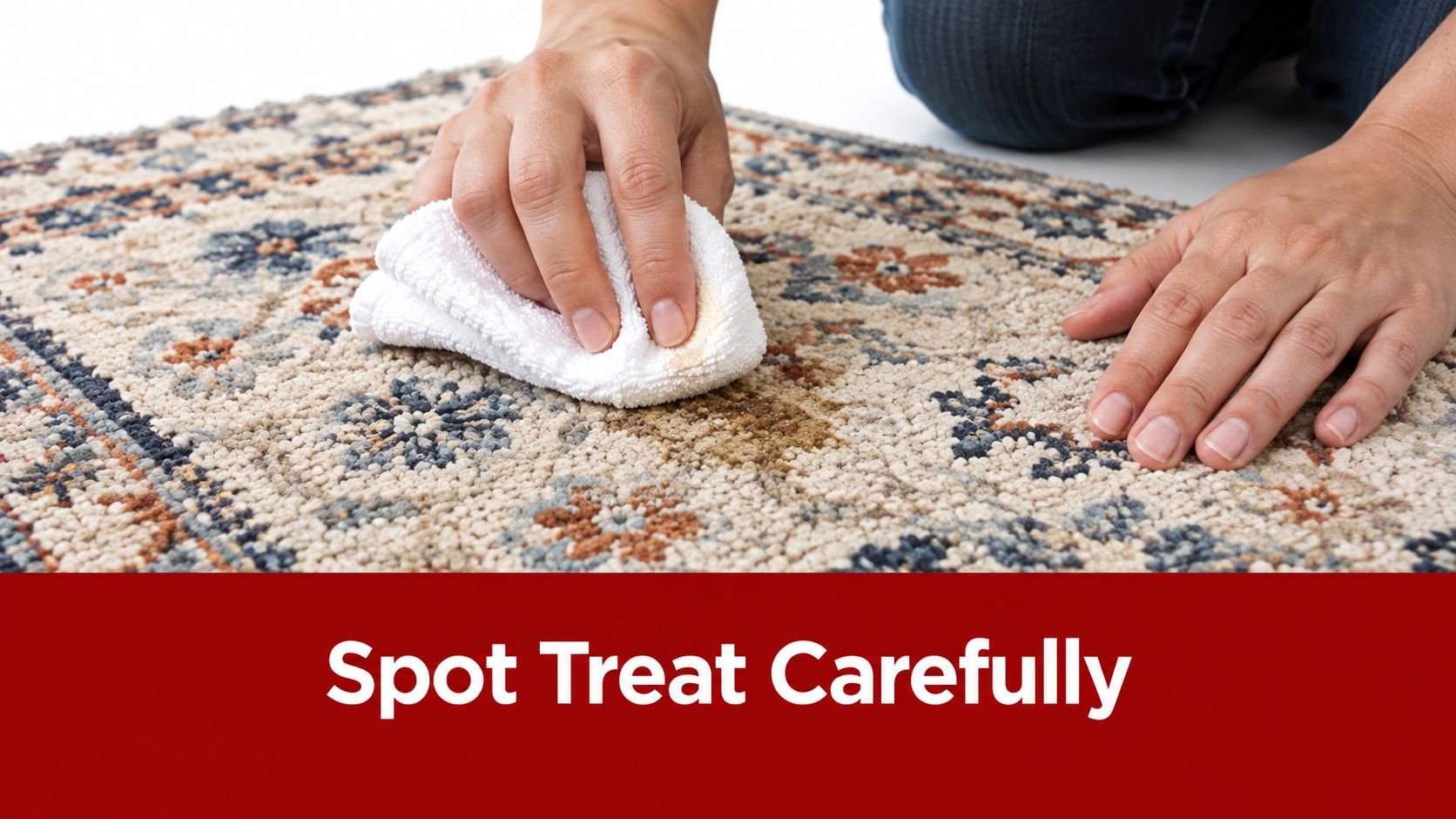
Treat a fresh stain like a mark on a good shirt. Remove solids first, blot liquid with a clean white cloth, and work from the outside of the spot toward the center. Rubbing pushes contamination outward and can roughen the pile.
For ordinary coffee, wine, muddy footprints, and pet tracks, mix a small amount of mild dish soap with cool water. Apply the solution to the cloth rather than flooding the rug, then press and lift repeatedly. Follow with a separate cloth dampened with clean water to reduce detergent residue.
Don't use bleach on wool. On a colorfast synthetic rug, a very small hydrogen peroxide dab may help with an organic stain, but test first and stop if the dye changes. Avoid oxygen cleaners when you can't confirm colorfastness. Vinegar, fabric softener, heavy fragrance products, and strong household degreasers can leave residues or affect dyes and backing.
When hand washing is appropriate
Only hand-wash when the label, fiber, dye, and backing support it. Place a suitable washable rug flat on a clean driveway or porch. Use a low-pH rug shampoo and a soft brush, working in the direction of the pile rather than scrubbing against it. Rinse thoroughly with a hose until runoff is clear, then remove as much water as possible without twisting.
A machine cycle is appropriate only when the care label specifically allows it. Heat, agitation, and high spin can distort cotton backings, shrink wool, or stress glued construction. Natural fibers such as jute and sisal are especially poor candidates for casual saturation, while shag rugs need careful pile handling to prevent matting.
For patterned or hand-woven pieces, this resource on oriental rug spot removal offers useful caution around localized treatment. It's still wise to stop home treatment when dyes transfer, pet urine has penetrated the backing, or the rug has an uncertain construction.
Rubber Ducky Rug Cleaning's guide to getting stains out of rugs can help you decide whether a mark is suitable for limited spot treatment or needs professional washing.

Drying the Rug So It Actually Stays Clean
The rug isn't clean because the pile feels dry. The backing, pad, and lower fibers can retain moisture long after the surface seems ready, and that trapped dampness can create odor, residue, distortion, or mildew risk.
This matters in Birmingham because warm, humid conditions can slow evaporation. Restoration guidance warns that mold may begin growing on wet materials within twenty-four to forty-eight hours, and porous items that remain wet longer than forty-eight hours may need removal when they can't be thoroughly dried and cleaned, according to this water-damage mold prevention guidance.
A reliable drying check
Press out water without wringing. Lay the rug flat on a clean surface with airflow beneath and above it, or support it over two parallel rails so its weight doesn't stretch the shape. Turn it during drying when the construction allows, and keep air moving across the backing with a fan.
A full twenty-four hours of indoor airflow is a practical starting point for a washed throw rug, with longer drying needed for wool, thick pile, jute, or rubber-backed styles. Use a dehumidifier where possible. Rug-restoration guidance recommends maintaining relative humidity below 50% to speed drying and suppress fungal growth, as explained in this water-damaged wool rug restoration guide.
Press a dry white towel firmly against the back for ten seconds. If the towel feels damp or shows moisture, don't return the rug to the floor. For additional emergency drying precautions after a spill or leak, see these wet carpet drying tips from Restore Heroes.
When Home Cleaning Stops Being Enough
DIY cleaning can be a reasonable stopgap for a clearly labeled, colorfast, low-pile synthetic rug. It becomes risky when the rug carries embedded grit, has a delicate fiber, contains pet contamination, or can't dry quickly. A garden hose can rinse soap from the surface, but it can't reproduce the dusting, washing, rinsing, extraction, and drying controls used for textile care.
Birmingham homes also face practical complications. Yard soil and red clay can enter on shoes, pets can drive odor into the backing, and humid weather can make a washed rug difficult to dry evenly. Wool, cotton, jute, synthetic blends, oriental rugs, and rubber-backed constructions don't respond to the same chemistry or agitation.
Signs to stop experimenting include:
- Recurring pet odor: The surface may look clean while urine residue remains deeper in the construction.
- Dye transfer: Continued blotting or washing can spread the problem beyond the original stain.
- Fringe yellowing or distortion: Overwetting and residue may be affecting the foundation or decorative ends.
- Backing damage: Rippling, cracking, flaking, or separation needs controlled handling.
- Older or valuable rugs: A rug that's more than ten years old deserves extra caution, particularly if its history and materials are unknown.
A professional plant can dust the rug mechanically, select a suitable detergent, rinse away residue, extract water, dry it flat under controlled conditions, and groom the pile. For households comparing pickup services generally, Tumble Laundry's laundry delivery service in Singapore illustrates the convenience of scheduled collection and return, though rug cleaning requires textile-specific inspection and treatment rather than ordinary laundry processing.
| Factor | DIY Home Cleaning | Professional Cleaning |
|---|---|---|
| Dry soil | Shaking and household vacuuming | Mechanical dusting designed to release embedded grit |
| Washing | Limited by home equipment and rinse control | Fiber-aware washing with measured detergent and controlled rinsing |
| Stains and odors | Surface treatment may leave deeper residue | Targeted treatment for stains, pet odor, and contamination |
| Drying | Dependent on household space, airflow, and humidity | Flat or suspended drying in a controlled environment |
| Final care | Homeowner returns the rug to service | Grooming, inspection, wrapping, and return placement |
Rubber Ducky Rug Cleaning Birmingham handles area rugs through inspection, mechanical dusting, custom wash-tank cleaning, controlled rinsing, drying, and grooming. That process treats a throw rug as a textile, not as a removable piece of carpet.
Schedule a Rug Pickup With Rubber Ducky in Birmingham
Rubber Ducky Rug Cleaning offers free pickup and delivery across Birmingham, Hoover, Vestavia Hills, Homewood, Mountain Brook, and Trussville. The usual turnaround is roughly a week, and same-week pickup is available for most Birmingham addresses and surrounding suburbs.
Scheduling can start with a call to 205-637-4357, a photograph sent through the website form, or direct online booking. Pricing is quoted per rug based on its size, fiber, and soil level rather than by room, so you can receive an estimate before pickup.
Once collected, the rug is inspected, dusted, washed with a fiber-safe method, rinsed under controlled conditions, and dried flat in a climate-controlled room. It's then wrapped and returned ready for its original location. The Birmingham area rug cleaning pickup service is particularly useful when a rug is too heavy, delicate, or damp to manage safely at home.
Homeowners in Pelham, Alabaster, Gardendale, Helena, and nearby Birmingham communities can request availability when booking. If your throw rug still smells after washing, feels stiff, shows dye movement, or won't dry fully, arrange pickup rather than adding another round of detergent.
Rubber Ducky Rug Cleaning Birmingham provides pickup and delivery, professional rug washing, deep stain and pet odor treatment, fiber-safe care, controlled drying, restoration, and grooming for throw and area rugs. Visit Rubber Ducky Rug Cleaning Birmingham to send a rug photo, request an estimate, or schedule your Birmingham-area pickup.