
A glass tips during dinner, and a dark red splash spreads across the cream wool rug in your Birmingham living room. If you're searching for how to get red wine out of a wool rug, the first ten minutes matter more than a cupboard full of stain products. Wool responds badly to heat, friction, strong chemistry, and excess water, so the safest response is controlled absorption followed by a carefully diluted, wool-safe treatment.
A fresh spill can often be reduced before it migrates into the backing. An older mark, a spreading ring, or a stain on an antique or hand-knotted rug is a different job. This guide explains what you can do immediately, where DIY treatment reaches its limit, and when Birmingham homeowners should arrange professional pickup, facility washing, controlled drying, and return delivery.
The First Sixty Seconds After Red Wine Hits Wool
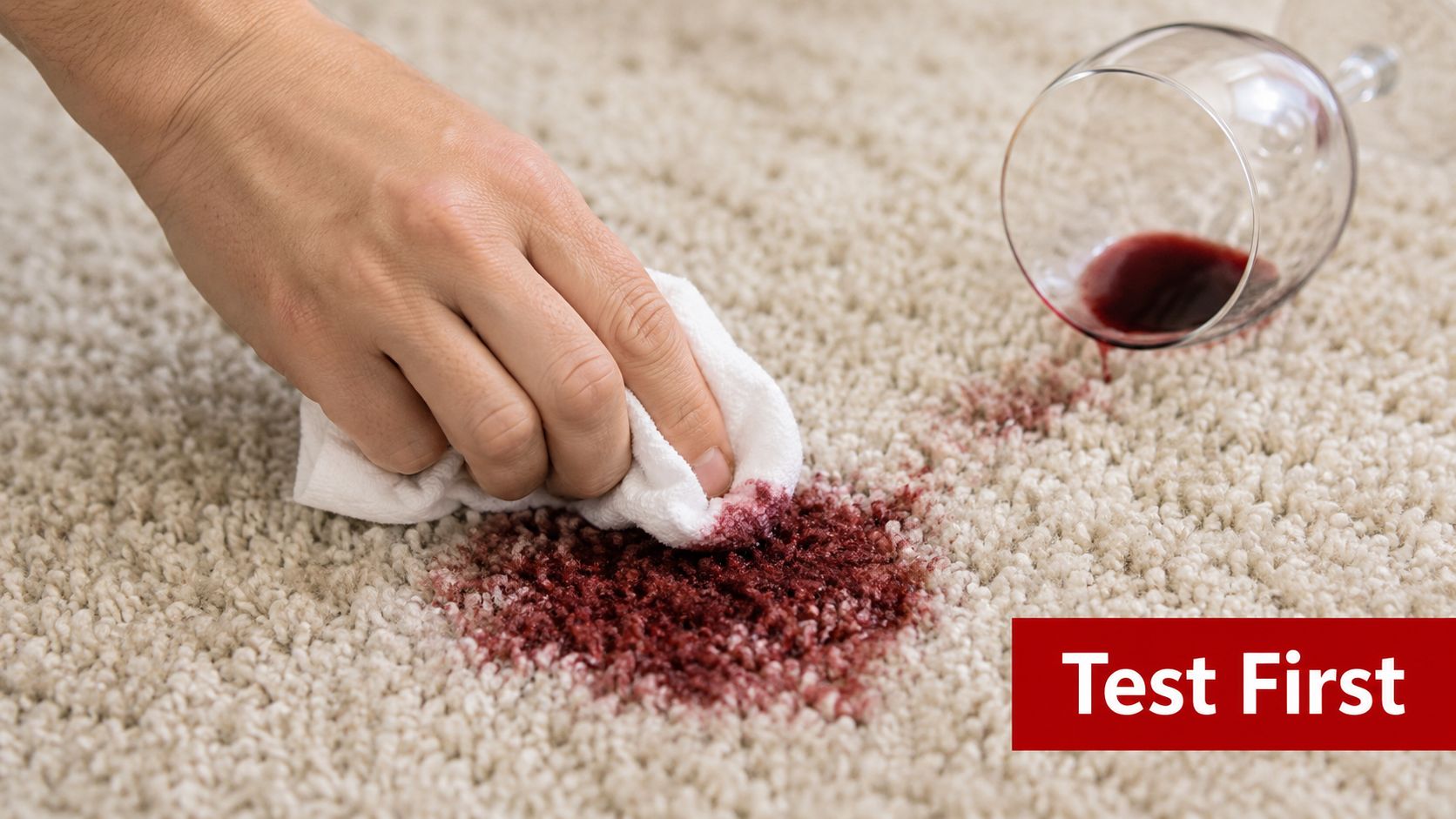
During a weekend dinner in a Birmingham home, the natural reaction is usually to grab the nearest towel and wipe. Resist that impulse. Press a clean white cloth or paper towel directly onto the liquid before applying any cleaner. Consumer Reports' long-standing red wine guidance for wool rugs recommends immediate blotting, followed by soap and water, while warning against scrubbing and heat.
Wool has a scaled outer structure, and moisture changes how those fibres handle friction. Rubbing can push wine pigment deeper, spread it sideways, and roughen the pile. The red colour comes from wine pigments, including tannin-related colour compounds and anthocyanins, and the longer the liquid remains in contact with the fibre, the harder it becomes to lift cleanly.

Use the right first-minute toolkit
Set out white cotton towels or paper towels, cold water in a spray bottle, and a plastic scraper for any residue that has begun to dry. Coloured cloths can transfer dye, and a rough towel can disturb delicate loops.
- Press, then lift. Start at the outer edge of the wet area and work inward. Use your body weight lightly, then lift the cloth straight up rather than dragging it.
- Change to a dry section often. A saturated towel stops absorbing and can redeposit wine.
- Skip heat, salt, and detergent for now. Consumer Reports specifically cautions against heat and scrubbing, and wool-care guidance increasingly favours measured dilution over improvised applications.
- Check beneath the rug. Lift a corner and inspect the underside and padding. Liquid can migrate through the foundation even when the surface looks partly dry.
Practical rule: The first move is absorption, not cleaning. Keep the spill contained before you introduce moisture.
If the same accident reaches an upholstered chair, use a separate fabric-care method rather than transferring rug products to furniture. Stahl Home Center's guide to how to clean performance fabric offers useful material-specific context, but wool still needs its own test and dilution approach.
Safe Step-by-Step Stain Removal for Wool
Once the loose wine has been absorbed, move slowly. A wool rug isn't a synthetic carpet, and a product that works on a resilient man-made pile can alter wool's colour, texture, or protective surface.
Test before treating the visible mark
Choose an inconspicuous section, such as beneath furniture or near an edge. Prepare a 1:4 solution of mild wool detergent to cool distilled water, apply a small amount, blot it away, and wait five minutes to check for dye bleed or a texture change. Those quantities and the waiting period are a cautious spot-test framework for this specific method, not a reason to skip the manufacturer's care instructions.
Use white microfiber cloths for the working area. Microfiber gives you a clean surface for transfer, but pressure still needs to be light, especially on a loop pile. A cut pile can accept slightly firmer vertical pressing, while loops can fuzz or pull if you scrub across them.
Dilute, dwell briefly, and rinse
Mist cool water onto the stain rather than pouring it. A spray gives you control and lets you dilute the wine without flooding the foundation. Blot from the outside toward the centre, turning the cloth frequently so the pigment leaves the pile instead of circulating across it.
After the cool rinse, apply a wool-safe enzymatic cleaner at a 1:8 dilution. Keep the application targeted and allow a three-to-five-minute dwell time, then blot with a clean cloth. Finish with another cool-water mist and blot until the towel no longer feels soapy.
Modern wool-rug guidance commonly recommends a mild detergent mix, cold water, and quick blotting, including a formulation of 1 teaspoon of mild dish soap to 1 cup of cold water for wool area rugs. Apadanarugs' wool-rug wine stain guide also describes a commonly repeated 1:2 dish-soap-to-hydrogen-peroxide mix, left for five to ten minutes before blotting and rinsing. These are alternative published approaches, not products to layer together.
For broader upholstery and household stain principles, Gorins Furniture stain advice can help you distinguish blotting from rubbing. On wool, the priority remains low temperature, small amounts, short contact time, and repeated absorption.
Adjusting Your Approach for Dried or Set Stains
Not every red wine mark deserves the same response. A spill treated while it's still wet is mainly an absorption problem. A mark that dried overnight needs controlled rehydration, while a weeks-old stain may have migrated through the pile and into the rug's foundation.
| Stain Age | Recommended Response | Expected Outcome | DIY Worth Trying? |
|---|---|---|---|
| Fresh spill, treated within thirty minutes | Blot immediately, then mist with cool water and continue blotting from the edge inward | The colour may reduce substantially before it penetrates further | Yes, if the rug passes a hidden-area test |
| Dried overnight stain | Rehydrate with a cool-water mist for ten minutes, then test a 3% hydrogen peroxide wool-safe mixture before limited treatment | The mark may lighten, but a shadow or ring can remain | Only on a stable, non-antique rug and with restrained moisture |
| Weeks-old set stain | Avoid repeated surface applications and arrange professional assessment | Surface treatment may only lighten the visible pigment | Usually no, particularly on light, antique, hand-knotted, or valuable wool |
The ten-minute rehydration period gives dried residue time to soften without saturating the rug. After that, a 3% hydrogen peroxide solution should be tested in a hidden area and used sparingly if the colour remains stable. Hydrogen peroxide can lighten dyes as well as wine, so a successful spot test still doesn't guarantee uniform results across the visible design.
Know what the backing changes
A set stain is rarely confined to the top of the pile. Pigment can move into the backing, including a cotton foundation, where a surface cloth can't reach it. Consumer products may reduce the front-facing colour while leaving residue below, and repeated wetting can cause wick-back as the rug dries.
A practical judgment is simple. If the mark is small, the rug is modern and colourfast, and no dye transfers during testing, one restrained attempt may be reasonable. If the stain has spread, the rug is pale or old, or the colour returns after drying, stop applying products. Full restoration often requires controlled immersion washing, not more rubbing on the floor.
What Never to Put on a Wool Rug
Viral cleaning shortcuts often confuse absorption with removal. Salt may pull some liquid from the surface, but a thick layer can leave crunchy residue that abrades the pile. Circular rubbing creates heat and friction, spreads the stain sideways, and can felt wool.
The common shortcuts that create new damage
- Chlorine bleach: It can yellow wool and weaken its protein structure. Use a wool-safe, tested treatment instead.
- Hydrogen peroxide above 3%: Stronger solutions can strip natural lanolin and lighten the rug's dye. If peroxide is considered at all, use only a tested 3% strength formulation.
- Undiluted white vinegar: Straight vinegar changes the fibre's pH and may shift colour or drive tannin-related staining deeper. Choose a measured wool detergent solution.
- Thick salt applications: Salt can dry into abrasive crystals. Continue blotting with clean white cloths rather than grinding an absorbent into the pile.
- Hot water and steam: Heat can shrink wool, distort the backing, and set the stain. Use cool water applied by mist.
- Oxygen powders left overnight: Prolonged contact can alter dyes and bake tannin residue into the cuticle. A short, controlled dwell is safer than soaking.
A cleaner's foam isn't evidence that a product is safe. Strong alkalinity, aggressive oxidisers, and excess dwell time can remove colour or protective oils before they remove the wine. Further context on peroxide and carpet staining is available in this hydrogen peroxide stain guidance, but wool requires particular caution.
If it smells harsh, foams aggressively, or promises a miracle in seconds, keep it away from wool.
Drying, Inspecting, and Deciding What's Next
Removal isn't finished when the red colour seems lighter. Wool dries slowly and unevenly, and moisture moving upward through the pile can carry dissolved pigment back to the surface. That process creates a wick-back mark, often visible as a pink, brown, or yellowish ring after the area appears dry.
Control the finish
Follow a measured drying routine:
- Blot repeatedly: Use dry white microfiber cloths every ten minutes during the first hour.
- Support the underside: Place a folded dry towel beneath the damp section where possible.
- Draw moisture downward: Put a flat object over the top towel, with enough weight to encourage absorption without crushing the pile.
- Move air gently: Run a fan or open windows, keeping the room below 70°F. Avoid direct heat.
- Protect the area: Keep foot traffic off the treated section for six to eight hours.
- Inspect under raking light: Shine a lamp across the pile rather than straight down to reveal a residual ring.
These drying controls matter because a wool rug can look acceptable at the centre while moisture remains at the edges or in the backing. Practical moisture-management principles also apply to larger incidents, and this guide to drying carpet after flooding explains why airflow and extraction are preferable to adding heat.
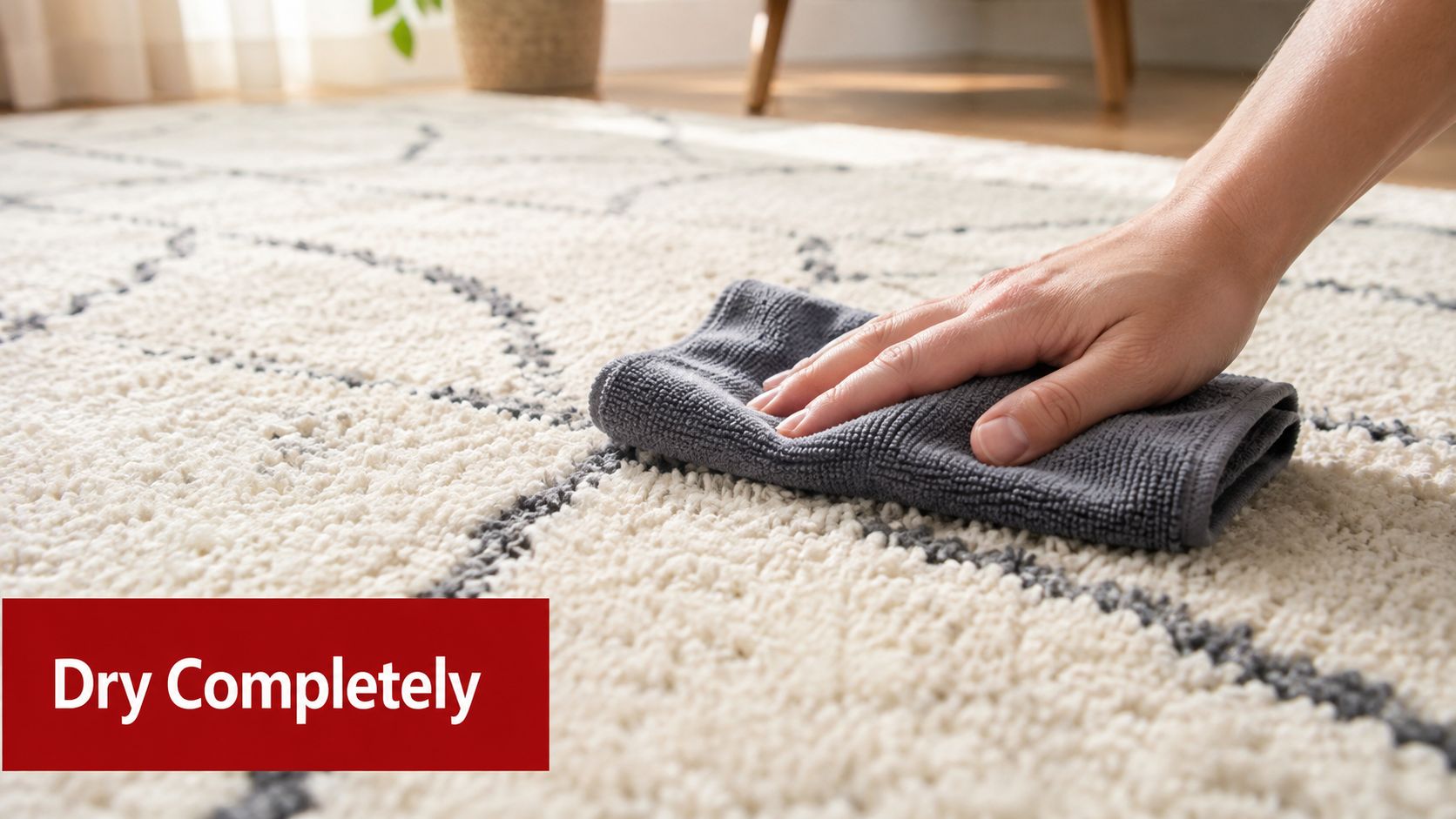
At twenty-four hours, wick-back may appear as a pale ring around a cleaner centre. At forty-eight hours, the outline can become more obvious if residue remains in the foundation. Don't scrub when that happens. A second gentle treatment may be safer, but only if the rug passed its colour test and the backing is fully dry. For additional guidance on finishing a wet area rug, see this controlled area-rug drying process.
The handoff point is clear: if the ring persists, the stain has spread, or the rug still feels damp below, stop DIY treatment and arrange an assessment.
Why Birmingham Homeowners Call Rubber Ducky for Stubborn Stains
DIY treatment has a ceiling. That ceiling usually appears when the stain is older than twenty-four hours, larger than a dinner plate, located on a light-coloured or antique rug, or visible again after drying. It also appears when the owner can't identify the fibre, backing, dye stability, or previous treatments.
A professional rug-washing facility can work on the entire construction rather than repeatedly wetting one patch on the floor. The process includes fibre and pH assessment, targeted treatment for tannin-related colour, water temperature controlled below 100°F, full submersion rinsing to remove residue from the backing, and flat controlled drying to reduce dye migration and shrinkage risk.
What facility cleaning changes
A home towel can only absorb what reaches the surface. Facility washing can address soil and cleaning residue held deeper in the pile and foundation, while the rug is supported throughout the process. Rubber Ducky Rug Cleaning Birmingham handles home pickup, facility washing, deep stain and odour treatment, fibre-safe cleaning, controlled drying, grooming, and return delivery to the rug's original location.
That pickup-and-return model matters in Birmingham, Hoover, Vestavia Hills, Mountain Brook, Homewood, Trussville, Pelham, Alabaster, Gardendale, and Helena. You don't have to carry a saturated wool rug through the house or risk over-wetting hardwood, padding, or the rug itself.
Compare the real trade-off
The question isn't only whether a household product might lighten the mark. It's whether another application could create a permanent halo, dye loss, felting, or backing distortion. A pickup-and-delivery treatment is generally a more sensible financial decision than replacing a hand-knotted or heirloom wool rug, especially when the piece carries sentimental value or has been kept in the family for decades.
For homeowners weighing the next step, wool rug cleaning service in Birmingham is the relevant route when blotting and careful spot treatment haven't removed the shadow. Ask for a rug cleaning estimate and explain the stain's age, size, location, and products already used.
A Quick Recap and Your Next Move
Start with the first sixty seconds. Press with a clean white cloth, work from the outside toward the centre, and keep changing to a dry section. Use cool water by spray rather than pouring, because wool responds better to controlled moisture than flooding.
If the mark remains, use a hidden-area test before applying a diluted wool detergent or other wool-safe treatment. Keep dwell times short, rinse with cool water, and avoid friction. Dried stains need gentle rehydration, while set stains may require facility washing because pigment can sit in the backing as well as the pile.
The unsafe shortcuts are consistent: no heat, bleach, aggressive alkaline products, undiluted vinegar, concentrated peroxide, overnight oxygen powders, or circular scrubbing. Once treatment is complete, dry the rug with airflow and absorption rather than a heater, keep traffic away, and inspect it under bright angled light after the area has had time to dry.
The decision is simple. If the stain survives a careful spot test, returns as a ring, or covers more than a few inches, stop adding chemistry.
Wool can recover well when technicians control temperature, moisture, pH, and mechanical action. It can also suffer lasting colour and texture changes when a homeowner keeps escalating products after the first attempt has stalled. Birmingham homeowners can schedule rug pickup with Rubber Ducky, have the rug washed and dried at a professional facility, and receive it back groomed and ready to return to its original position.
If the spill has just happened, start blotting now. If you're already seeing pink, brown, or yellow shadows, request a professional rug cleaning estimate instead of risking a larger damaged area.
Rubber Ducky Rug Cleaning Birmingham offers home pickup, facility rug washing, targeted wine-stain and odour treatment, fibre-safe cleaning, controlled drying, grooming, and return delivery. Visit Rubber Ducky Rug Cleaning Birmingham to schedule a pickup for your wool rug or request an estimate for a stain that hasn't cleared.