

When it comes to cleaning a wool rug, the best and safest approach is professional rug washing. Well-intentioned DIY attempts often cause irreversible damage. Common household chemicals and aggressive cleaning methods can strip the natural oils from wool, cause colors to run, or shrink the fibers permanently. Professional care from Rubber Ducky Rugs is not just about removing dirt; it’s about preserving your investment for years to come. As a nationwide rug cleaning company with local service teams across the United States, we provide specialized care that protects the value and beauty of your rugs.
Why You Should Trust a Professional With Your Wool Rug
Your wool rug is more than a floor covering; it's a significant part of your home's character. The natural wool fibers are incredibly resilient but also sensitive to improper handling. They require specific care that generic, one-size-fits-all cleaning methods cannot provide. At Rubber Ducky Rugs, our trained specialists handle every rug with the expert knowledge it requires, ensuring it remains vibrant and beautiful for decades. Our national scale and local presence in cities like New York, Chicago, and Los Angeles ensure you receive consistent, expert-level service.
Protecting Wool Fibers and Natural Lanolin
What makes wool unique is also what makes it vulnerable. Each fiber is coated in lanolin, a natural waxy oil that acts as a built-in stain and water repellent. Harsh chemical cleaners dissolve this protective lanolin, leaving the wool fibers exposed, brittle, and much more likely to stain in the future.
Our specialists work to protect this delicate balance. We use only pH-neutral, wool-safe cleaning solutions formulated to lift dirt without stripping the lanolin. This process keeps your rug soft, resilient, and looking its best.
The Risk of Dye Bleeding from Hot Water
Many wool rugs, particularly Oriental and antique pieces, derive their stunning color from natural dyes. These dyes can be unstable when exposed to improper cleaning methods. Using hot water is a common mistake that can instantly cause colors to bleed, turning a crisp, beautiful pattern into a blurry, damaged mess.
In our dedicated washing facility, our specialists control every variable. We begin by testing the dyes for stability and always use cool, softened water for the main wash. It’s a meticulous, careful process that cannot be replicated with at-home methods.
At Rubber Ducky Rugs, our philosophy is simple: preserve the integrity of every fiber. Our process is designed not just to remove soil but to protect the rug's structure, dyes, and natural oils, ensuring it returns to you in pristine condition.
Removing Deep-Down Abrasive Dirt
The biggest threat to your rug isn’t visible spills but the dirt you can’t see. Tiny, sharp particles of sand and grit get trampled deep into the rug’s foundation. With every step, these particles act like sandpaper, grinding against the wool fibers and slowly severing them from the inside out. This internal friction is what causes rugs to thin and wear down prematurely.
Our professional process is the only way to safely remove this embedded grit. Before any washing begins, we use specialized equipment to gently vibrate and extract pounds of this damaging soil. This step is crucial for protecting your rug’s foundation and is a key reason why professional cleaning is the best way to clean a wool rug and truly extend its life.
For a closer look at our full process, you can learn more about how to clean area rugs the right way. We're dedicated to providing coast to coast rug cleaning expertise, with new locations opening in major cities to meet growing demand.
Our Professional Rug Inspection Process
Before a single drop of water touches your wool rug, our specialists conduct a thorough inspection. This is the most important part of our entire cleaning process. Every rug has a unique history, construction, and set of existing conditions. This deep evaluation allows us to create a custom cleaning plan from the ground up.
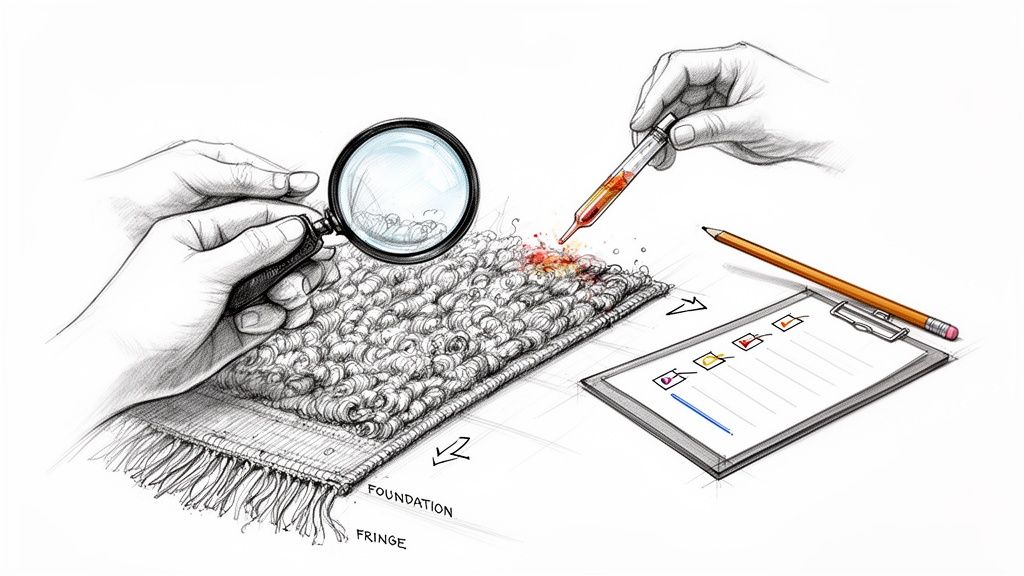
This methodical evaluation protects your investment and separates true professional care from risky, one-size-fits-all approaches. We document everything we find, providing you with a complete picture of your rug’s health before we begin our restorative work.
Identifying Wool Fiber and Construction
First, our specialists identify exactly what we are working with. Not all wool is the same. Fibers from different sheep breeds have unique characteristics; some are softer, some have more natural lanolin, and some are more durable. Our technicians are trained to spot these differences, which informs which cleaning solutions and techniques will be safest and most effective.
Next, we analyze how the rug was made. Is it hand-knotted, hand-tufted, or machine-made? The foundation is just as important. A rug with a cotton foundation behaves differently during washing and drying than one with a wool or silk base. A delicate hand-knotted Persian requires a completely different approach than a modern tufted wool rug to keep its structure sound. Understanding your rug's construction is key to its preservation.
Conducting Dye Stability Tests
One of the biggest risks in rug cleaning is dye bleed, when colors run together and cause permanent damage. This is a real concern, especially with rugs that use natural vegetable dyes. To prevent this, we always perform a dye stability test.
Our specialists apply our pH-neutral cleaning solution to a small, inconspicuous spot on each individual color. After a moment, we blot the area with a clean white cloth.
This crucial test tells us:
- Dye Stability: Are the dyes locked in, or are they likely to run during a full wash?
- Color-Locking Needs: If we see any color transfer, we apply a special dye-setting solution before the main wash.
- Method Adjustment: If a rug’s dyes are extremely unstable, we pivot to a specialized low-moisture cleaning method to protect its artistry.
Documenting Pre-Existing Conditions
Many rugs come to us with a history of wear that the owner may not have noticed. A critical part of our inspection is identifying and documenting these conditions for transparency and to set clear expectations for the final result.
A professional rug inspection isn't just about finding problems; it’s about understanding the rug's history. By identifying faded areas, worn spots, or old repairs, we can tailor our cleaning process to protect these vulnerable sections, ensuring we enhance the rug's beauty without causing further stress.
Our specialists look for key conditions:
- Sun Fading: We note any areas where UV exposure has lightened the dyes.
- Traffic Patterns: We identify paths where the pile has become worn down.
- Stains and Spills: We carefully document the location and type of any visible stains.
- Moth Damage: We check for telltale signs like small holes or thinned patches.
- Foundation Issues: We inspect the back of the rug for structural weakness, brittleness, or past repairs.
This detailed report becomes the blueprint for a cleaning plan designed specifically for your rug. It’s this expert, customized approach that ensures every wool rug we handle receives the safest, most effective care, a standard we uphold in cities across the United States.
Removing Dry Soil Before Washing
Before our cleaning solution touches your rug, we must tackle the primary enemy of wool fibers: dry soil. Up to 80% of the dirt hiding in a wool rug is sharp, gritty sand. This isn't surface dust; it’s a hidden danger that burrows deep into the rug's foundation.
Every time someone walks on the rug, these tiny, sharp particles act like sandpaper, grinding away at the delicate wool. This abrasion causes wear, thinning, and eventual bald spots. Standard home vacuums only skim the surface, leaving the most destructive grit behind.
Why Professional Dusting is a Critical Step
To preserve your rug, that abrasive soil must be removed first. Our process always starts with a critical step we call "dusting." We use specialized equipment that gently vibrates the back of the rug, safely shaking loose compacted soil from deep within the pile. This is not a violent beating but a controlled, methodical process that protects the rug's delicate knots.
You would be amazed at what comes out. We have seen seemingly clean rugs release pounds of sand, dust, and allergens that have been packed in for years.
It's no exaggeration—a standard 8×10 wool rug can easily hide several pounds of dirt. When clients see the pile of grit we remove before washing, they finally understand the limitations of home vacuuming.
Preparing for a Deeper, Safer Clean
Washing a rug full of grit creates an abrasive, muddy slurry that grinds dirt deeper into the fibers and can trap stains and odors. Removing all that dry soil first is the only way to properly prepare a wool rug for a true wash.
With damaging particles gone, the wool fibers are open and ready for a gentle, thorough cleaning. Wool rugs make up a massive 38.5% of the global area rugs market because they are both durable and soft, but that dense pile is a magnet for dirt. Learn more about the rug market and cleaning demands.
By taking this crucial first step, our specialists protect the rug from the inside out. This focus on correct procedure defines the Rubber Ducky Rugs process, a standard of care we're bringing to customers as we continue our nationwide expansion.
Our Full Immersion Wool Washing Method
Once we’ve thoroughly dusted your rug and removed pounds of gritty, abrasive dry soil, it’s time for our full immersion wash. This is far more than a surface clean. Our specialists gently place your rug into a specialized, shallow wash basin, submerging it completely in cool, softened water mixed with our pH-neutral, wool-safe cleansers.
This modern, highly controlled version of traditional river washing techniques allows our gentle cleaning solutions to work their way through every single fiber. This process flushes out deep-seated grime that surface cleaning cannot touch, including sticky spill residues, allergens, and the stubborn urine salt crystals that are the true source of lingering pet odors.
Protecting The Natural Beauty Of Wool
One of our primary goals is to protect the wool's natural lanolin. This waxy oil gives wool its signature softness, resilience, and natural ability to resist stains. Using harsh chemicals or the wrong water temperature strips this lanolin away, leaving the fibers dry, brittle, and susceptible to future damage.
Our trained specialists constantly monitor the water's chemistry and temperature during the wash. We lift away dirt and contaminants while ensuring that essential lanolin remains. The result is a rug that is not just clean, but genuinely healthy, soft, and vibrant.
This graphic gives a simple overview of our pre-cleaning workflow. It’s a crucial first step that prepares the rug for a safe and effective wash.
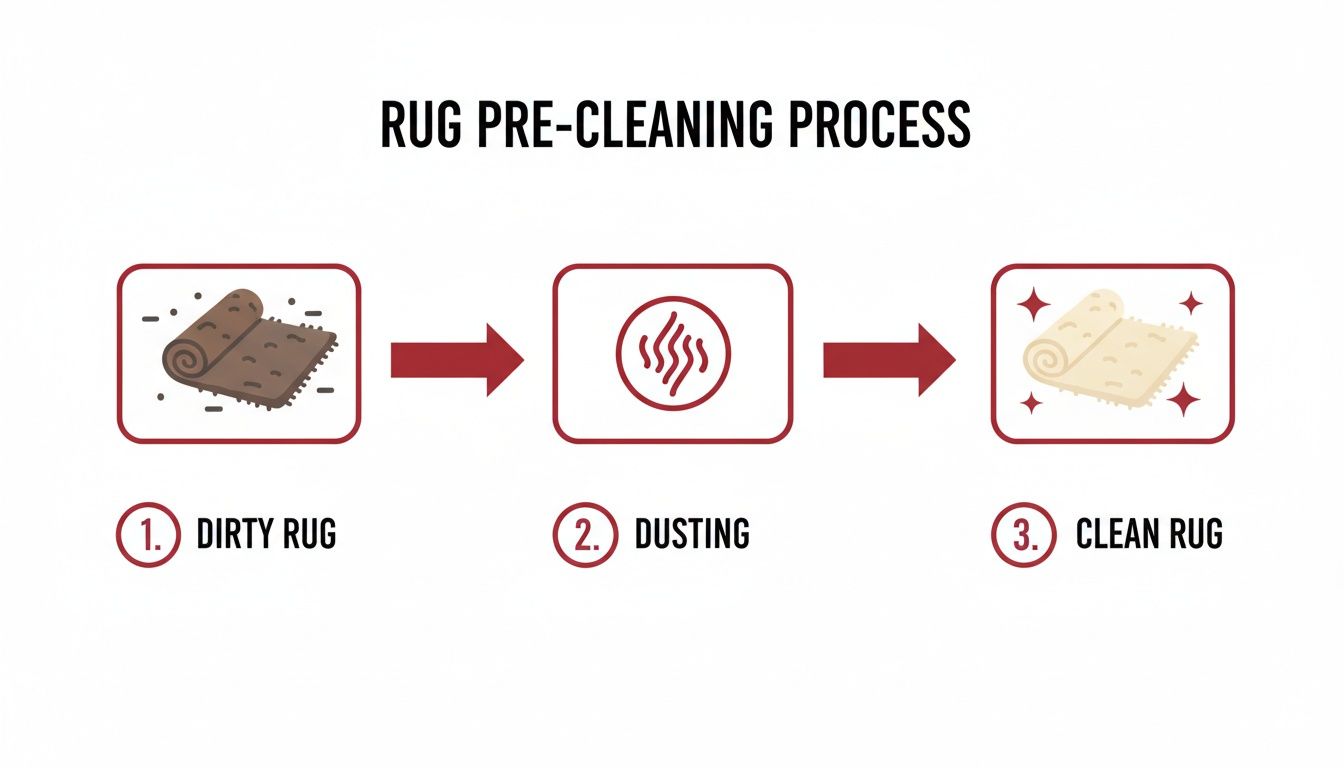
As you can see, removing that dry, abrasive soil is non-negotiable. Skipping this step and going straight to washing would grind dirt deep into the rug's foundation and cause irreversible fiber damage.
Why This Method Is The Gold Standard
The difference between a professional immersion wash and other cleaning methods is significant. Improper cleaning techniques can cause a wool rug to shrink by as much as 10-15%, permanently ruining its shape and value. Our controlled immersion process completely eliminates that risk.
It's also uniquely effective for tackling pet accidents. Our wash is designed to dissolve and flush out 99% of urine crystals from deep within the rug's foundation, something surface treatments cannot achieve.
Our Takeaway: A full immersion wash is the only method to truly deep clean a wool rug. It addresses the entire structure, from the fiber tips to the foundation base. It's a complete decontamination that restores a rug's hygiene and beauty from the inside out.
Many common cleaning methods introduce excessive heat and moisture, which is incredibly damaging to delicate wool fibers. To understand the potential pitfalls, we explain why steam cleaning is not suitable for most area rugs.
A direct comparison highlights the value of our professional process.
Professional Immersion Washing vs At-Home Surface Cleaning for Wool Rugs
| Feature | Professional Immersion Wash (Rubber Ducky Rugs) | At-Home Surface Cleaning |
|---|---|---|
| Cleaning Depth | Flushes contaminants from the entire rug, including the foundation. | Cleans only the top surface fibers, leaving deep dirt and allergens behind. |
| Pet Odor Removal | Removes 99% of urine salt crystals for complete odor elimination. | Often masks odors temporarily; fails to remove the source of the smell. |
| Drying Process | Controlled drying in a climate-regulated room to prevent shrinkage and mold. | Uncontrolled air-drying can lead to browning, dye bleed, and mildew growth. |
| Risk of Damage | Zero risk of shrinkage or dye bleed with our controlled methods. | High risk of fiber damage, browning, shrinkage (10-15%), and color run. |
| Lanolin Preservation | pH-neutral, wool-safe cleansers protect the wool’s natural protective oils. | Harsh, high-pH detergents can strip lanolin, leaving fibers dry and brittle. |
| Final Result | A truly clean, soft, healthy, and vibrant rug restored from the inside out. | A superficially "clean" rug that may be hiding damage and residual dirt. |
This meticulous, fiber-safe washing process is the cornerstone of the Rubber Ducky Rugs promise. It's how we ensure every wool rug we handle receives the absolute highest standard of care.
Controlled Drying and Final Grooming
How a wool rug dries is as important as how it's washed. This stage is where many cleaning efforts fail, often leading to irreversible damage. Mildew, cellulosic browning (ugly yellow or brown discoloration), or a warped foundation are all classic signs of improper drying.
At RubberDuckyRugs.com, we see this final step as crucial for a professional result. It’s where we lock in the rug's structural integrity and restore its beauty. Our method is a scientifically managed system designed to protect your investment.
The Climate-Controlled Drying Environment
The moment your rug is out of its final rinse, we move it directly to our dedicated, climate-controlled drying room. This is an environment where we meticulously manage every detail to guarantee a safe, fast, and effective drying process.
Here’s how our controlled environment works:
- Managed Airflow: We use specialized air movers that create a steady, gentle breeze across the entire rug. This prevents damp spots, which are a primary cause of mildew and odors.
- Precise Temperature Control: The room is held at a moderate temperature. This encourages water to evaporate efficiently without harsh heat that could shrink or damage wool fibers.
- Humidity Management: High-powered, industrial dehumidifiers run constantly, actively pulling moisture from the air. This dramatically cuts down drying time, which is essential for stopping mold or mildew before they can form in the rug’s foundation.
This carefully orchestrated process gets your rug dry evenly and quickly, usually in just a few hours, eliminating the risks of slow, uncontrolled air drying.
A rug that stays damp for more than 24 hours is at a very high risk of developing mildew. This can rot the fibers and leave behind a musty smell. Our professional drying rooms slash the drying time, eliminating this danger entirely.
Final Grooming for Perfect Texture
Once we confirm the rug is 100% dry, the process is not quite finished. The washing process can leave the wool pile looking disheveled. Our specialists step in for a final grooming to reset the pile and restore its original, luxurious feel.
Using soft, purpose-built grooming tools, we gently brush the fibers back into their natural direction. This small detail makes a huge difference. It lifts and separates the fibers, bringing back that plush softness. It also helps light reflect evenly across the surface, making the colors pop and the design look crisp and clear.
The Final Quality Inspection
Before preparing your rug for its return, it goes through one last, thorough inspection. A senior technician reviews every square inch, comparing it to the notes and photos from our initial assessment. We are checking for perfect cleanliness, uniform texture, and a complete absence of odors.
This final check is our promise of quality. It ensures that every detail has been addressed and that the rug meets our exacting standards. Only after a rug passes this inspection do we consider applying a protective treatment. Our professional-grade rug stain guard provides an invisible shield against future spills and stains.
This complete, end-to-end process is how we deliver consistent, beautiful results for our customers. We ensure every wool rug receives the absolute best care.
Common Questions About Professional Wool Rug Care
Our specialists have spoken to thousands of wool rug owners, from bustling cities like New York and Los Angeles to smaller towns all over the country. While every rug is unique, the questions we receive are often very similar. Here are answers to the most common inquiries.
How Often Does My Wool Rug Need Professional Cleaning?
For a typical wool rug in a living room or bedroom with normal foot traffic, we recommend professional deep cleaning every 12 to 24 months. This is not just about surface dirt; it is about removing the deep-seated, abrasive grit that vacuums cannot reach. This hidden grit slowly grinds down and wears out the wool fibers over time.
Certain situations call for a more frequent schedule:
- High-Traffic Zones: Rugs in hallways or main family rooms benefit from professional cleaning every 6 to 12 months.
- Homes with Pets: To manage dander, oils, and accidents, a 6 to 12-month schedule is recommended for the rug's health and your home's air quality.
- Allergy Concerns: If your family struggles with allergies, cleaning your rug every 6 months can make a significant difference by removing trapped dust and allergens.
Professional cleaning is proactive maintenance. It is the single best thing you can do to preserve your rug's structure and beauty for generations.
Can You Remove Old Pet Stains and Odors?
Yes, and this is where our full immersion washing process excels. The source of pet urine odor is not on the surface; it is the salt crystals that penetrate deep into the rug’s foundation fibers. At-home spot cleaning only addresses the top layer, leaving the crystals behind and allowing the smell to return.
Our method submerges the entire rug, allowing our wool-safe, pH-balanced solutions to fully dissolve and flush out those deeply embedded urine salts. It is the only way to truly neutralize the odor at its source. While some very old stains may cause permanent discoloration, our process offers the absolute best chance of removing them completely.
At-home spot treatments are a temporary fix that masks pet odors. Our professional immersion wash is engineered to get to the root of the problem, flushing contaminants from the very core of your rug for a truly hygienic clean.
Is Your Cleaning Process Safe for My Antique Rug?
Absolutely. Our entire cleaning system was designed with delicate, valuable, and antique rugs in mind. We treat every heirloom with meticulous care, starting with a thorough pre-cleaning inspection where we analyze fiber strength, check foundation integrity, and test every color for dye stability.
We use cool, softened water and gentle, pH-neutral cleansers specifically formulated for natural fibers and fragile dyes. Everything is done in a controlled environment to prevent any risk of shrinkage, color bleeding, or structural damage. Our methodical approach preserves the history and beauty of your most cherished pieces.
Why Shouldn't I Use a Rental Cleaning Machine on My Wool Rug?
Rental machines are designed for synthetic, wall-to-wall installations and are incredibly destructive to natural wool fibers. Their high-pH detergents strip the natural lanolin oil from the wool, leaving fibers dry, brittle, and prone to breaking.
Worse, these machines blast hot water into the rug but lack the power to extract it effectively. This oversaturation leads to mildew, browning, a warped foundation, and permanent dye bleed. Using a rental machine on a wool rug is a gamble that can cause irreversible damage.
For a professional, fiber-safe cleaning that protects your investment, trust the specialists at Rubber Ducky Rugs. We provide expert care with local service availability in cities large and small across the country. Call, text, or book your cleaning online today for fast, reliable service.