



When you're looking for the best rug for a high traffic area, your focus should be on two things: a dense, low-pile construction and durable materials like wool or a high-performance synthetic. These are the non-negotiables that ensure a rug can handle the constant foot traffic in busy spots like hallways, entryways, and living rooms without showing premature wear.
Your Professional Guide to High Traffic Rugs
Selecting a rug for a busy part of your home is about much more than finding a color or pattern you like. It's a practical decision that requires a balance of great style with serious resilience. The right rug can protect your floors, muffle sound, and tie a whole room together, while the wrong choice can quickly become a flattened, worn-out eyesore.
At Rubber Ducky Rugs, our specialists across the country help clients make smart, lasting investments in their area rugs every single day. We are a dedicated rug-only company, providing specialized care for fine textiles.
When our trained specialists evaluate a rug for durability, we look at three core pillars: its material, its construction, and its pile density. Understanding how these three elements work together is the secret to choosing a rug that will look fantastic even with heavy daily use.
Key Factors for Durability
-
Material Strength: Natural fibers like wool are incredible. They have a natural crimp in the fiber that acts like a spring, allowing them to bounce back after being walked on. On the synthetic side, high-quality options like nylon are engineered from the ground up for extreme toughness and stain resistance.
-
Construction Integrity: How a rug is put together is a huge predictor of its lifespan. Machine-made rugs with a high knot or point density are woven very tightly, making them far better equipped to handle heavy footfalls. Hand-knotted rugs are the premium choice and are famous for lasting generations.
-
Pile Height: This one is crucial. Low-pile rugs, like flatweaves, are your best friend in high-traffic zones. Their short fibers don't trap as much dirt, are less likely to get crushed and matted, and won't become a tripping hazard, making them perfect for entryways and hallways.
One of the biggest mistakes we see is the assumption that any thick, plush rug is durable. The truth is, a high, shaggy pile will quickly mat down in a busy hallway, creating worn-in traffic lanes.
Embedded dirt is the enemy of any rug. The abrasive particles and debris that get tracked in and grind their way deep into the fibers cause a rug to age prematurely. You can learn more about the hidden life inside your rug to understand why our professional washing is so important for its longevity.
Making an informed choice from day one ensures your rug holds up to the demands of a busy home. With our coast-to-coast rug cleaning expertise, Rubber Ducky Rugs is here to help you protect that investment. Our teams in major cities from New York to Los Angeles provide the professional rug washing needed to maintain the beauty and integrity of your high-traffic rugs for years to come.
Quick Guide to High Traffic Rug Characteristics
To make it even simpler, we've put together this quick-reference table. Think of it as our professional cheat sheet for spotting a rug that's built to last.
| Characteristic | Why It's Critical for Durability | Our Professional Recommendation |
|---|---|---|
| Durable Material | The foundation of a long-lasting rug. The fiber must resist crushing, abrasion, and staining. | Wool for natural resilience and soil hiding. Nylon or Polypropylene for synthetic toughness. |
| Low Pile Height | Shorter fibers are harder to crush, require professional cleaning less frequently, and pose less of a tripping hazard. | Look for a pile height of 1/4 inch or less. Flatweaves are an excellent choice. |
| Dense Construction | A high knot or stitch count means the fibers are tightly packed, providing better support. | When you bend a corner of the rug back, you should barely see the backing material. |
| Effective Color/Pattern | Darker colors and intricate patterns are brilliant at hiding minor stains and daily dirt between professional cleanings. | Consider multi-tonal rugs, traditional patterns, or modern abstract designs. |
Ultimately, choosing the right rug is about matching its specific characteristics to the demands of your space. By prioritizing these features, you'll find a rug that not only completes your room but also stands strong against the daily chaos of a well-lived life.
Choosing Rug Materials That Endure
When you’re looking for a rug that can stand up to the daily chaos of a busy home, the material it’s made from is everything. It's the first major decision you'll make, and it really comes down to choosing between natural and synthetic fibers. Each has its own unique strengths when it comes to resilience.
This is the same starting point our specialists at Rubber Ducky Rugs use when we assess a rug for cleaning. From Philadelphia to Phoenix, we provide homeowners with expert insights on rug materials, ensuring their beautiful pieces receive the proper, fiber-specific care required for a long life.
The Timeless Strength of Natural Fibers
There's a reason wool has been the gold standard for high-quality, long-lasting rugs for centuries. Its fibers have a natural crimp, almost like a tiny spring, that allows them to bounce right back after being stepped on. This built-in resilience is exactly what stops a rug from looking crushed and matted in a busy hallway or living room.
Wool also has a secret weapon: lanolin. This natural waxy coating provides an initial defense against stains and soil, which helps it look clean for longer between washes. And when it is time for a deep cleaning, its fibers respond beautifully to professional care. If you've invested in a quality wool piece, it pays to understand why expert handling matters—you can learn more about the best way to clean wool rugs from our own specialists.
High-Performance Synthetic Fibers
Engineered for the demands of modern life, synthetic fibers bring incredible toughness to the table, often at a great price point. The two you’ll see most often are nylon and polypropylene, and both are fantastic choices.
- Nylon: If you need a true workhorse, look no further. Nylon is famous for its exceptional durability and resiliency. The fibers are specifically designed to fight back against abrasion, crushing, and staining, allowing it to hold up under years of heavy use.
- Polypropylene (Olefin): This material is a champion when it comes to resisting stains, moisture, and fading. Because it's "solution-dyed"—meaning the color is an integral part of the fiber—it won't lose its vibrancy even in a sun-drenched room. Its ability to repel moisture also makes it an excellent choice for areas prone to spills.
The flowchart below gives you a great visual for how material, construction, and pile height all work together to define the perfect high-traffic rug.
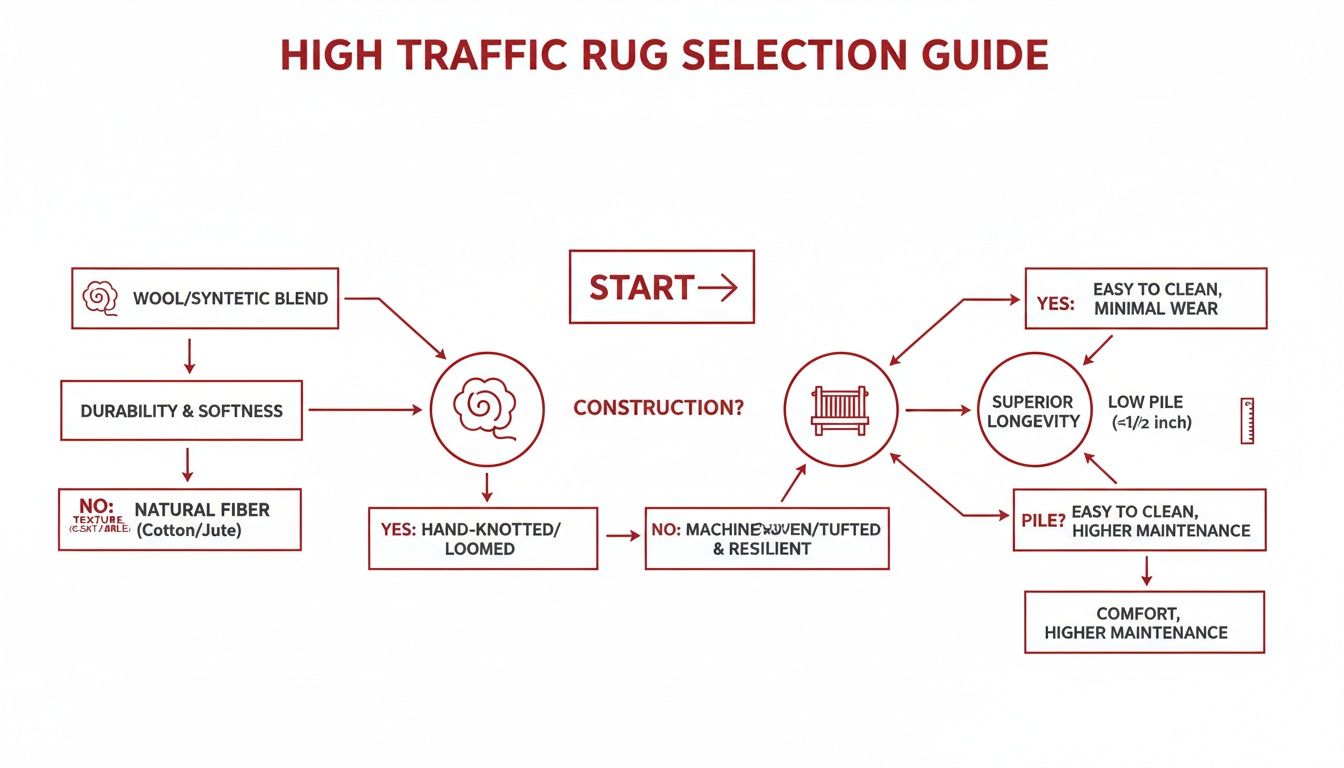
As you can see, your choice of material is the critical first step. It has a massive impact on how long your rug will last. For instance, a quality nylon rug can easily last 10 to 15 years under heavy foot traffic because its engineered fibers resist wear so effectively. On the other hand, a wool rug maintained with professional washing can become a family heirloom, sometimes lasting over 50 years while keeping its softness and color.
How a Rug Is Made Really Matters for Durability
It's easy to focus on the material a rug is made from, but how it's actually put together is just as crucial for its lifespan. The physical structure determines how well it can stand up to the daily grind of feet, furniture, and dirt. When you're searching for a rug that can handle a busy area, you need to look at its weave and pile just as closely as its fiber.
At Rubber Ducky Rugs, our specialists from San Francisco to Miami don't just look at stains; they assess a rug's fundamental construction. This insight tells us everything about its structural integrity and guides our professional rug washing process. Knowing what we look for will empower you to pick a rug that's truly built to last.
Why a Tight Weave Is Your Best Friend
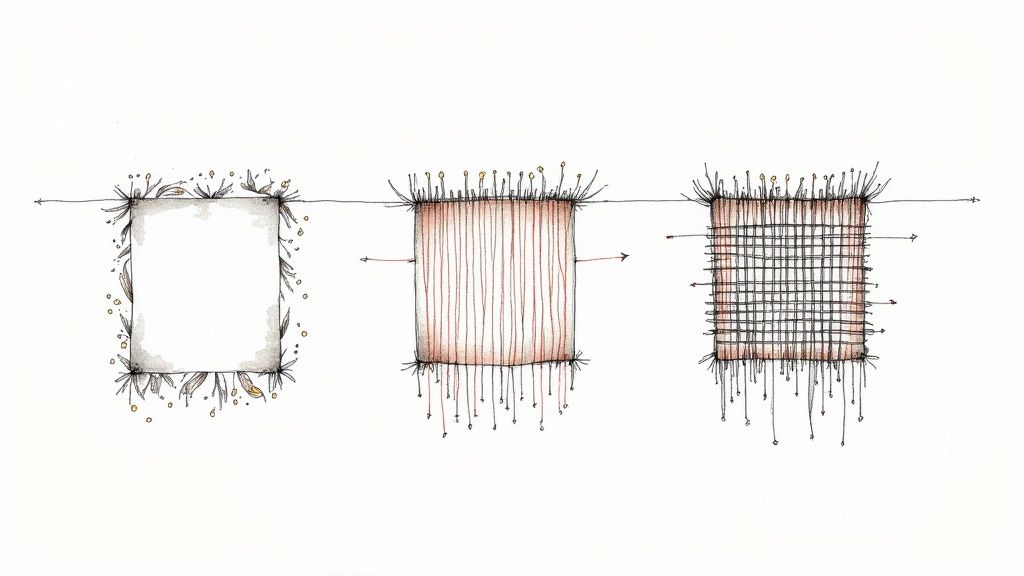
If there's one construction detail to remember, it's weave density. This is simply how tightly the fibers are packed together. A dense, tight weave creates a rock-solid surface that fights back against matting and crushing. It's far more resilient than a loose, shaggy rug where fibers have room to get squashed.
Think of it like a freshly sodded lawn versus a patchy one. A dense cover of grass is tough to disturb, but a sparse lawn with loose soil wears away quickly. A rug with a high stitch count or tons of knots per square inch offers that same solid foundation.
A quick professional tip: bend a corner of the rug back on itself. In a quality, dense rug, you should barely see the backing material. If you see a lot of the backing peeking through, that weave is too loose for a high-traffic area.
Pile Height: Shorter Is Stronger
Pile height is the other piece of the puzzle. It’s the length of the fibers, measured from the backing to the very tip. For those workhorse areas like hallways, entryways, and family rooms, a low pile is almost always the best option.
- Low-Pile Rugs (¼ inch or less): These are the champions of high-traffic zones. Their short, tight fibers don't trap as much dirt, they resist getting crushed flat, and they're less of a tripping hazard.
- High-Pile Rugs (over ½ inch): We all love a soft, plush shag rug, but they cannot withstand constant traffic. The long fibers get matted down quickly, creating "traffic lanes," and they require professional washing to get truly clean.
For the absolute toughest spots, you can't beat a flatweave rug. With no pile at all, its construction is inherently strong and incredibly resilient.
And a final pro tip: to give any rug a fighting chance, ask our team about applying a protective rug stain guard after a professional washing. It creates an invisible shield that helps repel spills and dirt, giving you more time to address accidents before they become permanent stains.
Using Patterns and Colors to Hide Wear
You can pick the toughest, most durable rug in the world, but how do you keep it looking good between professional cleanings? The secret is choosing visual elements that work for you, not against you. The right patterns and colors are your first line of defense, brilliantly camouflaging the inevitable dirt, dust, and minor wear that comes with a busy home.
Think of it as a practical design hack. You want a rug that's not just physically tough, but also visually forgiving. This simple strategy ensures it looks fresh for much longer.
Embrace Multi-Tonal Designs
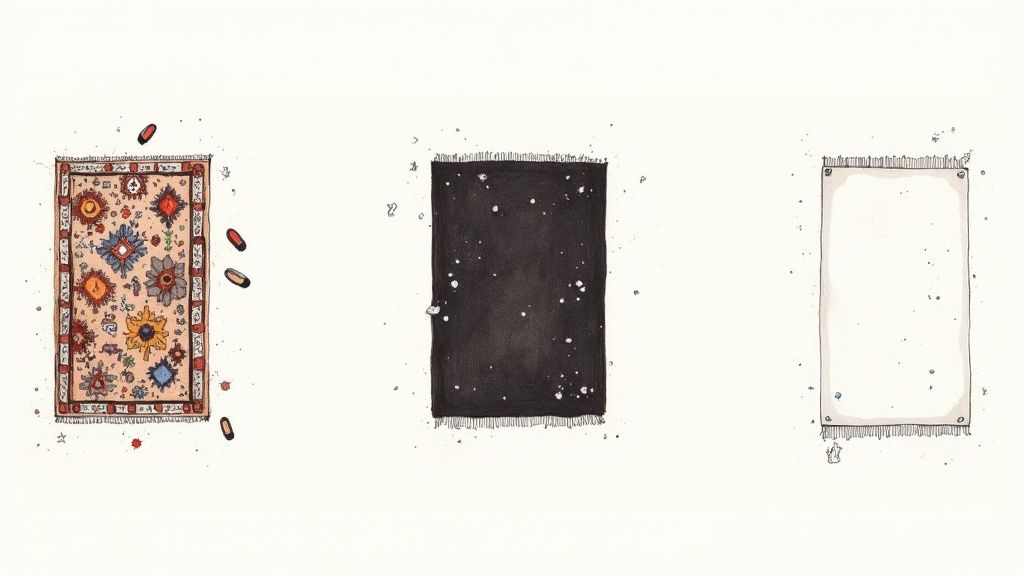
Let’s be honest: solid, light-colored rugs are gorgeous, but in a busy hallway, they highlight every speck of dirt and every tiny spill. A multi-toned rug, on the other hand, is much more practical. It weaves together several related shades to create a surface that's incredibly forgiving.
Here are a couple of great options:
- Heathered or Flecked Rugs: These have little specks of different colors woven in, creating a textured look that is fantastic at masking everyday soil.
- Variegated Colors: Rugs with subtle, gradual color shifts or an ombre effect do a wonderful job of distracting the eye from minor imperfections.
This isn't about hiding a mess; it's about smart design that keeps your home looking tidy.
The Power of Intricate Patterns
When it comes to hiding life's little accidents, complex patterns are your best friend. The busier the design, the better it is at disguising footprints, stray pet hairs, and small spots. There's a reason traditional Oriental and Persian rugs have been popular for centuries—their intricate, detailed motifs are as practical as they are beautiful.
A well-chosen pattern doesn't just add style; it adds camouflage. It works with you to maintain your home's appearance, cleverly hiding minor incidents until your next scheduled professional rug cleaning.
Don't love traditional looks? No problem. Modern abstract designs pull off the same trick. Their non-uniform lines and shapes mean a small stain or smudge just looks like part of the art, rather than an obvious flaw.
Choose Forgiving Colors
Even with a great pattern, the color palette is critical. It’s no surprise that darker colors are generally more forgiving than lighter ones. Shades like charcoal, navy, deep brown, and rich jewel tones are masters at concealing dirt.
Earth tones are another fantastic choice. Colors like terracotta, olive green, and slate have a natural, grounded look that hides soil and dust beautifully. Combine a forgiving color with a busy pattern, and you've got a rug that's truly equipped to handle everything daily life throws at it.
Why Professional Rug Maintenance is a Must
Choosing a tough rug is only half the battle. You can pick the most durable materials and the tightest weave, but without proper care, even the hardiest rug will eventually show its age. While regular vacuuming helps, it is not a substitute for deep, professional rug washing.
Attempting to clean rugs with household products can cause significant damage. Harsh chemicals can strip the natural lanolin from wool, cause colors to bleed, and often leave behind a sticky residue that attracts even more dirt. Over time, you’re not just cleaning the rug; you’re weakening its very fibers.
Protecting Your Investment with Expert Care
Regular vacuuming is fantastic for grabbing surface-level debris. But it can’t touch the deep-down, embedded grit that truly damages your rug's foundation. Every time someone walks on the rug, those tiny, sharp particles grind away at the fibers like sandpaper. That’s what causes the noticeable wear patterns you see in hallways and family rooms.
Only a professional rug wash can safely remove all that abrasive soil. At Rubber Ducky Rugs, we treat each rug as a unique piece, tailoring our washing process to its specific material, construction, and condition. It's a careful, multi-step system that goes way beyond a surface clean.
Our process breaks down like this:
- Thorough Dusting: We begin by using specialized equipment to gently remove the pounds of dry soil that your vacuum could never reach. The amount of hidden dirt is often shocking.
- Customized Wash: Next, your rug gets a full immersion bath with gentle, pH-balanced solutions designed specifically for its fibers. This cleans deep into the pile without causing any damage.
- Complete Rinsing: We completely flush out all cleaning agents and grime, ensuring there’s absolutely no residue left behind.
- Controlled Drying: Finally, the rug is dried in a climate-controlled room to prevent shrinking, color bleeding, or mildew from setting in.
This isn’t just about making your rug look clean. It's about getting it hygienically clean from the foundation up, which restores its original vibrant colors and soft texture.
Don't forget about a quality rug pad. It's one of the most important parts of rug care. A good pad acts like a shock absorber, cushioning the blow from every footstep and reducing friction. This one simple addition can make a huge difference in how slowly your rug wears down.
The Rubber Ducky Rugs Promise, Coast to Coast
Handing your rug over to our trained specialists is the single best way to protect your investment for the long haul. Our expert teams, located in major cities from Boston to San Diego, offer the know-how of a national company with the friendly, accessible service of a local business. We have the proven methods to keep high-traffic rugs looking incredible.
With new locations opening nationwide to meet growing demand, our professional care is never too far away. Protect the beauty and life of your rug. For a professional wash that gets real, reliable results, contact Rubber Ducky Rugs to schedule a service today.
Your High-Traffic Rug Questions, Answered
When you're trying to pick the perfect rug for a busy part of your home, many of the same questions tend to pop up. Drawing from our years of experience at Rubber Ducky Rugs, we've put together some straightforward answers from our expert specialists to help you make the right call.
What's the Best Rug Material for a Home with Pets and Kids?
For a home full of life—and the occasional mess that comes with it—we almost always point people toward high-performance synthetic fibers like nylon and polypropylene. These modern fibers are specifically engineered to be tough and incredibly stain-resistant, which is exactly what you need for spills and constant foot traffic.
If you prefer natural fibers, you can't go wrong with wool. It's a fantastic choice because its natural oils provide a surprising degree of liquid repellency, and its spring-like fibers bounce back beautifully from being walked on.
Both synthetics and wool will eventually trap dirt, allergens, and odors deep down. That’s where professional washing makes all the difference. Our specialists use a professional process for tackling pet stains and odors that safely and thoroughly restores your rug.
How Often Should I Get My High-Traffic Rug Professionally Cleaned?
For most rugs in busy areas like living rooms or hallways, we suggest a professional washing every 12 to 18 months. This isn't just about appearance; it's about removing the deep-down, abrasive grit that acts like sandpaper on the fibers, causing them to wear out faster.
If you have pets, small children, or anyone with allergies at home, you might want to schedule a professional cleaning every 6 to 12 months. Staying on top of cleanings contributes to a healthier home environment and significantly extends the life of your rug.
Is a Low-Pile or High-Pile Rug Better for a Hallway?
For a hallway, entryway, or any major walkway, a low-pile rug is the hands-down winner. We recommend them for a few very practical reasons:
- It’s tougher: The short, tight weave of a low-pile rug can take a beating from constant walking without showing wear as quickly.
- It cleans more effectively: Dirt and debris tend to sit on the surface, making professional dust removal more effective and preserving the rug's integrity.
- It’s safer: A lower profile means less of a tripping hazard, which is a big deal in a narrow or busy space.
Plush, high-pile rugs feel amazing underfoot, but they tend to get crushed and matted in high-traffic zones. Save those luxurious rugs for places like bedrooms, where comfort is the main goal.
Does a Rug Pad Really Make a Rug Last Longer?
Yes, one hundred percent. A quality rug pad is a non-negotiable part of your investment. It plays a huge role in protecting your rug, especially in a busy area.
A rug pad is essentially a shock absorber for your rug. It takes the brunt of every footstep, reducing the daily friction and stress that wears down the rug's fibers and backing over time.
Beyond that, a good pad keeps the rug from slipping and sliding around (a major safety plus) and allows for better airflow, which helps protect your floors from trapped moisture or grit. We always tell our clients that a proper rug pad is the single best thing you can do to get the most life out of your rug.
Choosing and caring for the right rug is a real investment in your home. The experts at Rubber Ducky Rugs are here to help you protect it. Serving clients across the United States, we provide the deep, professional washing your high-traffic rugs need to stay beautiful for years to come. You can book your rug cleaning quickly and easily online at https://rubberduckyrugs.com.