A Tuesday in Mountain Brook. You walk in after work, drop your bag in the hall, and the wool rug under your foot is damp in the same corner it was damp last week. The dog is fed, walked, friendly, and not remotely sorry.
That pattern, a dog going back to the same patch of carpet, is the shape most indoor accidents take, and it rarely comes down to a dog being difficult or an owner being careless. What it usually comes down to is timing, an odor cue sitting below the pile, and occasionally a health issue nobody has checked yet. Get those three in the right order and the problem often fades faster than expected.
What follows is the practical sequence: a schedule built around the moments a dog physically can't postpone, a pattern check that separates a training gap from a medical one, a cleanup that removes the cue rather than just the stain, and a way to break the return-to-the-same-spot cycle for good. This is how to keep a dog from peeing on carpet without a single raised voice, whether you live in Birmingham, Hoover, Vestavia Hills, or anywhere else in the metro.
A Daily Potty Schedule That Keeps Accidents Off the Carpet
The first thing to check isn't the dog's attitude. It's the clock.
Come home to a damp patch at 6 p.m. when the dog's last trip outside was 8 a.m. and you don't have a stubborn dog, you have a ten-hour gap no bladder is built to cover. Replace guesswork with a schedule tied to the moments a dog can't hold, and a large share of indoor accidents stop before any training conversation begins.
Puppies run on tighter limits. The American Kennel Club's guidance on house training reports that many puppies cannot reliably control their bladder until approximately 16 weeks of age, and the commonly used ceiling is age in months plus one hour, so a 4-month-old may manage about 5 hours under ideal conditions. That's a maximum, not a routine target to build a workday around. Very young puppies may need a trip as often as every 15 minutes, depending on activity, feeding, waking, and individual bladder capacity.
The Outdoor Trigger Table
Treat each row as a fixed appointment rather than a suggestion, and set the next trip before the previous window closes.
| Trigger | When to Take the Dog Out | Why It Matters |
|---|---|---|
| Waking up | Within a few minutes of waking | Bladder pressure builds during sleep |
| After eating or drinking | About 15 to 30 minutes after each meal | Digestion and drinking fill the bladder quickly |
| After play or excitement | Right after a play session | Activity increases the urge to urinate |
| Routine interval for adults | Every 4 to 6 hours | Limits long gaps when no trigger has occurred |
| Before leaving or bedtime | Last trip before you leave or go to sleep | Prevents long unsupervised gaps on the carpet |
| Puppy hold-time ceiling | Roughly age in months plus one hour | A maximum under ideal conditions, not a routine target |
Supervision and frequent outdoor trips beat waiting for the dog to signal, every time. A dog that has been taught to ask politely still asks late, and a dog that has never been taught to ask gives you nothing at all.
The schedule rule: if every trigger above is already covered and accidents keep happening, do not stretch the waits or add another trip. Move to the medical pattern check and tighten carpet access in the same week.
Owners often loosen the schedule the moment a good week appears, then feel blindsided when the rug gets hit again. Hold the routine through a sustained accident-free stretch before you give back any freedom, and give it back one room at a time.
Medical Causes to Rule Out Before Retraining
A dog that has been reliable in the house for four years and suddenly starts urinating on the carpet isn't being spiteful. Something changed, and the change may have nothing to do with training.
The ASPCA's behavioral help guidance draws the line clearly. A 9-week-old puppy urinating indoors without supervision is usually a normal training gap. A 5-year-old dog that suddenly begins urinating inside after years without mistakes may have a medical condition. Same puddle, completely different next step.
Veterinary guidance groups house-soiling into four broad causes:
- Incomplete or deteriorated training, where the routine slipped or was never fully finished
- Physical illness, including urinary infections, bladder stones, and conditions that increase thirst
- Behavioral problems such as fear or anxiety around noise, visitors, or being left alone
- Urine marking, which is usually smaller volume and aimed at vertical surfaces
VCA Animal Hospitals advises starting training the day a dog enters the home and notes that puppies are typically ready for more freedom after 8 to 12 weeks without accidents, which gives you a fair yardstick for deciding whether your adult dog's setback is a training issue or something else.
Matching What You See to the Next Step
| What You Notice | Likely Cause | Next Step |
|---|---|---|
| Sudden accidents in a reliably trained adult | Possible urinary infection, pain, or other illness | Book a veterinary exam |
| Frequent urination, straining, or extra thirst | Urinary disease or systemic illness | Book a veterinary exam soon |
| Accidents during sleep or without warning | Possible incontinence or medical cause | Ask your vet to check |
| Small amounts on walls, doors, or furniture | Urine marking | Discuss behavior options with your vet |
| Accidents linked to outdoor noise or visitors | Fear or anxiety | Use desensitization and a sheltered elimination spot |
| Repeated accidents in a puppy under about 16 weeks | Normal training gap | Increase supervision and outdoor trips |
Fear-driven soiling is easy to misread as defiance. VCA's notes on house soiling point out that a dog frightened by outdoor noises may need desensitization or a quieter, sheltered spot to eliminate, not a stricter tone at the door.
Watch for the details that point straight to the vet: accidents during sleep, straining to urinate, blood in the urine, or a sudden jump in water intake. Those are examination triggers, not training triggers.
Cleaning up prevents odor from driving repetition, but it can't resolve pain, urgency, or incontinence. If you catch a dog marking in real time, interrupt calmly and redirect it outside rather than frightening it. A startled dog learns to hide the behavior, which makes the pattern harder to find.
How to Reward Outdoor Peeing Without Punishment
After a carpet accident, the dog may return to the same area because of a habit, lingering scent, or easy access. A steady outdoor routine builds a clearer alternative: the right place, followed immediately by a reward.
- Choose one outdoor spot. Take the dog to the same patch of grass or gravel each time. Familiar surroundings can help the dog settle into the routine.
- Give the dog time to sniff. Wait without coaxing or distracting. Sniffing is part of exploring the spot.
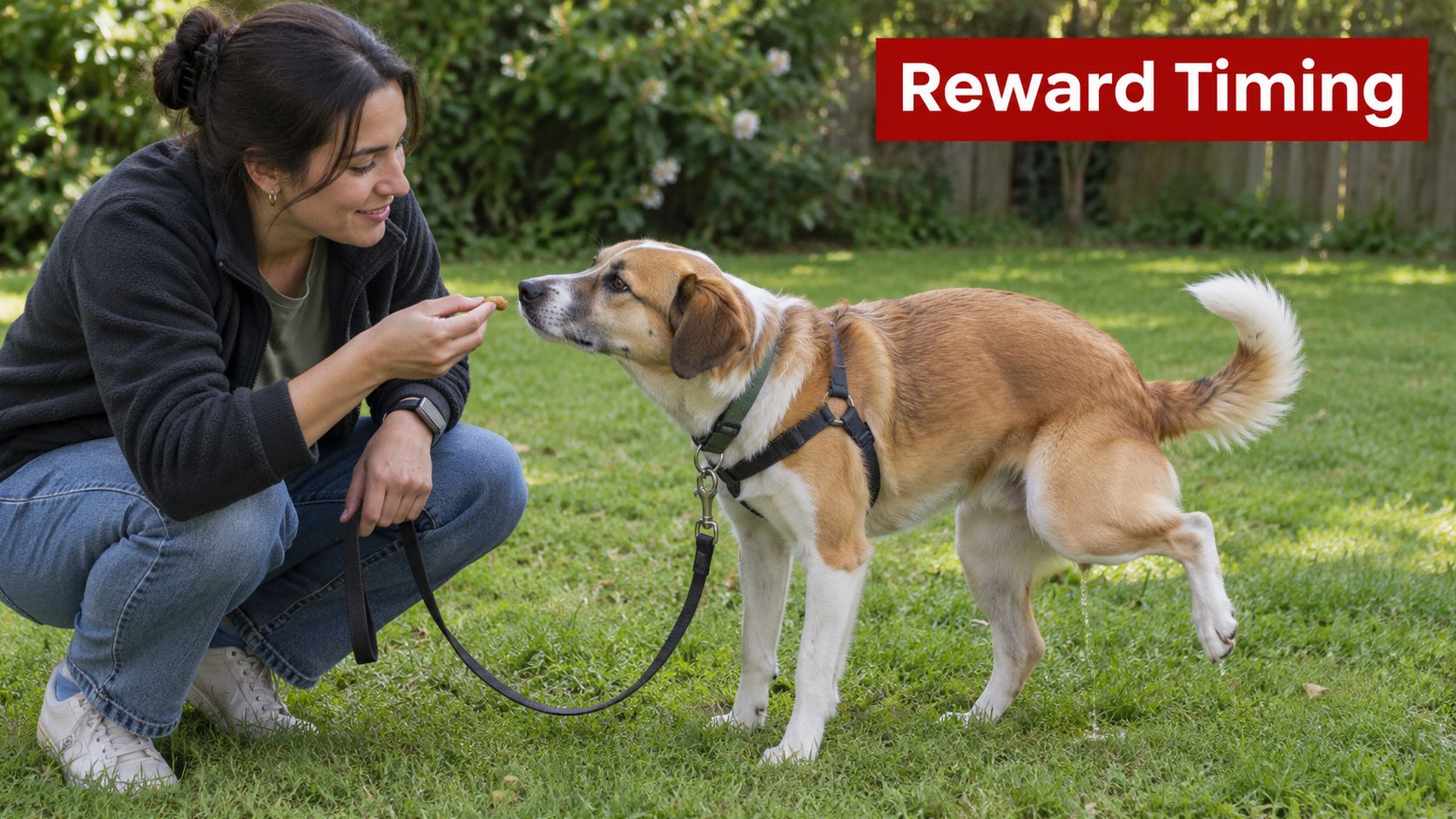
- Reward as soon as urination ends. Offer a treat, praise, or a short play session while you are still outside. The American Veterinary Society of Animal Behavior presentation notes include immediate positive reinforcement among the protocol's components. A reward at the door comes too late to clearly connect it with peeing in the chosen spot.
- Manage indoor access. Keep the dog nearby and in sight, or use a crate or gated room when direct supervision is not possible. This reduces chances to revisit carpet spots while the outdoor routine takes hold.
- Respond calmly to an accident in progress. Interrupt gently and take the dog outside. The same behavioral guidance recommends supervision, frequent access to the preferred site, immediate positive reinforcement, and avoiding physical punishment.
- Keep a simple log. Note outdoor trips and whether the dog peed. The pattern can help you adjust the schedule and spot changes that may need attention.
Scolding after discovering a dried accident does not teach the dog where to pee. A delayed correction can instead make the dog wary of eliminating near you, so keep rewards timely and responses calm.
House-training takes time, and progress varies. Expand the dog's access gradually as the routine becomes reliable, rather than treating a few successful days as proof the pattern has changed.
If a previously reliable adult starts having repeated accidents, book a veterinary exam. A new pattern can reflect a health problem rather than a training lapse.
How to Clean a Fresh Accident Without Reinforcing It
The visible stain is not what brings the dog back. The odor is.
Urine carries scent compounds that survive a surface wipe, and a dog's nose reads them long after your eyes see nothing. That's why a spot that looks clean can keep attracting the same dog to the same square of carpet. Cleanup has to reach wherever the liquid reached.
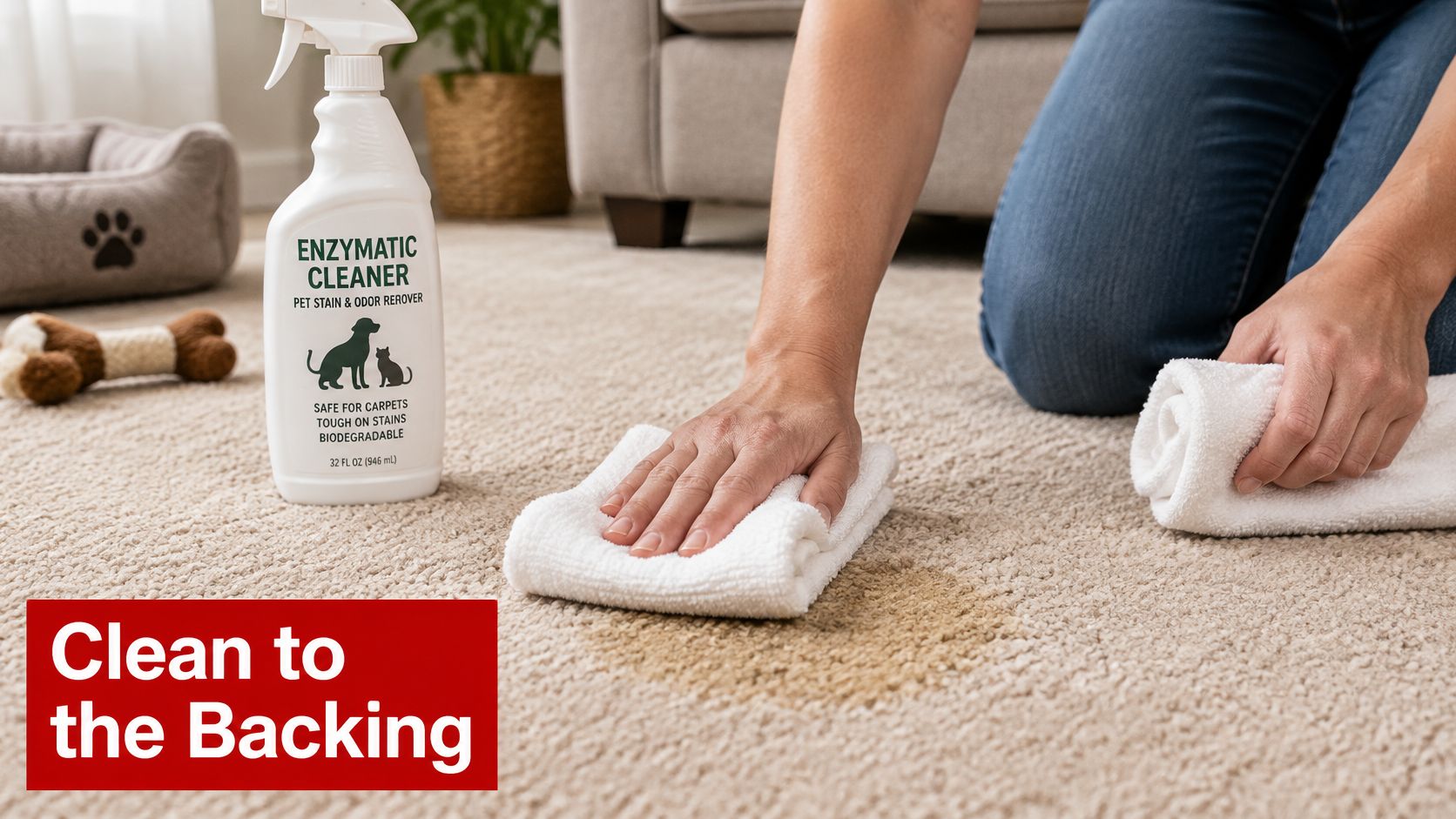
The step-by-step accident protocol for house training lays out a sequence worth following exactly:
- Blot, don't rub. Press white absorbent towels into the fresh urine and lift. Rubbing spreads liquid sideways and drives it deeper into the pile.
- Apply a pet-urine enzymatic cleaner in enough volume to reach the carpet backing and padding wherever the urine traveled. A light mist on top does nothing for what's underneath.
- Respect the dwell time on the label before blotting again. Enzymes need contact time to break down the organic material causing the smell.
- Let the area dry completely. Odor assessment only works once the fibers are dry.
- Smell the spot once dry and repeat the treatment if anything remains.
Skip these entirely on a fresh accident: ammonia-based cleaners, chlorine bleach, and steam or other heat. They can fail to neutralize urine odor, create hazardous reactions, or set residues into the fibers that make the smell harder to shift later.
For a wool, oriental, hand-woven, or dye-sensitive rug, test any product in an inconspicuous corner first, then hand the piece to a rug specialist rather than saturating it yourself. On the room-air side, an air purifier from the EcoQuest Purifiers living air range can help with lingering odor in the air, though it won't reach what's inside the fibers.
Persistent odor, a large saturated area, or urine that has clearly reached the backing means the rug needs professional pet stain removal and inspection rather than another round of spray.
Stop Repeat Spots and Treat Odor Below the Surface
Here's the habit worth questioning early: adding more cleaner to the top of the same spot.
If the scent cue is sitting in the backing, underlay, or subfloor, another layer of product on the surface changes nothing the dog can smell. Veterinary guidance describes dogs developing a settled preference for a surface like carpet and recommends blocking access to previously soiled areas unless the dog is under direct supervision. The fix is source removal plus access control, not a stronger bottle.
One Spot or the Same Spot
The answer changes the plan, so decide first.
A single fresh spot gets cleaned thoroughly, dried, and watched for a week. The same location, again and again is a substrate problem. That one needs the area gated off, the rug lifted, and the underside checked, because urine wicks down and out through the backing and into whatever sits beneath it.
If odor returns after a surface clean, treat the layers below or bring in professional inspection. A removable area rug is a genuine advantage here, since it can be isolated, flipped, inspected, and cleaned according to its fiber and backing instead of being treated like wall-to-wall carpet you can't move.
The three-part check: control access, remove the source, retrain outdoors. Miss any one of the three and the dog will usually find the spot again within a fortnight.
In Birmingham, that middle step can happen off-site. Pick-up is handled by team members when needed, who transport the rugs to the local cleaning facility and then schedule the return of the rugs to the customer, which means the soiled spot sits empty and blocked while the odor source is out of the house.
- Control access: a gate, a closed door, or rearranged furniture until the dog is reliable again
- Remove the source: enough odor neutralizer to reach every layer the urine soaked into, or professional treatment when it has gone deep
- Retrain outdoors: back to the trigger schedule and same-spot rewards until the carpet stops being an option
Repeat marking that continues despite all three is a pattern for your vet, and a rug that still smells after a proper clean is a pattern for a rug cleaner. Treat them as separate questions and you'll stop guessing. For persistent smell between professional visits, this guide to a pet urine odor eliminator covers what works at home.
When Persistent Rug Odor Needs Professional Drying in Birmingham
Some rugs don't come back with blotting and enzymes. When the smell survives a correct treatment, or urine has soaked the backing and padding, the next step is professional cleaning, not another trip to the pet store.
Household vacuuming moves surface soil and nothing more. The EPA's guidance on controlling indoor pollutants treats carpet as a reservoir for dust, dirt, pollen, mold spores, and other debris, where substantial quantities accumulate and can be released into the air during ordinary activity. Pet dander and tracked soil sit in that same reservoir.
Moisture raises the stakes. The EPA's indoor air quality guide notes that carpet left damp can become a primary source of microbial growth, and recommends cleaning and thoroughly drying water-damaged carpets and building materials within 24 hours where possible. A urine-saturated rug in a Birmingham summer is exactly that situation.
Humidity matters for the whole room, not just the rug. The EPA's health-professional guidance on indoor air pollution recommends keeping home relative humidity below 45 percent for people sensitive to dust mites, and notes that mites thrive in warm, damp conditions. Fibers that stay damp feed the same problem.
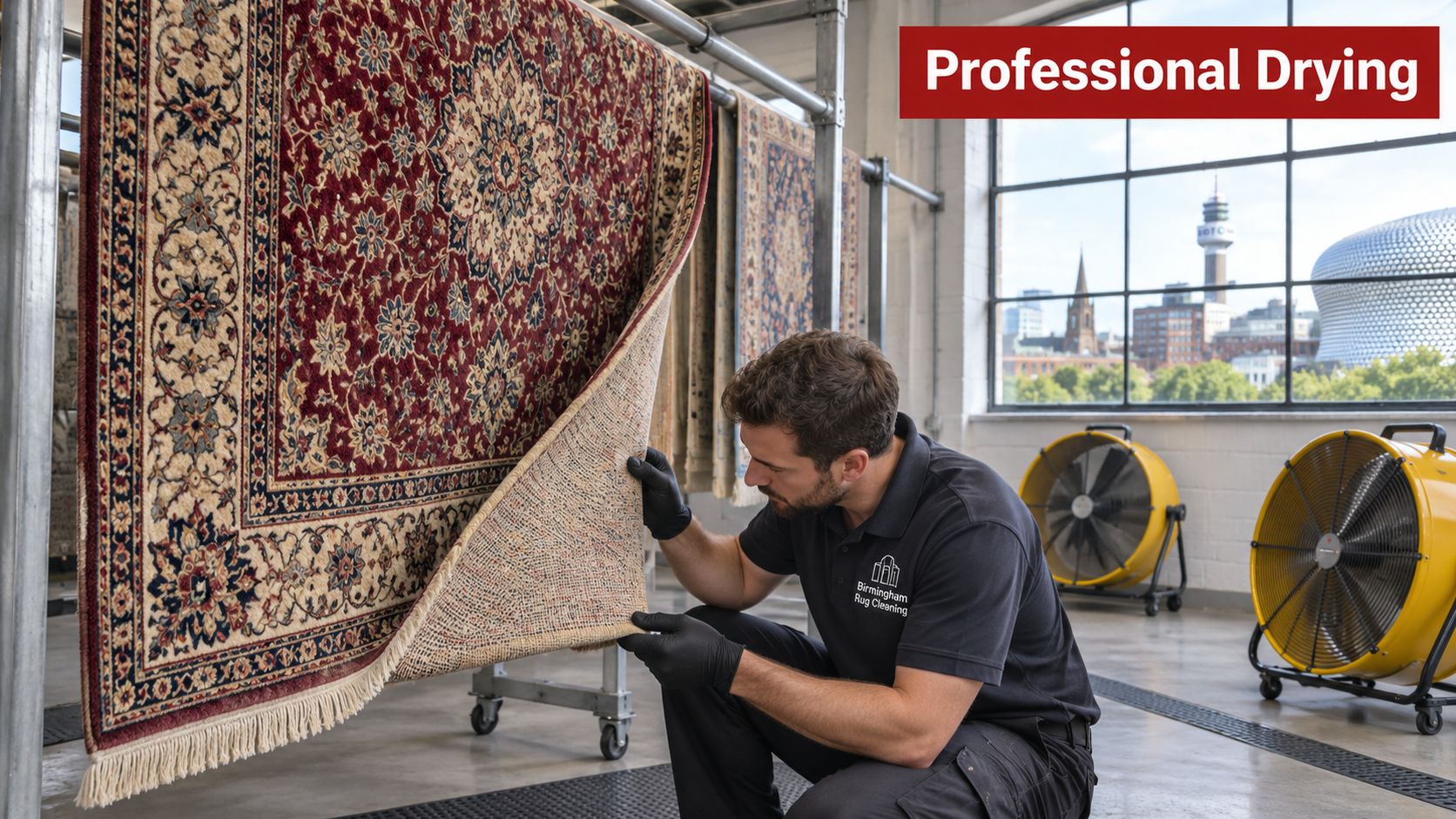
Pickup and controlled drying earn their keep. We collect the rug from homes across Birmingham, Hoover, Vestavia Hills, Mountain Brook, Homewood, Trussville, and the surrounding cities, wash it with fiber-safe methods aimed at deep stains and odor, dry it under controlled conditions rather than on a humid driveway, groom the pile back to softness, and return it to the same place in the home. Drying time depends on the fiber and construction, and this explanation of how long a rug takes to dry covers what drives it.
The practical side benefit is that pickup takes the smell source out of the house for a few days, which gives you a clean window to block the spot and rebuild the outdoor routine. Our booking form lets you flag pet urine or odors, mold, mildew or water damage, and fraying edges or moth damage when you arrange the service, so the right treatment is planned before the rug arrives.
If your dog has picked a rug and keeps going back to it, Rubber Ducky Rug Cleaning Birmingham can take the odor source out of the equation with home pickup and return across Birmingham, Hoover, Vestavia Hills, Mountain Brook, Homewood, Trussville, Pelham, Alabaster, Gardendale, and Helena, washing each rug with fiber-safe methods and controlled drying at our local facility. Call (205) 329-6488 to arrange pickup or request an estimate, and ask about the 20% discount if you'd rather drop off and collect your area rug yourself. Start with a visit to Rubber Ducky Rug Cleaning Birmingham and we'll help you figure out whether the rug needs a wash or a replacement.