
The common advice to bleach any dark patch under a rug skips the questions that matter. If you're searching for professional rug cleaning in Birmingham after a leak or storm, the water source, time spent wet, and rug construction tell you more than the stain's color. A dark mark isn't proof of black mold, and a clean-looking surface isn't proof that the backing or pad is dry.
Why Black Mold and Water Damage Need Different Responses
Say you lift your living room rug after a summer storm or dishwasher leak and find a dark outline underneath. Your first thought might be black mold, but that mark could also be a water tide line, transferred dye, or discoloration from the backing. Treating all of those possibilities with the same chemical can damage the rug without resolving the underlying problem.
Water damage is the physical event of water reaching the pile, foundation, backing, pad, or floor. Mold is biological growth that can develop when moisture persists on suitable materials. They can occur separately or together, which is why a rug-cleaning assessment should establish what got wet and what remains wet before choosing a treatment.
Restoration Starts Beneath the Surface
A professional needs more than a photograph of the dark patch. A dense wool rug, a thin synthetic runner, and a tufted rug with glued backing can absorb and release moisture differently. Their cleaning options also differ, particularly if dyes have migrated or adhesive layers have weakened.
Rubber Ducky's water damage restoration process provides Birmingham homeowners a service-focused starting point for discussing extraction, cleaning, and drying. The useful question isn't just whether a mark will wash out. It's whether the complete rug can be cleaned and dried safely, and whether the surface beneath it is ready for its return.
Working rule: Treat moisture as the first problem. Treat color as a clue, never as proof.
That approach avoids both unnecessary disposal of a recoverable rug and cosmetic cleaning of one that needs contamination assessment.
Signs, Causes, Health Risks and Remedies Side by Side
Black mold versus water damage at a glance
| Factor | Water Damage | Black Mold |
|---|---|---|
| What it is | The physical event of water reaching rug fibers, backing, pad, or floor | Fungal growth that develops when moisture persists on damp materials |
| Visible signs | Dark tide-line stains, swollen backing, wet smell, flattened or matted pile | Fuzzy or spotted growth, musty odor, discoloration that returns after cleaning |
| Typical causes | Spills, supply-line leaks, overflowing appliances, storm or flood intrusion | Unresolved wetness, damp pad or subfloor, high humidity, incomplete drying |
| Health concern | Contaminated water can create risks even without visible mold | Respiratory irritation and allergy or asthma triggers associated with damp conditions |
| Time pressure | Begin extraction and drying promptly | Don't wait for growth to spread or become darker |
| Remediation approach | Extraction, air movement, dehumidification, and a subfloor check | Correct moisture, assess contamination, and remove porous materials that can't be adequately cleaned and dried |
| Rug outcome | Often recoverable after a clean-water event with prompt, thorough drying | Professional assessment is needed; moldy porous materials may require disposal |
The Differences That Change the Cleaning Decision
The cause matters more than the size of the stain. A supply-line spill and sewage intrusion can leave similar-looking marks, but they don't belong in the same cleaning category. The EPA's mold cleanup guidance distinguishes contaminated-water situations from ordinary cleanup and explains why moldy absorbent materials may be impossible to clean completely.
The health row isn't a ranking of harmless versus dangerous. A clean-water incident primarily calls for moisture recovery, while polluted water requires a contamination decision immediately. Visible growth adds an exposure concern, but its color doesn't establish the species or the severity of the hazard.
The rug-outcome row requires a construction check. The visible pile might tolerate cleaning while the backing has separated, the pad remains saturated, or the foundation has distorted. Removing a stain won't repair those conditions.
Homeowners commonly confuse a dark tide line after a spill with mold, then make the opposite mistake when fuzzy growth appears underneath: they assume another wash will handle it. Neither conclusion is reliable without examining the underside.
For black mold vs water damage, the practical comparison is what you should do next, not which label sounds worse. A rug can be worth restoring even when it looks badly stained, while an apparently minor patch can justify stopping ordinary cleaning until contamination is assessed.
Reading the Clues on Rugs, Carpets and Floors
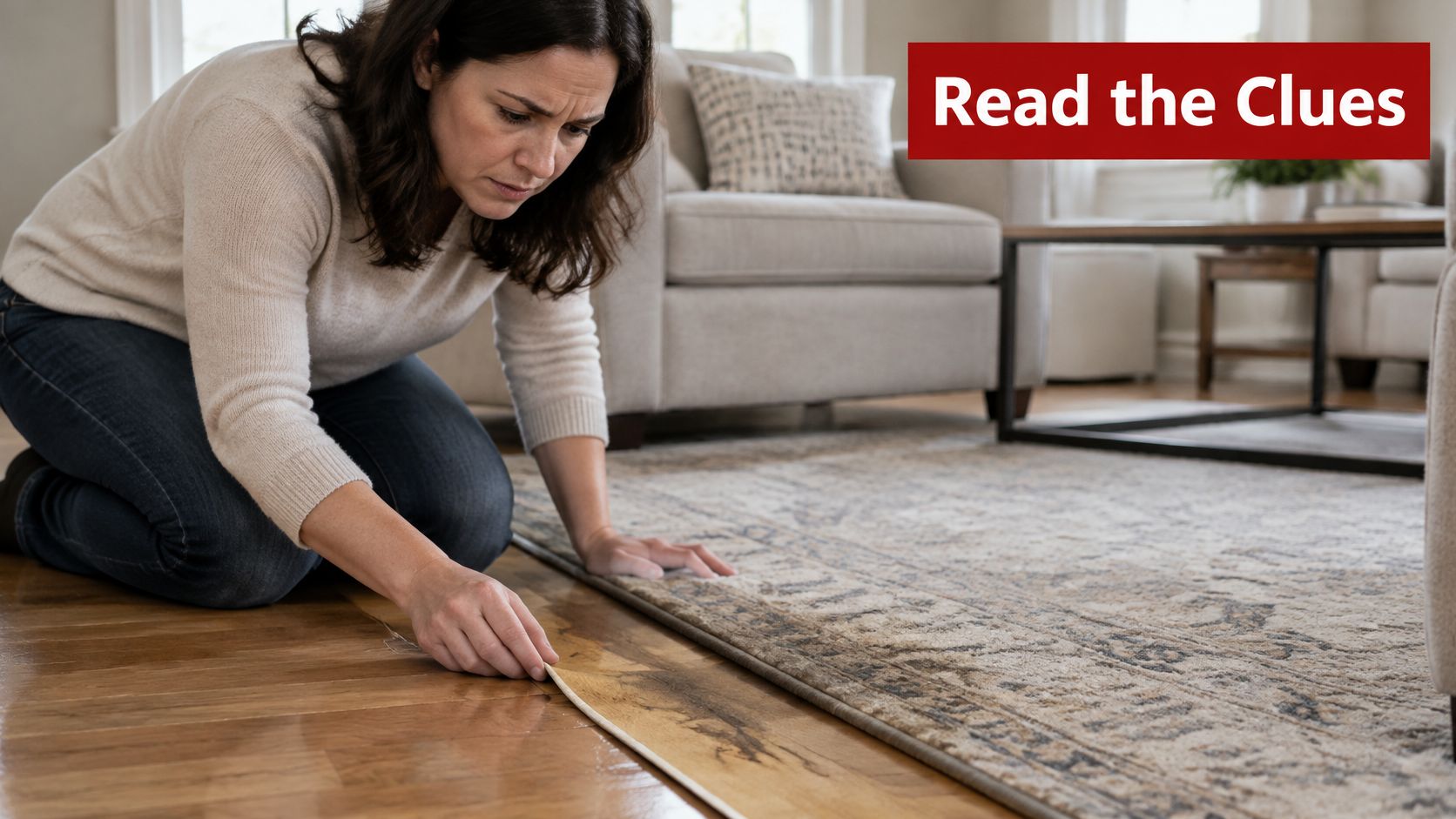
A useful inspection starts at the edge of the affected area, not with a bottle of spot remover. Don't disturb a rug showing visible growth or suspected sewage contamination. For a small, known clean-water incident without visible mold, a careful corner check can help you describe the problem when arranging service.
Follow the Pattern and Texture
A defined darker edge often indicates a drying boundary where dissolved soil or color collected. Note whether the mark follows the outline of a spill, appliance, or wet section of pad. That pattern helps a cleaner investigate the source, but doesn't identify mold.
Pile that feels dry on top can conceal a cool, damp foundation underneath. A swollen, unusually stiff, or rippled backing suggests that moisture has affected more than the exposed fibers. Don't pull hard on a distorted corner, because wet construction can be vulnerable to stretching or separation.
Use these observations when contacting a professional:
- Stain timing: Explain whether it appeared after a known leak or was discovered unexpectedly.
- Underside condition: Describe dampness, stiffness, loose backing, or a wet pad.
- Odor location: Note whether the smell is strongest at the rug, pad, or exposed floor.
- Surface texture: Report fuzzy or powdery patches without scraping or brushing them.
Recurring Odor Needs a Different Response
A wet-carpet smell that disappears after complete drying is different from a musty odor that returns after cleaning. Reappearing spots or growth on the underside warrant professional evaluation rather than another round of fragrance or spot shampoo.
For an otherwise safe clean-water check, lift a corner gently, look at the backing and pad, and compare the damp area with the visible stain. Avoid dragging the rug into another room or leaning close to sniff it.
A clean face and a damp underside can belong to the same rug.
A spill may initially leave only water damage, then support microbial growth if the pad stays wet. Home checks can identify reasons to call, but they can't confirm mold species or verify dryness throughout every layer. For fitted carpet, the hidden backing, cushion, and subfloor deserve the same attention.
Health Risks and the Conditions That Drive Them
The World Health Organization's 2009 indoor-air-quality guidance concluded that occupants of damp or mouldy buildings face up to a 75% greater risk of respiratory symptoms and asthma than occupants of dry buildings, and estimated that indoor dampness affects approximately 10–50% of indoor environments across several regions. Those findings concern damp-building conditions, not a diagnosis based on a rug's color.
A dark growth isn't automatically more toxic than a lighter one. Risk involves the organisms present, exposure concentration and duration, occupant vulnerability, and the conditions allowing growth. A cleaning estimate should therefore address the source and extent of dampness, rather than promise safety because a black stain has disappeared.
Who Should Avoid Handling the Rug
Children, older adults, people with asthma or allergies, and people with weakened immune systems deserve particular caution around suspected growth. They shouldn't be the people lifting, brushing, or moving an affected rug.
Symptoms worth discussing with a healthcare professional include:
- Respiratory changes: Coughing, wheezing, or worsening asthma.
- Irritation: Sore or irritated eyes and throat.
- Other complaints: Headaches, which have many possible causes and don't establish mold exposure.
Breathing difficulty or a severe asthma flare needs prompt medical attention, not a rug-cleaning appointment alone. A cleaner can evaluate a rug's condition, but can't diagnose an illness or determine what caused someone's symptoms.
Cleaning and Medical Advice Serve Different Purposes
For readers considering clinical care, Sunridge Medical's approach to mold illness describes that practice's approach to evaluation. It should be considered separately from the decision about whether a rug is suitable for cleaning, and shouldn't replace individual medical advice.
Daily use also matters. A damp rug in a bedroom or play area creates more opportunities for contact than one in a seldom-used room. Keep affected rugs out of occupied use while arranging assessment, rather than attempting to cover their smell.
Rubber Ducky's information on allergen reduction through rug care addresses a related cleaning concern, but routine allergen removal isn't a substitute for mold remediation. A water-damaged rug may need contamination assessment before any growth is visible, so the health and drying decisions belong together.
The Drying Clock and the First 48 Hours
The EPA's guide to mold, moisture, and the home recommends drying wet areas and absorbent items within 24–48 hours, because prompt drying usually prevents mold growth. Treat that as a prevention target, not a guarantee that everything is safe until the deadline or that every rug becomes moldy immediately afterward.
The drying clock begins when the rug gets wet, not when you discover it. If a leak was hidden, tell the cleaning company that the exposure time is unknown. A rug that feels dry across the tips may still need extraction and controlled drying through its pile, backing, and foundation.
Drying clock for a wet rug
| Time Since Wetting | Status | Priority Action |
|---|---|---|
| 0 to 24 hours | Clean-water damage, drying window open | Stop the source, extract water, lift the rug when safe |
| 24 to 48 hours | Drying window closing | Confirm pad and subfloor are drying; consider professional drying |
| Beyond 48 hours | Possible microbial growth | Assess for mold, check backing and subfloor, consider removal of unsalvageable porous materials |
| Visible mold at any time | Mold remediation territory | Isolate the rug, avoid dry brushing, request professional assessment |
| Contaminated water at any time | Contamination risk | No DIY cleaning; arrange professional evaluation first |
Establish Whether Home Drying Is Appropriate
The EPA's water-damage cleanup table applies its 24–48-hour carpet-drying guidance to clean-water damage and calls for additional precautions where sewage, chemical, or biological contamination is suspected. Don't apply the clean-water routine below to a sewage overflow or flooded rug of uncertain contamination.
That distinction also limits the use of fans. Air movement can help dry clean, wet materials, but blowing air across visible growth can spread contamination. If you see growth or suspect polluted water, keep people away and seek professional assessment before moving the rug or operating equipment around it.
For a regional comparison of the urgency involved, Erica's Plumbing, Air Conditioning & Restoration offers mold timing guidance for Florida homeowners. For your Birmingham rug, however, the service decision should follow its actual water source and condition, not a generic countdown.
Follow a Clean-Water Recovery Routine
Stop the source safely. Shut off the appliance or water supply if you can reach it without entering standing water or approaching electrical hazards. Arrange plumbing help for the cause. Extraction can't compensate for a continuing leak, and rug washing shouldn't begin while fresh water is still reaching the floor.
Identify the water type. Record whether the water came from a supply line, appliance discharge, toilet, outdoor flooding, or an unknown source. Don't assume every appliance leak is clean. Tell the cleaning team what happened so they can decide whether ordinary pickup and washing are appropriate.
Remove accessible liquid without spreading it. For a small clean-water event, use clean towels or a wet-rated extractor. Never use an ordinary household vacuum on a wet rug. Avoid rubbing the pile or pushing water across unaffected sections, and stop if dyes transfer noticeably onto the towels.
Expose the underside when safe. A small, manageable rug can be supported on a clean drying rack so air reaches both sides. Don't fold a saturated rug or drape a heavy piece over a narrow rail that can distort it. If the rug is large, delicate, or too heavy to support evenly, leave the handling to the pickup team.
Document its condition. Photograph the face, stain edges, backing, pad, and exposed floor if safe access is possible. Write down any odor, since a photograph can't capture it, along with the suspected wetting time and actions already taken. Keep this record for the cleaner and any insurance discussion, without assuming coverage.
Control the drying environment. Use a dehumidifier with appropriate air circulation for eligible clean-water materials. The EPA's mold and moisture resource recommends indoor relative humidity below 60%, ideally between 30% and 50%. A hygrometer measures room humidity, but it doesn't establish that a thick rug or pad is dry internally.
Arrange professional assessment early. Call if the underside remains damp, the exposure duration is uncertain, or the rug has unstable dyes, damaged backing, visible growth, or persistent odor. Don't wait for a deadline when the rug already needs specialist handling. Describe the condition before pickup so the team can plan safe handling and determine whether restoration is appropriate.
Protect the Construction While It Dries
Dense wool pile can hold considerable moisture beneath a dry-feeling surface. A tufted rug may have adhesive and secondary backing that respond poorly to prolonged saturation, while a hand-knotted rug needs attention to its foundation, fringe, and dye stability. More water and stronger shampoo aren't automatically better treatments.
Rubber Ducky's guide to drying a wet area rug can help you prepare for a service conversation. Professional extraction and controlled drying are especially valuable when a household setup can't expose and support the whole rug.
A small stain left damp beneath a pad can be a harder restoration problem than a larger clean-water spill dried promptly.
Avoid shortcuts that conceal rather than correct the problem:
- No default bleach: A stronger chemical doesn't establish that a porous rug is safe or preserve its dyes.
- No dry brushing of growth: Don't turn a localized concern into airborne debris.
- No covering damp surfaces: Don't install a fresh pad or return a cleaned rug over a wet floor.
- No fragrance as verification: A pleasant smell isn't evidence of complete drying.
Book Professional Rug Restoration in Birmingham
When a rug needs professional restoration
| Situation | Water Type | Drying Status | Recommended Action |
|---|---|---|---|
| Clean-water spill dried within 48 hours | Clean | Fully dried | Surface cleaning and drying may be enough; book cleaning if odor remains |
| Clean-water spill still damp past 48 hours | Clean | Incomplete | Professional drying, subfloor check, and assessment |
| Visible mold or musty odor that returns | Any | Unknown | Professional restoration assessment with a moisture check before cleaning |
| Floodwater, sewage, or toilet overflow | Contaminated or suspected contaminated | Any | Isolate the rug and arrange professional evaluation before cleaning |
| Pet urine odor with no water event | Not a water-intrusion event; localized contamination | Not applicable | Professional pet-odor cleaning and stain removal |
| Delicate hand-knotted or wool rug with damp backing | Clean | Incomplete | Professional assessment, suitable washing, and controlled drying; avoid DIY soaking |
These cases call for a salvageability decision, not automatic washing. The EPA's remediation guidance emphasizes moisture control and removing porous materials that cannot be adequately cleaned and dried. A responsible rug service should explain whether cleaning is reasonable, or whether disposal or separate building remediation needs consideration.
What Facility Cleaning Adds
Rubber Ducky offers home pickup and return. Confirm availability for your address when requesting an estimate, and describe any suspected contamination before collection. A rug with visible growth needs assessment before it enters a routine cleaning process.
For rugs that are suitable for restoration, facility care can include inspection, rug-specific washing, stain and odor treatment, rinsing, controlled drying, grooming, and practical repairs. The method should match the fiber and construction rather than applying the same wash to every rug. Mechanical dusting can release embedded grit from eligible rugs, but it is not appropriate agitation for suspected mold.
Controlled drying gives the team a way to manage temperature and humidity and support the rug's shape while it dries. That differs from leaving a wet rug on the floor with a household fan, where moisture may remain beneath the rug or in its backing. Construction matters: pile, backing, pad, and subfloor affect what can be recovered. Washing cannot reverse dye bleed, rebuild deteriorated adhesive, or make every contaminated porous rug suitable to return.
Choose Pickup With a Clear Restoration Plan
When requesting an estimate, provide the rug's approximate size, fiber if known, water source, current dampness, and photographs. Those details help the team assess the appropriate service before pickup.
With pickup and return, an accepted rug can be washed, dried, and finished away from your living space. Have the rug's location ready for its return: the floor and any replacement pad should be dry. Convenience helps, but the cleaning plan must fit the rug's condition and construction.
Ask what treatment can realistically improve, what damage may remain, and whether the pad needs replacement. Book restoration after the water source is controlled, and disclose suspected contamination before handling.
Rubber Ducky Rug Cleaning Birmingham offers pickup, professional facility washing, stain and odor treatment, controlled drying, and return service for rugs suitable for restoration. If your rug has water damage, recurring mustiness, or questionable backing, visit Rubber Ducky Rug Cleaning Birmingham to request an estimate and arrange an assessment before scheduling pickup.