
If you've just found cat vomit on a carpet or area rug in your Birmingham home, act carefully rather than aggressively. The best way to clean cat vomit from carpet starts with lifting away the solid material, absorbing moisture, and preventing the stain from being driven into the pile, backing, or pad.
A quick surface cleanup can make the mark look better, but appearance isn't the same as source removal. Delicate wool, oriental, hand-woven, and synthetic rugs all respond differently to moisture and cleaning chemistry. If odor remains after the first treatment, professional rug washing is often the safer route for homeowners in Birmingham, Hoover, Vestavia Hills, Mountain Brook, Homewood, and nearby communities.
Immediate Triage for Cat Vomit on Carpets and Rugs
Finding a fresh mess is unpleasant, but the first few actions affect how far the material travels. Put on disposable gloves, use a spoon or plastic scraper to lift solids, and place them directly into a sealed waste bag. Don't drag the tool across the rug more than necessary, particularly if the rug has a loose pile or delicate fringe.
Once the solids are gone, press dry paper towels or an absorbent white cloth onto the remaining moisture. Blot from the outside of the spot toward the center, replacing the towel as it becomes soiled. Scrubbing can spread contamination across a larger area and push it deeper into the fibers and pad, which is why consumer and veterinary cleaning guidance consistently favors lifting and blotting over rubbing (ASPCA Pet Insurance's cat-vomiting cleanup guidance).
Practical rule: Remove what you can mechanically before adding water, detergent, vinegar, or an enzyme product.
A temporary treatment that won't replace washing
For a fresh spot on a colorfast synthetic carpet, a light covering of baking soda can help absorb residual moisture. Guidance commonly recommends leaving it in place for 15 minutes to 2 hours before vacuuming, depending on the product or method being used (ZeroRez's guidance on cleaning cat vomit from carpet). Don't grind the powder into an area rug, and don't assume vacuuming has removed material from the backing.
If you use a carpet-safe enzyme cleaner, follow its label and allow roughly 5 to 10 minutes of dwell time when that range is specified, then blot and lightly rinse with clean water. Test an inconspicuous area first. For a more detailed related procedure, see this guide to carpet cleaning for dog vomit.
What not to do
Avoid brushes, carpet steam, forceful rubbing, and soaking a rug without knowing how its dyes and backing will react. A homeowner cleaning an outdoor mat may have more tolerance for moisture than someone treating a hand-woven wool rug in a Birmingham living room. If the mess has dried, crusted into the pile, or reached the pad, stop repeating surface applications and arrange an inspection.
For homeowners also dealing with a contaminated outdoor surface, the separate resource on how to sanitize artificial turf provides more relevant guidance than treating turf like an indoor rug.
Why DIY Cleaners Fail on Birmingham Area Rugs
A vinegar-and-water mixture, baking soda, dish soap, peroxide, and store-bought sprays can all appear in household cleaning advice. The problem is that a broad carpet recommendation isn't automatically safe for an area rug. Wool, silk, cotton, viscose, jute, latex-backed rugs, and dyed oriental pieces can react differently to acidity, oxidizers, agitation, and prolonged moisture.
Synthetic wall-to-wall carpet is usually constructed for a different cleaning environment than a decorative area rug. An area rug may have unstable dyes, layered foundations, a backing that holds moisture, or fibers that distort when scrubbed. A solution that lifts a mark from a common synthetic carpet can leave a pale patch, a tide mark, stiffness, or dye bleed on a more delicate textile.
Why chemistry and residue matter
Vinegar can help with deodorizing in some situations, but it isn't a universal stain treatment. Hydrogen peroxide and other oxidizing products can alter color, while excessive dish soap can leave a sticky film that attracts soil. Baking soda may absorb surface moisture, but it can't guarantee that organic residue has been removed from the backing or pad.
That's why testing matters. Apply any proposed solution to a hidden section, use a small amount, and check for color transfer or texture change before treating the visible area. The homemade rug cleaning solution guide is useful background, but a delicate or valuable rug still needs fiber-specific judgment.
A clean-looking face yarn doesn't prove that the backing is clean.
Professional rug washing becomes more appropriate when odor returns, the stain covers a broad section, the rug is valuable, or the spill has penetrated through the face fibers. The decision is less about whether a home remedy can lighten the mark and more about whether the method can remove residue without damaging the rug's construction.
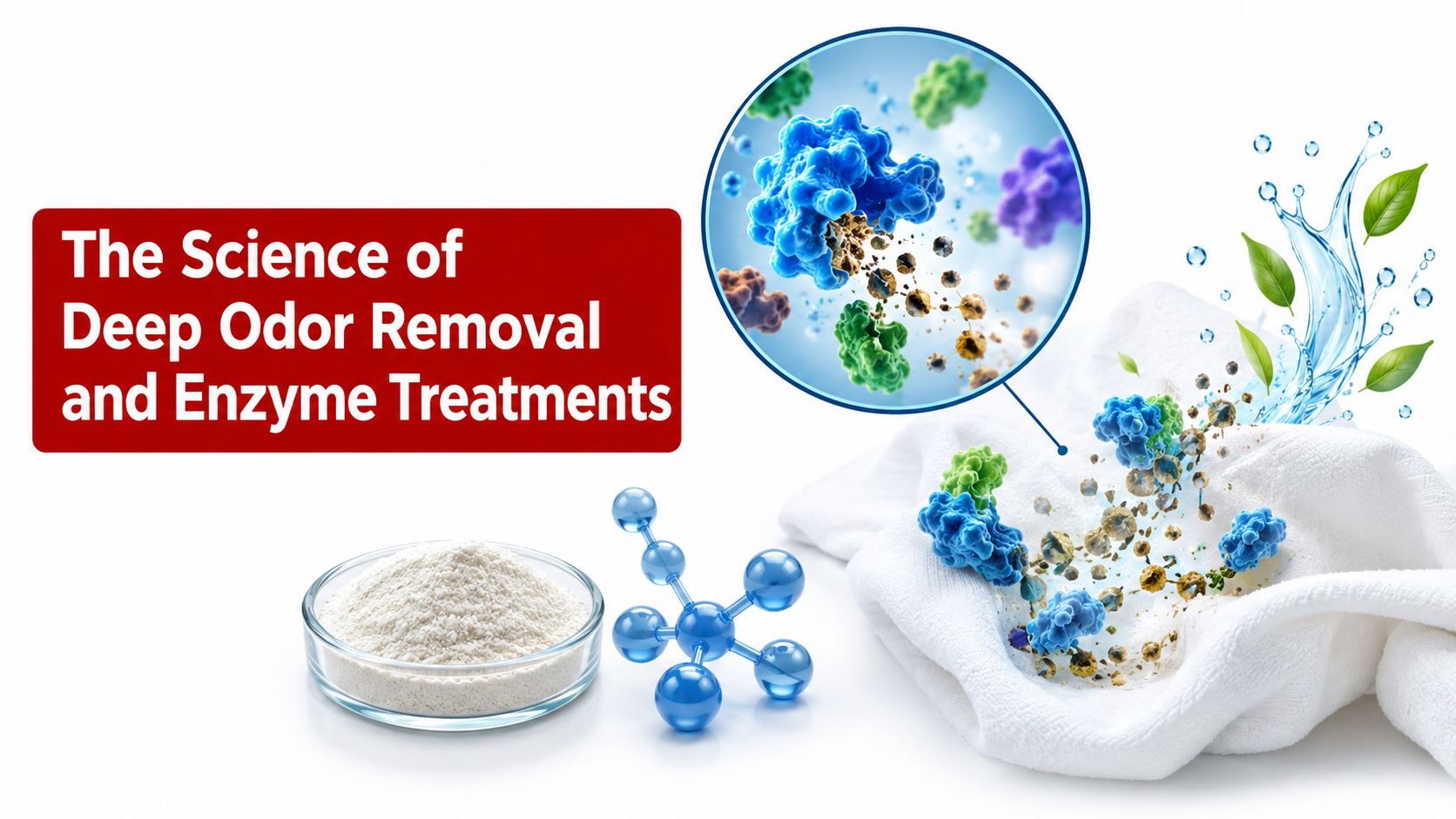
The Science of Deep Odor Removal and Enzyme Treatments
Cat vomit contains organic residue that can remain below the visible surface. If a homeowner removes the solids but leaves dissolved material in the foundation, the rug may look acceptable while odor persists. A perfume-based spray only changes what the room smells like for a while. It doesn't remove the source.
Enzymatic cleaners are designed to break down organic compounds associated with stains and odors. For a suitable carpet or rug, the usual sequence is mechanical removal, blotting, enzyme application, the labeled dwell period, light rinsing, and thorough drying. Many professional instructions recommend testing first and following the product label rather than flooding the textile.
Why pad and backing inspection changes the answer
A rug resting on a pad can hold contamination below the upper pile. A spot cleaner applied from above may not reach the full depth of the affected area, while excess moisture can remain trapped underneath. That creates a difficult trade-off. Too little product leaves residue behind, but too much liquid without extraction and controlled drying can create a separate moisture problem.
Older stains may need rehydration and repeated treatment, but there's no universal point at which a homeowner can know that repeated spraying has solved the hidden odor. If the surface looks clean and the smell returns during damp weather, the source may be in the backing, pad, or floor beneath the rug. Pet-care guidance explains that urine's uric acid can crystallize as it dries and reactivate with heat or humidity, while enzyme cleaner must reach the full depth the urine traveled (PetSmart's pet-stain and odor guidance).
Urine and vomit aren't identical problems, but the lesson is relevant. Surface deodorizing can't substitute for depth-controlled cleaning. For more detail about recurring feline urine odor, see why cat urine smells so bad.
Professional treatment versus masking
A professional cleaner evaluates the fiber, dye stability, backing, pad, and moisture exposure before choosing chemistry. Commercial odor-control products can be useful when selected for the material and application, and a resource covering janitorial chemicals from Material Handling USA offers broader product context. For an area rug with a recurring pet odor, however, the important question is whether the cleaning process extracts the residue and dries the complete textile safely.
The Rubber Ducky Professional Rug Washing Process
For a Birmingham homeowner, the practical advantage of off-site rug washing is that the rug doesn't have to be treated as if it were fixed wall-to-wall carpet. The rug can be picked up from the home, inspected, washed at a specialized facility, dried under controlled conditions, groomed, and returned to its original location.
The process begins with inspection. The team considers construction, fiber type, dye behavior, backing condition, fringe, pet contamination, and visible damage. That assessment guides the cleaning method instead of applying one household formula to every rug.
From pickup to washing
Home pickup is especially useful for large area rugs that are difficult to move without folding or dragging. After transport, mechanical dusting tumblers release embedded grit, sand, and allergens before wet cleaning. Professional rug-cleaning guidance commonly uses dust removal before washing to reduce soil and help prevent muddy residue during the wet stage (independent area-rug cleaning guidance from PuroClean).
The rug is then immersed in custom wash tanks with specialized detergents selected for the textile. Pet staining receives targeted attention, with the objective of removing residue and odor rather than covering it with fragrance. Mechanical rinsing, including a patented infusion rinse, helps remove suspended soil and cleaning residue that could otherwise attract more dirt.
For homeowners comparing service options, a general carpet cleaning pricing calculator from Estimatty may help explain why rug cleaning estimates depend on material, size, condition, and process. Area rugs often require a different assessment from ordinary in-home carpet cleaning.
Drying, grooming, and return
Drying is not an afterthought. Climate-controlled drying rooms balance temperature and humidity, while rugs are hung to dry straight to reduce the risk of shrinkage or distortion. Once dry, the rug is brushed and groomed to restore softness and luster, then inspected before delivery.
This facility process is particularly useful when cat vomit has reached the backing or when repeated home treatments have left a rug damp, stiff, or heavily perfumed. The Birmingham rug-washing team can arrange pickup and return, so the homeowner doesn't have to manage bulky equipment or carry a wet rug through the house.
Protecting Your Home and Scheduling Your Rug Pickup
Pet stains become more complicated when homeowners keep treating the visible mark without checking what lies below it. A rug may need professional attention when the odor returns after drying, when the stain has spread beyond the original spot, when the backing feels damp, or when the rug is made from wool, silk, viscose, cotton, or another material that can't tolerate rough handling.
Professional washing also addresses more than the isolated stain. Dust, embedded grit, allergens, and pet residue can remain throughout a rug, especially in busy Birmingham homes with indoor animals. For people with mite allergies, one independent rug-cleaning source cites an EPA-referenced recommendation to keep relative humidity below 45%, and reports that professional cleaning can reduce dust-mite allergen concentration by up to 85.5% (dust-mite control and rug-cleaning guidance). Those figures apply to the cited source's context, not as a guarantee for every rug or household.
Local service for difficult pet stains
Homeowners in Trussville, Pelham, Alabaster, Gardendale, and Helena can request an estimate before deciding how much treatment the rug needs. Pickup and delivery reduce the risk of dragging a contaminated or saturated rug across clean floors, while facility washing allows the cleaning team to address the face, foundation, and drying requirements as one job.
Don't keep adding household chemicals to a rug that still smells. Arrange a professional inspection when the stain is persistent, the rug is valuable, or the pad may be involved.
Rubber Ducky Rug Cleaning Birmingham offers home pickup, facility rug washing, pet stain and odor treatment, controlled drying, grooming, and return delivery for area rugs in the Birmingham metro. Visit Rubber Ducky Rug Cleaning Birmingham to request a cleaning estimate and schedule your rug pickup.