
You've just unrolled a new Oriental rug in your Birmingham living room. The pattern is sharp, the wool still has its natural spring, and the fringe is lying neatly along the hardwood. Then a child walks in from the driveway, a dog crosses the room, or a humid afternoon leaves the pile feeling heavier than it did on delivery day. If you're searching for hand knotted rugs near me in Birmingham, you may not need another rug. You may need someone who knows how to clean, dry, and restore the one you already own.
Hand-knotted rugs are built differently from ordinary floor coverings. Their wool, silk, or cotton foundations can hold fine grit, pet residue, pollen, and moisture below the visible pile. A professional facility process removes that contamination more safely than household sprays or a rented carpet machine. For homeowners across Birmingham, Hoover, Homewood, Mountain Brook, and nearby communities, Rubber Ducky Rug Cleaning provides pickup, facility washing, controlled drying, grooming, and return delivery for specialty rugs.
Why Birmingham Homeowners Search for Hand Knotted Rugs Near Me
A hand-knotted rug changes the way a room feels. A Birmingham homeowner may spread a Persian, Oriental, or tribal piece across the living room and immediately notice that it has more presence than a mass-produced rug. The design carries small variations, the pile responds underfoot, and the fringe is part of the rug's foundation rather than an afterthought. Hand-knotted construction has existed for more than 2,400 years, with the Pazyryk carpet commonly dated to roughly the 5th century BCE, as documented in this history of Oriental rugs.
That history explains why owners treat these rugs as future heirlooms. Each knot is tied by hand, so the rug carries more labor and a more individual structure than a machine-made alternative. The global hand-knotted rug market was estimated at $8.2 billion in 2025 and projected to reach $12.8 billion by 2034, while wool represented the largest material share at 42.5% and residential buyers represented 68.3% of revenue, according to recent hand-knotted rug market data.

Local soil becomes a textile problem
Birmingham homes introduce conditions that ordinary rug advice often overlooks. Red clay tracked in from a Mountain Brook driveway can fall below the tips of the pile. Summer humidity can leave wool and silk foundations slower to release moisture, particularly in Homewood ranch houses with limited airflow. Between Crestwood and Hoover, children, pets, and regular weekend traffic add repeated abrasion to the same pathways.
Regular vacuuming removes loose surface debris, but it doesn't extract every abrasive particle from the knot base. Wool-care guidance explains that embedded grit can work into the foundation and accelerate wear, which is why controlled dust removal should precede wet treatment. For a deeper look at how local businesses use local lead generation SEO to help homeowners find specialized services, the resource from Aim Set Win is useful, but the cleaning decision still depends on the rug's fiber and construction.
A local search should therefore lead to more than a nearby address. It should lead to a specialist who can identify the fiber, test the dyes, record existing wear, and choose a process that protects the structure. Rubber Ducky's area rug cleaning service in Birmingham is designed around that facility-based approach, including home pickup and return delivery.
What Makes a Rug Hand Knotted and Why It Changes Everything
A genuine hand-knotted rug is formed on a loom with warp threads running lengthwise and weft threads running across the width. The maker ties each pile knot around adjacent warps, then secures rows with weft threads. That foundation gives the rug its character, but it also creates spaces where dry soil can settle below the surface.
Knot density affects design resolution and often influences value, but it isn't a complete quality test. Tribal rugs may contain around 30 to 100 knots per square inch, town and city workshop rugs around 120 to 300, and the finest silk pieces can exceed 500 knots per square inch, according to rug construction guidance from Nejad. A careful inspection should also consider wool spring-back, knot clarity, dye behavior, pile condition, and the integrity of the fringe.
A practical showroom inspection
Turn the rug over before you buy it or before you approve an unfamiliar cleaning method. Look for these signs:
- Back pattern: A hand-knotted rug generally shows the design through the back, although the surface is less plush than the front.
- Visible knots: Individual knots should be distinguishable, with slight irregularities consistent with handwork.
- Foundation fringe: The fringe should extend from the warp foundation, not appear as a strip sewn onto the rug.
- Backing: A latex-coated backing usually signals a different construction, such as hand-tufted or machine-made production.
- Pile response: Quality wool should recover after thumb pressure rather than retain a deep crush mark.
A Persian-style pattern doesn't prove that a rug is hand-knotted. Machine-made rugs can reproduce traditional designs, so the underside and fringe deserve more attention than the label.
| Feature | Hand Knotted | Machine Made |
|---|---|---|
| Foundation | Warp and weft structure made on a loom | Mechanized production with a more uniform construction |
| Pile formation | Individual knots tied by hand | Fibers inserted or formed mechanically |
| Back appearance | Front pattern is generally visible on the back | Construction is typically more uniform and may include backing |
| Fringe | Usually part of the warp foundation | May be attached as a finishing detail |
| Cleaning concern | Fiber, dye, density, and foundation require inspection | Synthetic materials may tolerate different procedures |
Because a hand-knotted rug is assembled fiber by fiber, surface scrubbing isn't enough for embedded Birmingham soil. Rubber Ducky's explanation of rug construction types can help you identify what you own before arranging professional washing.
Inside Rubber Ducky's Multi-Stage Cleaning Process
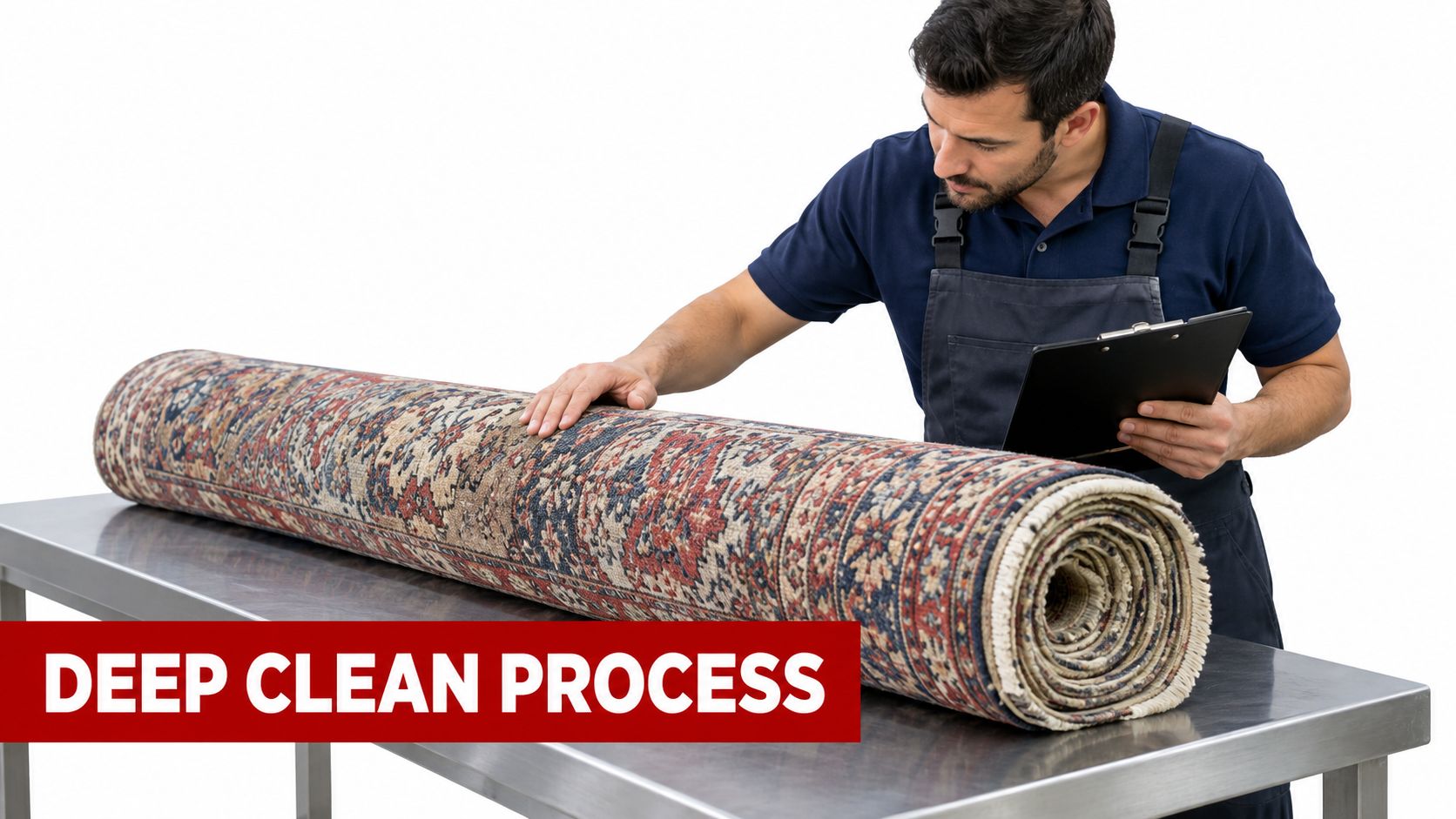
A specialty rug shouldn't be cleaned as though it were wall-to-wall carpet. The process starts when the rug leaves your home and continues through inspection, dry soil removal, washing, rinsing, drying, and finishing.
Intake comes before water
At pickup, the team documents the rug's condition and examines its construction. Fiber identification matters because wool, silk, cotton, hemp, and synthetic fibers respond differently to moisture and agitation. The technician also checks for dye instability, worn edges, previous repairs, pet damage, moth damage, stains, and areas where the pile has already weakened.
Photos and condition notes help separate pre-existing issues from changes that occur during service. That record also guides the written estimate and determines whether routine cleaning or restoration work is appropriate.
Dusting removes abrasive grit
The rug is mechanically dusted before washing. Dusting tumblers release dry sand, clay, dander, and settled debris from the back and foundation, where a household vacuum may not reach. This step matters because wetting grit in place can turn loose particles into a heavier abrasive load during handling.
Practical rule: Remove dry soil before introducing water. It protects the pile and makes the wash more effective.
Washing, rinsing, and drying are controlled
The rug then receives an immersion wash in a controlled bath using pH-balanced, fiber-safe solutions. The wash releases embedded clay, pet residue, odors, and old detergent films without treating the rug like a synthetic mat. Mechanical rinsing and an infusion rinse remove suspended soil and cleaning residue, while conditioning helps restore a softer hand.
Drying takes place in a climate-controlled, dust-free room. Managed airflow, temperature, and humidity help limit shrinkage, warp distortion, and dye migration. The IICRC advises in-plant cleaning with trained technicians and specific equipment for rugs prone to shrinkage, while noting that low-moisture methods reduce but don't eliminate that risk, as explained in its area rug cleaning guidance.
After drying, the rug is groomed, the fringe is detailed, and the finished piece receives another inspection before wrapping. If you're coordinating multiple household services, a remote assistant for cleaning companies can help businesses manage scheduling, but the rug itself still needs hands-on evaluation by a trained cleaning team.
Birmingham-Specific Risks That Damage Hand Knotted Rugs
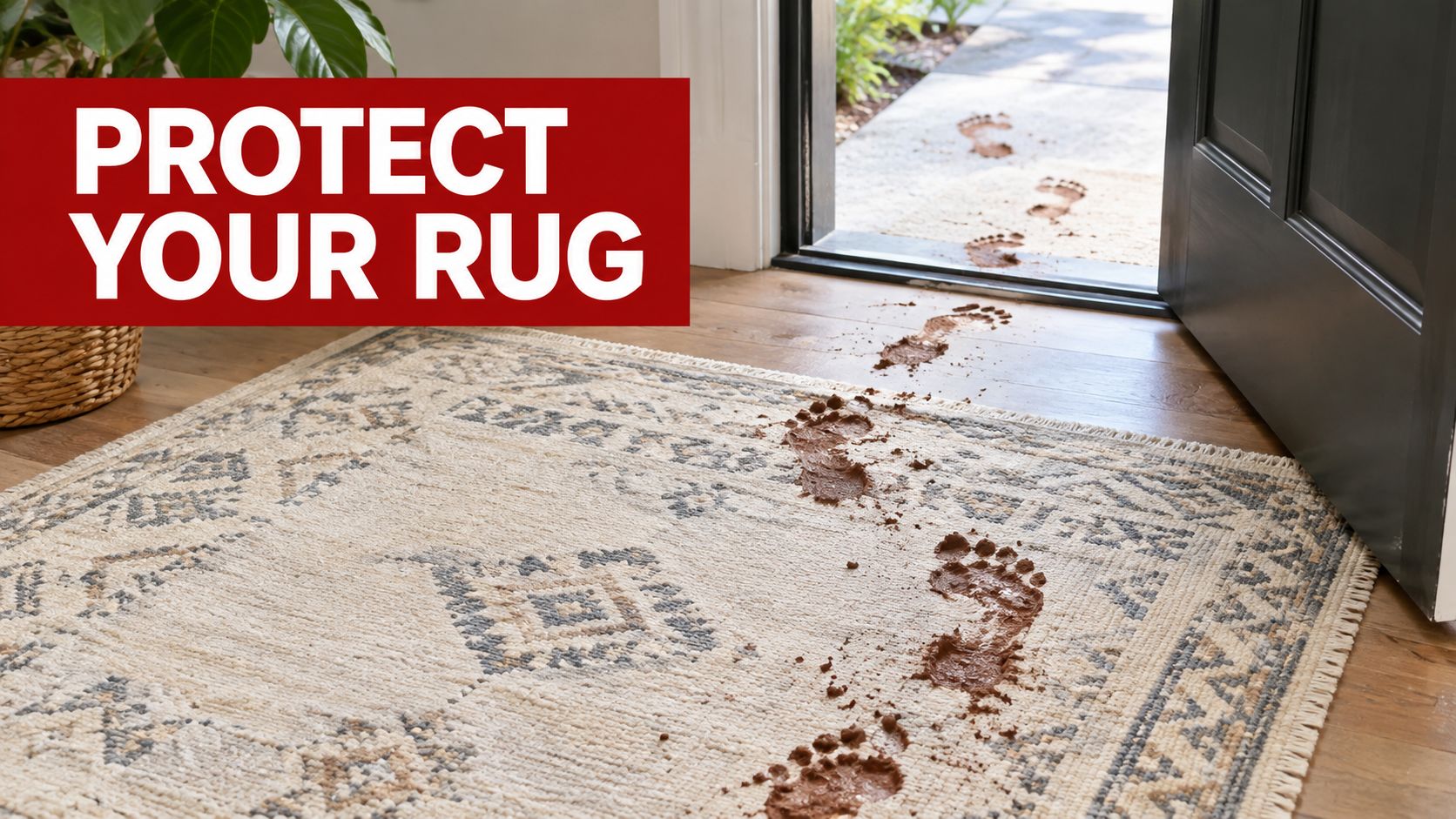
Birmingham's red clay is more than a visible stain. Fine particles can pass through the pile and settle around the knots, especially when family members enter from a driveway, garden, or damp porch. Each footstep presses that grit against wool or silk fibers. Over time, the rug can look reasonably clean while the foundation experiences steady abrasion.
Humidity creates a separate problem. Moisture doesn't automatically damage every rug, but a hand-knotted foundation that stays damp for too long can develop distortion, dye movement, odor, or deterioration. The risk increases when a rug is placed over a less breathable surface or cleaned without a controlled drying plan.
Watch for these local warning signs
- Dark traffic lanes: Repeated paths between a doorway, sofa, and kitchen may indicate soil below the pile, not only surface discoloration.
- Musty or pet odor: Odor that returns after a spot treatment often remains in the foundation.
- Sticky pile: Detergent residue can make wool feel coated and attract fresh soil.
- Wavy edges: Moisture or uneven drying may have affected the foundation.
- Dull color: Clay and residue can mask the original contrast of the pattern.
- Fringe discoloration: Dirty or tangled fringe can signal that the rug needs more than a surface vacuum.
Seasonal pollen adds to the indoor load. A published review notes that ordinary vacuum cleaners don't prevent debris buildup or remove live mites, while wet cleaning can significantly reduce rug allergens, as described in this review of dust-mite allergen removal. The American Lung Association recommends weekly vacuuming with a HEPA-filter vacuum, but also notes that mites live deep in carpet and upholstery, so routine vacuuming isn't a substitute for professional treatment, according to its indoor dust-mite guidance.
A rented carpet machine may extract some surface moisture and soil, but it isn't designed to inspect hand-knotting, test dyes, or dry a specialty rug flat. Hot water extraction can leave moisture in the foundation, while shampooing can leave residue around the knots. Facility immersion washing gives the technician a way to flush the structure and control the drying environment rather than hoping the rug dries safely in a Birmingham room.
DIY Cleaning Versus Professional Hand Knotted Rug Care
A small fresh spill doesn't always require immediate transport to a facility. Blotting with a clean, absorbent cloth can prevent liquid from spreading, provided you avoid rubbing and don't add a strong chemical. The decision changes when the rug is silk, heavily soiled, urine-affected, visibly bleeding, misshapen, or valuable enough that a failed experiment would be costly.
Store-bought sprays often leave surfactants or fragrance residues behind. Those residues can make the pile feel stiff or sticky and may attract more clay. A rented machine adds another variable, because the operator may not know whether the rug has unstable dyes, a weakened fringe, or a foundation that shouldn't be saturated.
| Method | Fiber Safety | Soil Removal | Drying Control | Allergen Reduction | Best For |
|---|---|---|---|---|---|
| DIY spot treatment | Depends on product and fiber knowledge | Limited to the spill area | Low | Limited | Fresh, minor spills handled by blotting |
| In-home carpet cleaning | Variable for hand-knotted construction | Can improve surface soil removal | Limited in a living space | May leave embedded debris | Compatible wall-to-wall carpet and suitable synthetic rugs |
| Facility-based hand-knotted care | Based on inspection and dye testing | Reaches the pile and foundation through washing and rinsing | Controlled drying environment | More thorough than ordinary vacuuming | Wool, silk, Oriental, Persian, tribal, and heirloom rugs |
Match the method to the rug
For a durable synthetic area rug with a simple, isolated spill, careful local treatment may be reasonable. For wool, silk, cotton foundation rugs, or pieces with pet urine and recurring odor, professional immersion washing is the safer route. A specialist can identify whether the rug needs cleaning, fringe work, reweaving, color correction, or water-damage treatment before choosing a solution.
Humidity control also belongs in the decision. A peer-reviewed review identifies carpets and upholstered materials as major allergen reservoirs and recommends humidity control as part of an indoor allergen strategy, as discussed in this review of house dust mites and indoor environments. That doesn't mean every rug needs aggressive washing, but it does mean a damp rug shouldn't be left to dry slowly on a Birmingham floor.
Pickup, Delivery, Turnaround, and Pricing in Birmingham
Professional care should fit the way Birmingham households operate. Rubber Ducky schedules home pickup across Mountain Brook, Homewood, Hoover, Vestavia Hills, Birmingham, Trussville, Pelham, Alabaster, Gardendale, and Helena. At the door, the team can document the rug's condition with photographs before rolling and transporting it for facility evaluation.
Prepare the rug by clearing small objects from its surface and telling the technician about recent spills, pet accidents, moth activity, previous cleaning, repairs, or water exposure. Don't apply another chemical treatment before pickup. A new product can alter dye behavior or leave a residue that affects the wash plan.
What happens after pickup
The facility confirms the construction, records visible conditions, and issues a written quote before work begins. Routine cleaning generally takes seven to ten business days, while restoration involving fringe repair or color restoration generally takes two to three weeks. Those timeframes depend on inspection findings and the scope of work, so the written schedule matters more than a rushed promise.
Pricing depends on dimensions, fiber, construction, condition, and restoration requirements. Small rugs under 4×6 may start around $150, mid-sized 8×10 rugs may start from $300, and large or heirloom pieces are priced after inspection. These are starting points rather than guarantees, and the quote should identify cleaning, repairs, odor treatment, and delivery separately.
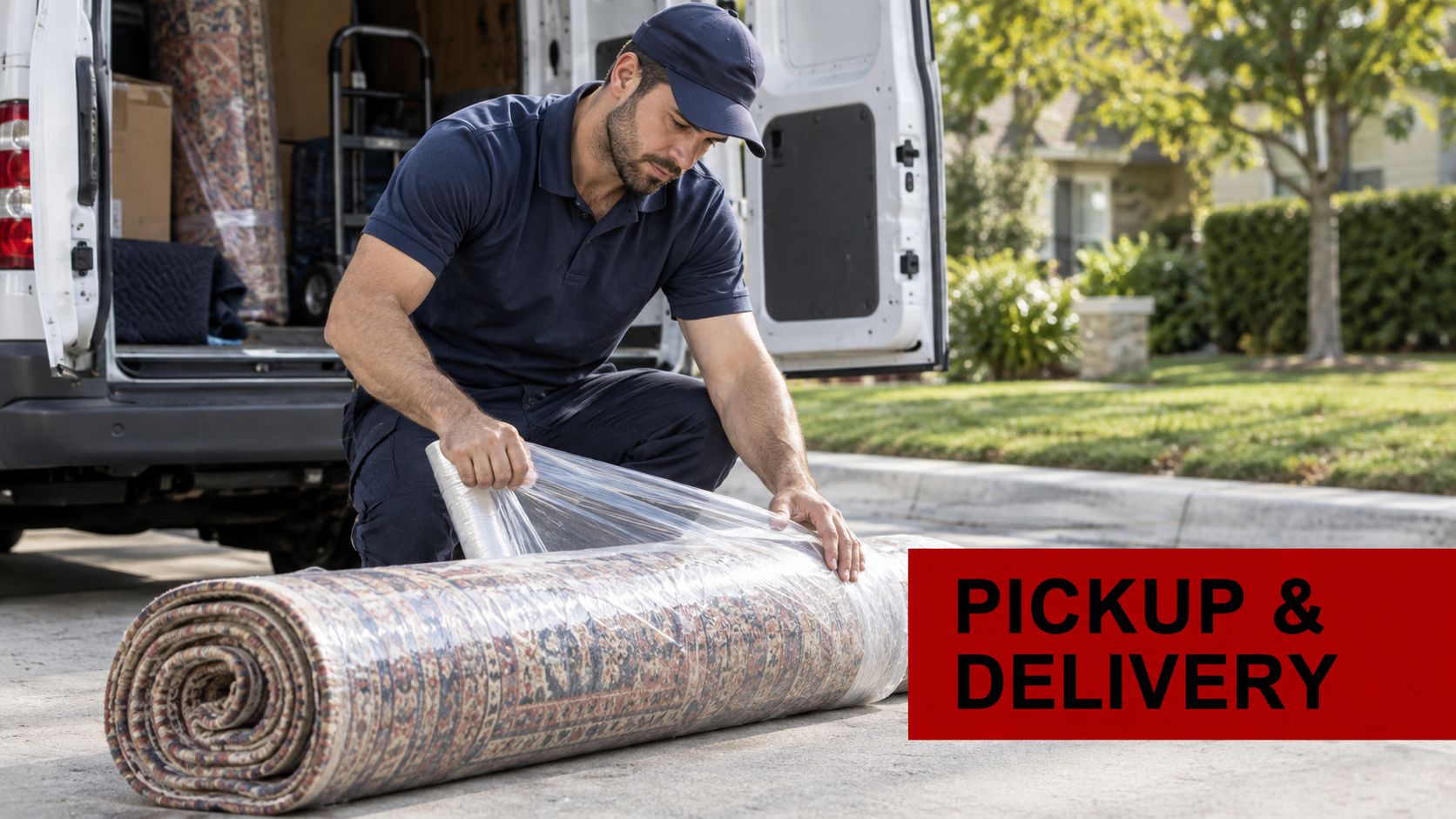
At delivery, the cleaned rug is wrapped for transport and returned to its original location when practical. The team should explain any remaining limitations, such as permanent color loss, prior wear, or repairs that cleaning can't reverse. Details about rug delivery service in Birmingham help homeowners understand why pickup and return are part of specialty care rather than an incidental convenience.
Trust Signals, Aftercare, and Booking Your Rug Pickup
Handing over an heirloom requires more than a clean-looking website. Ask whether the company follows recognized industry practices, keeps technicians in ongoing specialist training, documents pre-existing conditions, and provides a clear estimate before washing. IICRC-aligned procedures and rug-specific training are useful trust signals because specialty cleaning depends on fiber identification, dye testing, moisture control, and finishing discipline.
Rubber Ducky Rug Cleaning Birmingham provides inspection records and before-and-after photos as part of its documented service approach. Short customer feedback can also be more useful when it identifies the type of problem and the area served, such as pet odor in Homewood, traffic soil in Hoover, or fringe wear in Mountain Brook. Look for specific service details rather than vague praise.
Keep the rug stable between washes
After professional cleaning, small habits protect the result:
- Rotate periodically: Rotating the rug every six months helps distribute foot traffic and uneven fading.
- Use a breathable pad: Choose a rug pad suited to hardwood and compatible with humid Alabama subfloors.
- Blot spills: Press a damp microfiber cloth onto a fresh spill. Don't rub the pile or flood the area.
- Manage sunlight: Keep the rug away from prolonged direct southern sunlight through south-facing windows.
- Schedule planned washing: Professional immersion cleaning every two to three years is a practical maintenance interval for many occupied homes, with traffic, pets, fiber, and condition determining the final schedule.
For ongoing allergen control, weekly HEPA vacuuming is still useful, but it should be treated as maintenance rather than a complete extraction method. Professional cleaning addresses the embedded load that household equipment can't reliably reach.
To book, call the Birmingham facility, request a pickup window, describe the rug's fiber and condition, and ask for a written quote. Confirm the turnaround date before collection so you know what happens after the rug leaves your home.
Rubber Ducky Rug Cleaning Birmingham provides pickup, facility washing, stain and odor removal, controlled drying, grooming, restoration, and return delivery for hand-knotted, Oriental, Persian, wool, silk, and other specialty rugs. If your Birmingham rug is holding red clay, pet odor, allergens, or moisture-related damage, visit Rubber Ducky Rug Cleaning Birmingham to request a pickup and cleaning estimate.