A coffee spill lands on the area rug in your Birmingham living room, followed by muddy paw prints near the back door. You blot quickly, but the rug still develops a dark outline and a lingering smell. Whether that damage becomes permanent often depends on the rug's fiber, existing protection, and the quality of the cleaning that follows.
Carpet stain resistant treatment can slow liquid penetration and give you time to respond, but it isn't a permanent shield. Professional rug cleaning also matters because protectants can wear down, dirt can remain beneath the surface, and a DIY spray may leave residue instead of creating an even barrier. For homeowners in Birmingham, Hoover, Vestavia Hills, Mountain Brook, Homewood, and nearby communities, the practical goal is simple: preserve the rug investment without relying on claims that protection makes every spill harmless.
Why Carpet Stain Resistant Treatment Matters for Birmingham Homes
A Birmingham homeowner notices the problem first in the places a rug works hardest. The entry rug collects soil from shoes and paws, the family-room rug receives constant foot traffic, and the dining-area rug catches coffee, food, and drink spills. Once liquid reaches untreated or worn fibers, blotting becomes less effective because the spill has already moved into the pile.
Red clay soil, humid conditions, pets, and busy households create a demanding environment for area rugs. Soil can grind into the fiber as people walk across it, while moisture can help contaminants spread through the pile. A treatment doesn't stop this activity, but it can make the first response more effective by delaying wetting.
The value of extra response time
Earlier fabric protectors such as Scotchgard and Teflon worked by increasing surface repellency, allowing spills to bead instead of soaking immediately. That same basic logic remains in many carpet-protection systems today, although modern products and safety expectations vary. Industry history of topical carpet treatments traces the modern stain-resistant carpet era commonly to 1986, when DuPont introduced Stainmaster.
A treated rug still needs prompt care. Blotting removes more of a spill than rubbing, which can spread the material and work it deeper into the pile. Treatment is most useful when it buys those critical moments before coffee, wine, muddy water, or a pet accident bonds with the fiber.
Practical rule: Protection should support fast spill response, not replace it.
Professional cleaning adds another layer of protection. Embedded soil, pet residue, and old cleaning products can interfere with a new application, so the rug needs inspection and appropriate washing before re-treatment. Rubber Ducky's pickup, facility cleaning, controlled drying, and return process gives Birmingham homeowners a practical way to address both the visible stain and the condition beneath it.
How Stain-Resistant Treatments Actually Work
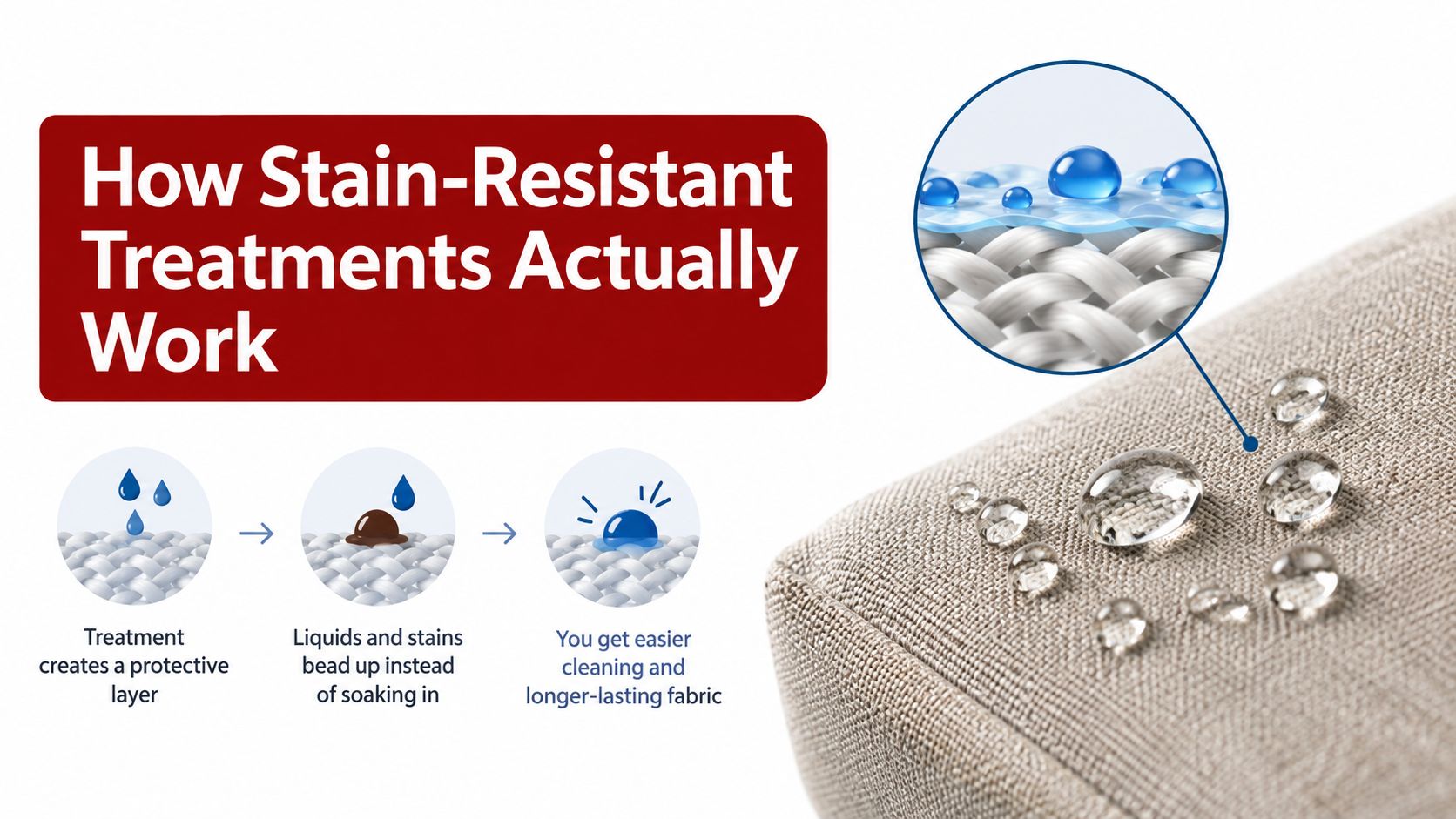
A coffee spill on a Birmingham rug behaves differently after professional protection. Instead of spreading through the yarn immediately, water-based and oil-based liquids are more likely to bead on the fiber surface, giving you time to blot. Topical protectors change the way fibers interact with liquid. Fluorochemical treatments lower surface energy. Technical guidance places nylon's surface energy at about 43 dynes per centimetre, with fluorocarbon treatment reducing it by roughly 50%. That creates a low-energy barrier that slows penetration. Technical explanation of fluorochemical action
Two different routes to stain resistance
Topical protection is applied after the rug or carpet has been made. Fluorochemical and silicone-based products coat the fiber surface, helping liquids bead long enough for effective blotting. Results depend on clean fibers, even application, the correct product for the material, and suitable maintenance. A professional cleaner must also avoid leaving soil or detergent behind, since residue can affect how evenly the treatment bonds.
Solution-dyed fiber resists staining through its construction rather than a later coating. Colour is built into the fiber during manufacturing, leaving fewer dye-receptor sites where spilled substances can bond. A comparison of topical treatments and solution-dyed fibers explains why these methods rely on different mechanisms.
Application coverage affects performance. Technical guidance indicates that satisfactory protection generally requires treatment across about 50% to 70% of the surface. Roughly 0.1% to 0.4% fluorochemical solids by fabric weight is often sufficient for many carpets and upholstery fabrics, equivalent to about 200 to 800 parts per million of fluorine based on fiber weight.
For homeowners, the practical point is straightforward. Treatment delays wetting, helping you blot before a spill penetrates. It does not make a rug stain-proof. Dirt, heavy traffic, harsh cleaning, pet urine, and strongly coloured liquids can still defeat the barrier. Rubber Ducky Rug Cleaning Birmingham can assess whether cleaning has preserved the existing protection or whether professional reapplication is the better way to protect the rug investment.
The Shift Away From PFAS in Modern Carpet Protection
Carpet protection has changed substantially since the industry's heavy reliance on PFAS-based chemistry. Reporting describes PFAS use in stain repellency as an important part of the carpet business from the 1970s through 2019, while U.S. carpet makers later said they had stopped using PFAS in production by 2019. Reporting on PFAS and carpet protection also describes a staged move away from long-chain chemicals such as PFOS and PFOA, with the U.S. carpet sector transitioning away from those older formulations in 2008.
Those dates matter because homeowners may hear “stain guard” and assume every product has the same chemistry. It doesn't. Product names, labels, and marketing language can conceal meaningful differences in ingredients, intended use, and expected durability.
What Birmingham homeowners should request
Ask the cleaner which formulation they're applying and whether a PFAS-free or fluorine-free option is available for the rug's fiber. Request the product's safety data sheet before application. That document won't answer every performance question, but it gives you a more reliable view of handling, ingredients, and precautions than a broad claim such as “advanced protection.”
Modern alternatives can include silicone-based treatments and other formulations designed for specific fibers. They may perform differently from older fluorochemical products, so the cleaner should explain whether the product is suitable for wool, nylon, synthetic blends, or a hand-woven rug.
For a Birmingham homeowner considering an older Scotchgard-style service, the discussion of Scotchgard for rugs can help frame the questions to ask. The important point isn't choosing a familiar name. It's matching a current, documented product to the rug and understanding that reapplication remains part of maintenance.
Protection Performance Across Different Rug Fibers
A protector that performs well on a synthetic hallway rug may be inappropriate for a fine wool or antique piece. Fiber construction, dye method, age, previous washing, and traffic all affect the result. That's why a professional inspection should come before any treatment application.
| Rug type | What usually helps | Important limitation |
|---|---|---|
| Nylon and other synthetics | Topical protection can improve liquid beading and soil release | The surface finish can diminish with traffic and cleaning |
| Solution-dyed synthetics | Built-in resistance because colour is integrated during manufacture | Inherent resistance doesn't prevent oily soil or all discolouration |
| Wool | Fiber-appropriate cleaning and carefully selected protection | Natural structure and previous treatments affect absorption and appearance |
| Hand-woven and antique rugs | Testing, gentle washing, and conservative restoration decisions | Fragile dyes, age, backing, and construction may rule out some protectants |
Where protection has an advantage
Nylon often accepts topical protection well, while solution-dyed fibers have resistance built into the fiber rather than relying only on a surface application. A high-traffic Birmingham home with children and pets may benefit from that distinction when selecting new carpet, but an existing area rug must be assessed on its own condition.
Wool needs more caution. Its natural oils and scaled structure interact differently with protectors, moisture, and detergents. A cleaner who applies the same product to every rug may create uneven results, affect texture, or give the homeowner confidence that the rug hasn't earned.
What treatment cannot guarantee
Stain protection is not 100% effective. A neutral overview of carpet protection limits specifically identifies turmeric and pet urine as examples that can defeat treatment. Pet urine is particularly difficult because it can move through the pile and affect the foundation, while turmeric's strong colour can remain visible even after careful cleaning.
A professional service should explain those risks before applying anything. Rubber Ducky Rug Cleaning Birmingham can assess the rug, use gentle stain treatment for problem areas, and apply rug-appropriate protection when it makes sense. That decision should follow fiber testing and cleaning, not precede them.
Why Professional Reapplication Works Better Than DIY
Topical protection is a maintenance product. Repeated foot traffic, vacuuming, and cleaning gradually reduce the finish, often unevenly in the busiest lanes. Technical guidance reports that treated nylon carpet may perform well for about 5 to 8 years before the topical layer wears away, while re-treatment can recover roughly 80% of original performance. Guidance on treatment wear and renewal places those figures in the context of a finish that delays wetting rather than permanently sealing the fiber.
DIY spray creates a separate problem. If the rug still contains soil, detergent residue, or greasy pet contamination, the product may sit on an unsuitable surface. Uneven spraying can leave some areas heavily coated and others exposed, and a homeowner may not know whether the fiber is compatible with the formula.
Cleaning must come before protection
Rubber Ducky's process is built around preparation. Home pickup keeps homeowners from carrying a heavy or delicate rug across Birmingham, and facility cleaning allows the team to use equipment designed for area rugs rather than treating the piece like installed carpet.
The process can include:
- Mechanical dusting: Tumblers release embedded grit, sand, and allergens before washing.
- Custom wash tanks: Specialized detergents lift soil while the team considers dyes and fiber structure.
- Mechanical rinsing: A patented infusion rinse helps remove suspended dirt and cleaning residue.
- Controlled drying: Climate-controlled rooms help manage temperature and humidity while the rug dries straight.
- Grooming and restoration: Brushing restores softness and appearance before the rug returns to its original location.
A protectant applied after that work has a cleaner surface to contact. The result is more consistent than spraying over a rug that still contains residue.
A clean rug can be evaluated honestly. A dirty rug can make a new protectant look ineffective before it has had a fair chance.
The right timing also matters after professional washing. Ask whether the rug needs reapplication, whether a PFAS-free or fluorine-free product is available, and what performance to expect for that specific fiber. Re-treatment isn't a one-time purchase. It's part of protecting the rug as use and cleaning gradually change its surface.
What to Ask Your Cleaner Before Treatment Application
A reputable cleaner should answer treatment questions without vague promises. Before you schedule service in Birmingham, ask what the product is designed to do, which fibers it suits, and what it won't protect against.
Use this treatment checklist
Is the product PFAS-free or fluorine-free? Ask for the product name and safety data sheet. If the cleaner can't identify the formulation, postpone application until you have clearer information.
Will you inspect and test the rug first? Wool, antique, hand-woven, and previously damaged rugs need a different decision process from modern synthetic pieces.
Does cleaning come before application? Protection should follow thorough soil removal and rinsing. Residual cleaner can affect feel, attract soil, or interfere with even coverage.
How will you dry the rug? Controlled drying helps prevent problems associated with lingering dampness and supports a straight, groomed finish.
What maintenance does this product require? Ask when reapplication may be appropriate and whether traffic, pets, vacuuming, and cleaning method change that expectation.
What happens with pet urine, turmeric, and oily spills? A candid answer is more valuable than a guarantee. Treatment delays penetration, but high-risk contaminants may still require specialized stain and odor work.
Homeowners who manage furnished properties or short-term rentals may also benefit from a broader guide to vacation rental cleaning when coordinating rug care with turnover cleaning. The rug itself still needs a fiber-safe process, not just a faster surface spray.
For preparation details before a carpet appointment, review how to prepare for professional carpet cleaning. Clear access and prompt disclosure of spills, pet accidents, water exposure, and previous treatments help the cleaner choose a safer method.
Protecting Your Rugs With a Smart Maintenance Plan
The most reliable plan combines three actions: respond to spills quickly, remove embedded soil professionally, and renew protection when the rug's condition calls for it. A coating alone can't compensate for ground-in grit, repeated pet contamination, or an unsuitable cleaning method.
Vacuuming helps with surface soil, but it doesn't remove everything held in the pile. Rugs can trap dust mites, pet dander, pollen, mold, and fine soil, while full immersion washing can flush embedded allergens from the foundation rather than only cleaning the surface. Information about professional rug washing and allergens supports the value of washing when vacuuming leaves contaminants behind.
Match the plan to the household
A quiet bedroom rug may need a different schedule from an entry rug exposed to muddy shoes and pets. Homes in Birmingham, Hoover, Vestavia Hills, Mountain Brook, Homewood, Trussville, Pelham, Alabaster, Gardendale, and Helena can all have different traffic patterns, flooring layouts, and rug materials.
Use these signals to decide when to request an inspection:
- Spills no longer bead: The topical finish may have diminished.
- Traffic lanes look dull: Soil may be grinding into the pile or the fibers may be losing resilience.
- Pet odour returns: Surface cleaning hasn't reached the contamination source.
- The rug stays damp or develops a musty smell: Drying and moisture control need professional attention.
- A valuable rug has fading, fraying, or dye concerns: Cleaning and restoration should be planned together.
A professional cleaning service can remove allergens and soil, address stains and odors, dry the rug under controlled conditions, and then decide whether protection is suitable. Practical guidance for protecting rugs from stains is useful for homeowners who want to coordinate spill response with ongoing care.
Rubber Ducky's pickup and return service keeps the process manageable. The team can collect the rug, wash it at a dedicated facility, treat problem areas, dry it carefully, groom it, and return it to its original place. That approach protects both the treatment decision and the rug itself.
If your Birmingham rug has lost its liquid repellency, holds pet odour, or needs stain treatment before protection is reapplied, schedule pickup with Rubber Ducky Rug Cleaning Birmingham. Request an estimate and ask for a fiber-specific cleaning and treatment recommendation before applying another DIY spray.