
You're in a La Jolla living room in late September, looking at a Persian wool rug that appears clean from across the room. Underfoot, though, it feels slightly stiff, and one corner seems faintly damp after a season of marine-layer mornings. That combination is common in coastal San Diego homes, where a rug can pass the eye test while holding fine soil, pet residue, and moisture deep below the visible pile.
Wool rug cleaning in San Diego requires more than applying a carpet shampoo and waiting for the surface to dry. Wool is a protein fiber, and the wrong chemistry, excessive heat, aggressive agitation, or incomplete drying can cause shrinkage, felting, browning, odor, or color loss. The right service depends on whether your rug needs routine immersion cleaning or targeted restoration for moisture, pet contamination, or structural damage.
Why Your Wool Rug Feels Different After a San Diego Summer
By late September, a wool rug beside an open slider may look clean yet feel firmer underfoot or smell faintly musty. San Diego's marine-layer mornings, fog, and damp flooring let wool absorb and release moisture gradually. The fiber can hold about one-third of its own weight in moisture before it feels damp, according to wool-rug cleaning guidance from The Rug Cleaners. Moisture, salt-laden dust, and pet residue can remain below the surface even after the pile feels dry.
A Point Loma hand-knotted rug may collect fine grit and dander between its yarns over several months. Foot traffic pushes that material downward, where it can compact traffic lanes, reduce softness, and create odor as humidity rises. Lanolin and other natural wool residues can help fine particles cling to the fiber. Embedded grit then abrades the pile with each step, accelerating wear while the pattern still appears vivid.
Practical observation: A rug that looks clean but feels stiff or smells musty deserves inspection from the back, pad, and floor, not just the visible pile.
Foundation dampness changes the cleaning decision. For a routine soil load, the rug may need controlled immersion cleaning. Moisture, odor, or pet contamination around the foundation can require targeted restoration instead. On-site, a technician should lift a corner, check whether the pad or flooring feels damp, and use a moisture meter when the condition is uncertain. Those checks distinguish surface buildup from a moisture problem that needs treatment and thorough drying.
The distinction matters in San Diego homes because poor airflow can leave moisture concentrated around foundation yarns. A clean-looking face does not confirm that the rug is dry or free of residue.
San Diego has a mature rug-care trade rather than a new niche market. One local provider says it has cleaned rugs in San Diego since 1956, while other businesses identify local or industry histories beginning in 1974 and 1992. These established specialist lineages help explain why wool-rug care calls for craft knowledge instead of one-size-fits-all carpet treatment. Local San Diego rug-care history reflects that regional specialty.
What Happens During Professional Wool Rug Cleaning
A wool rug that picked up coastal moisture, tracked-in grit, or pet residue needs more than a quick surface pass. A proper facility process first removes dry soil, then matches moisture and chemistry to the fiber, dyes, and construction. The final test is drying the rug through its foundation, not only making the face look clean.
Inspection sets the cleaning plan
The cleaner examines the face, back, fringe, edges, corners, and foundation under directed light. Raking light can expose pile distortion, worn areas, residue, and earlier repairs that ordinary room lighting misses. The inspection should record existing damage before water touches the rug and should help determine whether the piece needs routine immersion cleaning or targeted treatment for moisture, odor, or contamination.
Dry soil comes out before wet cleaning begins. A specialist removes loose grit from both sides or with a suitable dusting system, because particles trapped in the foundation can abrade wool during washing. Curran Floor's rug-care guidance also supports gentle suction and blotting rather than aggressive action on delicate fibers.
Removing this material reduces the slurry created during washing and limits the soil left near the foundation after rinsing.
Fiber and dye tests guide the chemistry
Wool, silk, cotton, viscose, and blended rugs react differently to water and detergent. The cleaner tests representative colors for bleeding and observes how the pile responds to controlled moisture. A hand-knotted Persian rug may require a different method from a machine-woven wool blend, even when both are casually called wool.
Washing and rinsing remove the load together
For a washable wool rug, controlled immersion reaches the pile and foundation more evenly than surface extraction. The operator chooses cool water and a mildly acidic to near-neutral cleaner, avoiding alkaline agents, bleach, high heat, and steam that can stress wool or affect dyes. The detergent must be measured carefully. Excess product can remain in the yarns, attract soil, and hold moisture.
Rinsing then removes suspended soil and detergent residue. Water extraction is performed methodically rather than leaving the foundation saturated. Incomplete extraction lengthens drying and can contribute to browning, odor, or distortion.
Grooming and drying protect the finished shape
After washing, the pile is aligned to restore a consistent direction and improve the rug's hand. Grooming also reveals areas that remain matted, uneven, or structurally weak. The rug then dries under controlled airflow and, where needed, dehumidification. That matters in coastal San Diego, where cool marine air can slow evaporation. High heat is not a substitute for proper airflow because it can contribute to shrinkage or distortion.
A rug is ready only when its foundation is dry, not merely when the surface feels dry.
Final inspection catches remaining problems
Before wrapping, the cleaner checks stains, dye movement, fringe condition, odor, moisture, and any areas needing repair. A protectant may be appropriate, but it must suit the rug's fiber and dye system. Repairs should be handled separately from cleaning when the structure requires them.
For homeowners comparing providers, how professional carpet cleaning works explains the difference between general carpet extraction and a rug-specific facility process. The two services are not interchangeable.
Why Home Methods Fall Short on Wool
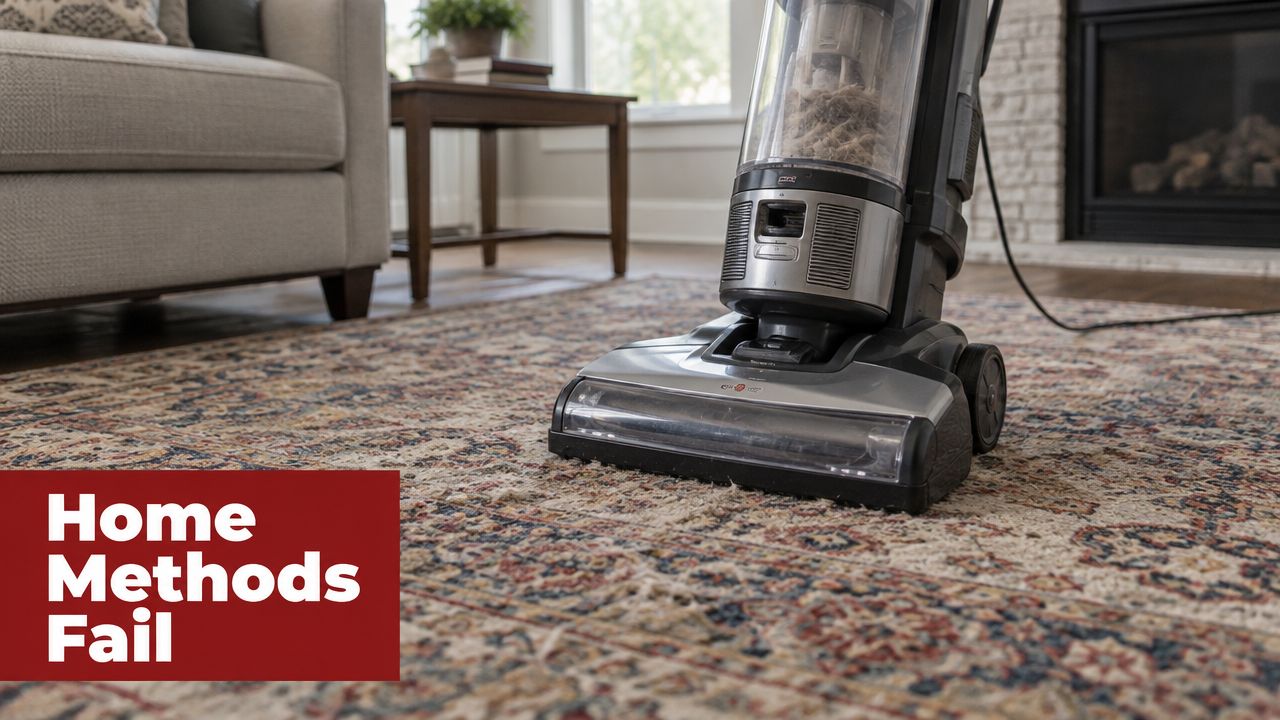
Home care is useful when the rug only needs routine maintenance. Vacuum loose debris with suction only, check the rug's condition, and stop before a small issue becomes a restoration problem. A household vacuum cannot inspect the foundation, remove contamination held below the pile, or confirm that the backing has dried internally.
Before treating a spill, check four points:
- Is the area still damp, or has moisture reached the underside?
- Is there an odor that returns after the surface dries?
- Does the pile feel sticky, stiff, matted, or different from the surrounding wool?
- Has the fringe, binding, backing, or color changed around the affected area?
These signs help determine whether careful blotting is enough or whether the rug needs professional assessment. In coastal San Diego, moisture can remain below a surface that feels dry, particularly after cool, humid nights.

Know when to stop treating a spot
Blot a fresh spill with cool water and a clean cloth. Work from the outside toward the center, use minimal moisture, and allow the area to dry with airflow. Do not scrub, steam, bleach, or saturate the rug while trying to improve it.
Stop home treatment when the spill has a persistent odor, the affected area is spreading, the underside feels damp, or the rug shows color transfer. Pet urine and other contamination can travel into the foundation, where repeated surface cleaning may hide the symptom without removing its source.
Routine suction-only vacuuming suits regular upkeep, while embedded grit, recurring odor, moisture damage, and pet contamination call for a different decision. A specialist can inspect the backing and determine whether the rug needs immersion washing, targeted odor treatment, repair, or full restoration.
What Drives the Cost of Wool Rug Cleaning in San Diego
A wool rug that looks lightly soiled may still need a different service from one with pet contamination or moisture in its foundation. In San Diego, the quote should reflect more than floor area. Construction, soil type, drying requirements, access, and the risk of color or foundation damage all affect the work.
A Southern California rug specialist lists wool cleaning at $5 per square foot, compared with $4 for synthetic rugs and $8 for silk. The figures in The Rug Specialists' wool-rug pricing guidance provide a regional benchmark, not a guaranteed San Diego quote. Inspection should come before a final price, especially if the rug has odor, staining, or an unstable backing.
The variables behind the estimate
- Size and minimum charges: Larger rugs require more washing, extraction, drying space, and handling. A provider may also apply a minimum charge when a small rug requires the same setup as a larger job.
- Fiber and construction: A hand-knotted Persian rug, wool-and-cotton blend, and machine-woven wool piece may require different chemistry, agitation, and drying controls.
- Soil and contamination: Ordinary traffic soil usually calls for routine washing. Pet urine, mildew odor, smoke residue, coffee, or wine may require separate testing, treatment, or repeated inspection.
- Drying conditions: Dense pile and vulnerable foundations hold moisture longer. Coastal humidity can increase the time and equipment needed to dry the rug safely.
- Repairs and finishing: Fringe repair, edge work, dye stabilization, moth damage, or a weakened foundation should appear as separate craft charges rather than being hidden inside a basic cleaning price.
- Pickup and access: Stairs, restricted parking, distant pickup, or expedited scheduling can add labor or transport costs.
| Cost Variable | Why It Changes the Price | What to Confirm |
|---|---|---|
| Size | Washing and drying capacity increase with surface area | Ask whether a minimum charge applies |
| Pet odor | Contamination may extend below the pile and require targeted treatment | Confirm whether odor work is priced separately |
| Moisture risk | Dense construction can slow drying and expose a weak foundation | Ask how drying and moisture checks are handled |
| Fringe or edge damage | Repair requires separate hand labor after cleaning | Request a line-item repair estimate |
| Stains and dyes | Sensitive colors may need testing and controlled treatment | Confirm whether dye stabilization is included |
| Logistics | Pickup distance and access change labor and transport time | Check service-area and delivery charges |
A written estimate should separate cleaning, specialty treatments, repairs, pickup, and return delivery. For a broader comparison of how providers frame wool service estimates, review this guide to wool rug cleaning cost. The useful question is whether the quote matches the rug's construction and condition, not just whether its first number looks low.
Routine Cleaning Versus Full Rug Restoration
Routine immersion cleaning is appropriate for a structurally sound wool rug with ordinary dust, foot-traffic soil, light pet hair, and no sign that moisture has reached the backing. The goal is to remove embedded soil, rinse away residue, refresh the pile, and return the rug ready for normal use.
Restoration addresses a different problem. A rug exposed to flooding, sewage, smoke, prolonged damp storage, or heavy pet contamination may need controlled drying, foundation-level odor treatment, substrate repair, antimicrobial work, or dye correction. Washing alone won't repair a weakened foundation or reverse damage caused by trapped moisture.

A practical decision screen
Choose routine cleaning when:
- The rug has normal traffic soil but no persistent damp odor.
- The backing is stable and free of crusty or stiff patches.
- Colors remain stable when the rug is handled normally.
- There has been no flood, sewage event, or prolonged wet storage.
Ask for restoration assessment when:
- A musty smell remains after ventilation.
- The backing feels stiff, wavy, or unusually heavy.
- You see browning, tide marks, color bleeding, or distorted edges.
- Pet urine or another contaminant has reached the foundation.
- The rug was stored damp after a marine-layer episode.
Independent rug mold and mildew restoration guidance emphasizes that wool and cotton can retain moisture deep inside the pile and foundation. Surface drying isn't enough. The rug needs complete drying through its structure, followed by an inspection that identifies whether contamination or odor remains.
Best next step: Ask the cleaner to inspect the back and foundation before quoting a standard wash.
That small request can prevent a mismatch between the service purchased and the specific problem the rug has. Routine cleaning is efficient when the rug only needs cleaning. Restoration is the safer path when moisture, contamination, or structural damage has changed the risk profile.
Caring for Wool Rugs in San Diego's Coastal Climate
A rug can feel dry in the afternoon and still hold moisture after a marine-layer morning. Wool exchanges moisture with the surrounding air, while salt-air dust and tracked-in grit settle into the pile. In San Diego, care needs to address both abrasive soil and the risk that dampness reaches the foundation.
A coastal home rhythm
- Time vacuuming around the marine layer: Vacuum once the room and rug are fully dry, rather than immediately after a damp morning. Use suction only on hand-knotted pieces, with the beater bar disabled. Keep a closer schedule in Point Loma or La Jolla homes where open windows bring in salt-air dust.
- Manage bedroom humidity: Run a dehumidifier during extended gray weather and keep indoor relative humidity within the machine's recommended range. Air movement helps, but aim airflow across the room rather than blasting one section of the rug.
- Keep patios separate: Move the rug indoors if a covered patio stays damp, even when rain is not falling. Concrete and tile can hold moisture after overnight condensation, allowing the backing to remain wet.
- Check the underside after humid spells: Lift a corner and feel the backing, pad, and floor. A cool, heavy, or musty underside calls for drying and inspection, not another dose of spot cleaner.
- Trim, never pull: Clip loose yarns level with the pile. Restoration Hardware's rug-care instructions also recommend professional cleaning for fine rugs.
Manufacturer care guidance commonly recommends frequent vacuuming and avoiding bleach, ammonia, oxygen bleach, and soaking. On a lightly used bedroom rug, the need for immersion cleaning may arise less often than on an entry rug exposed to pets, sand, and daily traffic. A professional should judge timing from soil, odor, fiber condition, and foundation stability rather than a calendar alone.
Routine cleaning removes accumulated soil. It will not resolve a persistent damp odor, pet contamination, or a backing that has become wavy or stiff. Those signs shift the decision toward targeted restoration, where the rug can be assessed for moisture movement, odor, and structural damage before treatment.

The Residue and Over-Wetting Problem Most Owners Miss
“Be gentle with wool” is incomplete advice. The more useful rule is use low-residue chemistry, control the water, and dry the rug completely.
Consumer rug shampoos, essential-oil treatments, and improvised steam-cleaning solutions can leave surfactants or sugary residues in the pile. That film can make the rug feel stiff, attract fresh soil, and hold moisture near the yarns. Owners often interpret the resulting odor as proof that the rug needs stronger cleaning, then add more product and make the residue problem worse.
Why more water isn't better
Wool absorbs moisture readily, and cotton foundations can retain it longer than the surface suggests. If the rug dries slowly during a marine-layer period, moisture can wick upward and carry dissolved soil with it. Browning, tide marks, and musty odors may appear after the rug initially seems clean.
The answer isn't a blast of high heat. Excessive heat can shrink or distort wool. A facility should remove as much water as possible mechanically, then use managed airflow and humidity control so the rug dries steadily through the pile and foundation.
Counterintuitive but important: A wool rug often needs less aggressive chemistry and more complete drying.
Rinsing should continue until suspended detergent and soil are removed rather than leaving a cleaning film behind. Before wrapping, the technician should check the rug for residual moisture in more than one area. If the rug still smells musty after drying, it needs assessment for hidden contamination rather than another surface deodorizer.
For an example of how sticky residue can persist after consumer-style cleaning, review this discussion of sticky carpet after cleaning. The same basic lesson applies to wool rugs, but the consequences can be more serious because wool and its foundation respond poorly to uncontrolled moisture and chemistry.
Getting Your Wool Rug Professionally Cleaned
Start with the rug itself, not the cleaner's sales language. Photograph the front, back, fringe, corners, stains, and any areas that feel stiff or smell unusual. Those images help a specialist decide whether to recommend routine washing, pet-odor treatment, water-damage restoration, or an in-person inspection.
Pickup and delivery can make the process straightforward from La Jolla and Point Loma to Chula Vista. Before the rug leaves your home, the technician should identify the fiber, test dye stability, document pre-existing damage, and note fringe or corner repairs that may need a separate quote.
Questions worth asking before booking
- Facility method: Will the rug be washed in a dedicated rug facility, or cleaned in the home with a portable extractor?
- Handling coverage: Does the company carry insurance for the rug while it is being transported and processed?
- Turnaround: What is the normal completion window, and what changes if you need expedited service?
- Contamination plan: How are pet urine, persistent odor, mold concerns, or water-damage rugs handled differently from ordinary soil?
- Written scope: Will the estimate identify pickup, cleaning, treatments, repairs, and return delivery?
A facility-based process is generally better suited to rugs that need dust removal, immersion, controlled rinsing, grooming, and complete drying. In-home extraction can be useful for some installed carpets, but it doesn't provide the same control over a loose wool rug's foundation, dye behavior, or internal moisture.
Ask for an all-in written estimate after inspection. A responsible provider shouldn't promise a precise result or a fixed price without seeing the rug's construction and condition. If the rug has pet contamination, moisture damage, or a persistent musty odor, say so before pickup rather than treating it as an ordinary stain.
Finally, confirm how the cleaned rug returns to its original location. Professional pickup, facility washing, controlled drying, grooming, and return placement remove much of the logistical burden while preserving a clear chain of care. If you're comparing local service models, Rubber Ducky Rug Cleaning Birmingham describes facility washing, mechanical dust removal, specialized rinsing, climate-controlled drying, grooming, and pickup and delivery for homeowners who need rug-specific service.
Rubber Ducky Rug Cleaning Birmingham offers professional area rug washing, stain and odor treatment, controlled drying, and pickup and delivery for wool and other floor coverings. Visit Rubber Ducky Rug Cleaning Birmingham to request a rug cleaning estimate and arrange professional care for a piece that needs more than a surface clean.