If you're searching for professional pet stain removal in Birmingham, you may be dealing with more than a mark on the rug. A spot can look lighter after blotting while urine remains in the pile, backing, adhesive, or floor beneath it. Homeowners in Birmingham, Homewood, Mountain Brook, Hoover, and nearby communities often call after the smell returns, the dog revisits the same place, or a once-bright rug begins attracting soil around the treated area.
Area rugs need a different approach from wall-to-wall carpet. They must be inspected, washed, rinsed, dried, and groomed according to their fiber and construction. Rubber Ducky Rug Cleaning provides pickup, facility-based rug washing, stain and odor treatment, controlled drying, and return delivery for Birmingham-area homes.
Why Pet Stains in Rugs Are Harder Than They Look
A Homewood family recently noticed that a dog kept returning to the same corner every morning. The visible mark had faded after repeated cleaning, but the behavior continued. That pattern usually means the surface looks cleaner while odor compounds remain below it.
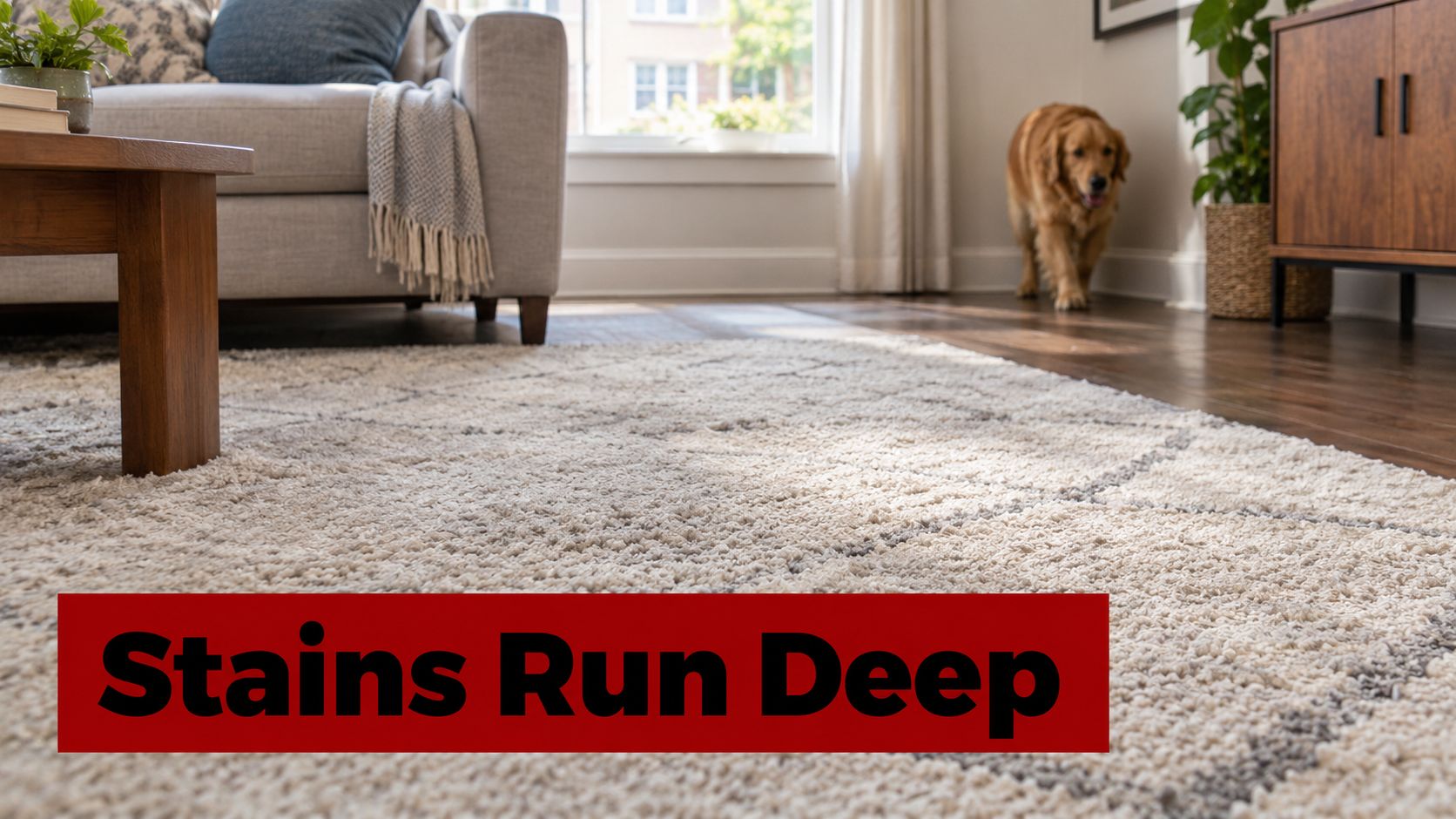
A rug can hold urine through the wool face, cotton foundation, latex adhesive, and backing before it reaches the floor underneath. Unlike wall-to-wall carpet, an area rug usually isn't stretched over a fixed pad. Liquid can pool beneath it, wick sideways through the foundation, and dry slowly where ordinary towels and a household machine can't reach.
The visible spot isn't the entire affected zone
The average cat deposits 2–3 ounces per urination, while the average dog deposits 3–4 ounces, according to this practical pet urine cleaning guidance. That volume can spread beyond the darkened area, especially when the rug has absorbent fibers or a dense foundation.
Urine also leaves sticky salts behind as it dries. Those residues attract fresh soil, so the treated corner may look dirty again within days even when the original color has improved. Professional treatment has to address both the discoloration and the material that causes re-soiling.
Practical rule: A clean-looking face doesn't prove that the rug is odor-free.
Wool, silk, and vegetable-dyed rugs add another complication. Acidic contamination and later alkaline residues can shift color or weaken sensitive fibers. Scrubbing may roughen the pile, while aggressive chemistry can cause color loss that is harder to correct than the original stain.
That's why surface success and odor elimination are separate problems. The first calls for careful stain treatment. The second requires saturation, appropriate chemistry, extraction, and drying through the affected substrate. Homeowners dealing with recurring accidents can also review this guide to pet stains on rugs before deciding whether a household product is enough.
The Chemistry and Biology Behind Lingering Pet Odors
Fresh urine is typically acidic, around pH 5–6, but bacterial breakdown of urea makes the residue alkaline and can push it above pH 11, according to BISSELL's explanation of dried pet urine chemistry. That change explains why an older accident can be more damaging to natural fibers and more difficult to neutralize than a fresh one.
A dog accident also doesn't remain neatly inside the visible outline. Liquid follows capillaries through the face yarn and foundation, then reaches the backing and any absorbent material below. As it dries, urine salts crystallize and remain attached to fibers. Moisture and humidity can reactivate the odor even after the surface appears dry.
Urine chemistry stages in rug fibers
| Stage | Timeframe | pH Range | Dominant Compound | Cleaning Implication |
|---|---|---|---|---|
| Fresh contamination | Soon after the accident | 5–6 | Dilute urine and urea | Blotting and complete-area enzyme contact can limit spread |
| Drying residue | As moisture leaves the rug | Increasingly alkaline | Urea breakdown products and urine salts | The affected zone needs deeper treatment than a surface wipe |
| Established residue | After bacterial breakdown | Can exceed 11 | Alkaline salts and crystallized uric-acid residue | Fiber testing, chemistry control, and thorough rinsing become essential |
Guidance from PetMD on removing dog urine from carpets and fabrics recommends blotting first, then saturating the affected area and its surrounding spread. Set-in stains may need enzymatic products to dwell for hours because odor compounds can sit below the surface.
Enzymes and neutralizers perform different jobs. Enzyme chemistry helps break down organic residue, while neutralization addresses the conditions that make the remaining material smell sharp and alkaline. A professional cleaner has to choose the treatment around the fiber, dye stability, backing, and contamination depth instead of treating every accident as the same type of spot.
Why DIY Methods Often Fall Short on Rugs
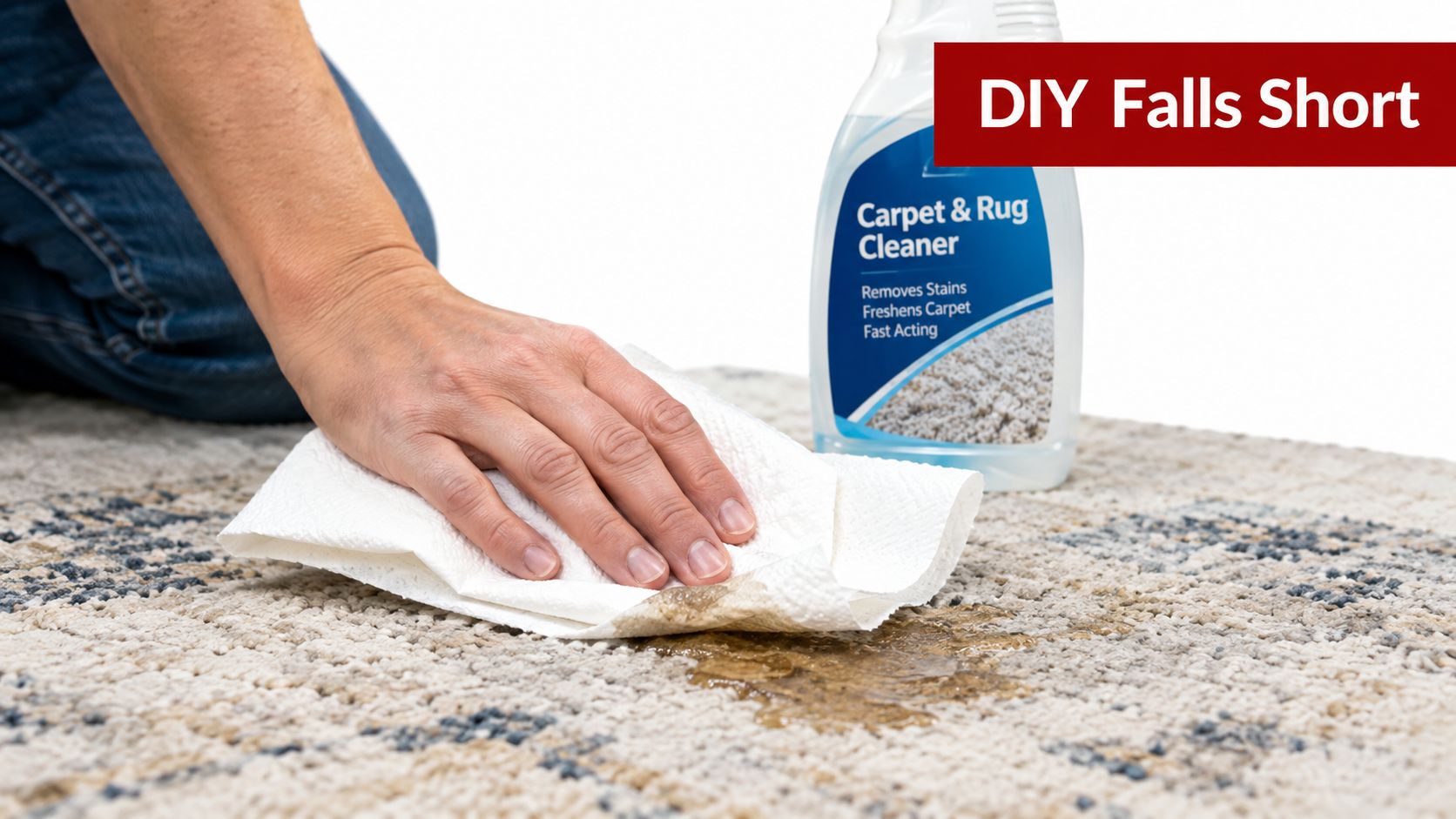
A pet accident can look like a small mark while urine has already reached the pile, foundation, and backing. Towels, spray bottles, rental machines, and carpet shampooers may improve the visible surface, but they rarely control the full moisture path or remove dissolved residue from the rug's construction.
Four common home approaches
- Blotting: Pressing towels onto a fresh spill removes accessible liquid from the surface. Heavy pressure can push contamination deeper into the pile, while towels cannot extract residue from the backing or underside.
- Retail enzyme sprays: These may help with a fresh, limited accident if the product reaches the entire affected area and stays wet long enough to work. A light mist usually cannot provide that saturation or dwell time for set-in residue.
- Rental steam machines: Steam cleaning adds substantial moisture without giving the rug controlled washing, rinsing, and drying. A saturated rug can take several days to dry, while a localized spill may dry within 12–24 hours. Longer drying increases the risk of browning, dye migration, and fiber damage.
- Home carpet shampooers: Foaming detergents can clean the face while leaving surfactant behind. That residue attracts soil and may create a darker ring around the original stain.
Pet Magasin on removing pet stains offers useful general guidance for household treatment, but rug construction determines whether that advice is suitable. Wool, silk, viscose, jute, and hand-dyed materials respond differently from synthetic wall-to-wall carpet.
What the rug actually needs
Effective treatment requires controlled moisture, fiber-safe agitation, chemistry that reaches the contaminated substrate, extraction that removes dissolved urine residue, and drying from a controlled position. Facility washing provides those controls instead of leaving a wet rug on a Birmingham floor.
Rubber Ducky Rug Cleaning Birmingham's professional carpet cleaning versus DIY comparison explains why household equipment cannot reproduce a rug-washing facility. The process relies on inspection, washing, rinsing, and controlled drying, not fragrance, surface foam, or heat alone. That combination removes material from the rug rather than redistributing it through the pile or backing.
Inside the Professional Multi-Stage Cleaning Process
A rug that has taken on pet urine should not go straight from a Birmingham living room into a wash tank. The technician first checks what the rug is made of, how far the urine moved into the substrate, and whether the dyes and backing can handle the chosen chemistry.
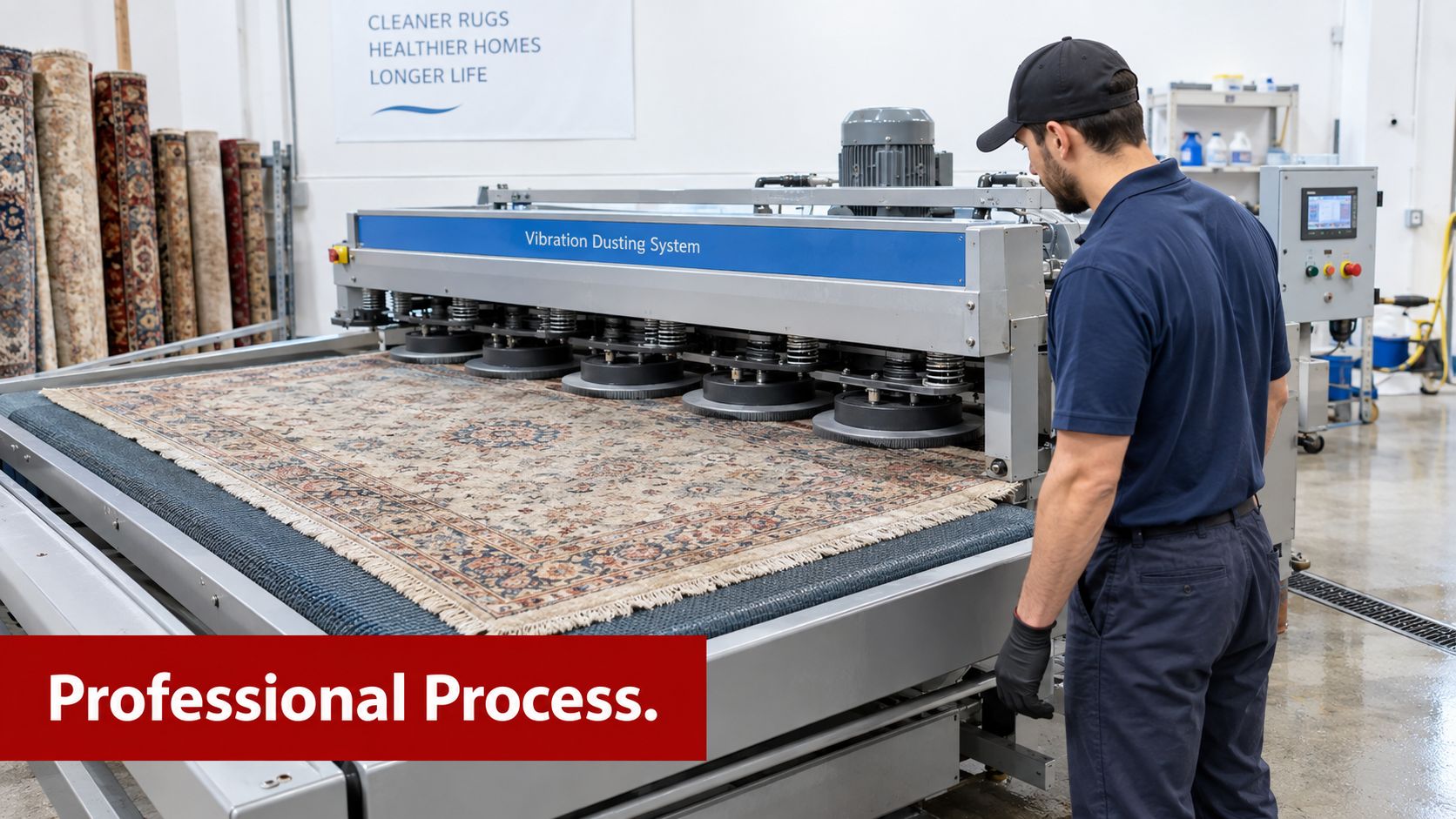
Six stages from pickup to drying
- Inspection and fiber identification: The rug is checked for wool, silk, cotton, viscose, jute, synthetic fibers, unstable dyes, backing damage, and visible or suspected pet contamination. Treatment starts with construction, not a generic product.
- Dry mechanical dusting: Controlled-vibration equipment releases sand, grit, hair, and dry soil before wet work begins. Removing that debris first keeps abrasive particles from grinding through damp pile during washing.
- Controlled immersion washing: Water temperature and detergent selection are matched to the fiber and dye behavior. Immersion lets the cleaning solution move through the face and foundation together instead of stopping at the surface.
- Targeted dwell treatment: Contaminated zones receive an appropriate enzyme or oxidizing treatment where testing allows it. The solution has to stay in contact long enough to work, while silk and other sensitive fibers may need a different approach.
- Full-substrate rinsing: Mechanical rinsing and extraction pull dissolved soil, chemistry, and urine residue out of the backing. This stage matters because leftover detergent or salts can turn the rug into a re-soiling magnet.
- Flat, controlled drying: The rug is dried with airflow and conditions designed to limit shrinkage, browning, and dye migration. Direct heat should be avoided because it can shrink wet wool and permanently set migrating dyes during controlled drying.
Why facility equipment changes the result
Rotary brush units work the wash solution through the pile. Extraction washers remove loosened material, and drying racks support the rug so air can reach the right surfaces. These controls matter during Birmingham's humidity swings, when a rug that feels dry on top may still hold moisture below.
A professional facility also gives technicians room to inspect the rug again after washing. They can groom the pile, assess fringe and edges, and identify restoration needs before the rug returns to the home. For homeowners who also need carpet work, this explanation of how professional carpet cleaning works provides useful context, but area rugs still need rug-specific handling.
Stain-Specific Tactics Birmingham Pet Owners Should Know
Pet messes don't all respond to the same treatment. A urine accident, a protein-rich vomit stain, fecal contamination, and oily fur transfer each leave different materials behind.
| Stain Type | Primary Chemistry | Key Risk |
|---|---|---|
| Fresh urine | Enzyme treatment followed by full-substrate extraction | Odor and salts can spread beyond the visible spot |
| Dried urine | Detection, controlled alkaline conditioning, and fiber-tested boosting | Alkaline residue can damage sensitive fibers |
| Vomit | Acidic protein break followed by targeted enzyme work | Heat or incorrect chemistry can set protein soils |
| Feces | Solid removal, sanitation, and stain-specific reduction | Physical contamination and tannin staining |
| Oily paw or fur transfer | Surfactant-based degreasing before washing | A greasy edge can attract soil even without urine |
Fresh urine generally benefits from prompt blotting, full-area saturation, enzyme dwell, and extraction. Dried urine needs more investigation. A technician may use urine detection tools, condition the residue, and consider peroxide boosting only when colorfastness and fiber construction make that safe.
Vomit often contains protein-bound soil, so an acidic break may be needed before controlled enzyme treatment. Fecal material must be removed before sanitation, while a remaining tannin stain may call for a reducing agent. Oily transfer along a rug edge behaves more like cooking grease than a conventional pet stain, so a surfactant degreaser belongs before the general wash.
Fiber changes the treatment decision
Silk and viscose generally don't tolerate aggressive oxidizers. Jute foundations can swell when over-wet. Polypropylene is usually more forgiving than wool, but even synthetic rugs can suffer from residue, backing problems, or wicking when the process is poorly controlled.
Birmingham pet owners arranging care, boarding, or visits can also use Global Pet Sitter's Birmingham resource while planning how to keep a cleaned rug protected. The cleaning decision still depends on the rug, not on the type of pet or product label.
When Pet Odor Can Be Fully Eliminated and When It Cannot
Professional pet stain removal can often eliminate odor when contamination is limited to the face yarn, the accident is recent, and the backing can be thoroughly flushed. It becomes less certain when urine has soaked into latex, rubber, padding, or a subfloor that retains the residue after the rug itself is washed.
A damaged substrate changes the job. Rubber or latex may absorb urine and begin breaking down. Cotton or wool foundation yarns can hold alkaline salts for a long time, and repeated untreated accidents can create overlapping odor layers that no surface treatment can reliably remove.
The honest decision tree
- Face-yarn contamination: A complete wash and targeted treatment may resolve the issue.
- Contaminated backing: Deep flushing may work if the backing remains stable and accessible.
- Saturated pad: Replacement may be more durable than repeated cleaning when residue lies beyond effective rinse reach.
- Damaged foundation or floor: Sealing, repair, or replacement may be necessary after the source is identified.
- Heirloom or vintage rug: Restoration value, fiber condition, dye stability, and replacement difficulty should be weighed before treatment.
A responsible technician should explain this before charging for a process that cannot deliver a lasting result. One pet stain removal service guide notes that deep-set or repeated stains may need a second visit and that full removal isn't guaranteed when padding or subfloor damage is severe.
For additional household odor-care context, Evo Dyne Products' pet odor advice can help owners understand why masking fragrance isn't the same as eliminating the source. The practical question is whether the contaminated material can be reached, treated, rinsed, and dried without damaging the rug.
Pricing, Turnaround, and Questions to Ask Your Cleaner
Birmingham homeowners should compare pet stain removal quotes by process, not just by the first number offered over the phone. A proper estimate may separate the base rug-washing fee from area-based charges, severe odor or contamination surcharges, and optional work such as padding replacement or fiber protection.
Turnaround depends on the rug's construction, moisture load, stain severity, and whether restoration is needed. Routine facility work may take 5–10 business days, while severe odor cases and restoration jobs can take longer. That waiting period reflects inspection, washing, rinsing, drying, grooming, and review. A same-day return promise may indicate that drying and post-cleaning inspection have been shortened.
Questions worth asking before pickup
- Fiber identification: Will someone identify the rug's fibers, dyes, backing, and construction before treatment?
- Sub-surface testing: How will the cleaner locate urine that isn't visible?
- Chemistry: What neutralizer or enzyme treatment is appropriate for this specific rug?
- Padding decisions: If the pad is contaminated, will it be cleaned, replaced, or left untreated?
- Drying: Where will the rug dry, and how will the provider control airflow and moisture?
- Re-treatment terms: What does the warranty cover if odor returns?
- Restoration limits: What happens if the backing, foundation, or floor beneath the rug is damaged?
| Provider Attribute | Budget Cleaner | Mid-Range Specialist | Restoration-Grade Service |
|---|---|---|---|
| Fiber identification | May be limited | Usually included | Detailed inspection and testing |
| Pet odor treatment | Surface product | Targeted chemistry | Substrate-focused treatment and review |
| Washing method | In-home or basic machine | Rug-specific cleaning | Facility immersion, rinse, and restoration |
| Drying | On-site drying | Controlled drying may vary | Dedicated climate-controlled drying |
| Damage assessment | Limited | Case-dependent | Included before treatment decisions |
| Re-treatment explanation | Often unclear | Discussed on request | Defined before work begins |
Red flags include vague estimates, no discussion of fiber type, refusal to explain chemistry, absolute odor guarantees, and promises that ignore drying time. A clear provider should tell you what the process can achieve and where substrate damage may limit the result.
Preventing Future Pet Stains and Booking Service
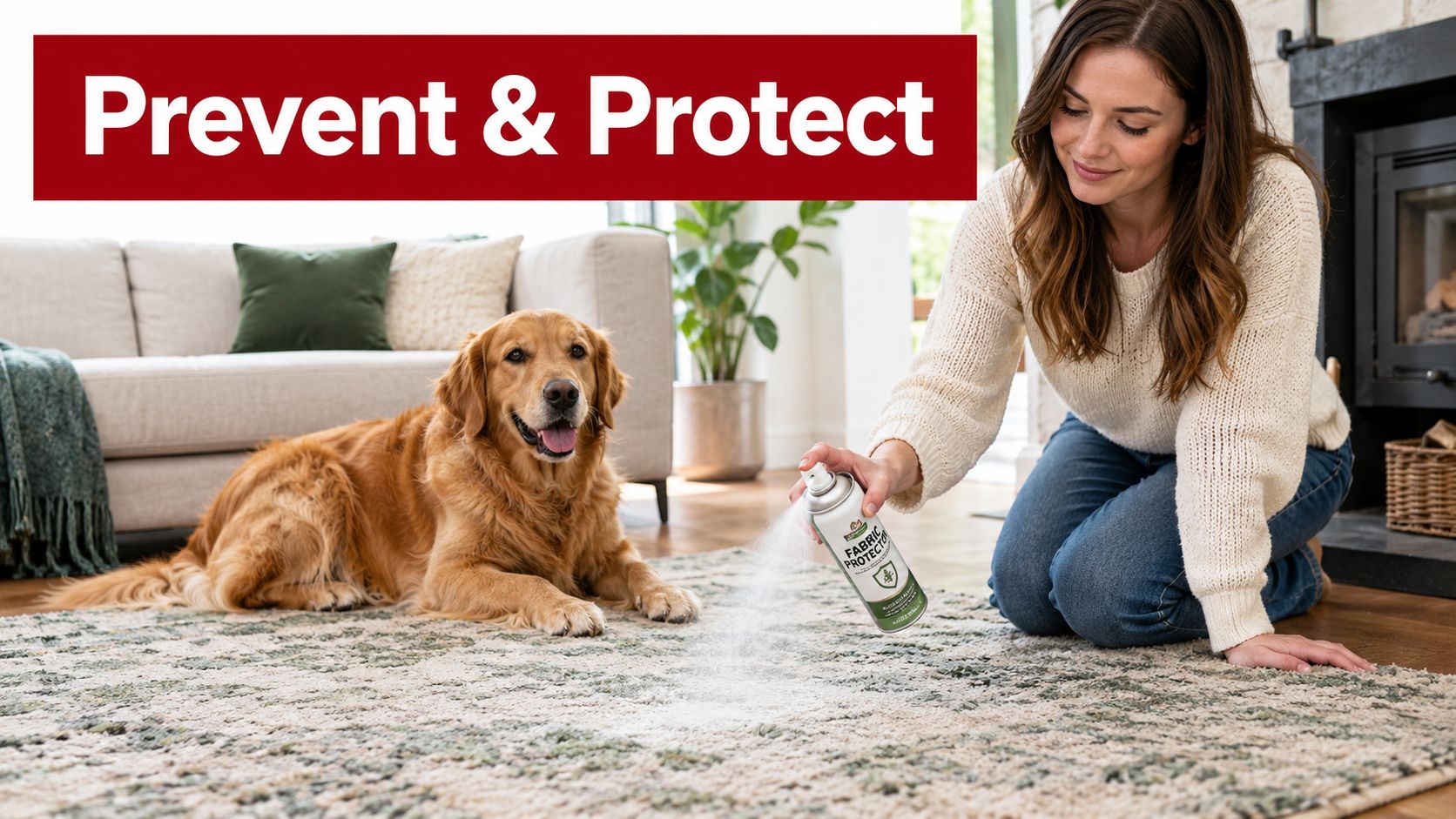
After professional washing, prevention starts with the rug's location and the pet's behavior. Rotate rugs when appropriate to distribute traffic, place washable mats near feeding or litter areas, and consider a fluorochemical protector after cleaning when the fiber and finish allow it.
Repeated accidents may point to a behavioral or medical issue, so a veterinarian should assess the underlying cause. Cleaning removes residue, but it won't prevent a recurrence if the pet continues marking the same location. Prompt blotting and a careful water-only rinse can help limit a fresh accident, but neither replaces professional washing once urine has wicked into the foundation.
What booking looks like in Birmingham
- Request an estimate: Send details about the rug, fiber if known, stain type, odor history, and approximate dimensions.
- Arrange pickup: Schedule home pickup in Birmingham, Homewood, Mountain Brook, Vestavia Hills, Hoover, or another nearby metro community.
- Review inspection results: The technician explains the rug's construction, contamination depth, treatment options, and any restoration concerns before work begins.
- Approve the facility process: The rug is dusted, washed, treated, rinsed, dried, groomed, and checked before delivery.
- Receive the rug back: Return delivery places the cleaned rug in its original location, with follow-up discussion available for severe odor jobs.
Rubber Ducky Rug Cleaning Birmingham offers same-day phone quotes and free return delivery in metro Birmingham, according to its local service information. The company's facility process is designed for area rugs, including delicate hand-woven and oriental pieces, modern synthetics, and outdoor rugs.
Act quickly when a pet accident occurs. Early pickup can prevent residue from setting deeper into padding, backing, or the floor beneath the rug, while an honest inspection helps you decide whether washing, restoration, or replacement makes practical sense.
Rubber Ducky Rug Cleaning Birmingham provides home pickup, facility-based rug washing, targeted pet stain and odor treatment, controlled drying, grooming, and return delivery for homeowners across the Birmingham area. Visit Rubber Ducky Rug Cleaning Birmingham to request an estimate or schedule professional pet stain removal before the odor becomes harder to resolve.