
A wine glass tips over during dinner, or a pet has an accident beside the sofa, and your first instinct is usually to grab a wet towel and scrub. If you're searching for how to spot clean a wool rug in Birmingham, that instinct needs adjusting. Wool can tolerate careful, prompt attention, but aggressive rubbing, hot water, and excess moisture can create a larger problem than the original spill.
For Birmingham homeowners in Hoover, Homewood, Mountain Brook, Vestavia Hills, Trussville, and nearby communities, spot cleaning should be treated as low-moisture triage, not a substitute for professional rug washing. The immediate aim is to remove as much of the spill as possible while protecting the pile, dyes, and backing until a specialist can inspect and deep-clean the rug.
Why Wool Rugs Need a Different Cleaning Approach
A homeowner in Mountain Brook may notice a fresh red-wine spill sitting on the surface of a wool rug and assume a soaked towel will draw it out. Wool often gives you a useful window because liquid can remain near the surface, but the fiber responds poorly to friction, heat, harsh chemistry, and over-wetting. Rubbing can mat the pile, while excess moisture can affect the rug's backing and encourage dye migration.
Birmingham homes add practical complications. Humidity can slow drying, and red-clay soil tracked into a rug can combine with leftover cleaning product to leave the area dull or stiff. A rug that looks clean while damp may reveal a watermark, halo, or returning discoloration after it dries.
WoolSafe's care guidance recommends soaking up liquids, scraping away solids, working from the outer edge inward, and blotting rather than rubbing. It also advises applying small quantities of spot remover to a cloth instead of directly onto the wool, then rinsing water-based products with clean water and drying the area where possible. Those methods are designed to limit stress on the pile and dyes. WoolSafe's care guide is also a useful reference for anyone learning to clean wool carpets without felting.
The practical distinction: a safe home response protects the rug until professional washing. It rarely removes everything held below the visible pile.
Before treating an expensive hand-knotted, Oriental, or older wool rug, check Rubber Ducky's wool rug care guidance. If the rug has a strong odor, spreading stain, loose foundation, previous water damage, or uncertain dye stability, stop after blotting and arrange an evaluation.
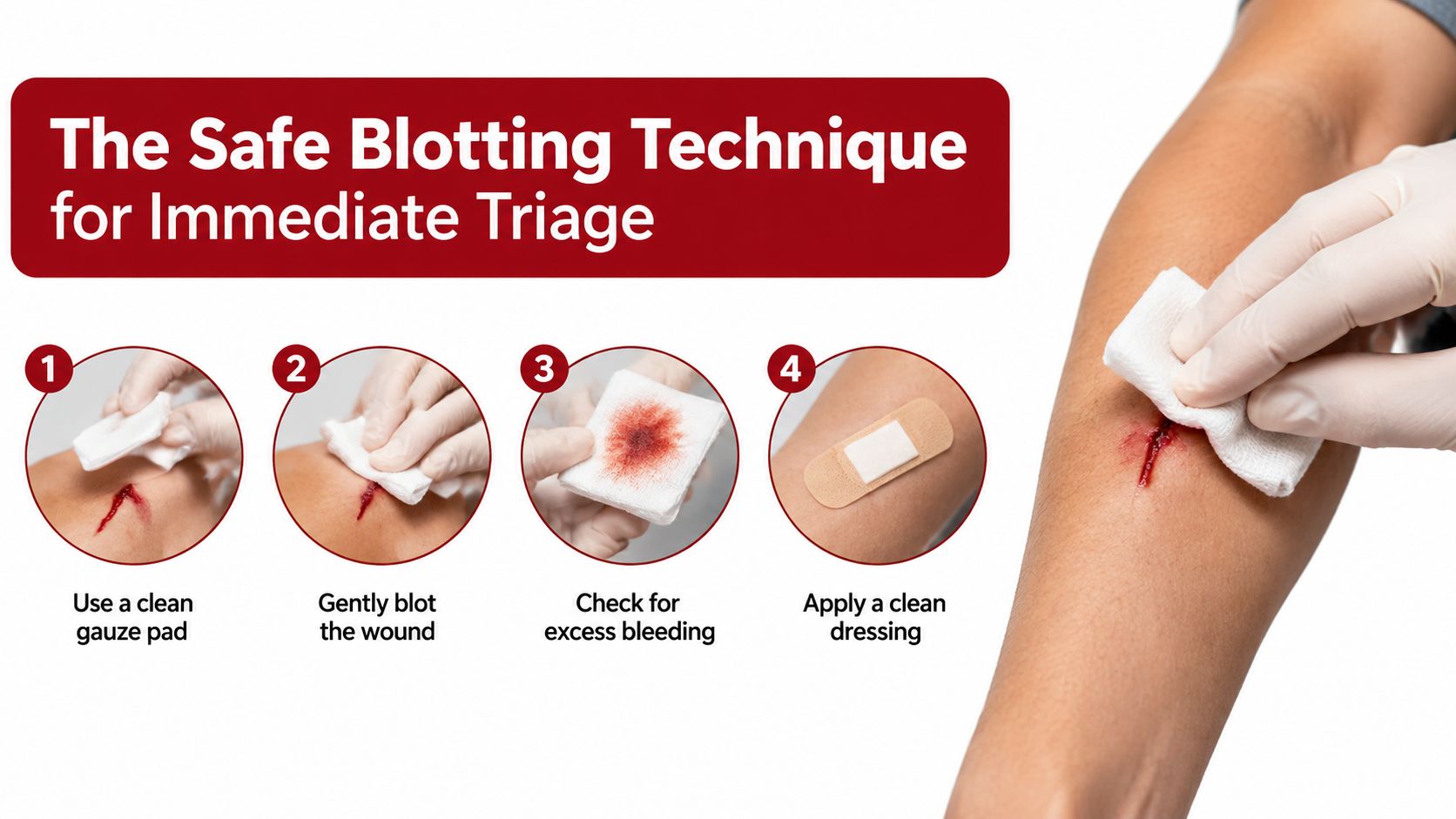
The Safe Blotting Technique for Immediate Triage
The physical action matters more than the amount of cleaner. WoolSafe recommends an edge-to-center blotting workflow, which limits the chance of spreading a liquid across clean fibers and creating a visible halo.
-
Remove solids first. Use a spoon, dull knife, or spatula to lift food, mud, or other debris. Don't grind the material into the pile with a towel. If red clay has dried, gentle surface removal and later vacuuming are safer than trying to dissolve a large amount of soil in place.
-
Use a clean white towel. White cotton towels or plain white absorbent paper help you see what's transferring and reduce the risk of dye transfer from a colored cloth. Press down, hold briefly, and lift. Replace or refold the towel as it becomes wet.
-
Start at the outside edge. Work toward the center in small sections. This keeps the wet boundary from moving outward and prevents you from enlarging the affected area with each pass.
-
Keep pressure controlled. Blotting lifts liquid from the pile. Scrubbing introduces friction, pushes contamination deeper, and can distort the wool's surface texture.
Don't pour water onto the rug because the stain looks stubborn. WoolSafe advises using small quantities of product on a cloth, not flooding the pile. Excess water can move into the backing, prolong drying, and increase the risk of dye migration or structural distortion.
Once the visible liquid has been lifted, leave the area alone long enough to assess it dry. A faint dark patch may be dampness rather than remaining soil. If the discoloration returns, the smell persists, or the stain has spread beneath the surface, professional rug washing is the safer next step.
Choosing the Right pH-Neutral Cleaners and Water Temperature
Wool needs controlled chemistry. Use cool or lukewarm water and a mild, pH-neutral or wool-safe detergent. Hot water, harsh alkaline cleaners, and aggressive oxidizers can contribute to shrinkage, felting, dye instability, or damage to the backing, especially when combined with friction.
A commonly repeated wool-care mixture is about 1 teaspoon of wool-safe detergent per cup of cool to lukewarm water. The Spruce's wool-rug cleaning guidance also reflects the broader principle of using a small amount of mild detergent, testing first, and controlling residue. For a minor spot, some guidance uses a single drop of dish soap in water, but less product is safer than creating a sticky patch that attracts fresh Birmingham soil.
Test before treating the visible stain
Choose an inconspicuous corner or an area normally hidden beneath furniture. Apply a small amount of the solution to a white cloth, then dab the rug rather than pouring the mixture onto it. Wait long enough to observe whether color transfers to the cloth or the surrounding fibers change appearance.
If dye appears on the cloth, stop. A colorfastness problem can turn a small spot into a much wider bleed during home treatment. Unknown stains also deserve caution. If you don't know whether the material is oily, protein-based, or water-soluble, applying the wrong chemistry may spread or set it.
Rinse away the chemistry
After a water-based spotter has done its limited work, use a separate cloth dampened with clean water to remove detergent residue. Blot repeatedly with a dry white towel and dry the area promptly. Residue can attract soil and make a stain reappear, while an over-wet backing can stay damp long after the pile feels dry.
For Birmingham homeowners considering household mixtures, Rubber Ducky's discussion of rug cleaning solutions and vinegar offers useful context. Avoid experimenting on a valuable wool rug when the dye response, construction, or stain chemistry is uncertain.
Handling Common Household Stains Without Over-Wetting
Different spills need different decisions, but the moisture limit stays the same. Pet urine, red wine, and cooking oil can all travel below the visible surface, so a successful first response focuses on containment, careful transfer, and fast drying, not saturation.
Pet urine
Blot the accident immediately with white towels, pressing from the outside toward the center. Don't use steam or hot water on a wool rug. Heat and moisture can drive urine farther into the structure, and repeated wetting can leave odor-causing residue in the backing.
After removing as much liquid as possible, use a clean cloth that's only lightly damp with cool or lukewarm water to lift remaining surface residue. Follow with dry towels. If the odor remains, the affected area feels stiff, or the accident was substantial, stop trying to neutralize it at home. Urine can discolor dyes and affect foundation fibers, and a surface dab won't reliably reach contamination below the pile.
Red wine
First, remove the glass or any solid residue, then press white towels into the spill without rubbing. Work around the perimeter and move inward, changing to a dry section of towel as pigment transfers.
If a small amount of moisture is needed, apply it to the cloth, not directly to the rug. Use minimal cool or lukewarm water, then blot again. A darkened area can remain temporarily while damp, so assess the color only after it has dried. If a pink or brown edge develops, don't chase it with repeated applications. Dye movement may require controlled professional treatment.
Cooking oil
Oil is not handled like a water-based spill. Blot first to lift the excess, then avoid adding water in the hope that it will dissolve grease. Unknown or oil-based stains may require a carefully selected solvent approach, and any agent should be applied in a small quantity to a cloth after a hidden colorfastness test.
Don't apply solvent directly to the pile, mix chemicals, or continue if the rug's color changes. After any approved water-based treatment, use a clean-water damp cloth to remove residue and blot dry. WoolSafe's spot-cleaning instructions emphasize the same core controls, blotting, limited product, rinsing, and thorough drying.
Why DIY Spot Cleaning Is Only a Temporary Bandage
A spot can look gone while material remains below the surface. Blotting removes accessible liquid and soil from the pile, but it doesn't provide the mechanical dusting, full wash, controlled rinse, or drying conditions needed to reset an entire area rug. As the rug dries and receives foot traffic, hidden residue can migrate back upward, leaving a stiff feel, dull appearance, odor, or returning mark.
Rental carpet machines create a separate risk. They're designed for installed carpet systems, not every combination of wool pile, natural dyes, cotton foundation, latex backing, fringe, and hand construction found in area rugs. Injecting large amounts of water into a rug at home can over-wet the backing, prolong drying, and increase the chance of shrinkage, felting, dye bleed, or backing separation.
A clean-looking spot isn't proof of a clean rug. If the spill reached the backing, surface treatment may only hide the problem temporarily.
For homeowners in Homewood and Trussville, Birmingham's red clay makes dry soil removal especially important. Embedded grit can work against the fibers as the rug is walked on, while humid indoor conditions make uncontrolled drying less forgiving. Professional facility washing allows the rug to be inspected before treatment and handled according to its fiber, construction, dye stability, and condition.
Rubber Ducky Rug Cleaning Birmingham uses a process that includes mechanical dusting, custom wash tanks, specialized detergents, mechanical rinsing, and controlled drying. The service also includes rug grooming and restoration work when the piece needs more than stain removal. The rug can be collected from the home, washed at the facility, dried under controlled conditions, and returned for placement once the work is complete. Homeowners comparing home methods with specialist care can also review this explanation of professional carpet cleaning versus DIY.

A professional wash is particularly appropriate when the stain covers a broad area, pet odor has penetrated, the rug has a backing, colors are bleeding, mold or water damage is present, or the rug is antique, hand-woven, or otherwise valuable. In those situations, another home application can increase the damage and make restoration harder.
Protecting Your Investment with Professional Rug Care
Safe wool-rug triage comes down to four rules: blot instead of rub, use cool or lukewarm water, keep moisture low, and avoid harsh chemicals. Remove solids before treating liquids, apply cleaner to a cloth rather than pouring it onto the pile, test hidden areas for colorfastness, rinse water-based products with clean water, and dry the treated area promptly.
Those steps can limit immediate damage, but they don't replace a professional wash. A facility process can address embedded red-clay soil, residue, allergens, odor, and contamination throughout the rug rather than only treating the visible mark. It can also identify construction problems, dye instability, backing weakness, fraying, or restoration needs before a cleaning method is selected.
For homeowners in Birmingham, Hoover, Pelham, Alabaster, Gardendale, Helena, and Shelby County communities, pickup and return service removes much of the difficulty. Your wool, Oriental, hand-woven, or modern rug can be collected at home, inspected, washed with fiber-safe methods, dried in a controlled environment, groomed, and returned to its original location. If you're also evaluating broader commercial methods, Arelli Cleaning provides background on professional carpet shampoo for offices, though area rugs still require rug-specific handling.
If the spill has already been blotted, don't keep adding products while waiting for the result. Schedule a professional rug evaluation and request pickup so the team can determine whether the piece needs stain treatment, full washing, odor removal, or restoration.
Rubber Ducky Rug Cleaning Birmingham provides home pickup, professional facility rug washing, deep stain and odor removal, controlled drying, grooming, and restoration for wool rugs across the Birmingham area. Visit Rubber Ducky Rug Cleaning Birmingham to request a rug cleaning estimate or arrange professional pickup before a temporary spot treatment becomes permanent damage.