If you're searching for eco-friendly rug cleaning in Birmingham, you may be dealing with a rug that looks presentable but still leaves a faint musty smell in the room, triggers sneezing, or feels gritty underfoot. Surface vacuuming can't reach everything packed into a rug's pile, foundation, and backing.
A green process isn't defined by a bottle labelled “natural.” It's defined by controlled water use, effective soil removal, low-residue rinsing, safe chemistry, allergen reduction, and complete drying. For homeowners in Birmingham, Hoover, Vestavia Hills, Mountain Brook, Homewood, Trussville, Pelham, Alabaster, Gardendale, and Helena, those process details matter more than marketing language.
Why Birmingham Homeowners Are Asking About Eco-Friendly Rug Cleaning
A rug in a Moseley terrace can look clean while still holding fine grit, pet dander, old spill residue, and odour-producing soil. Older Birmingham properties may also have limited ventilation, compact room layouts, and flooring that receives heavy daily traffic. If someone in the household sneezes whenever the rug is disturbed, appearance clearly isn't the whole story.
Homeowners often reach for heavily fragranced products because they want an immediate sense of freshness. That approach can hide odours without removing their source. Residue left in the fibres may also create a sticky surface that attracts more soil, which means the rug becomes dirty again sooner.
Look beyond surface appearance
Hard flooring isn't automatically the greener option. A 2007 comparative study found that carpet maintenance can have a lower overall environmental impact than hard-floor maintenance, with hard floors requiring up to 40 times more water than carpet depending on traffic levels. The study also found that carpet can use slightly more electrical energy in low-traffic areas while requiring less human labour, water, and time overall. Climatiq's summary of the comparative environmental data provides the relevant context.
That finding changes the question. The issue isn't whether a rug exists in your home. The issue is how it's maintained. A process that uses excessive water, repeats cleaning because residue remains, or leaves a rug damp for too long undermines the environmental benefit of keeping the textile in service.
Practical rule: Judge a cleaner by what happens to the soil, rinse water, detergent residue, and drying moisture, not by the word “green” on a website.
A 2015 life-cycle assessment found that adding high-maintenance procedures could raise environmental impact scores for carpet by as much as 114%, with vacuuming accounting for most of that increase rather than the carpet material itself. The published carpet-care assessment reinforces a practical point for Birmingham households: maintenance decisions drive a significant part of a floor covering's footprint.
Eco-friendly rug cleaning should therefore remove embedded soil efficiently, avoid unnecessary repeat work, and protect the rug so it stays usable. That's a better standard than applying a low-odour detergent.
What Eco-Friendly Rug Cleaning Actually Means
Eco-friendly rug cleaning is a technical process, not a slogan. A credible service should be able to explain how it removes dry soil, how much moisture it introduces, how it extracts and manages wastewater, what chemistry it uses, and how it controls drying.
The first useful measure is pre-cleaning particulate removal. Specialist equipment can gently flex, vibrate, and tap a dry rug so sand and grit fall out of the pile and foundation before wet cleaning begins. This explanation of mechanical rug dusting shows why ordinary vacuuming often isn't enough for embedded particles.
Four process tests that matter
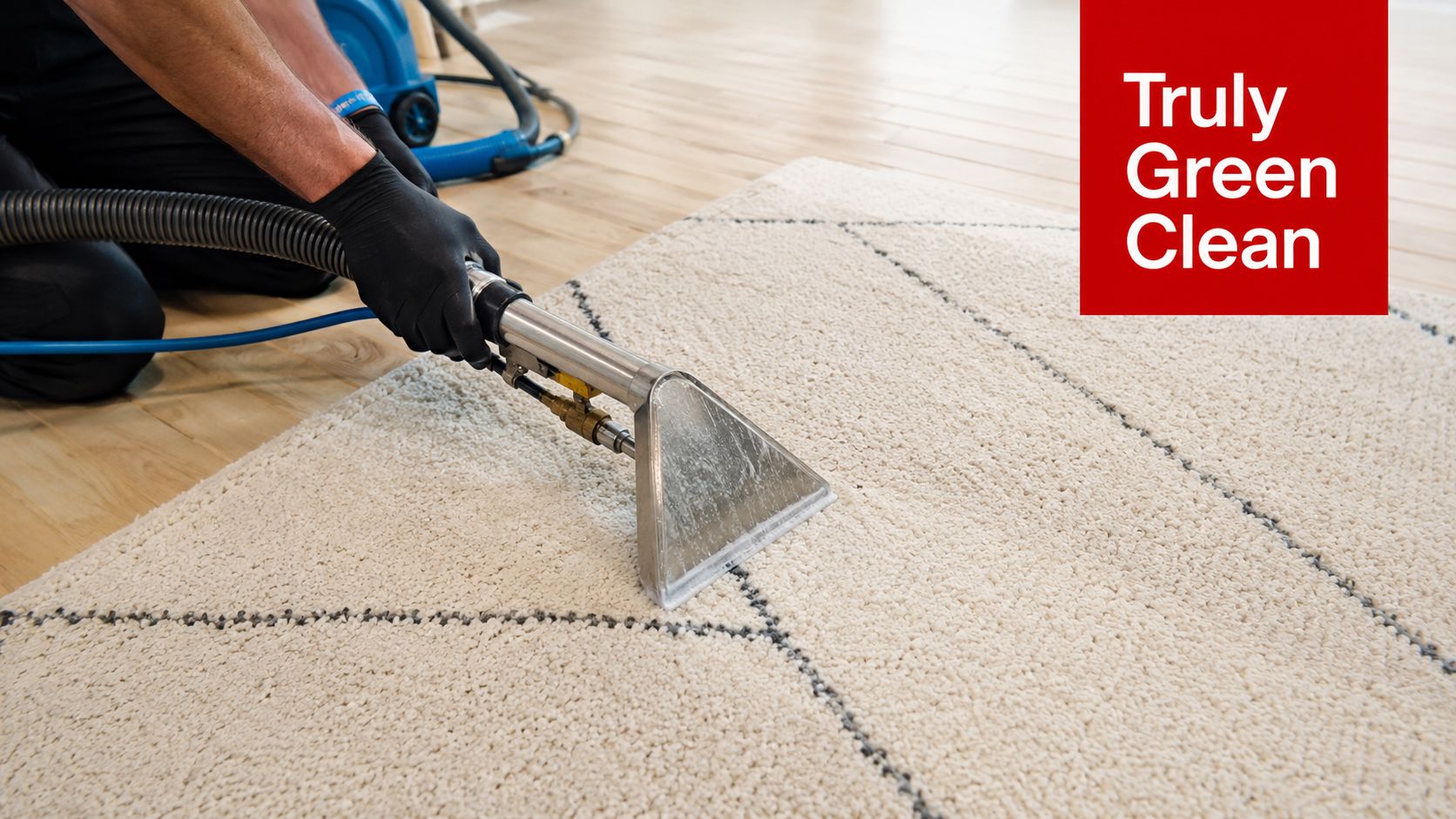
Controlled aqueous cleaning uses water deliberately instead of flooding the rug, backing, subfloor, or surrounding room. The goal isn't to avoid water at any cost. Water is often the safest way to carry away dissolved soil and detergent, provided the cleaner controls application and recovery.
Low-residue chemistry matters just as much. Plant-derived or enzymatic detergents can help break down organic soils, but the product name alone proves nothing. Think of enzymatic action as biological scissors, cutting large soil compounds into smaller pieces that extraction can remove. The final rinse still has to lift those pieces and the detergent itself.
Mechanical dusting acts like a precision grit-removal stage before washing. Removing dry particulate first reduces the amount of abrasive material moving through the fibres during wet cleaning.
Controlled drying completes the process. Wool guidance recommends strong airflow, low humidity, and complete drying within about 12 to 24 hours. Practical targets include indoor humidity below 50%, with well-ventilated drying preferred over heat-based drying. Industry guidance for wool-rug drying explains why prolonged moisture can contribute to browning, mildew, dimensional distortion, and persistent odour.
For broader background on responsible cleaning systems, homeowners can also review this resource on sustainable cleaning for Northern Arizona. The Birmingham decision remains the same. Ask for measurable process details rather than trusting labels such as “natural,” “child safe,” or “chemical free.”
DIY Green Cleaning Versus Professional Eco-Friendly Services
DIY spot care has a place. A fresh water spill that you blot promptly doesn't always require a service visit. Full washing is different, especially when the rug is wool, jute, sisal, hand-knotted, dyed with unstable colours, or carrying pet urine.
Rental machines and home recipes create four common problems. They can introduce more water than the user can recover, leave behind untested mixtures, dry the rug unevenly, and move fine particles without capturing them properly. Professional facility cleaning uses specialised equipment and a repeatable sequence designed around the rug's construction.
| Criterion | DIY / Rental Method | Professional Eco-Friendly Rug Service |
|---|---|---|
| Water control | A homeowner may over-wet the rug or recover moisture unevenly. | The cleaner matches moisture application and extraction to the fibre and backing. |
| Residue | Vinegar, castile soap, or supermarket products can remain in the pile if rinsing is incomplete. | Product selection, dilution, and rinsing are controlled for the rug's construction. |
| Drying | A rug may dry flat on a patio, over a radiator, or against a wall, creating uneven moisture exposure. | A facility can use airflow, elevation, and controlled drying conditions. |
| Fine soil and allergens | Household vacuums may move fine particulate without removing it from the rug structure. | Mechanical dusting and professional extraction address embedded dry soil before washing. |
A 2007 comparative study found that hard-floor maintenance can require up to 40 times more water than carpet maintenance depending on traffic, while carpet maintenance can still use less water, labour, and time overall. The comparative environmental data supports using water intelligently rather than treating every water-based method as wasteful.
A professional wash also avoids the false economy of repeated DIY attempts. If a rug keeps releasing a smell because the backing wasn't flushed or dried correctly, another home treatment adds more moisture and residue without solving the original problem.
For a closer look at the difference between home equipment and specialist service, see professional carpet cleaning versus DIY methods. DIY is reasonable for small, fresh spots. It isn't the right tool for complete washing of sensitive natural fibres.
Safe DIY Spot Care Recipes for Natural-Fiber Rugs
For a small spill on wool, cotton, jute, or sisal, act quickly and gently. Timing matters more than scrubbing pressure. Rubbing pushes liquid sideways and deeper, while aggressive agitation can distort the pile, roughen fibres, or spread dye.
Start by lifting solids with a spoon or blunt edge. Place a clean white towel over the wet area and press firmly, replacing the towel as it absorbs moisture. Use cool water, applied sparingly, and avoid saturating the backing or floor beneath the rug.
A conservative spot-care method
For a mild organic spill, mix cool water with a small amount of a pH-neutral, residue-free textile detergent. If you use baking soda, make a light paste with water, test it in an inconspicuous area first, and remove it carefully after the spot treatment. Baking soda may help with a limited organic mark, but it isn't a substitute for washing when liquid has reached the foundation.
Apply the solution to a white cloth rather than pouring it directly onto the rug. Dab from the outside of the mark toward the centre, allow the cloth to lift the soil, then rinse the cloth and repeat with clean water. Finish by pressing dry towels into the area and lifting the rug, if possible, so air can circulate above and below.
Published guidance for wool area rugs recommends keeping the area damp rather than saturated, allowing the solution to sit for about 10 to 15 minutes, and blotting again to remove moisture. This wool-rug pet-stain guidance also recommends lifting the rug where possible to improve air circulation.
Stop treating the spot yourself if the stain reappears after drying, colour transfers to the towel, the backing feels distorted, or the smell returns.
Never put chlorine bleach, solvent-based spotters, essential-oil blends, or undiluted vinegar on a natural-fibre rug. Don't use oxygen bleach on wool. Supermarket products may appear convenient, but an unverified cleaner can leave residue that defeats the purpose of a low-impact process.
For context on professional floor maintenance in other settings, commercial floor care for offices illustrates why product control and surface compatibility matter. For Birmingham homes, natural-fibre rug cleaning is the safer route when a spot has penetrated beyond the surface.
How to Verify Real Green Claims in Rug Cleaning
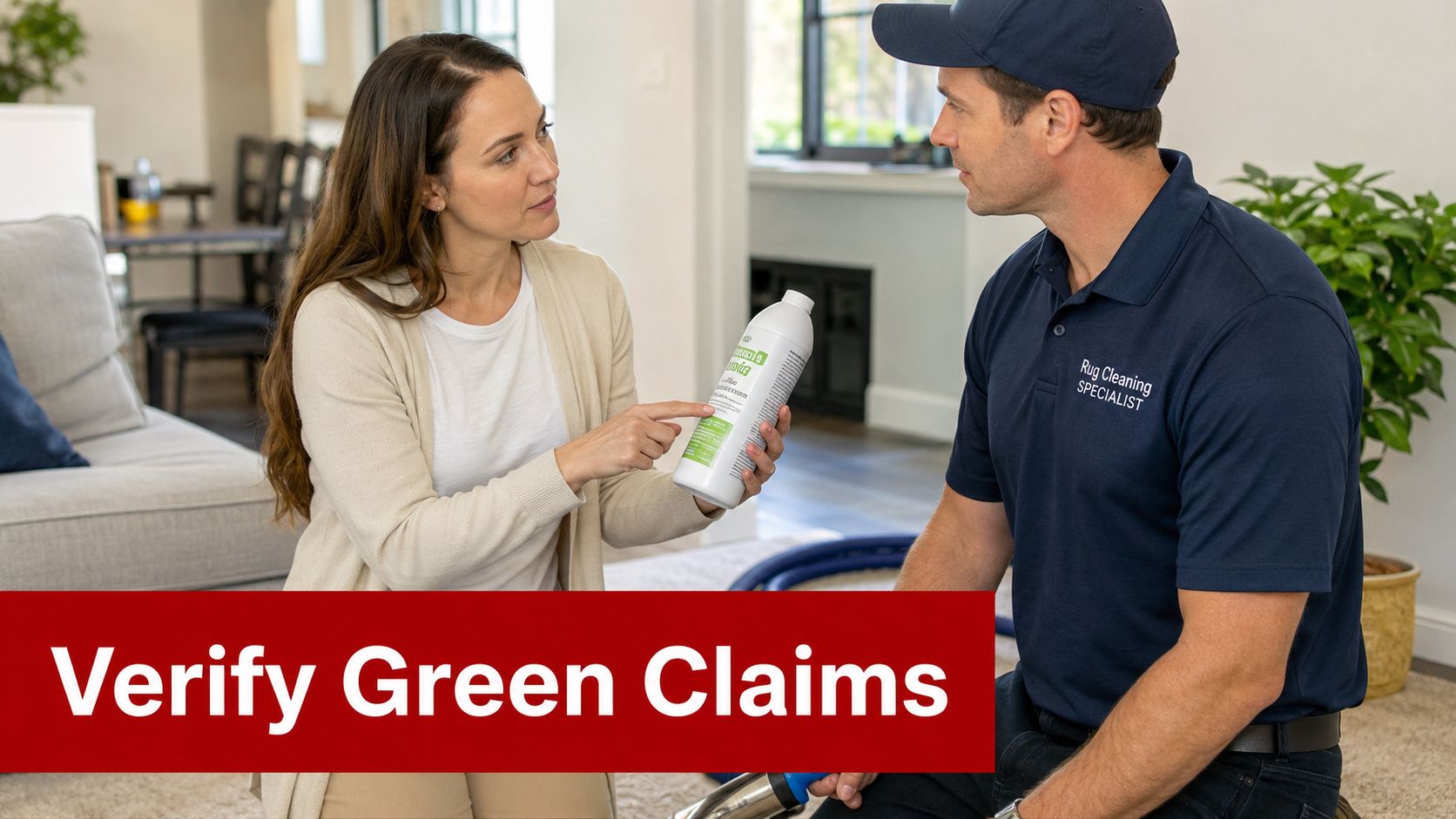
The word eco-friendly isn't regulated in rug cleaning. A company can use “green,” “natural,” or “child safe” without explaining its detergent ingredients, rinse process, wastewater handling, or drying controls. Birmingham homeowners should treat those words as an invitation to ask questions, not as proof.
Start with the rinse. A low-residue process should explain how the cleaner removes detergent after soil has been loosened. Ask whether the service uses a dedicated rinse stage, how it recovers wastewater, and what happens to the water after extraction.
Ask for evidence, not reassurance
A credible cleaner should be comfortable discussing:
- Product documentation: Ask for ingredient information, safety data, and evidence supporting biodegradable or low-residue claims.
- Dilution controls: Find out how staff measure detergent rather than pouring by guesswork.
- Rinse performance: Ask what method removes detergent from the pile and backing.
- Water handling: Ask whether the facility filters or manages wastewater before disposal.
- Drying conditions: Request a clear explanation of airflow, humidity, temperature, and expected drying completion.
- Fibre protection: Confirm how the process changes for wool, silk, viscose, jute, or hand-knotted rugs.
- Allergen language: Ask what “allergen reduction” means operationally, rather than accepting a vague health promise.
Independent guidance warns that green claims can be meaningless without proof such as product certifications, rinse methods, and clear wastewater handling. This discussion of green carpet-cleaner claims is useful because it puts the burden on the process rather than the label.
Watch for red flags. A cleaner who won't identify the product category, can't describe drying conditions, or pushes an expensive add-on before inspecting the rug hasn't answered the environmental question. “No chemicals” is another weak claim. Water itself is a chemical, and professional cleaning requires a controlled combination of water, chemistry, agitation, extraction, and drying.
The strongest answer is specific. You should hear how the rug is inspected, dusted, washed, rinsed, dried, groomed, and returned without relying on fragrance to create the impression of cleanliness.
Pet Owners, Allergies, and Delicate Fibers Need Extra Care
Pet urine, dander, and fine household dust need a process built around removal, not perfume. Fragrance can make a room smell different while the original contamination remains in the rug's pile or backing. For families with allergies, the meaningful outcome is reduced airborne soil and residue, not a strong scent after cleaning.
Research summarised by the Carpet and Rug Institute found that effective wet extraction and organised cleaning programmes reduced total suspended particulates, VOCs, fungi, and bacteria, while also helping keep allergens less airborne. The documented carpet-cleaning cases support a practical Birmingham recommendation: use extraction and rinsing to remove contaminants, then dry the rug fully.
Pet stains require controlled action
For fresh urine, IICRC consumer guidance recommends using a wet/dry vacuum for initial pickup and spotting-residue extraction. Humane World advises soaking up as much urine as possible and rinsing thoroughly with cool water, while warning against steam cleaners because heat can permanently set protein-based stains and odours in man-made fibres. The IICRC carpet-topic guidance contains those instructions.
A professional cleaner should inspect whether urine has reached the foundation, backing, or floor beneath. Surface treatment alone won't solve an odour that has migrated below the visible pile.
Wool is especially sensitive to heat and high alkalinity. Expert guidance recommends pH-neutral chemistry, cool water, and residue-free rinsing to reduce risks such as fibre damage, dye bleeding, and felting. Silk, viscose, and hand-knotted rugs need the same disciplined approach, with additional caution around agitation and moisture.
Daily pet-care choices also matter, but don't confuse a product intended for an animal's skin with a product intended for textile fibres. Homeowners comparing pet-care products can review information about antiseptic wipe ingredients for dogs, but those ingredients shouldn't be transferred to a rug without fibre-specific approval.
Mechanical dusting, controlled drying, and pH-balanced rinsing are the parts of the process that protect both the rug and the room's air. Rubber Ducky's allergen-reduction service information is relevant for Birmingham households that need a specialist approach rather than a fragranced surface clean.
Maintenance Habits That Extend Rug Life and Reduce Impact
The greenest rug is usually the one you don't need to replace prematurely. Everyday maintenance reduces abrasive grit, limits stain spread, and helps a rug remain serviceable for longer. That matters because every avoided replacement also avoids the materials, transport, packaging, and disposal associated with a new floor covering.
Rotate rugs every 6 to 12 months to distribute foot traffic and ultraviolet exposure more evenly. The maintenance guidance for wool area rugs supports regular, fibre-appropriate care and reinforces the importance of gentle chemistry. Vacuum according to the fibre and construction, using suction and attachments that don't pull loops or fringe into the machine.
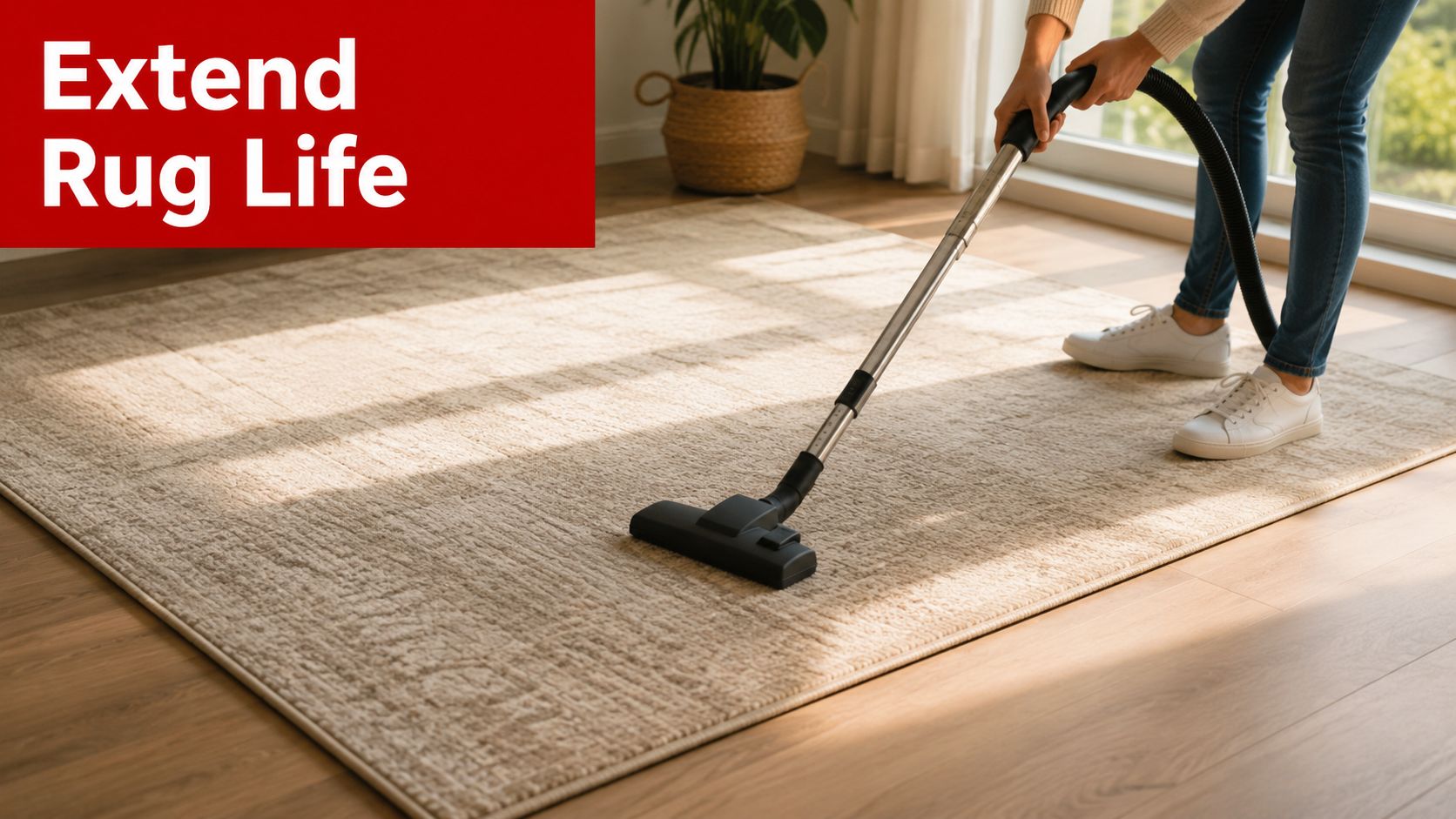
Small habits prevent large cleaning jobs
Blot spills promptly, ideally within 15 minutes, to reduce the chance of dye-setting and deep migration. The wool-rug maintenance guidance is the relevant reference for handling sensitive fibres, although the safest response still depends on the spill and rug construction.
Use a breathable rug pad that supports the rug without trapping dampness. Keep rugs away from direct sunlight during drying, and don't place a damp rug over a radiator. Heat can create uneven drying, distort dimensions, or accelerate dye movement.
A useful routine looks like this:
- Inspect monthly: Check edges, fringe, backing, and high-traffic lanes before damage becomes extensive.
- Vacuum carefully: Adjust the tool and pressure to the rug rather than using one setting everywhere.
- Blot immediately: Lift liquid with white towels and avoid rubbing.
- Document valuable pieces: Photograph condition, record previous repairs, and store antique rugs in a clean, climate-stable environment.
- Book professional care: Arrange low-water facility cleaning when ordinary maintenance no longer removes embedded soil or odour.
Professional cleaning should support these habits, not replace them. Rubber Ducky Rug Cleaning Birmingham's process includes pickup, mechanical dusting, rug washing, rinsing, climate-controlled drying, grooming, and return delivery. That sequence is particularly useful for collectors and homeowners who don't have a safe place to wash and dry a large or delicate rug.
Questions to Ask and Scheduling Your Green Rug Cleaning
Before booking eco-friendly rug cleaning in Birmingham, ask questions that reveal the actual workflow. You don't need a chemistry degree. You do need enough detail to distinguish a controlled process from a marketing label.
Ask the provider:
- How do you remove dry grit before washing? Mechanical dusting should be part of the answer for rugs carrying embedded sand and soil.
- How do you control water application and recovery? A professional should explain how the method changes for wool, silk, jute, synthetic, and outdoor rugs.
- What rinse process removes detergent residue? “We use green products” doesn't answer this.
- How do you dry rugs? Ask about airflow, humidity, temperature, elevation, and how the team confirms the rug is fully dry.
- Can I review product safety information? Safety data and ingredient documentation are more useful than a label saying “natural.”
- How do you handle pet urine and allergens? The answer should address inspection, extraction, rinsing, and fibre safety.
- What happens to wastewater? Ask whether the facility has a defined recovery, filtration, or disposal procedure.
- Will you inspect the rug before cleaning? Construction, dyes, backing, previous repairs, and damage all affect the correct method.
A proper service should also explain the convenience of pickup and return. Rubber Ducky's Birmingham process collects the rug from your home, transports it to a professional washing facility, removes stains and odours with fibre-safe methods, controls drying, grooms and restores the rug, then returns it to its original location.
That arrangement is more practical than attempting to wash a large area rug in a Birmingham home and hoping it dries evenly. It also gives the cleaner the space and equipment needed for mechanical dusting, specialised washing, thorough rinsing, and controlled drying.
Ask for a rug cleaning estimate, describe the fibre and problem, and mention any pets, allergies, previous water damage, or visible colour bleeding. A clear inspection and process explanation should come before any promise about results.
Rubber Ducky Rug Cleaning Birmingham provides home pickup, professional facility washing, low-residue rinsing, controlled drying, allergen-focused cleaning, grooming, and return delivery for area rugs. Visit Rubber Ducky Rug Cleaning Birmingham to request an estimate and schedule your rug pickup.