
If you're searching for polyester rug cleaning in Birmingham, don't assume your rug is easy to maintain just because it's synthetic. Polyester often resists many water-based spills, but its low absorbency can hide oily soil, pet contamination, grit, and residue deep in the pile. A rug may look refreshed after a home cleaning attempt while still holding the material that causes rapid resoiling, lingering odors, and gradual texture loss.
For homeowners in Birmingham, Hoover, Vestavia Hills, Mountain Brook, Homewood, Trussville, Pelham, Alabaster, Gardendale, and Helena, the safer approach is to match the cleaning method to the rug's pile, backing, stains, and construction. Professional pickup, facility washing, controlled drying, grooming, and return delivery remove much of the uncertainty that comes with saturating an area rug at home.
The Polyester Rug Care Myth Nobody Talks About
Polyester rugs are often marketed and treated as nearly worry-free. That reputation is only partly deserved. The fiber can handle many ordinary water-based spills better than some natural materials, but stain resistance doesn't mean the rug stays clean below the surface.
The problem becomes clearer with greasy contamination. Body oils, kitchen grease, tracked-in residue, and some pet-related soils can cling to polyester instead of dissolving readily in a basic water-and-soap treatment. Guidance for synthetic fibers notes that polyester's low absorbency can conceal oily soil and detergent residue, allowing resoiling even when the rug looks clean immediately after washing. The maintenance guidance for synthetic fibers explains why incomplete rinsing creates this problem.
Birmingham homes add practical challenges. Red-clay soil, active pets, and humid conditions can push dry grit toward the base of the pile, where surface vacuuming may not reach effectively. Longer-pile polyester makes that problem worse because debris can settle beneath the visible tips of the fibers rather than remaining on top.
Why clean-looking polyester can still be dirty
A quick spray, light scrub, and portable extraction pass may improve the appearance without removing the entire soil load. Worse, excess detergent can leave a sticky film. That film attracts fresh dirt, while over-wetting can saturate the backing and extend drying.
The better question isn't whether a polyester rug looks brighter after DIY cleaning. Ask whether the method removed oily soil, extracted the cleaning solution, and dried the backing completely. Those are separate tasks.
For broader maintenance context, homeowners can also review Canes Cleaners carpet care tips while deciding which issues call for professional rug service. Their general carpet guidance can help with routine care, but area rugs still need construction-specific handling.
If you're considering a homemade treatment, compare the ingredients and moisture level against the rug's backing before applying anything. This Birmingham guide to homemade rug cleaning solution can help you identify situations where a household mixture may create more residue than it removes.
The main lesson is simple. Polyester is not maintenance-free. Its resistance to some spills can delay visible staining while hidden soil continues to build. Professional polyester rug cleaning addresses that concealed contamination with controlled chemistry, extraction, and drying rather than relying on surface appearance.
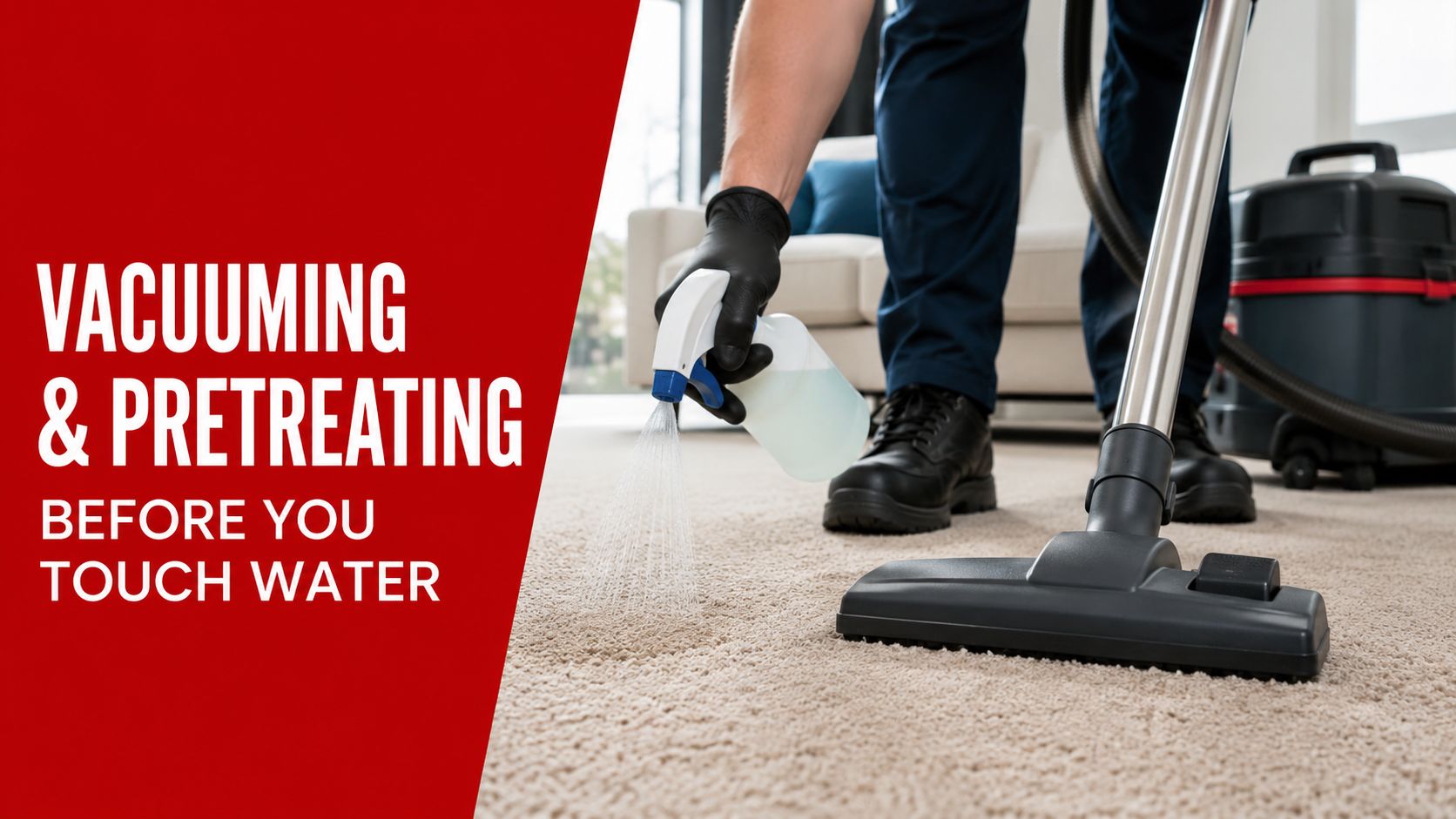
Vacuuming and Pretreating Before You Touch Water
The wet stage should never be the first serious cleaning step. Dry soil removal comes first because grit becomes harder to extract once moisture turns it into a paste inside the pile.
Start by checking the construction. A low-pile polyester rug may tolerate careful vacuuming across the face, while a shag or longer-pile rug needs a slower, more deliberate approach. Longer-pile polyester can be difficult to vacuum thoroughly, and robot vacuums may damage edges or catch loose fringe, as noted in polyester rug care guidance from NTK Atelier.
Match the vacuum to the pile
Use controlled passes instead of forcing a rotating brush into a high-pile surface. On delicate edges, fringe, or loose bindings, a hose and upholstery-style attachment provide more control than an aggressive beater bar.
A useful pre-wet routine includes:
- Inspect the edges: Look for fraying, loose fringe, lifted seams, or backing separation before vacuuming.
- Vacuum the face slowly: Work in several directions where the pile allows it, especially along traffic lanes.
- Check the underside: Remove grit beneath the rug so it doesn't migrate back into the fibers.
- Lift trapped hair carefully: Pet hair may need hand removal or a suitable soft tool rather than repeated forceful passes.
- Avoid autonomous equipment on vulnerable edges: Robot vacuums can pull fringe or catch loose borders.
Pretreatment comes after the dry soil has been removed. Apply a targeted, low-foam solution only to affected areas, then work it lightly with a soft-bristle brush. The purpose is to loosen embedded contamination so extraction can remove it, not to grind the product deeper into the fibers.
Why agitation must stay controlled
Hard scrubbing can roughen the pile, change its direction, or create a visible texture difference between the treated area and the rest of the rug. Polyester may be durable, but durability doesn't make aggressive mechanical cleaning harmless.
For Birmingham households dealing with clay-heavy entry traffic or pet hair, consistent dry maintenance reduces the burden placed on each professional cleaning. When the rug still looks gray at the base, feels sticky, or holds an odor after vacuuming, schedule a professional inspection instead of adding more product. Homeowners comparing equipment should also understand the limitations of vacuum and carpet cleaners for area rugs, particularly when the machine's moisture and agitation settings aren't designed for the rug's construction.
Spot Treating Stains Without Damaging the Fiber
Polyester rugs often appear low maintenance because many spills sit on the surface. That apparent stain resistance can create false confidence. Soil may remain deep in the pile, while greasy contamination can resist water-based cleaners. DIY treatment then spreads residue, moisture, or oil instead of removing it.
Identify the contaminant before applying anything. For a fresh water-based spill, lift solids first, then blot with a clean absorbent towel. Use cold water sparingly, working from the outside of the mark toward the center. Rubbing spreads liquid and distorts the pile. Flooding can create a larger drying problem than the original spill.
Choose treatment by contamination
Food, soda, and juice usually respond best to prompt blotting followed by a mild, low-foam surfactant. Apply enough solution to reach the affected fibers, not enough to soak the backing. Blot or extract the loosened soil with clean towels.
Grease and kitchen oil need a grease-cutting product compatible with the rug. Polyester's low absorbency can leave oily contamination clinging to the pile after a water-based cleaner removes the visible color. Generic soap may add residue, and heat can move the oil farther through the pile or stress the backing.
Pet urine calls for a product intended for odor-causing contamination, often an enzyme-based pretreatment suited to the rug's materials. Fragrance products can mask odor without treating the contamination below the surface. If urine has reached the backing, professional washing is safer than repeatedly wetting the rug at home.
Practical rule: Blot first, choose the least aggressive compatible chemistry, and stop adding moisture when the stain stops responding.
Stay inside the safe chemistry and temperature range
Synthetic-fiber guidance places suitable cleaning chemistry within a broad pH range of 5.5 to 10.0, but that range does not make every product safe for every rug. Dyes, finishes, backing materials, and the stain itself still determine the appropriate treatment.
Temperature requires the same caution. Guidance for synthetic rugs identifies different upper limits depending on construction and protocol, so cold water remains the prudent home standard. Avoid irons, heaters, hair dryers, and direct hot-air drying. High heat can deform polyester fibers, affect the rug's shape, and damage backing materials.
For practical advice on how to treat and prevent carpet stains, prioritize rapid blotting, product compatibility, and residue removal rather than repeated scrubbing.
Stop spot treatment if the stain has spread, formed a ring, left a sticky feel, or returned after drying. Repeated applications can layer products into the pile and make professional removal more difficult. A rug that still feels oily or shows a darkened base needs assessment, not more moisture.
Machine Washing versus Hand Washing Polyester Rugs
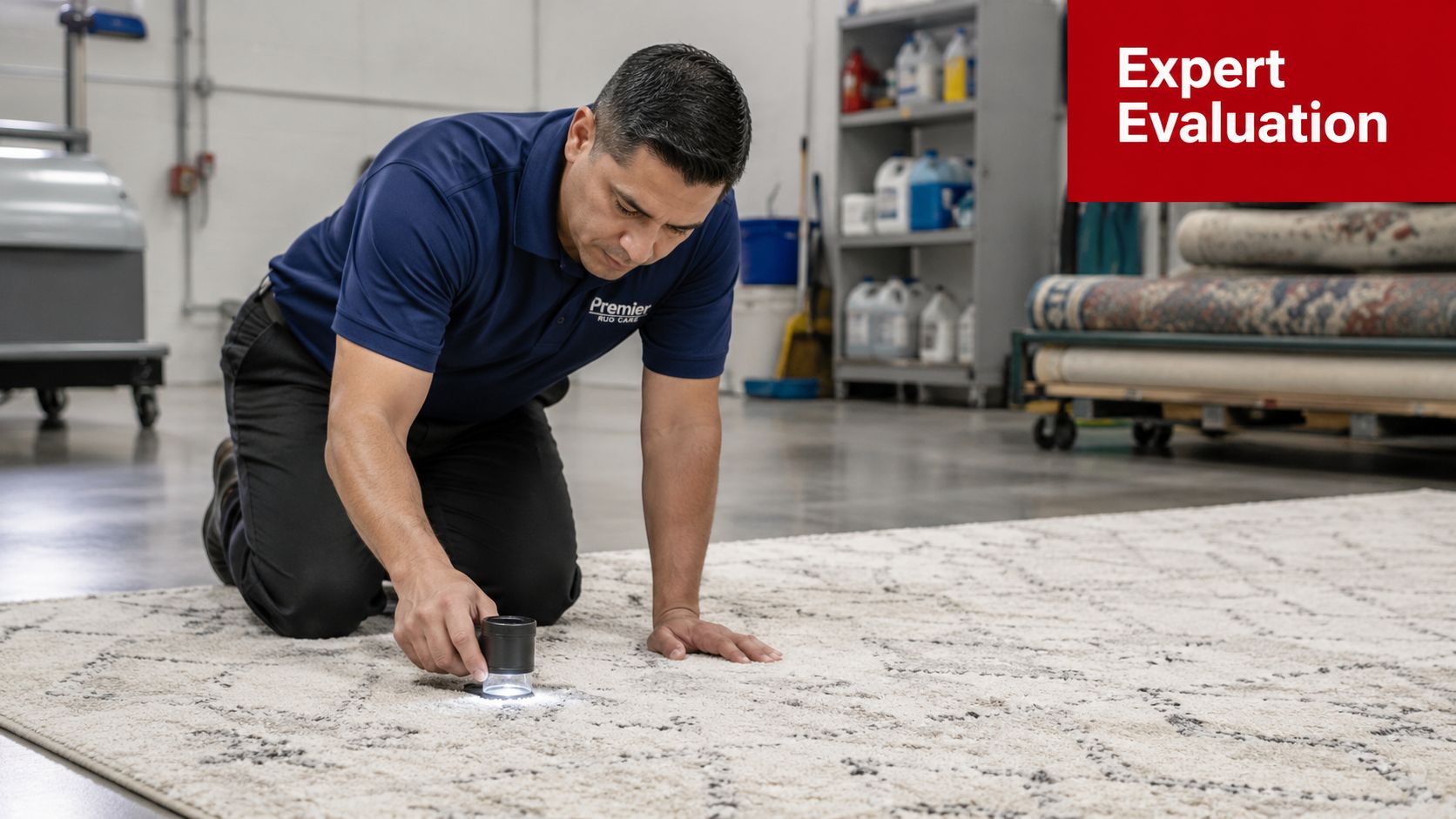
Machine washing and hand washing can both be reasonable for certain polyester rugs, but neither method is automatically safe. The label, backing, binding, and adhesive construction determine whether the rug can tolerate immersion and agitation.
A thin, unbacked throw rug with stable edges may handle a gentle machine cycle. A rug with latex, glued layers, delicate binding, loose fringe, or a structured backing is a different proposition. Agitation can distort the shape, while spinning can stress seams and edges.
The machine-washing trade-off
If the care label permits machine washing, use cold water and the gentlest suitable cycle. Keep detergent low-foam and avoid a dryer. A machine may provide convenience, but it doesn't guarantee that oily soil, pet contamination, or cleaning residue will leave the rug.
The main risks are:
- Mechanical stress: Fast agitation can pull at bindings and alter pile direction.
- Spin pressure: Aggressive extraction can twist the rug or strain the backing.
- Uneven cleaning: A bulky rug may fold, preventing consistent contact with water and detergent.
- Drying uncertainty: A household washer can remove water, but it may not remove enough to protect the backing.
Polyester rug care guidance commonly recommends avoiding hot water and high heat because they can damage synthetic fibers or backing. One care guide explicitly advises avoiding dryers and direct heat sources, while another warns that high heat can deform polyester fibers and permanently change the rug's shape. Review the polyester rug care guide before using a household washer or dryer.
Hand washing gives more control
Hand washing lets you monitor color, texture, and backing behavior throughout the process. Use a tub or large container, cold water, and a low-foam detergent intended for synthetic materials. Immerse the rug only if its construction permits it, agitate gently, and rinse until the water and surface no longer feel soapy.
The difficult part is extraction. A wet polyester rug can become heavy and awkward, and twisting it can permanently distort its shape. Roll it carefully to press out excess water, then dry it flat or supported with airflow reaching both sides.
In Birmingham's humid conditions, incomplete drying is a major concern. The rug must be fully dry before returning to the floor. If you can't verify that the backing has dried, professional pickup and facility cleaning offers more control than leaving a damp rug indoors.
When Professional Cleaning Becomes the Safer Choice
DIY cleaning makes sense for limited, fresh surface issues on a compatible rug. It becomes a poor choice when the rug has deep pile, complex backing, set-in grease, pet urine, persistent odor, or visible damage that could worsen with moisture.
Professional polyester rug cleaning separates the work into stages. The rug can be inspected before treatment, mechanically dusted to release embedded grit, pretreated according to the contamination, washed with fiber-appropriate chemistry, rinsed thoroughly, extracted, dried under controlled conditions, groomed, and checked before return.
Moisture recovery protects the backing
Low-moisture, pH-controlled extraction is particularly useful for synthetic rugs because it limits the amount of water left behind. Independent maintenance guidance recommends recovering at least 90% of injected moisture to limit drying time and prevent backing wetting. The area-rug maintenance guidance explains the moisture-recovery benchmark and the risks of backing saturation.
A professional facility can also control airflow and drying conditions more consistently than a living room or hallway. Guidance for synthetic drying specifies relative humidity below 50%, ambient temperatures between 70°F and 85°F, and a maximum safe air temperature of 120°F for synthetics, as detailed in the same maintenance reference.

Pickup and facility washing reduce household risk
Rubber Ducky Rug Cleaning Birmingham handles synthetic rugs through a rug-specific service process that includes inspection, mechanical dusting, controlled washing, mechanical rinsing, climate-managed drying, grooming, and return delivery. The company's professional rug cleaning process in Birmingham is relevant when a homeowner needs more than a surface refresh.
Pickup and delivery matter because large rugs are difficult to wash, move, and dry safely at home. The rug can be collected from the home, cleaned at a professional washing facility, dried and groomed, then returned to its original location. That removes the need to drag a saturated rug through the house or guess whether the backing is dry.
Professional service is especially appropriate for a valuable area rug, a rug with a delicate edge, a polyester shag that retains embedded grit, or contamination involving grease and pet odor. The goal isn't maximum scrubbing. It's controlled soil removal without sacrificing pile texture, shape, color stability, or backing integrity.
Scheduling Your Next Professional Rug Cleaning in Birmingham
The most reliable polyester rug care plan combines modest home maintenance with professional cleaning when the rug reaches its limits. Vacuuming removes loose grit, prompt blotting limits stain spread, and careful product selection prevents residue from becoming the next soil attractor.
Use a simple decision process:
- Keep it routine: Vacuum with a setting appropriate for the pile and inspect high-traffic areas regularly.
- Respond quickly: Blot fresh spills with cold water rather than rubbing or flooding the rug.
- Watch the texture: A flattened, sticky, matted, or roughened area may need more than spot treatment.
- Escalate odors: If pet odor remains after surface treatment, contamination may have reached the backing.
- Stop adding heat: Avoid steam tools, dryers, heaters, and direct hot air when the rug's construction isn't confirmed.
- Schedule professional washing: Choose pickup service when soil is embedded, stains persist, or drying the rug safely at home isn't practical.
Portable carpet cleaners often create a mismatch for area rugs. They may apply more moisture than the backing can tolerate, provide incomplete rinsing, or leave the rug damp in a room with limited airflow. Steam and heat can also be inappropriate for washable or backed synthetic rugs, particularly when the manufacturer's care instructions prohibit them.
A practical Birmingham service decision
Homeowners in Birmingham don't need to wait for a rug to look severely soiled. Dullness at the pile base, recurring odor, gray traffic lanes, oily hand marks, and stains that reappear after drying all justify an inspection. The same applies to rugs in busy homes with pets, children, or frequent entry traffic across areas such as Hoover, Vestavia Hills, Homewood, Mountain Brook, Trussville, Pelham, Alabaster, Gardendale, and Helena.
If you're comparing professional cleaning costs in different markets, a general resource such as carpet cleaning pricing Australia may explain common pricing factors, but Birmingham homeowners still need a local estimate based on rug size, fiber, construction, condition, stains, and pickup requirements.
Rubber Ducky's pickup and return model lets homeowners request rug washing without carrying a wet rug into a bathtub or leaving it to dry on a floor. A professional team can evaluate whether the rug needs routine cleaning, deeper stain and odor removal, or restoration attention for fraying, water damage, or backing concerns.
Rubber Ducky Rug Cleaning Birmingham provides pickup, professional facility washing, controlled drying, grooming, restoration support, and return delivery for polyester and other area rugs. Visit Rubber Ducky Rug Cleaning Birmingham to request a rug cleaning estimate and schedule service for your Birmingham-area home.