You've vacuumed the rug, treated the spot near the sofa, and opened the windows, but the room still smells faintly of yesterday's pet accident. For homeowners searching for professional rug cleaning in Birmingham, that's a familiar reason to stop repeating surface treatments and ask what's happening deeper in the rug. Rubber Ducky's pickup-and-return service takes the rug out of your living room for facility cleaning, where technicians can address soil, stains, moisture, and fiber condition as separate problems.
What an Advanced Cleaning Service Actually Does for a Rug
A rug can look acceptable from the doorway and still need substantial cleaning. The pile may hide gritty material, while the underside reveals a pet accident that never received proper treatment. Adding another spot cleaner might change the appearance without resolving the source of the problem.
An advanced cleaning service treats the rug as a textile with a particular construction, not a dirty surface. The work involves inspection, dry-soil removal, appropriate washing, rinsing, moisture management, and finishing. Each stage has a purpose, and the technician should be able to explain why your rug needs it.
Cleanliness isn't a fragrance
For a Birmingham household dealing with tracked-in clay soil or a rug that stays damp during humid weather, appearance alone is a poor acceptance test. Ask whether the service addresses the backing, rinses away treatment products, and checks moisture before delivery. A brighter surface doesn't answer those questions.
Fragrance also deserves scrutiny. Purdue University's research summary on everyday indoor chemical products explains that fragrances can react with ozone to generate nanoscale particles, while the health effects remain under investigation. For rug care, the practical distinction is odor-source treatment versus added scent.
Practical rule: Ask what the cleaner will remove from your rug, not just what the rug will smell like afterward.
If you're investigating a room-wide odor, Purified Air Duct Cleaning services from Purified Air Duct Cleaning is a separate resource for understanding that service category. It isn't a substitute for examining a contaminated rug, and rug washing shouldn't be presented as a solution to every indoor-air concern.
Convenience should support careful work
Home pickup makes facility cleaning practical when you can't transport a large rug yourself. Rubber Ducky collects the rug, handles the cleaning and finishing away from your floors, and returns it to its original location in the home.
That convenience matters, but the true value is access to the rug's full structure. Before scheduling, describe the problem clearly so the team can plan treatment rather than assume every rug needs the same wash.
Inside the Rubber Ducky Cleaning Process Step by Step
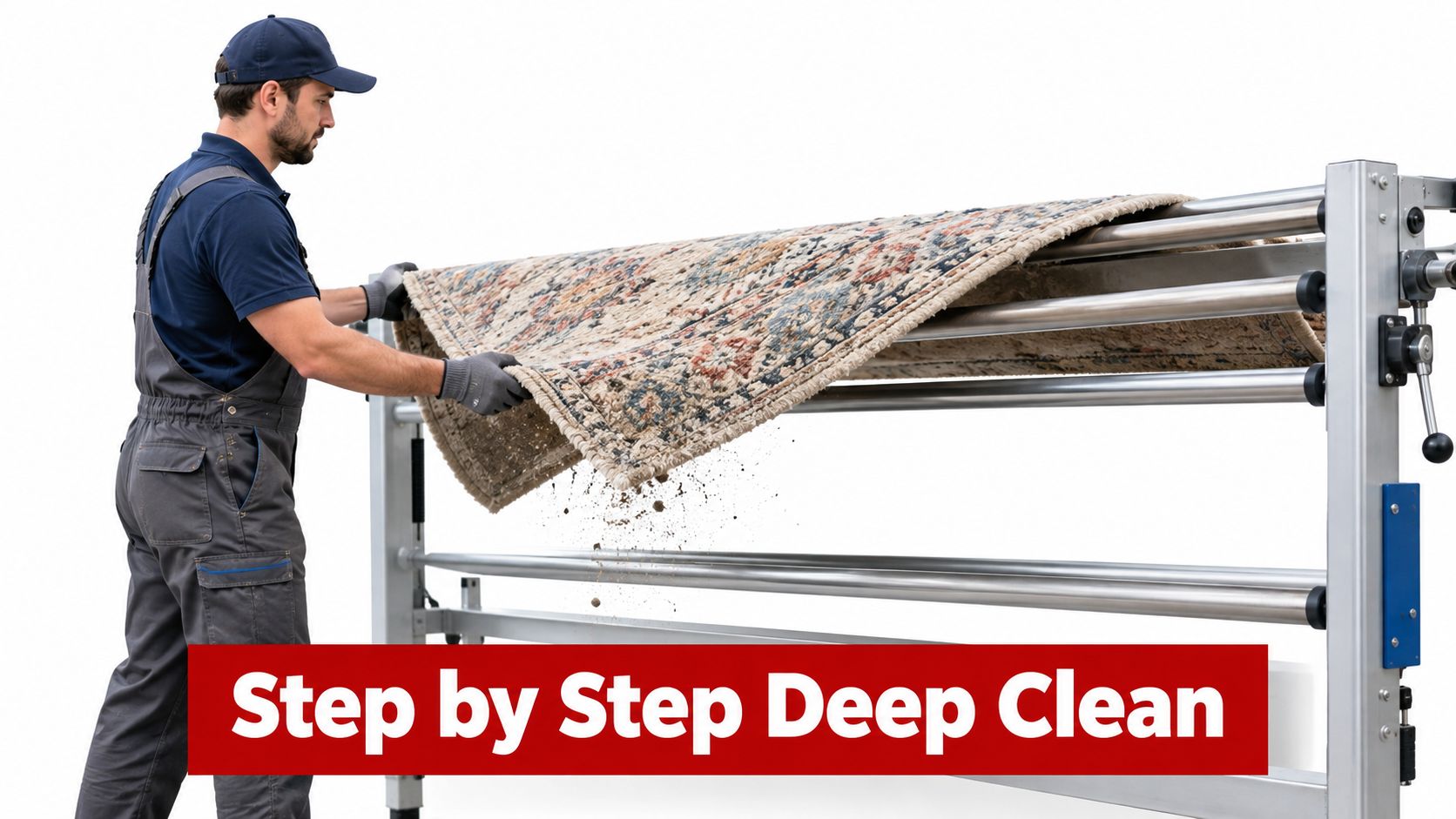
After pickup from Birmingham, Hoover, Mountain Brook, Vestavia Hills, or Homewood, the rug enters a facility workflow rather than receiving a quick cleaning pass where it lies. Rubber Ducky's process uses mechanical dusting tumblers, custom wash tanks, mechanical rinsing, and climate-controlled drying rooms. Inspection determines how those tools should be used.
Inspection and dry preparation
The technician examines the face, reverse, edges, fringe, and any damaged areas. Fiber type, construction, existing discoloration, and previous treatments affect the cleaning plan. Tell the team about earlier repairs or products you've applied, even if the spot now looks normal.
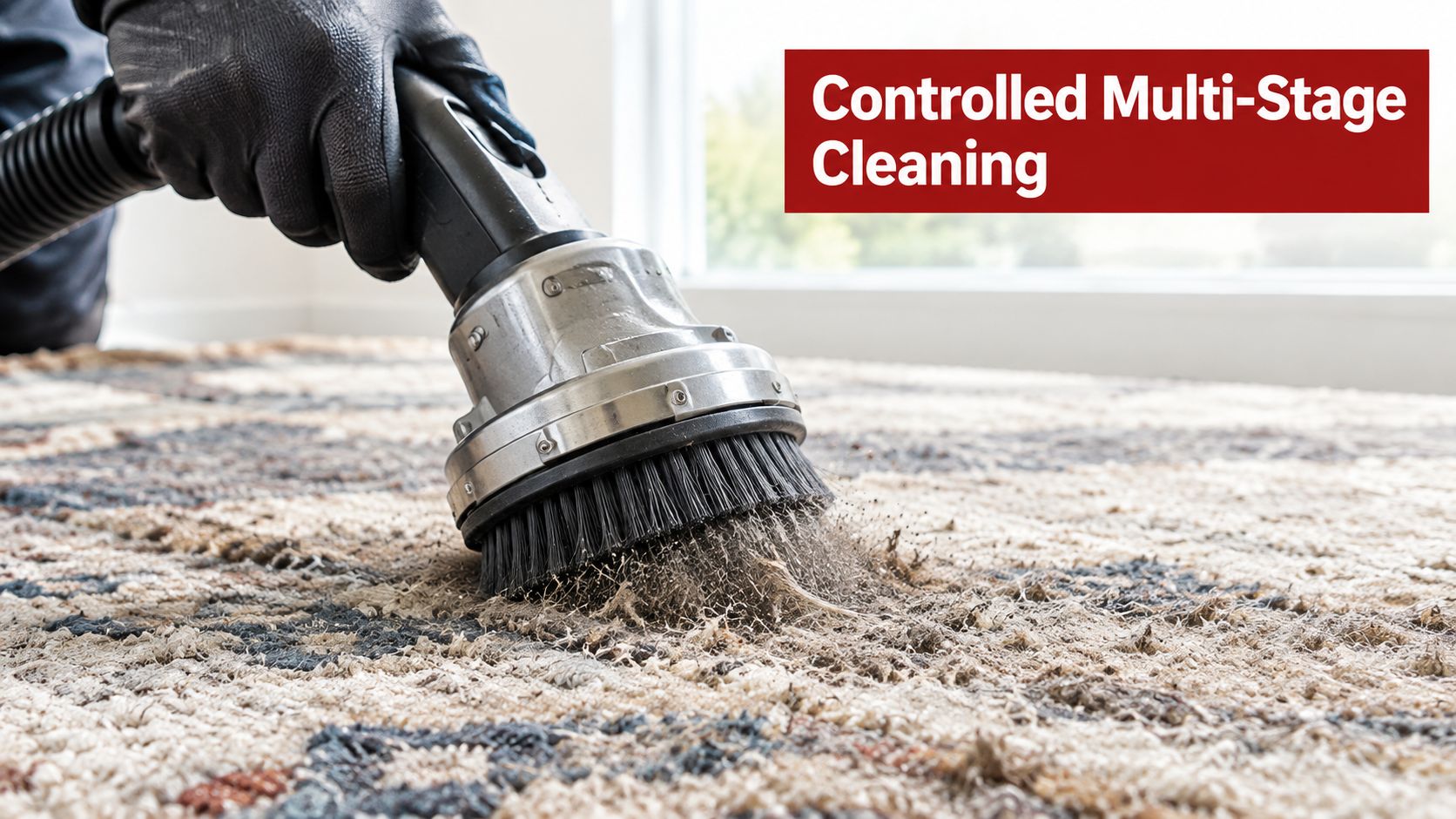
Mechanical dusting then releases embedded grit and dry debris before washing. This sequencing matters because loose soil is better removed dry than worked into a wet rug. Fragile construction requires appropriate handling, not maximum mechanical action.
Washing and rinsing
Rubber Ducky uses custom wash tanks and specialized detergents for rugs suited to immersion. Fiber-safe cleaning means selecting the treatment around the rug's material and condition, rather than choosing the strongest product available. Where full immersion isn't suitable, discuss the alternative treatment with the team.
Stain and odor work also needs its own assessment. A food spill, pet-contaminated backing, and permanently altered dye don't present the same cleaning problem. Some marks can be treated; others require a realistic discussion about restoration limits.
Mechanical rinsing, including Rubber Ducky's patented infusion rinse, removes loosened contamination and cleaning residue. Ask how the technician checks the rinse result, especially if previous home treatments have left the rug feeling sticky or stiff.
Controlled drying and finishing
Drying isn't just leaving the rug somewhere warm. Textile research on wool washing and drying identifies drying conditions, temperature, humidity, and mechanical stress as relevant to dimensional change, shrinkage, and felting. Rubber Ducky's climate-controlled rooms allow temperature and humidity to be managed while rugs dry straight.
Before return, the rug is groomed and inspected. Brushing helps arrange the pile and restore its finished appearance, while restoration needs such as fraying edges receive separate attention.
Ask these questions before approving the work:
- Wash suitability: Is immersion appropriate for this rug's fibers and construction?
- Damage documentation: Which marks or structural problems are present before cleaning?
- Return condition: How will dryness, shape, fringe, and remaining stains be checked?
Those checkpoints make the process understandable and give you something more useful than a broad promise of a “deep clean.”
Why Birmingham Homes Need More Than Surface Cleaning
Look at the routes people and pets take through your home. The rug beside the entrance receives different contamination from the rug beneath a dining table or in a pet's favorite resting area. For Birmingham homeowners noticing red-clay tracks, outdoor debris, or seasonal dust, the useful question is where that material has settled.
Rugs can hold more than visible dirt. The American Lung Association's guidance on carpets and rugs lists dust mites, pet dander, cockroach allergens, particle pollution, lead, mold spores, pesticides, dirt, and dust among contaminants they may trap. Its guidance recommends HEPA vacuuming when possible, vacuuming both sides of removable rugs, and annual deep cleaning, with proper drying to reduce mildew risk.
What dust sampling tells us
An EPA indoor-air investigation of floor-covering dust collected 258 samples, with 79% from carpets and 11% from rugs; approximately one-third contained cat allergen and both measured dust-mite allergens, and cat allergen was detectable in 94%. These findings establish that floor-covering dust can contain allergenic material.
They don't establish the contamination level in your Birmingham rug, nor do they prove that a particular cleaning service will eliminate allergens. The sensible goal is reducing the dust reservoir, with attention to the areas where contamination accumulates.
Common Birmingham Rug Problems and the Cleaning Stage That Solves Them
| Problem | What Triggers It | Cleaning Stage That Targets It |
|---|---|---|
| Gritty pile and dull traffic paths | Tracked-in clay soil and outdoor debris | Mechanical dusting followed by suitable washing |
| Dust concentrated in pet areas | Dander and embedded particulate material | Dry-soil removal and thorough rinsing |
| Persistent pet odor | Contamination extending beyond the visible spot | Targeted assessment and odor-source treatment |
| Stiff or sticky areas | Previous treatment residue | Controlled rinsing and final inspection |
| Damp backing after a leak | Water retained within the rug's structure | Urgent assessment and monitored drying |
The table identifies treatment targets, not guaranteed outcomes. A worn traffic lane may remain visibly different after soil removal, and pre-existing dye damage won't necessarily disappear.
Rubber Ducky's Birmingham rug allergen-reduction information offers a focused starting point for discussing dust-related concerns. When requesting pickup, identify pet resting zones, heavily used pathways, and any damp areas so inspection goes beyond overall brightness.
Who Should Choose Professional Rug Cleaning and When
The right service depends on what you're trying to solve. A dusty synthetic throw rug, a pet-contaminated wool rug, and a delicate heirloom with weakened fringe shouldn't receive identical treatment. Rubber Ducky's cleaning and restoration options let homeowners discuss the problem before committing to a method.

Match the service to the condition
Pet owners need contamination assessment, not just spot treatment. Tell the team whether accidents are isolated or repeated and whether you've treated the face, underside, or floor beneath the rug. Odor and visible staining should be evaluated separately because a better-looking spot doesn't confirm that the underlying problem is resolved.
For households managing allergies, discuss cleaning as reservoir reduction rather than a medical treatment. Don't accept an unsupported promise of an allergen-free rug or guaranteed symptom relief. The dust-removal approach matters, but so do realistic expectations.
Owners of oriental, Persian, wool, silk, and hand-woven rugs should prioritize material identification and condition checks. If there's fringe loss, weakened weaving, or an old repair, request a restoration assessment alongside the cleaning estimate. Preserving an already fragile section may justify a gentler treatment and a less dramatic cosmetic result.
A responsible cleaner may recommend less aggressive treatment when the alternative puts the rug's structure at risk.
Timing depends on the problem
For a high-traffic living-room rug in Trussville or Pelham, persistent grit and dullness may justify scheduled washing. A rug affected by a leak needs prompt professional assessment instead of waiting for a convenient routine appointment. Suspected mold, unsafe floodwater exposure, or severe structural deterioration requires a candid discussion about whether cleaning is appropriate at all.
Property managers, short-term-rental hosts, and professionals arranging rug care for clients should explain their access and return deadlines before pickup. Request a documented description of the work and any remaining damage, but don't treat a cleaning record as a sanitation certification.
A useful booking description includes:
- The main problem: Pet odor, food staining, embedded dirt, water exposure, or damaged edges.
- The rug's identity: Known fiber, approximate dimensions, construction, and care-label information.
- The practical deadline: When the room needs to be usable and who can receive delivery.
These details help Rubber Ducky recommend a service built around the rug rather than a generic appointment.
Advanced Service vs DIY and Home Carpet Machines
A home carpet machine is convenient because it works where the floor covering sits. That convenience becomes a limitation when an area rug needs inspection and treatment on both sides. Installed carpet cleaning and removable-rug washing are related services, but they aren't interchangeable jobs.
Routine home care still has a place. Vacuuming and sensible response to a fresh spill can help maintain a rug between professional visits. The concern is repeated wet treatment of a rug whose fibers, dyes, backing, and drying requirements you haven't identified.
Compare what each method can control
| Method | Useful role | Main limitation |
|---|---|---|
| HEPA vacuum | Routine removal of accessible dry material | Doesn't provide washing or pet-residue treatment |
| Consumer spot product | Limited treatment where the product suits the textile | Compatibility and rinsing may be uncertain |
| Home carpet machine | Surface wet cleaning of compatible floor coverings | Limited underside access and drying control |
| Facility rug cleaning | Inspection, preparation, washing, rinsing, and finishing | Requires transport and time away from home |
A rental machine's strongest suction setting doesn't resolve those differences. Before using one on a wool or silk rug, you still need to know whether the treatment is suitable and how you'll manage moisture afterward.
Rubber Ducky's discussion of area rug cleaning machines is a useful resource when comparing equipment. The purchasing or rental decision should follow the rug's requirements, not the machine's advertising.
Why repeated spot treatment can disappoint
Adding more detergent isn't the same as removing more contamination. If you can't rinse the treated area adequately, you may leave the rug feeling different from the surrounding pile. Likewise, chasing a permanent discoloration with stronger products can create a larger treatment problem without restoring the original color.
For a spill affecting nearby upholstery as well as the rug, Maid in America's furniture stain cleaning advice provides a separate resource. Don't assume advice for furniture applies to a hand-woven rug; identify each textile before choosing a treatment.
Before renting equipment: Work out how you'll assess the backing and verify dryness, not just how you'll clean the visible pile.
For Birmingham homeowners who can't answer those questions confidently, facility service is the more controlled choice. Rubber Ducky's pickup option removes the need to experiment on the rug or transport it in your own vehicle.
Preparing for Pickup and Caring for Rugs After Return
A successful pickup begins with access and accurate information. You don't need to prewash the rug or disguise the problem before the team arrives. Leave the condition visible and explain what has happened so the technician can assess it properly.
Before the pickup team arrives
- Clear the route: Remove small obstacles between the rug and the exit, and explain stairs, gates, or parking restrictions.
- Discuss furniture handling: Confirm who will move heavy items before collection rather than assuming that work is included.
- Flag vulnerable areas: Point out fraying edges, loose fringe, moth activity, weakened sections, and previous repairs.
- Describe past treatments: Identify products you've used and whether the rug has experienced earlier water damage.
- Agree on placement: Explain where the rug should go when it returns and whether the room will be ready.
Photographs of existing discoloration or damage can help you discuss expectations. If you have a particular stain you want removed, ask whether the team expects cleaning to resolve it or whether the fibers themselves appear altered.
Water-damaged rugs need a different timetable
The CDC's guide for homeowners and renters after water damage recommends removing standing water and wet materials and drying the home and contents within 24 to 48 hours when possible. It also identifies carpeting and padding wet for more than 48 hours as porous materials that may need removal when they can't be thoroughly cleaned and dried.
That guidance is an urgency threshold, not a guarantee that every rug collected within the window can be saved. Water source, contamination, existing condition, and the ability to clean and dry the material all matter.
Call Rubber Ducky promptly for an assessment rather than rolling a wet rug tightly and waiting. Explain where the water came from and whether the floor or carpet underneath is also wet.
After delivery
The rug should return ready for placement, not needing an improvised drying session in your home. Confirm its condition with the delivery team before arranging furniture, and ask about any remaining discoloration or restoration limitations.
If you notice unexpected dampness, stop placement and contact the team rather than covering the area with heavy furniture. For fragrance-sensitive occupants, ask about product use and ventilation needs before delivery; there's no universal airing period that suits every treatment.
Continue routine care and monitor the original problem areas. A returning odor, new ripple, or concern about the fringe is a reason to contact the cleaner, not immediately apply another product.
Cost, Turnaround, and How to Schedule Service in Birmingham
A useful estimate describes the work, not just the rug's dimensions. Size affects handling, but fiber type, construction, fringe condition, pet contamination, and water damage can change the treatment required. Cleaning and restoration should be clearly distinguished so you know what you're authorizing.
A lightly soiled synthetic rug and a fragile wool rug with repeated pet accidents may occupy similar floor space but need different attention. Ask whether the estimate includes specialized stain work, odor treatment, fringe care, pickup, and return placement. If inspection could change the scope, confirm how the team will obtain your approval.
Compare scope before comparing price
Rubber Ducky's area rug cleaning price-list information is a starting point for discussing costs. A rug-specific estimate should still account for its condition and any restoration needs.
Before approving service, clarify:
- Included work: Which cleaning stages, stain treatments, and finishing tasks are covered?
- Additional authorization: Will the team contact you before undertaking repairs or expanded treatment?
- Expected limitations: Which stains, faded areas, or worn sections may remain?
- Pickup and return arrangements: What access, furniture preparation, and placement assistance should you expect?
Clear answers are a better basis for trust than an unconditional stain-removal promise. Rubber Ducky's practical value is the combination of rug-specific facility work and home collection and return, with treatment choices tied to the textile.
Turnaround should follow the rug's needs
Facility cleaning involves transport, assessment, treatment, drying, and finishing. It shouldn't be compared solely with the time needed for an in-home carpet-cleaning pass. Ask for the expected return window after describing your rug, and mention any deadline before booking.
Homeowners in Birmingham, Hoover, Vestavia Hills, Mountain Brook, Homewood, Trussville, Pelham, Alabaster, Gardendale, and Helena can discuss pickup availability and local scheduling with Rubber Ducky. Have photographs, approximate dimensions, your location, and a description of the problem ready when requesting an estimate.
If the rug needs restoration, ask whether that changes the return schedule. If it's water-damaged, lead with that fact so the request is assessed for urgency rather than treated as routine cleaning.
The decision is straightforward: choose service based on what needs to be removed, what needs to be protected, and how the work will be checked. Then book a pickup window that gives the team the information and access needed to handle your rug properly.
Rubber Ducky offers professional rug washing, stain and odor treatment, controlled drying, and rug restoration, with pickup and return placement for Birmingham-area homes. Visit Rubber Ducky Rug Cleaning Birmingham to request a rug-specific estimate, explain your cleaning concerns, and schedule the next available pickup window.