A household steam cleaner is rarely the right tool for a shag rug, because the danger is trapped moisture inside the deep pile and backing, not just the heat on the surface. For wool shag, keep any steam contact to about 5 seconds per area at most, and only if the rug is suitable for it, because wool can shrink, felt, and change color when heat and moisture are pushed too far Ideal Home wool carpet guidance.
A lot of Birmingham homeowners drag out a rental machine after a party spill, a pet accident, or that musty smell that shows up when humidity rises. The problem is that “steam cleaner” usually means hot-water extraction, not dry vapor, and a shag rug can look fine on top while staying wet underneath. In a place like Birmingham, Hoover, Mountain Brook, or Homewood, that hidden dampness is what ruins a good rug.
Why Birmingham Homeowners Are Asking About Steam Cleaning Their Shag Rug
A rental steamer looks like the fastest answer when a shag rug gets hit with red-clay grime, pet mess, or a spill that settled deep into the pile. Homeowners in Birmingham see the surface soil, hear that the machine “cleans deep,” and assume the solution is obvious. It isn't.
Shag rugs punish guesswork. Their long fibers hold onto water, detergent, and grit far longer than low-pile carpet, and the backing can stay damp after the top feels dry. That's why the method matters more than the machine label.
Why the word steam causes confusion
Most consumer machines marketed as steam cleaners are really heated extraction tools. They apply a warm cleaning solution and then pull some of it back with suction, which is very different from a dry vapor treatment. That distinction matters because moisture recovery is the primary concern on shag.
Practical rule: if the rug can't dry fast and completely, don't treat the machine as safe just because it sprays something hot.
Birmingham humidity makes that problem worse. A rug in a busy Homewood living room or a Mountain Brook den can trap moisture at the base of the pile long after the surface looks fine. If you've ever wondered why a rug still smells off after cleaning, that's usually the reason.
For a quick local perspective from another cleaning company's customer experience, homeowners sometimes compare notes using Sweet Home Cleaning Service reviews. Reviews can help you compare service experiences, but they won't tell you whether a shag rug's fiber and backing are safe for heat and moisture in the first place.
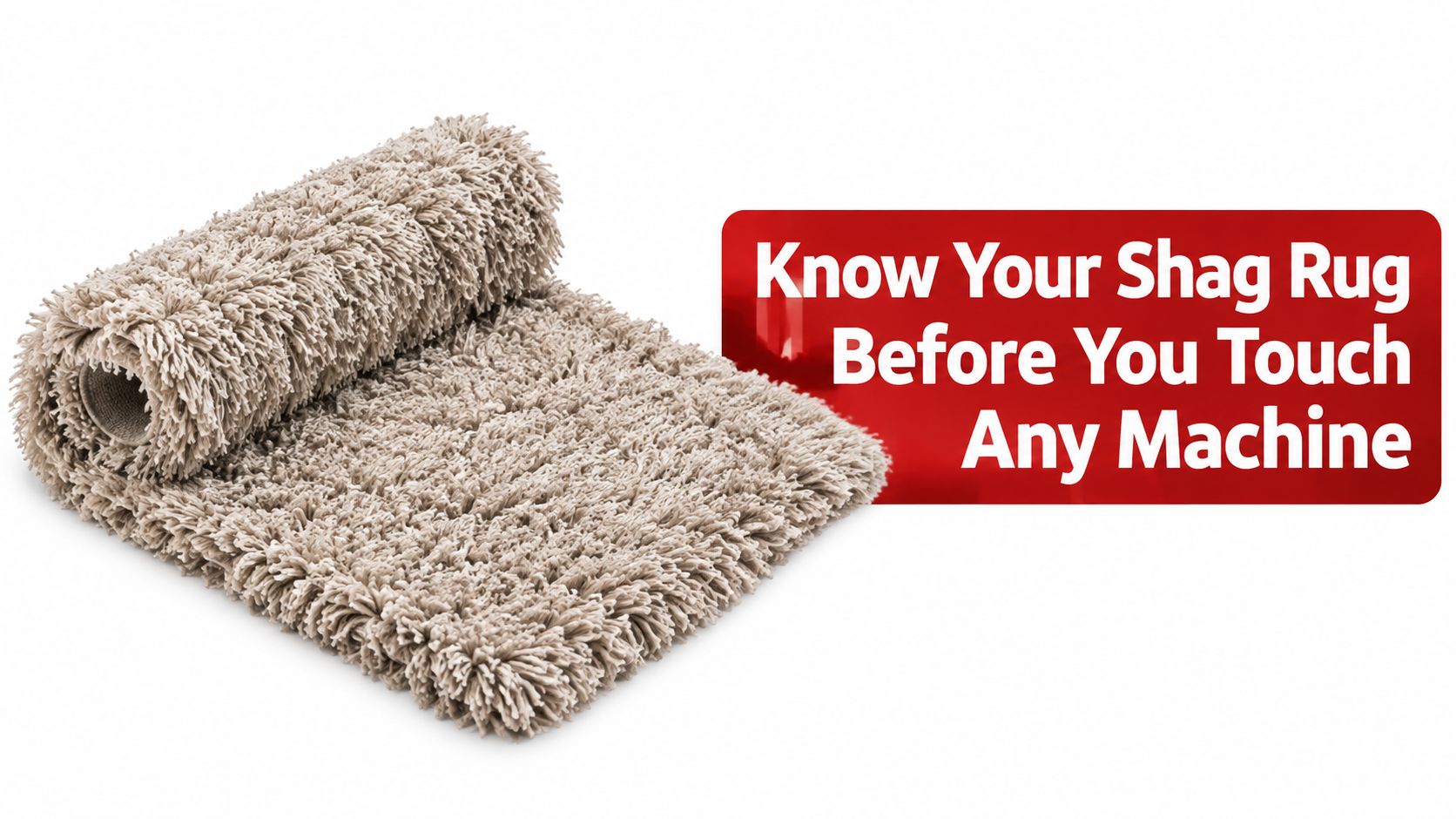
Know Your Shag Rug Before You Touch Any Machine
A shag rug is not one category. It's a pile style, and the fiber underneath can be wool, acrylic, polyester, polypropylene, cotton, viscose, or a blend. That's why a machine that looks harmless on one rug can wreck another.
Start with fiber and backing
Check the label first, then look at the underside. Wool needs the most caution because heat and excess moisture can distort the fiber. Polypropylene and polyester are usually more forgiving, but they still trap liquid inside a dense pile. Viscose is a hard stop for casual steaming in a Birmingham home, because it behaves badly when wet.
Backing matters just as much. If you see latex, glued layers, or jute, treat that rug as moisture-sensitive. A backing that softens, ripples, or sheds when damp is a sign you should slow down and call a pro instead of forcing extraction.
Test color before you make a mistake
Use a damp white cloth on an inconspicuous corner and press lightly. If you see dye transfer, stop. A small bleed on a visible area of a Persian-flavored heirloom in Vestavia Hills or a mid-century shag in Crestwood can turn into a permanent problem fast.
Pay attention to age, origin, fringe, and rug-pad contact too. A hand-knotted piece and a machine-tufted synthetic shag do not dry the same way, and they do not respond to heat the same way either. If you're unsure, the rug is already telling you to slow down.
The safest next step is to learn the construction type first, and this local guide helps with that, rug construction types.
If the rug's fiber, backing, or dye stability is uncertain, don't guess with heat. Identify it first or hand it to someone who does this every day.
Hidden Risks of Steam on a Deep Pile
A shag rug behaves like a dense sponge with a second problem hidden under the visible fibers. The top can feel clean while the base, backing, and pad are still holding water. That hidden wet layer drives odor, mildew, and fast resoiling.
Why wool is the biggest gamble
Wool is beautiful and durable, but heat, moisture, and agitation can turn it against you. The fiber scales can interlock, which causes felting, stiffness, shrinkage, and pile distortion. Once that happens, brushing will not put it back the way it was.
A wool shag in a Mountain Brook home or an heirloom rug in Vestavia Hills should not be handled casually with a rental machine. A little surface freshness is not worth a permanent change in texture or shape.
Why synthetics still fail when they stay wet
Acrylic, polyester, and polypropylene tolerate more than wool, but they still fail when technique is sloppy. Dense construction traps detergent and water deep in the pile. Leftover moisture draws soil back in and leaves the rug looking dirty again sooner than it should.
Judge any method by controlled soil removal, low residue, strong recovery, and thorough drying, not by the shine of the machine's marketing.
Bottom line: the risk is not just whether the rug gets cleaner. What decides the outcome is whether it dries from the bottom up without changing shape, color, or backing integrity.
True vapor is also different from hot-water extraction. One appliance may look gentle because it sprays little visible steam, but if it leaves the pile overloaded with moisture, the rug still loses. On shag, dry-out time and moisture recovery matter more than the word on the box.
How to Tell When Your Shag Rug Is Actually Dry
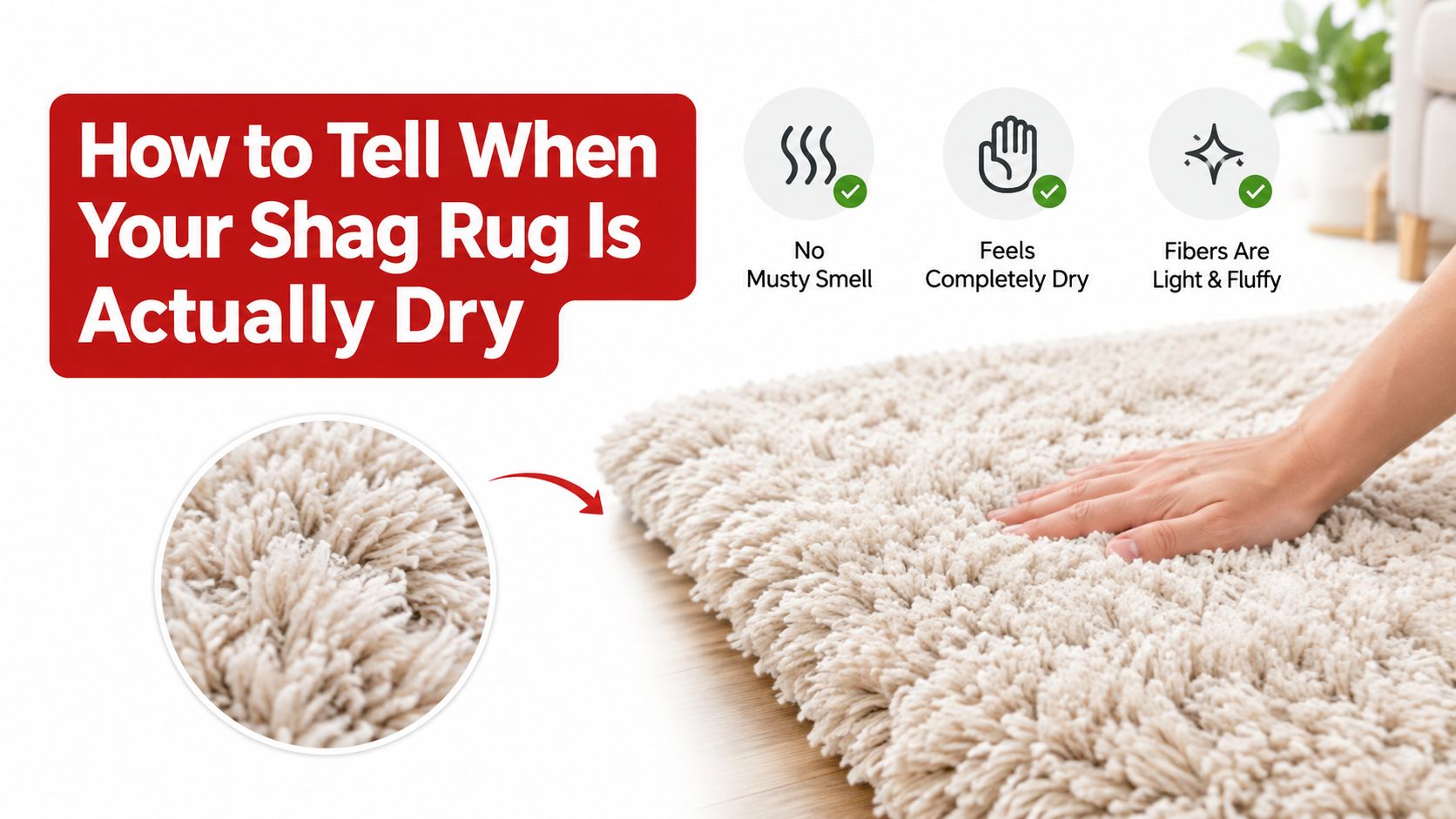
Surface dryness is a trap. Shag hides dampness below the tips of the pile, so a rug can feel ready long before the backing is safe. If you've cleaned the top and still smell something stale later, you probably dried only the visible layer.
Use the underside, not the top, as your real test
Lift one corner and press a dry paper towel against the backing and rug pad. If the towel picks up moisture or the underside feels cool, the rug is not done. Check the deepest part of the pile too, not just the outer fibers.
Flip, prop, or hang the rug so air can reach both sides. Fans help. A dehumidifier helps even more in a Birmingham summer, especially when the room stays closed up. The goal is not just “mostly dry,” it's fully dry at the base.
Practical rule: don't move furniture back onto the rug until the backing and deepest pile both pass the touch test.
Aiming for 6 to 12 hours of drying is reasonable when conditions are controlled, but room humidity can make that longer. Any rug that got wet from a leak, overflow, or appliance failure should be judged fast, because trapped moisture can turn into a mold problem before the smell shows up. The CDC advises removing wet materials and drying homes and contents within 24 to 48 hours whenever possible CDC homeowners and renters guide.
For a local step-by-step on moisture removal, see how to dry a wet area rug. If you want a broader carpet-drying reference, the practical advice in how to dry wet carpet fast lines up with the same idea, airflow and recovery matter more than surface appearance.
Safer DIY Alternatives for Birmingham Homeowners
A shag rug does not need a steam machine just because it looks dusty. If the rug is synthetic, colorfast, and small enough to manage, lighter home care is the safer move. That is especially true in a bedroom, entryway, or den where you can keep air moving and avoid trapping moisture in the backing.
Good DIY fits
- Vacuuming with care: Use suction only, or switch off the beater bar if the pile starts catching. Long fibers snag fast, and rough vacuuming does more harm than dust.
- Spot treatment only: Blot spills with a fiber-appropriate cleaner, then rinse lightly and pull the moisture out quickly. Work from the outside edge inward so the stain does not spread.
- Dry compound cleaning: On a smaller rug that just needs freshening, a dry compound can lift light soil without wetting the backing.
- Low-moisture extraction on synthetic shag: This can work if the rug is clearly synthetic, colorfast, and not antique or hand-woven.
Clear do-not-DIY triggers
- Unknown fiber or blend
- Viscose content
- Pet urine that has reached the backing
- Glued backing that's breaking down
- Mildew smell or visible spotting
- Antique, hand-woven, or heirloom value
A polypropylene rug in a Pelham playroom may be a fair DIY candidate. A wool shag in a Homewood living room that took a pet accident is not. That is not caution for its own sake. It is the difference between a cleanup and a permanent mistake.
The decision tree is simple. If the rug is stable, synthetic, and only lightly soiled, keep the process dry or low-moisture. If the fibers are unknown, the backing is failing, or the rug has taken urine, mildew, or a serious spill, stop using home methods. If the rug fails any of the do-not-DIY triggers above, skip straight to the professional-care section below.
How Rubber Ducky Handles a Shag Rug in Birmingham
The process starts before water touches the rug. Pickup keeps a shag rug out of a cramped hallway, and it keeps homeowners from forcing a bulky piece through a DIY setup that cannot control moisture well.
The pickup-to-return path
The rug comes in for inspection first. Then a mechanical dusting pass loosens embedded grit, sand, and debris before any cleaning chemistry touches the fibers. That prep matters because dry soil turns muddy once moisture hits it.
After that, the rug is washed with fiber-appropriate detergents, followed by a rinse that removes residue and helps keep new soil from sticking. Drying happens in a controlled facility, which is the part that matters most for shag. Temperature and humidity stay managed, so the pile dries evenly instead of setting crooked or stiff.
For homeowners in Birmingham, or from Hoover to Trussville, that controlled drying is the safer bet than a rental steamer in a humid garage or laundry room. You can see the Birmingham service context on the Rubber Ducky Rug Cleaning Birmingham page before booking a pickup.
When the rug returns, grooming and final inspection happen at home. A shag rug has to look right in the room where it lives, not just on a shop floor.
When to Stop DIY and Call a Birmingham Rug Professional
Stop treating shag cleaning like a heat problem once moisture has already gone too far. If the rug is antique, hand-woven, wool, viscose, or dye-unstable, if urine has reached the pad, or if the smell comes back after drying, the issue is what the water has done inside the rug.
The clearest call-professional triggers
Call a pro when the result is already bigger than a surface spill.
- The pad or backing stayed wet after a leak or flood
- Pet accidents soaked past the face fibers
- The dye moved during a test or after cleaning
- The backing is unknown, glued, or feels unstable
- A mildew odor returned after the rug dried
- Allergy or asthma concerns make indoor residue a problem
Those are not cosmetic problems. They point to trapped moisture, residue in the foundation, or contamination that keeps working after the top layer looks clean. A rental machine can leave the pile looking better for a day and still miss the part that causes lasting damage.
That is the point where facility-based washing makes sense. A local guide to deep cleaning Birmingham is useful because the decision is not about blasting the rug with more water. It is about removing the moisture safely, controlling drying, and stopping odor from settling into the backing.
For Birmingham homeowners, the smart move is to schedule a pickup instead of gambling with a rental steamer. If you're in Birmingham or nearby cities and your shag rug has stains, odors, or hidden dampness, let Rubber Ducky Rug Cleaning Birmingham inspect it, clean it in a controlled facility, and return it ready for the room again. Visit Rubber Ducky Rug Cleaning Birmingham to request rug pickup, ask for an estimate, or book professional rug washing before a small mistake turns into a permanent one.