
If you're a homeowner in Birmingham, you may have noticed the problem after moving a sofa or dining table. The rug looks clean from above, but beneath the furniture legs, the pile is flattened into visible squares or deep channels. A protector can reduce concentrated pressure, but it can't wash out embedded soil, remove pet odor, or restore fibers that have already compressed. That's where the right combination of rug protection and professional cleaning matters.
Homeowners searching for rug cleaning in Birmingham often need more than a stain treatment. They need help deciding whether a rug protector, furniture cup, rug pad, or professional washing service will solve the damage they can see. The practical answer depends on the rug's fiber, the furniture load, the condition of the pile, and whether the rug has already shifted, buckled, or absorbed contamination.
Understanding the Dent Problem in Birmingham Homes
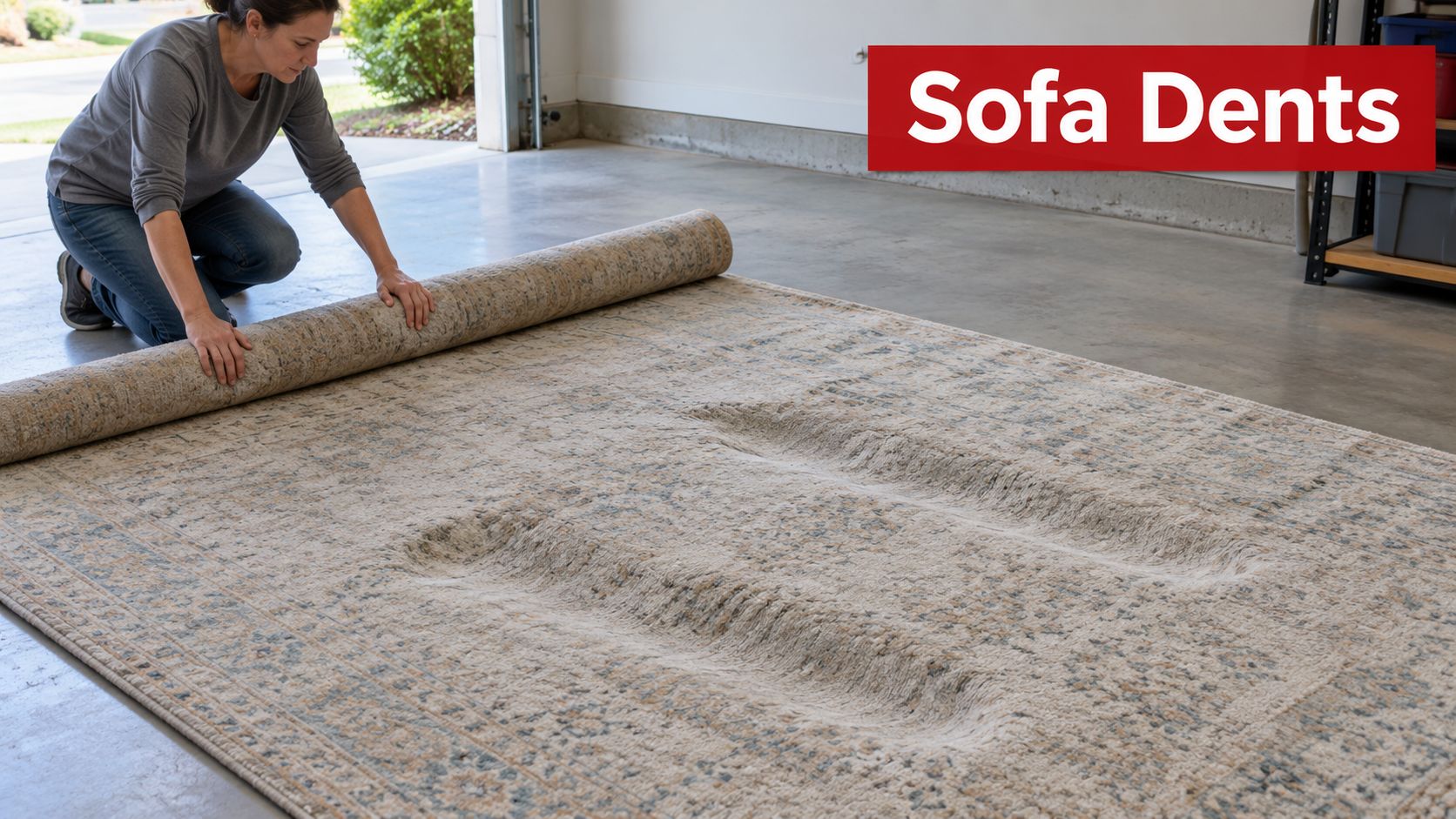
A Hoover homeowner recently brought in a beautiful wool area rug after moving a heavy sofa. The rug had no dramatic spill or obvious tear, but the pile under each sofa foot was pressed flat. Vacuuming had lifted loose debris from the surface, yet the indentations remained because suction can't rebuild fibers that have spent months under concentrated weight.
Why furniture leaves lasting marks
Furniture spreads its total weight unevenly. A broad sofa may rest on only a few narrow feet, while a dining chair repeatedly shifts pressure as people sit, stand, and pull it away from the table. Wool, cotton, viscose, and other fibers respond differently, but any rug can show compression when a small contact point carries a heavy load for a long period.
Moisture in the home can also make the problem more noticeable. In Birmingham-area homes, changing indoor conditions and daily foot traffic may leave a compressed pile looking dull, matted, or uneven around the furniture. Soil caught in the pile adds friction, and repeated movement can turn a small depression into a worn area.
Practical rule: A rug protector distributes pressure. It doesn't erase pressure that has already damaged the pile.
Standard vacuuming remains important, but it mainly removes loose particles from the surface and upper pile. It won't extract oily residue, urine contamination, or tightly lodged grit from the foundation of a rug. It also won't correct shrinkage, rippling, dye movement, or fiber distortion caused by unsuitable cleaning.
Where protection helps
A properly fitted rug pad or furniture protector can reduce concentrated loading before the rug reaches that point. It can also help limit movement, which matters because a rug that shifts beneath furniture may ripple at the edges and create additional wear.
The rug protection category has grown into a substantial home-furnishings market. One market estimate values it at USD 2.35 billion in 2024 and projects approximately USD 3.92 billion by 2033, while another estimates USD 2.8 billion in 2025 and projects USD 4.2 billion by 2033. These figures are reported in the Ubuy rug-protection market overview, and they reflect a simple reality in Birmingham homes: homeowners want to keep expensive floor coverings stable, clean, and usable.
Protection is preventive care, not restoration. Once a rug has deep dents, pet odors, or embedded soil, professional area rug cleaning is usually the more appropriate next step.
Comparing Protector Types for Different Furniture Loads
The right protector depends on whether the furniture moves often or stays in one place. A felt pad may suit a dining chair, while a narrow adhesive disc under a large sofa foot can compress quickly and leave the surrounding rug unsupported. Rubber cups, glides, and layered pads each solve a different part of the problem.
| Protector Type | Best For | Weight Limit | Pros | Cons |
|---|---|---|---|---|
| Dense felt pads | Light chairs, occasional tables, and furniture with smooth feet | Light to moderate loads | Soft contact, good pressure distribution, suitable beneath many anchored rugs | Can flatten, collect grit, or slide if undersized |
| Rubber coasters or cups | Stationary sofa legs, beds, and heavier furniture | Moderate to heavy loads | Spreads pressure over a wider area and can improve stability | May migrate, trap heat, or react with some finishes |
| Furniture glides | Chairs and pieces that move regularly | Light to moderate loads | Allows controlled movement and reduces scraping | A hard or damaged glide can still abrade rug fibers |
| Protector cups | Heavy sofas, cabinets, and beds that rarely move | Heavy stationary loads | Broad contact area helps limit concentrated pressure | Can become visible, collect debris, or leave a firm impression |
| Felt and natural-rubber system | Furniture-heavy installations on large area rugs | Heavy, distributed loads | Combines compression support with grip and helps keep the rug stable | Requires accurate sizing and careful placement |
For large rugs anchored by furniture, plain felt is often the safer foundation because it supports the rug without relying on a sticky underside. A two-layer system uses a dense felt body for compression support and a thin natural-rubber face for grip where movement is a concern. The grip layer should face the rug only when the rug and flooring are compatible with that material.
Rubber-backed or sticky products aren't automatically better. They can migrate, hold heat against a floor finish, or create residue over time. Unknown backing materials deserve caution, particularly on finished wood or delicate rug foundations. The Home Removals Sydney guide to moving heavy furniture is also useful for understanding why lifting, load distribution, and protecting contact points matter when heavy pieces are repositioned.
Match the protector to the furniture
Light chairs create repeated friction rather than constant compression. Dense felt or fitted caps usually make more sense than large cups. A heavy sofa or bed creates a different problem, so a wider protector or layered pad gives the load more area to rest on.
Dining sets deserve special attention because chairs move while the table stays put. If the rug is too small, chair legs may repeatedly cross the rug edge and drag grit into the fibers. A suitable rug pad can reduce movement, but it won't compensate for a rug that doesn't reach the active seating area.
For an oriental, hand-woven, or wool rug, the protector must suit the backing and floor beneath it. A professional cleaner can assess whether the pad is creating uneven pressure, trapping moisture, or contributing to rippling before the problem becomes visible from across the room.
Measuring and Sizing Your Rug Protector Correctly
Sizing errors cause many protector failures. A pad that's too small leaves the rug unsupported around the furniture, while one that's too large can show at the edge, catch on shoes, or create a raised border beneath the rug.
Start with the rug itself. Measure its length and width while it lies flat, then check whether the corners curl or the edges have begun to ripple. For a full rug pad, the practical fitting method is to cut it 1 to 2 inches smaller on every side than the rug. This keeps the pad hidden and reduces edge-bunching, as outlined in Jordan's furniture-care guidance.

A reliable installation sequence
Measure each furniture foot. A square foot, angled wooden leg, metal caster, and rounded foot place pressure differently. Measure the actual contact area rather than guessing from the leg's width higher up.
Mark the furniture footprint. With help, shift the sofa or table slightly and note where each leg sits. For a dining set, account for the chair positions as well as the table legs.
Cut or choose the pad to suit the rug. For a full underlay, keep the pad slightly smaller than the rug on every side. For individual cups or pads, choose a surface broad enough to distribute the load beyond the narrowest point of the foot.
Orient the layers correctly. Place the felt side toward the floor and the grip side toward the rug where a two-layer system is appropriate. Don't place an unknown rubber backing against a finished floor without checking compatibility.
Seat the furniture evenly. Put the legs back on their original support points, making sure the furniture doesn't rock. Heavy pieces should help anchor the rug on all four sides, but they shouldn't stretch or pinch the rug.
Mistakes that cause new problems
A protector that's too small concentrates the same load it was meant to spread. One that's too large may catch the rug edge or become visible. Cutting a pad flush with the rug is another common mistake because the edge can telegraph through the rug or create a raised line.
Furniture alone doesn't guarantee stability. Even an anchored rug can shift, ripple, or buckle as people walk around it. If the rug has begun to move, correct the pad fit and have the rug inspected before continued traffic turns a manageable issue into a trip hazard or a permanent crease.
What Protectors Actually Prevent Versus What They Cannot Fix
A protector changes how weight reaches the rug. It doesn't make the weight disappear. Independent rug-care commentary explains that cups and pads can spread a load, but they can't eliminate compression entirely, a distinction often missing from product comparisons. The Lucas Furniture & Mattress guide to protecting floors from furniture offers useful context on matching protection to the furniture's contact points and movement.
A narrow metal foot usually creates more concentrated pressure than a broad wooden base. Small casters can produce repeated loading in the same area, while a wide upholstered sofa foot may distribute pressure more evenly. Soft, high-pile rugs can show visible impressions even when the fibers haven't been permanently damaged, but compacted foundation yarns, crushed pile, and heavy soil can make the mark persist.
What a protector can do
A correctly selected protector can:
- Spread pressure: It gives each furniture foot a broader contact area.
- Reduce sliding: Grip or a suitable rug pad can limit movement beneath sofas and tables.
- Reduce abrasion: A soft, stable interface helps prevent rough feet from scraping the rug.
- Support the rug foundation: Dense felt can cushion the rug where heavy furniture remains in place.
A protector cannot remove a dent that already exists. It also can't extract pet urine, body oils, food residue, or grit that has worked into the rug. Those problems require a cleaning method matched to the fiber and construction.
A protector is a load-management tool, not a guarantee against dents.
When padding is the better answer
If a sofa sits on a large wool rug, a full felt pad beneath the rug may provide more consistent support than separate cups beneath each foot. If the floor beneath the rug is uneven, the pad can also reduce movement across the broader surface. Furniture rotation may help in rooms where the layout allows it, but rotation alone won't correct contamination or fiber damage.
Homeowners should also consider the condition of the rug before installing new protection. A rug with old spills, lingering pet odor, or moisture damage may need controlled washing and drying first. For stain-related issues, the Birmingham rug stain protection service is relevant because a protective treatment works more reliably after the rug has been professionally evaluated and cleaned, rather than applied over existing soil.
Pairing Protectors with Professional Rug Care in Birmingham
Rug protection and professional cleaning solve different problems. A pad helps limit future movement and concentrated loading. Professional washing addresses the soil, odors, residues, and contaminants that remain in the rug despite careful vacuuming and furniture protection.
A proper rug-cleaning process begins with inspection and dust removal. Mechanical dusting tumblers release embedded grit, sand, and allergens before washing. The rug then goes into a custom wash tank with detergents selected for its fibers and dyes, followed by mechanical rinsing designed to remove suspended soil and cleaning residue.
Why the drying stage matters
Washing is only part of safe rug care. Woven area rugs can shrink or buckle after cleaning, and low-moisture methods reduce but don't eliminate that risk. The IICRC area-rug guidance recommends in-plant cleaning for shrinkage-prone rugs, using trained technicians and suitable equipment.
Climate-controlled drying helps the rug dry evenly rather than leaving damp areas beneath dense furniture or along thick edges. Once dry, the rug can be groomed, brushed, and checked for remaining stains, loose edges, pile distortion, or signs of wear. A protector treatment can then be considered if the fiber and rug condition make it appropriate. The Birmingham furniture protection service provides additional context on applying Scotchgard after cleaning and evaluation.
For homeowners in Birmingham, Hoover, Mountain Brook, and Vestavia Hills, pickup and return service removes much of the disruption. The rug can be collected from the home, washed at a rug-specific facility, dried under controlled conditions, groomed, and returned to its original location. That process is especially useful when the rug has existing dents alongside pet odor, deep traffic soil, or a spill that has reached the backing.
Maintenance Checklist and Troubleshooting Common Issues
A protector can stop a chair or table from sliding, yet still leave a dent in the rug. Check the rug and protector whenever furniture moves, a ripple appears, or an edge catches your foot. Lift furniture instead of dragging it, then inspect for grit, flattened felt, cracked rubber, or a cup that has shifted from the leg.
Use this checklist:
- Protector slips: Realign it, remove grit, and confirm it suits both the rug and floor.
- Rug edges bunch: Move the furniture temporarily. Check for an oversized pad or a curled rug edge.
- Felt pad flattens: Replace it when it no longer spreads the load across the whole foot.
- Pet claws damage the pad: Replace torn pads or those with exposed edges, which can catch rug fibers.
- Grip disappears: Remove dust and residue first. Replace hardened or degraded backing rather than relying on it.
- Odor remains: Do not cover the rug with another protector. Persistent odor, repeated stains, or urine in the backing calls for professional cleaning, consistent with the American Kennel Club's pet-stain guidance.
Vacuum loose debris carefully, particularly from delicate pile. Follow this guidance on how to clean a rug pad before putting a soiled pad back beneath the rug. Ruggable's rug-care guidance recommends low-suction vacuuming for dry messes and mild soap and water for suitable spot cleaning. The Eco Clean Solutions cleaning guide also covers practical rug-care routines.
A protector helps control movement and spread pressure, but it cannot restore crushed pile or remove contamination. If dents remain after the load is redistributed, professional cleaning, controlled drying, and a correctly sized supportive pad may be needed. Rubber Ducky Rug Cleaning Birmingham provides pickup, facility-based washing, stain and odor removal, drying, grooming, restoration, and return delivery. Visit Rubber Ducky Rug Cleaning Birmingham to request an estimate or arrange pickup.