

If you're searching for area rug cleaning in Birmingham, you may be dealing with a familiar scene: muddy footprints near the entry, flattened fibers in front of the sofa, and a rug that still smells faintly of pets after vacuuming. Birmingham-area homes place rugs under constant pressure from foot traffic, tracked red clay, humidity, furniture movement, and everyday spills. The right rug construction helps, but lasting performance also depends on removing the grit and soil that regular home cleaning leaves behind.
Why Area Rugs Fail in Busy Birmingham Homes
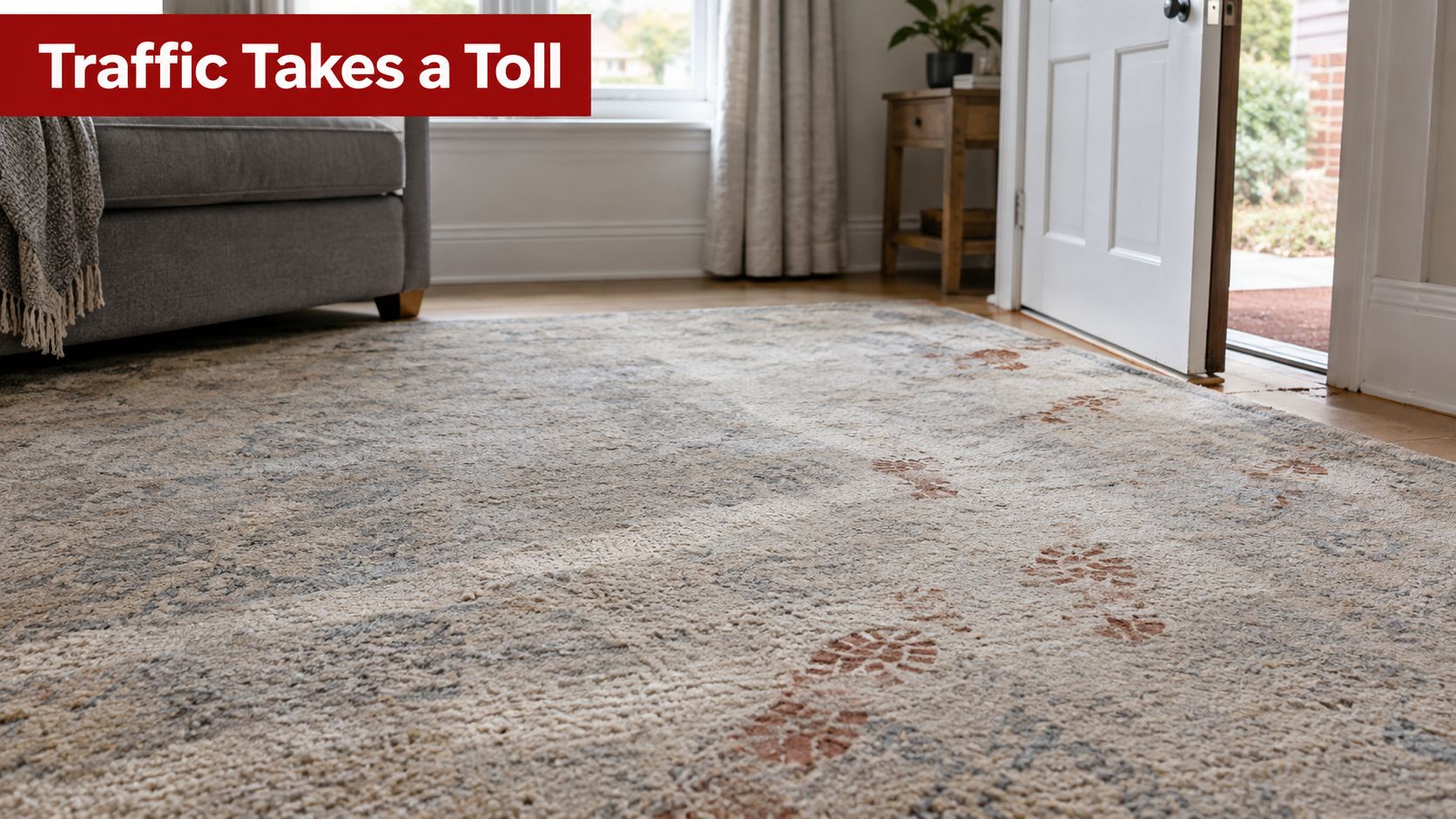
A living room rug in Birmingham rarely has an easy job. Family members walk across it repeatedly, children bring in soil from outside, pets shed into the pile, and chairs or sofas compress the same areas day after day. In homes around Birmingham, Hoover, and Homewood, red clay tracked indoors can settle deep below the visible surface, where it becomes an abrasive problem rather than a simple cosmetic stain.
Placement data helps explain why area rugs for high traffic areas need a maintenance plan from the start. A 2023 report citing CIN data found that about two out of three area rugs are placed in living rooms, while 73% are installed in high-traffic areas. The same data identified family rooms and dens at 17%, primary bedrooms at 14%, and dining rooms at 10%. These figures are reported in the area rug placement guidance from Talk of the House.
What soil does below the surface
A rug can look acceptable from standing height while its foundation is already suffering. Fine grit works through the pile as people walk, effectively grinding against fibers and backing. Over time, that abrasion crushes the pile, dulls the surface, weakens edges, and leaves traffic lanes that vacuuming can't reverse.
High-traffic placement also affects useful life. Independent longevity guidance commonly places an area rug's overall lifespan at 5 to 10 years, while daily use in busy zones can reduce useful life to 3 to 5 years in some situations, as summarized by Southwestern Rugs Depot's rug lifespan guidance. One 2024 guide referencing Carpet and Rug Institute guidance says visible wear may appear as early as four years in high-traffic areas, compared with eight years or more in low-traffic rooms.
A durable rug still needs soil removal. Construction buys time, but maintenance determines how much of that time the rug keeps.
This isn't necessarily evidence of poor manufacturing. A well-made rug can fail early when embedded grit stays in place through Birmingham's wet seasons, muddy entries, and repeated household use. Professional cleaning addresses that hidden wear before the rug's fibers and backing reach the point where restoration becomes more difficult.
Choosing Fibers That Withstand Daily Foot Traffic
Fiber choice changes how a rug handles stains, moisture, compression, and cleaning. It doesn't decide the result by itself, because pile height, weave, backing, and maintenance matter just as much. Still, comparing the common options gives Birmingham homeowners a practical starting point.
Wool offers resilience, natural soil resistance, and strong pile recovery. Its fibers can perform well in a busy living room, but wool needs controlled cleaning because excess moisture, unsuitable detergents, or aggressive agitation can affect dyes and structure. A wool or hand-woven rug shouldn't be treated like a disposable synthetic mat.
Nylon is a strong choice for households that need durability and stain resistance. It handles repeated use well and tends to recover better than softer fibers when the construction is appropriate. Nylon can suit living rooms, hallways, and family areas where people and pets cross the rug throughout the day.
Polypropylene, also called olefin, is useful where moisture and muddy soil are regular concerns. It absorbs little moisture and resists many water-based stains, making it practical for entries, mudrooms, and some indoor-outdoor applications. It isn't immune to crushing or oily soil, however, and a polypropylene rug can still develop a dull, compacted appearance if grit remains in the pile.
Natural fibers require a more careful match
Jute and related natural fibers can be durable and relatively low-maintenance, but their best location depends on how the room is used. Guidance from Home to Sight on high-traffic rug materials places low-pile and flatweave constructions in busy zones, while describing jute as better suited to specific spaces such as hallways and entryways.
The trade-off is straightforward. A textured natural rug may provide the look a homeowner wants, but its exposed fibers can retain soil and may not tolerate repeated aggressive cleaning. Wool generally offers better resilience, while polypropylene offers stronger moisture practicality. Nylon often makes sense where repeated abrasion and stain exposure are the main concerns.
For additional flooring context, Giorgi Bros. Furniture flooring experts provide a useful comparison of surfaces designed for demanding areas. The same decision principle applies to rugs: select for the room's actual conditions, not only for appearance in a showroom.
A Birmingham homeowner with pets, children, or a frequently used entry should ask what will happen after months of tracked soil and spot treatment. The most attractive fiber on day one isn't always the easiest fiber to keep clean, dry, and structurally sound.
Construction Factors That Determine Rug Longevity
A fiber label doesn't tell the whole story. Two rugs made from similar material can perform very differently because one has a compact weave, stable backing, and low pile while the other has a loose structure that holds more grit and collapses under furniture.
For busy rooms, technical buying guidance points toward a compact build with a face weight around 24 to 30 ounces and a pile height of roughly 1/4 to 1/2 inch, based on Revival Rugs' guidance for durable high-traffic rugs. That combination provides fiber mass below the walking surface without creating excessive height that encourages tripping, chair resistance, or rapid crushing.
The construction details that matter
Pile height affects both comfort and maintenance. Low-pile rugs and flatweaves expose less fiber length to mechanical crushing and offer fewer places for grit to settle. Thick pile can feel comfortable underfoot, but it often traps more soil and makes ordinary vacuum extraction less effective.
Weave density determines how firmly the surface holds together. A dense construction generally gives soil less room to migrate and helps the rug maintain a consistent appearance. Loose or uneven structures may show traffic patterns sooner, particularly in front of seating and along common walking routes.
Backing and edge finishing protect the rug's shape. A stable backing helps limit movement and distortion, while secure edges reduce fraying at doorways and furniture transitions. A rug pad can support stability, but it can't repair a failing backing or replace professional inspection.
For homeowners comparing styles, the rug construction types guide for Birmingham homes offers a useful way to distinguish flatweaves, hand-tufted rugs, woven designs, and other structures before choosing a cleaning approach.
Low pile makes cleaning easier, but no pile height makes a rug maintenance-free.
Robot vacuums also favor rugs that lie flat. Recent coverage from Wirecutter's area rug recommendations describes flatweaves and low-pile rugs as easier for vacuum cleaners to cross, less likely to snag, and better suited to busy spaces. That matters in corridors, pet-heavy households, and rooms where automated cleaning handles daily surface soil but cannot extract what has settled below the walking surface.
Maintenance Strategies That Protect Your Investment
Daily care should reduce the amount of soil entering the rug, not pretend to replace professional washing. Place a suitable rug pad beneath the rug to reduce sliding, support the structure, and limit stress against the flooring underneath. Keep entry rugs positioned where they can intercept outdoor soil before it reaches the larger living-room rug.
Vacuuming deserves more attention in a high-traffic home. The Huntington Health Library recommends washable throw or area rugs and advises using a HEPA-filter vacuum or a special double-thickness bag because those methods collect dust-mite particles and pollen more effectively, as explained in its rug and allergen guidance.
What homeowners can do between cleanings
- Vacuum deliberately: Move slowly over traffic lanes, use an attachment appropriate for the rug's construction, and avoid aggressive brush action on delicate fringes or unstable surfaces.
- Blot fresh spills: Press with a clean absorbent cloth instead of scrubbing. Rubbing can spread the liquid, roughen fibers, and drive the substance deeper.
- Check the underside: Inspect for grit, moisture, curled edges, backing separation, or discoloration. Problems underneath often explain odors and slipping.
- Control entry soil: Use exterior and interior mats, and address muddy footwear before it reaches the main rug.
- Keep the rug flat: A stable pad and correct placement reduce bunching that can create trip hazards and uneven wear.
The Carpet and Rug Institute's allergy guidance recommends washable area rugs over hard bedroom flooring and gives a specific maintenance rule of washing rugs once a week, as stated in the American Cleaning Institute's allergy and asthma cleaning document. That recommendation addresses washable rugs and household allergen control. It doesn't mean every hand-woven, wool, or large area rug belongs in a home washing machine.
Know when home care has reached its limit
Spot cleaning handles an incident. It doesn't remove the layer of dry soil, pet dander, and grit that settles throughout the backing and lower pile. A rental carpet machine may also leave an area rug too wet, fail to control dye movement, or extract unevenly.
Once the rug has persistent odor, dark traffic lanes, recurring stains, or visible pile compression, schedule professional assessment rather than repeating stronger home treatments. The guide to how often to clean rugs can help Birmingham homeowners plan cleaning around use, pets, and the rug's material.
Why Professional Cleaning Extends High-Traffic Rug Life
Professional rug cleaning begins before water touches the fibers. A rug-care provider's published workflow states that embedded dry soil, dust, and pet dander can account for up to 70% removal before liquid cleaning is applied, which illustrates why dry soil extraction is a critical first stage, as described in Carpet Tech's heirloom and oriental rug cleaning process.
A facility-based process can separate the stages that a home cleaner combines into one pass. Rugs are first inspected for fiber type, construction, stains, backing condition, and areas of weakness. Mechanical dusting tumblers then release embedded grit, sand, and allergens before a controlled wash begins.
A rug-specific washing sequence
The cleaning process used for high-traffic area rugs should include more than surface spraying:
- Inspection and testing identify dye stability, fiber sensitivity, fringe condition, and damage that could worsen during washing.
- Mechanical dusting removes dry soil that would otherwise turn into abrasive slurry during wet cleaning.
- Custom washing uses specialized detergents selected to lift soil while protecting compatible dyes and fibers.
- Mechanical rinsing removes detergent and suspended soil. A patented infusion rinse can help limit residue that attracts new soil.
- Climate-controlled drying balances temperature and humidity to reduce shrinkage risk.
- Grooming and finishing straighten the rug, brush the surface, and address presentation issues before delivery.
This is why a household carpet cleaner isn't automatically suitable for an area rug. Portable equipment may not provide controlled immersion, full underside soil removal, safe drying, or the inspection needed for wool, oriental, hand-woven, and delicate pieces. The professional carpet cleaning process explained for Birmingham homeowners also shows why equipment and method must match the floor covering being treated.
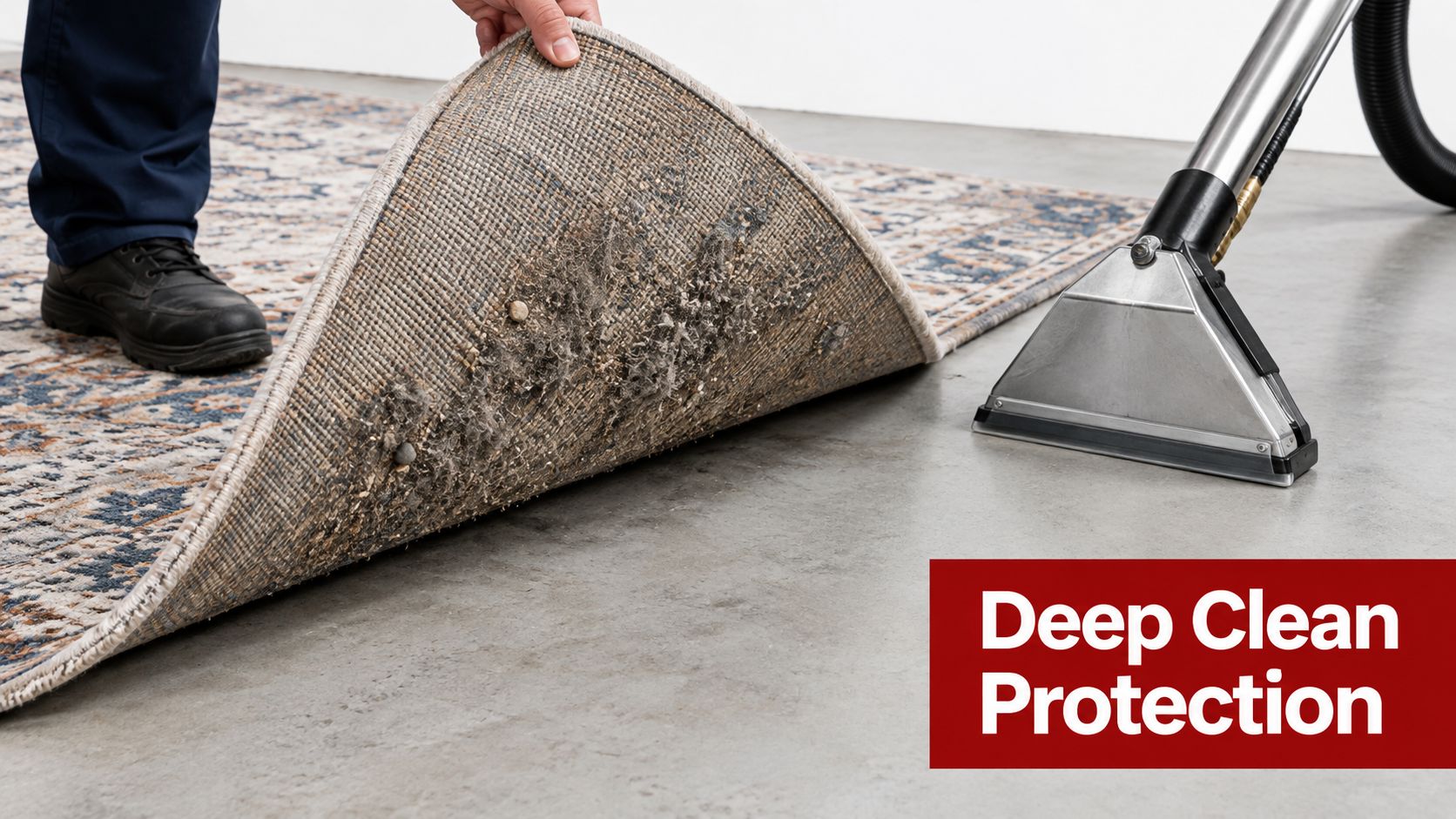
A controlled facility also makes pickup and return practical. The rug can be collected from the home, transported for specialized washing and drying, then returned to its original location after grooming. Professional handling and delivery guidance from Benson Rugs supports this inspection, facility cleaning, and controlled drying approach.
For a rug exposed to Birmingham's red clay, humid conditions, pets, and repeated footfall, professional cleaning isn't just a cosmetic reset. It removes the material that accelerates abrasion, treats odors at greater depth, and gives the technician a chance to identify fraying, water damage, or backing problems before they become harder to restore.
Making the Right Choice for Your Birmingham Home
The practical choice is not only “synthetic or natural.” Start with the room, then match the rug's construction and care requirements to that room's actual use.
A living room with pets and frequent guests may call for nylon, wool, or a well-built polypropylene rug with a low profile. A muddy entry benefits from a flatweave or moisture-tolerant construction. A formal room with less foot traffic can accommodate a more delicate piece, provided the owner understands that it needs gentler handling and scheduled professional care.
A working decision framework
- Start with exposure: Identify whether the rug faces outdoor soil, pet activity, dining spills, furniture movement, or constant walking.
- Choose the build: Favor low pile or flatweave construction when robot vacuums, chair movement, and embedded grit are concerns.
- Inspect the foundation: Look at backing, edges, weave density, and pad compatibility rather than relying only on the fiber label.
- Plan the care: Decide how fresh spills, routine vacuuming, odor, and periodic washing will be handled before buying.
- Book service early: Don't wait for permanent traffic lanes, severe odor, or brittle edges before arranging professional inspection.
The 2026 rug buying guide from Slone Brothers Furniture can provide additional buying context, but Birmingham homeowners still need to judge each rug against local household conditions. A durable rug won't remain durable if grit stays buried in its pile, and a beautiful natural-fiber rug won't perform well when its cleaning limitations are ignored.
This applies across Birmingham, Hoover, Vestavia Hills, Mountain Brook, Homewood, Trussville, Pelham, Alabaster, Gardendale, and Helena. The right maintenance decision is the same in principle: remove surface soil at home, respond quickly to stains, and use professional washing when embedded contamination and wear begin to exceed what household equipment can manage.
Rubber Ducky Rug Cleaning Birmingham offers home pickup, facility-based rug washing, deep stain and odor removal, fiber-safe cleaning, controlled drying, grooming, and return delivery to the rug's original location. If your high-traffic rug is showing embedded soil, pet odor, muddy staining, or flattened pile, schedule a pickup and request service through Rubber Ducky Rug Cleaning Birmingham.