
If you're looking at a rug in Birmingham that still looks decent but feels rough underfoot, trust your shoes less than your toes. Homeowners all over Birmingham, Hoover, Vestavia Hills, Mountain Brook, Homewood, Trussville, Pelham, Alabaster, Gardendale, and Helena make the same mistake. They assume a rug that hides mess is a rug that stays clean.
It isn't.
A dirt-hiding rug solves a visual problem. It does not solve a cleaning problem. In my opinion, the rugs that fool people the longest are often the ones carrying the most dry soil, pet dander, pollen, and grit deep into the base. That's exactly why so many people wait too long to get professional rug washing. By the time the rug looks dirty, it's usually well past the point where vacuuming is doing much good.
The Rugs That Hide Dirt Look Fine Until You Lift Them
A common Birmingham scene goes like this. There's an entry rug by the front door. It's dark, patterned, and still “looks fine.” Nobody rushes to clean it because it isn't showing obvious spots. Then someone lifts a corner and sees dust along the floor line, grit in the backing, and a dull shadow where traffic has been grinding soil into the fibers.
That's the trap with rugs that hide dirt. They buy you visual forgiveness, not actual cleanliness.
What's building up under the surface
In Birmingham homes, rugs near doors and living spaces catch everything people bring in. Alabama yard soil, fine outdoor dust, pet debris, pollen, and the dry grit that settles out of shoes all work their way below the face yarns. Independent rug-care references describe rugs as reservoirs for dry soil, grit, and allergens, and note that a typical area rug can trap several pounds of fine particles each year. The same guidance says a 9×12 wool rug may hold several pounds of dry soil before it even begins to look dirty in this rug soil overview.
That's why “looks clean” is such a bad standard.
Practical rule: If a rug feels gritty, smells stale, or leaves dust around the edges when moved, it's dirty whether the pattern admits it or not.
Why homeowners get fooled
The rugs people brag about are often the worst offenders. “This one never shows anything” sounds good until you realize that hidden buildup keeps collecting because nobody feels urgency to wash it.
The carpet industry has treated soil-hiding as a real design problem for decades. A technical manufacturing reference notes that early nylon fibers had poor soil-hiding performance, and later generations improved the effect by changing fiber shape to scatter light and disguise dirt better in this summary of carpet fiber design history. In plain English, manufacturers learned how to make carpets look cleaner for longer.
That visual trick has value. It just shouldn't be confused with hygiene.
What Actually Makes a Rug Hide Dirt
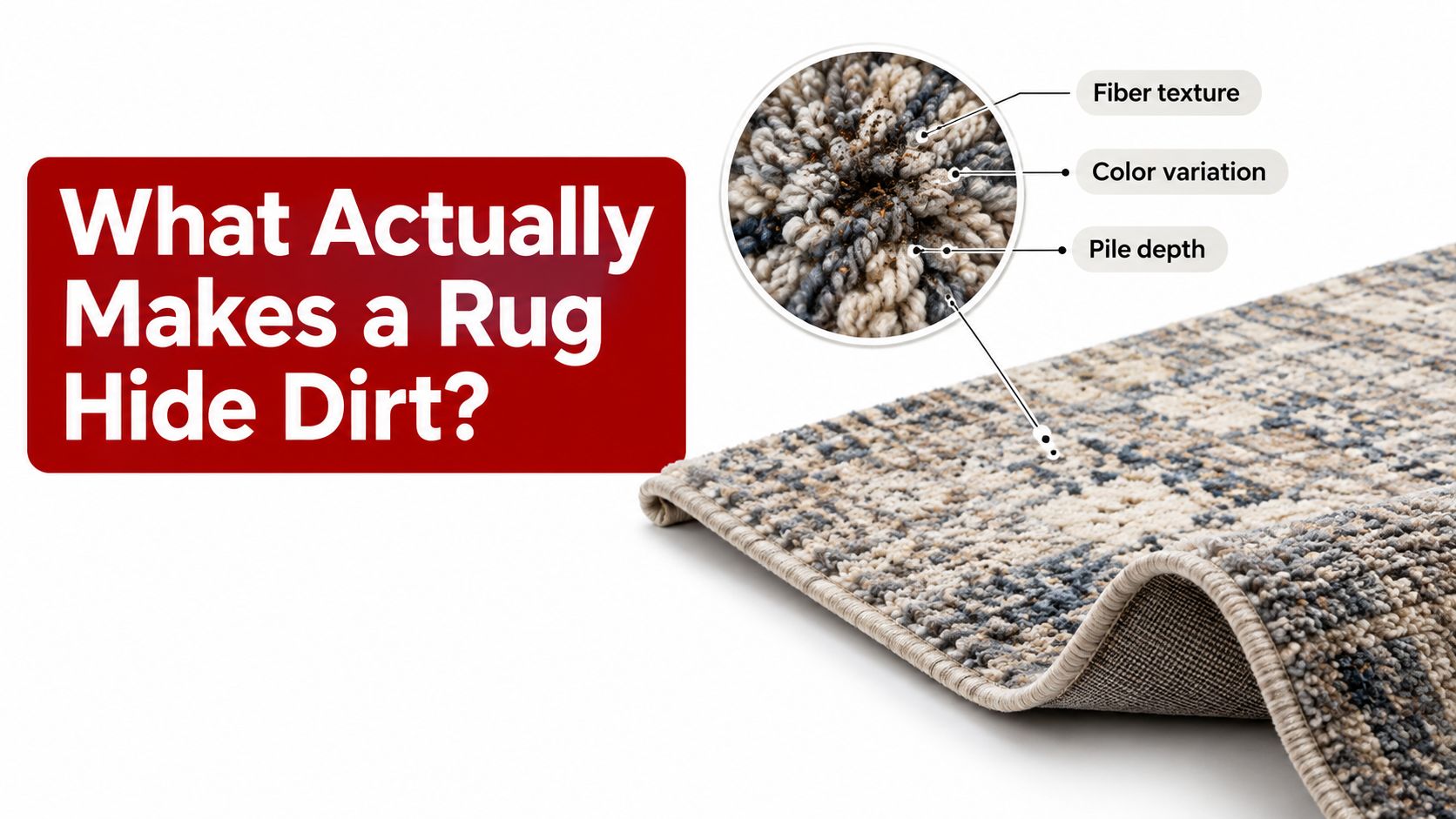
Some rugs hide dirt because of color. Others hide it because of texture, density, or the way the fiber plays with light. If you want to choose wisely, you need to understand the five traits that matter most.
Fiber shape changes what your eye sees
Not all synthetic fibers behave the same. Older round filaments tended to show soil more plainly, while later engineered shapes did a better job disguising dirt by scattering light instead of reflecting it evenly. One manufacturing source even describes a more successful soil-hiding nylon using a roughly square cross-section with voids running along the fiber length in this discussion of fiber engineering and optical design.
Matte fabric versus glossy fabric. Glossy shows everything.
Pile height and density matter more than people think
Low-pile and tightly woven rugs usually keep debris nearer the top, where a vacuum has a fighting chance. Dense construction also reduces how far soil can disappear before you notice it. Independent rug-care guidance notes that low-pile, tightly woven constructions keep debris nearer the surface, while dense fibers reduce the depth where soil can settle in this rug color and construction guide.
Long loose pile is the opposite. It may hide crumbs, dust, and pet hair better for a while, but that's because the mess is dropping down into the structure.
Color value decides what contrasts and what disappears
The most useful advice on rug color is simple. Match the rug to the kind of dirt your home gets. A University of Minnesota conservation resource says blues and greens tend to show the least soil, while yellows and golds show the most. It also notes that very light colors reveal soil quickly, and dark colors can show lint and pale dust if that's what lands on them, as explained in this carpet-soiling summary.
That's why medium values usually win. They don't fight every speck.
Pattern breaks up visual contrast
Solid rugs tell on themselves. Multi-color, heathered, and patterned surfaces interrupt the eye, so tracked soil blends into the field instead of reading as one obvious patch. It's the same reason a flecked shirt hides dust better than a plain black one.
A rug doesn't need to be dark to be forgiving. It needs variation.
The plain takeaway
If you want rugs that hide dirt, look for these traits:
- Mixed color tones: Better at disguising everyday dust than flat, solid color.
- Low to medium pile: Easier to vacuum and less likely to let grit sink deep.
- Dense weave: Better structure, less visual contrast from traffic.
- Patterned surface: Breaks up soil marks.
- Fiber that releases soil reasonably well: Especially important in homes with pets or heavy entry traffic.
The catch is simple. The same feature that makes a rug look clean can also help it hold dirt longer without warning you.
Best Rugs for Pets, Traffic, and Outdoor Spaces in Birmingham
Birmingham homeowners usually ask the wrong question. They ask which rug hides dirt best. The better question is which rug fits the room's dirt load and your tolerance for hidden buildup.
If you've got dogs running in from the yard, kids crossing the entry all day, or a covered patio that feeds debris indoors, your rug choice should lean toward cleanability first and camouflage second. That matters just as much as flooring choice in the rest of the house. If you're comparing hard-surface wear too, these Savera Wood Floor Refinishing recommendations give useful context on how high-traffic zones should drive material decisions.
My blunt take by use case
For entry rugs and covered porch transitions, I'd choose indoor-outdoor polypropylene most of the time. It handles moisture better, releases dry soil more easily, and doesn't punish you for every bit of Birmingham grit tracked in from outside.
For living rooms with pets, I'd lean toward low-pile wool blends or tightly woven constructions with tonal variation. They can still look good while giving you a better chance of removing hair and dry particulate before it packs down. Loop styles can work, but if your dog's claws catch everything, think twice.
For decorative rooms or heirloom rugs, appearance matters more, but so does caution. Fine wool, hand-knotted pieces, cotton foundations, and detailed fringe need proper washing, not repeated home scrubbing.
Rug Material vs. Birmingham Use Case
| Material | Pets | High-Traffic Entry | Outdoor/Covered Patio | Decorative/Low-Use |
|---|---|---|---|---|
| Polypropylene | Strong choice for easy cleanup and odor resistance | Strong choice | Strong choice | Acceptable, though less refined |
| Wool blend low pile | Good if shedding and accidents are managed quickly | Good | Poor fit for damp outdoor-adjacent exposure | Very good |
| Tightly woven flatweave | Good for hair and surface debris | Good | Fair if kept dry | Good |
| Loop/berber style | Mixed, because claws can snag loops | Good | Fair | Good |
| Shag or high pile polyester | Poor for pet homes with tracked debris | Poor | Poor | Better for low-use comfort zones |
| Viscose | Poor | Poor | Poor | Decorative only |
| Jute or rough natural fiber | Mixed, tends to hold grit and odors | Mixed | Poor in moisture-prone spots | Better for light-use styling |
What I'd avoid
Some rugs are sold as forgiving when they're really just good at hiding neglect.
- Shag rugs: They disguise debris because the pile swallows it.
- Viscose rugs: They look expensive, but they don't forgive moisture or rough handling.
- High-pile polyester: Soft at first, but often a magnet for packed soil and matting.
- Loose natural fibers near doors: They grab grit and can hold odor longer than homeowners expect.
If you want a deeper comparison of easy-care options before you buy, this guide on an area rug that's easy to clean is worth reading.
Choose the rug for the room you actually live in, not the photo you liked online.
The Tradeoff Birmingham Homeowners Often Miss
You vacuum the rug, it still looks decent, and the room smells a bit off by the weekend. That usually means the rug is winning the appearance battle and losing the cleanability one.
The tradeoff is air quality and buildup. A rug that hides marks, hair, and tracked-in grit buys you visual forgiveness. It also gives dust, dander, and fine debris more time to sit deep in the pile before you deal with them properly.
Clean-looking rugs can still work against the room
The useful point from the carpet and allergy research summary is simple. Carpets and rugs can help keep particles out of the air, but only when they are cleaned thoroughly. Vacuuming helps. More complete cleaning methods, including agitation and hot-water extraction, reduce allergen load further.
That matters in Birmingham homes with dogs, school-age kids, busy hallways, and doors opening onto damp gardens or patios. In those houses, a rug that looks fine can still hold the stuff that keeps a room feeling stale.
Visual forgiveness vs. actual cleanability
| Rug Type | Visual Camouflage Rating | Soil Retention Tendency | Air and Allergen Concern |
|---|---|---|---|
| Solid light low-pile rug | Low | Lower, buildup shows earlier | Moderate, easier to monitor because it shows dirt fast |
| Patterned low-pile rug | High | Moderate, hides surface mess longer | Moderate, manageable if cleaned on schedule |
| Dense wool tonal rug | High | High, holds fine grit deep in the pile | Higher, especially in busy family rooms |
| Shag or high-pile rug | High | Highest among these options | High, because debris, dander, and odor settle deep |
| Flatwoven entry rug | Moderate | Lower than deep pile, but catches gritty tracked-in soil | Moderate, especially near doors and shoes |
Here is the plain advice. The best dirt-hiding rug is rarely the easiest rug to keep clean.
If you want camouflage without creating a dust reservoir, stick to patterned low-pile rugs or flatweaves in the messier parts of the house. If you already own dense wool or high-pile rugs, stop judging them by appearance alone. Judge them by traffic, pets, smell, and how quickly they stop feeling fresh after vacuuming.
When to stop vacuuming and hand it off
Once a rug keeps odour, feels gritty underfoot, triggers more sneezing, or dulls again a day or two after vacuuming, home care has done what it can. At that point, running the vacuum over it again is mostly for your conscience.
That is when Birmingham homeowners should hand the rug off to Rubber Ducky. Especially with wool, deep pile, pet-heavy rooms, and rugs near entrances, the tradeoff stops being about looks and starts being about what is stuck down in the fibres.
Daily Maintenance That Keeps Dirt-Hiding Rugs Looking Fresh
A dirt-hiding rug needs more discipline, not less. Since it won't always show buildup early, you need a routine that goes by traffic and fiber type instead of looks.
Weekly care that actually helps
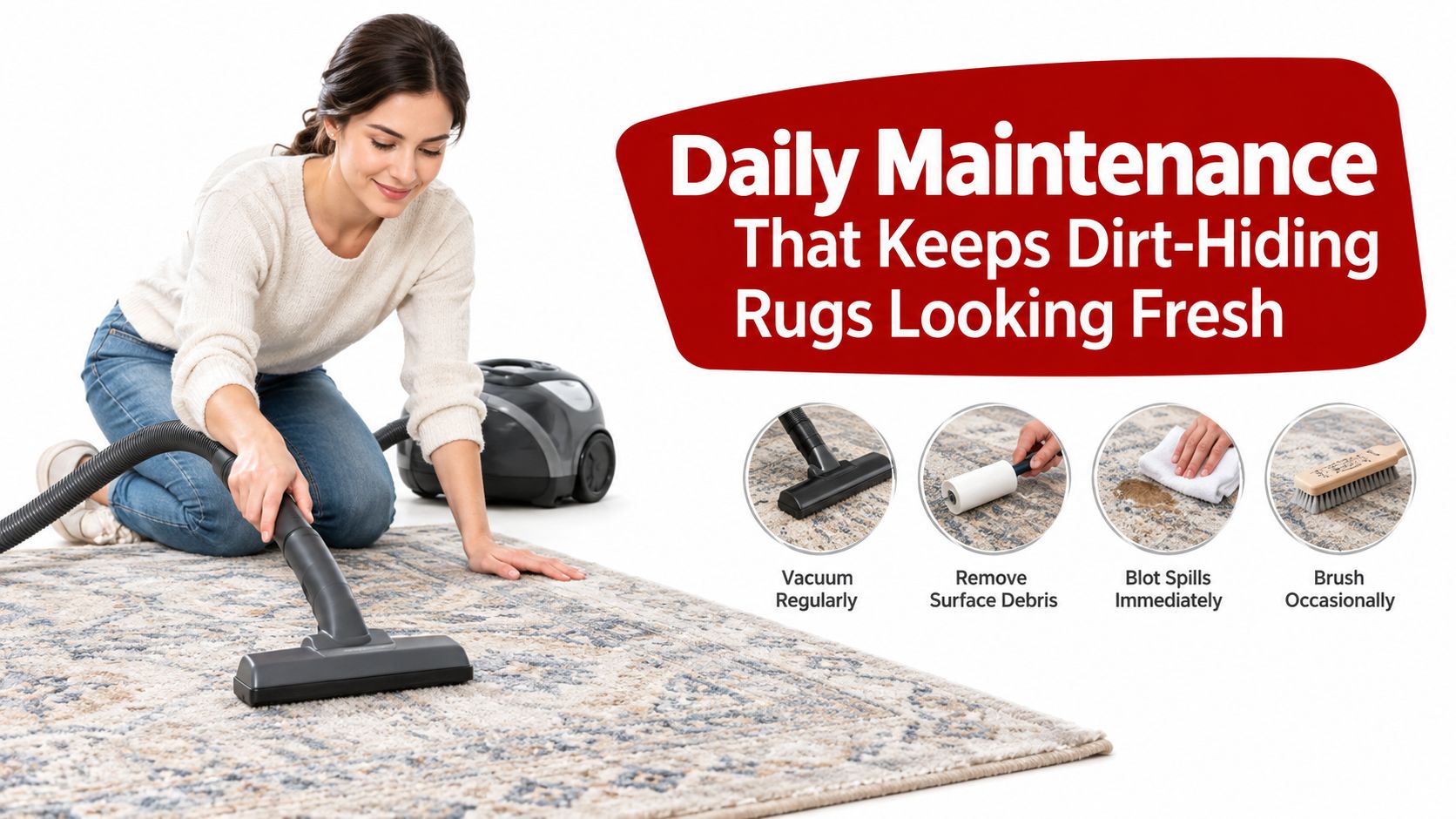
Start with vacuuming. Not random vacuuming when the rug looks bad. Scheduled vacuuming based on pile.
- Flatweaves and looped berbers: Use suction-only if possible. Aggressive brush action can fuzz loops and raise wear.
- High-pile rugs: Turn the beater bar off. You're trying to remove loose debris, not churn the pile into matting.
- Entry rugs and pet zones: Vacuum more often than bedroom rugs because they catch the worst of shoes, pollen, and pet mess.
If your dog sheds heavily, reducing what lands in the rug helps. A simple grooming routine like this vet-informed shedding routine can cut down the hair load before it gets worked into the pile.
Monthly habits that prevent ugly surprises
Rotate the rug a half turn every quarter. That spreads wear across traffic lanes and helps one side of the rug avoid taking all the seasonal mud, dust, and pollen.
Spot treatment should stay boring and careful.
- Blot, don't scrub. Work from the outside inward.
- Use a cleaner matched to the fiber. Wool and viscose don't forgive guesswork.
- Keep moisture controlled. Over-wetting is where many DIY jobs go sideways.
What quietly damages rugs
I see the same mistakes over and over:
- Soaking wool or wool blends: Can leave yellowing, distortion, or residue.
- Over-wetting jute: Often leads to browning and a rougher hand.
- Scrubbing viscose: Crushes the look fast.
- Using heat near rubber backing: Can create damage that isn't reversible.
If you want a practical benchmark for timing between home care and professional service, this page on how often to clean rugs is a useful starting point.
A rug that hides dirt needs maintenance based on use, not on appearance.
When DIY Cleaning Stops Working and Professional Help Makes Sense
There's a clear point where home care stops being useful. Most Birmingham homeowners wait past it.
The signs are usually obvious once you know them
Watch for these:
- Musty odor: That usually means the rug is holding more than dry dust.
- Dull or gray traffic lanes: The color hasn't changed. Soil load has.
- Matting that won't recover: Packed grit and wear are sitting deep in the pile.
- Allergy flare-ups despite vacuuming: Surface cleanup isn't reaching what's embedded.
- Dust or grit at the base when you lift the rug: The rug is carrying a deeper load than the face shows.
Why rented machines often make things worse
Area rugs are not wall-to-wall carpet, and homeowners treat them like they're the same thing. They aren't. The IICRC warns that woven area rugs may shrink or buckle after cleaning, and says the risk can be reduced, but not eliminated, by low-moisture methods. It specifically recommends in-plant professional cleaning for shrinkage-prone rugs in this IICRC rug cleaning guidance.
Controlled cleaning also matters for allergens. A university study found that combining dry steam cleaning with repetitive HEPA vacuuming reduced dust by 64.4% and house dust mite allergens by 85.5% in this summary of HEPA vacuuming and dry steam cleaning research.
If you've ever compared specialist floor care with rental equipment, it's a similar lesson to this article on when to hire a tile cleaner Melbourne. The right tool and process matter more than effort.
For Birmingham households dealing with deep soil, odor, or delicate fibers, one practical option is professional carpet cleaning vs DIY, especially when the rug needs pickup, proper washing, controlled drying, and return instead of another pass with a grocery-store machine.
Why Birmingham Homeowners Trust Rubber Ducky Rug Cleaning
Local rug care works better when the cleaner understands local dirt. Birmingham homes deal with red clay grit, pollen-heavy seasons, pet dander, and a lot of traffic moving between outdoor and indoor spaces. Those contaminants behave differently in wool, cotton, synthetics, and delicate decorative fibers.
What good rug service should include
You should expect a process that removes dry soil before water touches the rug, uses fiber-safe cleaning solutions, rinses thoroughly, and dries under controlled conditions. That matters because rugs that hide dirt often need real dust removal first. Otherwise, wet cleaning can turn embedded dry particulate into mud inside the pile.
A proper service should also account for construction details. Hand-knotted fringe, bound edges, cotton foundations, and shrinkage-prone pieces need different handling than a modern synthetic area rug.
Why pickup and return matter
Busy homeowners in Birmingham, Hoover, Vestavia Hills, Mountain Brook, Homewood, Trussville, Pelham, Alabaster, Gardendale, and Helena don't need another awkward DIY project spread across the driveway. Pickup, cleaning at a rug washing facility, controlled drying, grooming, and return to the original spot in the home is the sensible route.
That's why people hand rugs off instead of pretending one more round of vacuuming will solve deep buildup.
If your rug looks fine but feels gritty, smells stale, or keeps holding onto pet hair and dust, it's time for a proper reset. Rubber Ducky Rug Cleaning Birmingham offers pickup, professional rug washing, fiber-safe cleaning, controlled drying, and delivery back to your home, which is exactly what dirt-hiding rugs need once surface care stops working. Visit Rubber Ducky Rug Cleaning Birmingham to schedule pickup or request an estimate for your rug.