If you're in Birmingham and you've just noticed a stain, a sour smell, or a dull gray cast on a handmade rug, don't assume it only needs a quick spot clean. On an Asian rug, the visible mess is often the least important part of the problem. The issue usually sits down in the foundation, where grit, moisture, and residue stay trapped long after the surface looks “mostly fine.”
That matters in houses across Birmingham, Hoover, Vestavia Hills, Mountain Brook, and Homewood because these rugs don't behave like broadloom carpet. They're textiles with structure, dyes, and fibers that can be permanently changed by the wrong cleaner, too much heat, or sloppy drying. If you want the rug to last, Asian rug cleaning has to match the fiber and the condition of the rug, not the convenience of whatever spray bottle is under the sink.
Why Birmingham Homeowners Are Rethinking Asian Rug Cleaning
A common call starts the same way. The homeowner says the rug gets vacuumed, the stain was blotted quickly, and they even used a rug-safe cleaner. But the wool still looks flat, the room still smells off when the air conditioner kicks on, and the traffic lane near the sofa keeps turning dirty again.
That's not bad housekeeping. That's a handmade rug telling you surface cleaning didn't reach the contamination.
In Birmingham homes, especially near entryways and living rooms, people track in fine dry soil that settles below the face yarns. Then summer humidity adds the second half of the problem. Moisture hangs around in the lower structure, especially in rugs with cotton foundations, and odor starts building where a towel and spray can't touch it.
Surface dirt is the symptom
A hand-knotted Asian rug can look only mildly dirty on top while holding packed grit underneath. That buried soil keeps rubbing against the fibers every time someone walks across it. The rug loses color, softness, and life long before most homeowners realize what's happening.
Practical rule: If a handmade rug looks dull again shortly after vacuuming, the problem usually isn't on the surface anymore.
The same goes for odor. Musty smells, pet smells, and that stale damp scent after a spill often mean contamination reached the foundation. Once that happens, in-home touch-up cleaning stops being enough.
Why supermarket products keep disappointing people
The wrong product often makes the rug look better for a day and worse after that. Residue stays behind. Moisture spreads farther than the stain. Colors can wick upward as the base dries unevenly.
That's why more Birmingham homeowners are moving away from supermarket spot sprays and rented carpet machines for true handmade pieces. Asian rug cleaning works when it treats both the pile and the structure beneath it. Anything less is cosmetic.
What Your Rug Is Actually Made Of
You notice a stain, grab a cleaner, and stop when the fringe feels different from the pile. Good. That hesitation can save the rug. On a true handmade Asian rug, the right cleaning decision starts with fiber and structure, not the spot you can see.
Check the fringe, backing, and sheen
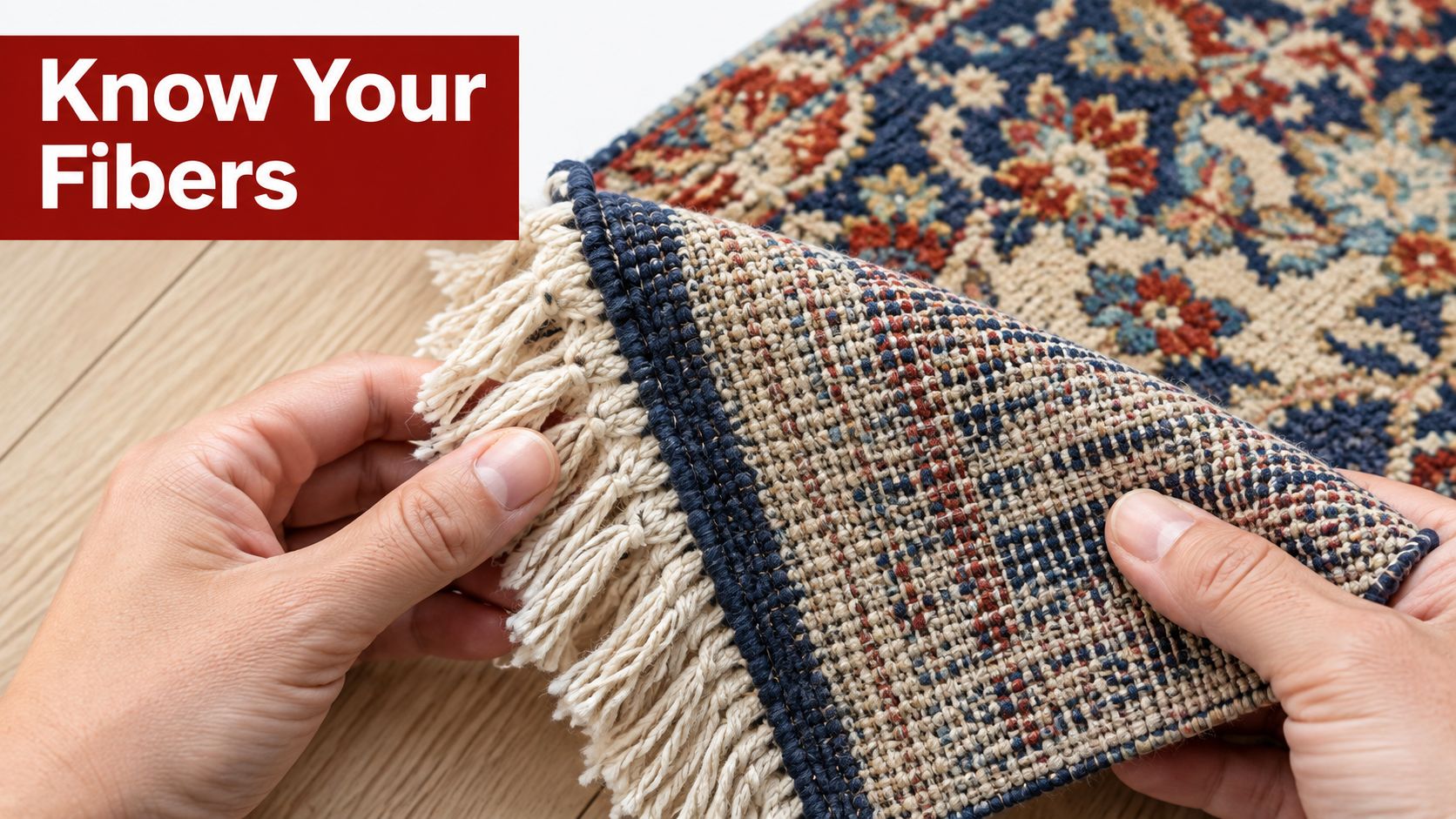
Start at the fringe. If it is part of the rug's foundation rather than sewn on afterward, you are usually looking at a handmade piece with structural yarns running through the full length of the rug. In many cases, that means wool pile tied onto a cotton foundation. That matters because the cotton base can hold moisture long after the surface feels dry.
Flip the rug over and study the back closely. A clear pattern on the back, with small irregularities in the knotting, usually points to hand-knotted construction. If you need a visual reference before making a cleaning decision, review these rug construction types. Birmingham homeowners often mistake a detailed machine-made rug for a handmade one, then clean it the wrong way for its actual build.
Now check the sheen. Wool gives off a softer, warmer glow. Silk reflects light harder and changes appearance sharply from one angle to another. Viscose often mimics silk at first glance, but it is far less forgiving once it gets wet.
What the fibers actually mean
Fiber tells you how much water the rug can tolerate, how much friction it can handle, and how high the risk is to the foundation underneath.
Chinese rug history alone proves why one cleaning method does not fit every Asian rug. Earlier Chinese rugs were often wool in warp, weft, and pile, while later export pieces commonly used cotton foundations, with silk reserved for finer work, as outlined in this overview of Chinese rug fiber history. Change the foundation, and you change the drying risk.
- Wool pile: Usually handles careful washing well, but it still needs the right detergent chemistry and controlled handling to protect the fiber and dyes.
- Cotton foundation: Absorbs and holds water. That raises the chances of dye movement, odor in the base, and structural weakening if the rug dries slowly.
- Silk: Needs low-moisture, low-friction treatment. Aggressive scrubbing can rough up the surface fast.
- Viscose and other silk substitutes: These are trouble. They can brown, distort, lose texture, or go flat from ordinary spot cleaning.
The big mistake is treating all soft, shiny rugs as if they respond the same way. They do not. A wool-on-cotton hand-knotted rug may survive a proper bath in a wash facility. A viscose blend can look permanently worse after one wet cleaning attempt in the lounge.
Good rug cleaning starts with identifying the face fiber and the foundation, then judging the risk below the pile.
That is why true handmade Asian rugs in Birmingham usually need professional pickup and delivery rather than in-home experimentation. Once the foundation is part of the problem, the rug needs controlled washing and drying conditions, not a bottle from the cupboard.
If you're shopping for pieces built to last, it also helps to choose heirloom quality rugs in Ontario from dealers who explain fiber and construction clearly. Homeowners make better cleaning decisions when they know exactly what is on the floor.
Why Standard DIY Methods Fall Short on Hand-Knotted Rugs
Generic cleaning advice treats every rug like synthetic carpet. That's the core mistake.
Blotting a spill is fine as first aid. Spraying all-purpose cleaner across a hand-knotted rug isn't. Rental carpet extractors, grocery-store shampoos, and steam tools are built for convenience, not textile preservation.
What DIY misses below the pile
The biggest issue is dry soil. Fine grit settles between knots and into the foundation. Once moisture hits that grit, it turns abrasive. You're no longer just cleaning the rug. You're rubbing a muddy mineral slurry through it.
Independent rug-care guidance also stresses that deep dust extraction should happen before wet washing, with mechanical removal from the back of the rug and controlled drying afterward so the foundation dries fully, not just the face, as explained in this guide on oriental rug dusting and drying. Most DIY methods skip that completely.
The equipment mismatch
Upright vacuums with rotating brush rolls grab fringe, tug at selvages, and rough up weak areas. Steam cleaners add heat where heat often does the most damage. Home extractors can saturate a cotton foundation and still leave detergent trapped inside.
That's why homeowners think they cleaned the rug, then call later because it smells worse or the stain came back at the edges.
Consider what these methods leave behind:
- Residual detergent: It attracts new soil fast.
- Trapped moisture: It creates odor and dye movement.
- Uneven drying: It can distort shape and texture.
- Foundation stress: It weakens the rug where you can't see it.
Hand-knotted rugs aren't hard to own. They're hard to clean incorrectly and get away with it.
This isn't about blaming homeowners. It's about using the right category of care. A handmade Asian rug behaves like an heirloom textile. Treating it like wall-to-wall carpet is where the damage starts.
Common Stains on Asian Rugs and How Professionals Treat Them
Not every stain needs the same response, and that's where a lot of bad advice falls apart. In Birmingham homes, the usual culprits are drinks, pet accidents, tracked-in mud, food oils, and the lingering discoloration left by older DIY attempts.
If the rug is handmade, the first question isn't “What removes this stain?” It's “What can this fiber and foundation survive?”
For homeowners dealing with a fresh spill or a set-in mark, the most useful next step is learning when simple first aid is enough and when the rug needs off-site treatment. Rubber Ducky Rug Cleaning Birmingham is one local option for rugs that need pickup, wash-facility treatment, controlled drying, and return, and their stain-specific guidance on oriental rug stain removal is a good reference point.
The chemistry behind the common stains
Coffee and red wine are not “just dark spills.” They carry color bodies that travel fast through natural fibers. On many handmade rugs, the safer approach is to treat from the backing side when appropriate so you flush contamination out instead of driving it deeper from the top.
Mud is different. Wet mud should usually be left alone long enough to dry. Once it dries, much of the soil can be removed mechanically before any wet process starts.
Pet urine is the stain homeowners underestimate most. Humane World for Animals advises soaking up as much as possible, rinsing thoroughly with cool water, and avoiding steam cleaners because heat can lock in odor and make removal harder, as explained in this article on removing pet stains and odors. On handmade rugs, that's only the beginning if urine has reached the foundation.
Common Asian Rug Stains and Professional Treatments
| Stain | Chemistry Needed | Home or Professional |
|---|---|---|
| Coffee | Fiber-safe tannin treatment and thorough rinse | Home first aid, professional if it spread through foundation |
| Red wine | Careful tannin and dye-sensitive treatment | Usually professional on handmade rugs |
| Pet urine | Enzyme treatment, full flushing, acidic balancing rinse | Professional if odor remains or contamination soaked through |
| Mud | Dry soil removal first, then targeted wash if needed | Often home first step, professional if embedded |
| Oil or grease | Solvent choice matched to fiber type | Professional |
| Ink | Spot chemistry matched to dye stability and fiber | Professional |
| Browning from overwetting | Corrective wash and drying control | Professional |
One more point on urine. Enzyme-based cleaners are specifically recommended because they break down the urine molecules or uric-acid crystals that hold odor. One rug-cleaning source describes pre-treating with enzymes and then fully flushing the rug so urine, salts, and bacteria are rinsed from both pile and foundation in a pet urine rug treatment process.
What Happens During a Professional Asian Rug Cleaning
You notice a sour odor after rain, or a stain that keeps coming back even after blotting. On a true handmade Asian rug, that usually means the problem is sitting deeper than the pile. The cleaning decision starts with fiber and structure, not with whatever spot remover is under the sink.

Inspection comes before water
A proper wash plant begins with inspection under strong light and by hand. The cleaner checks whether the rug is wool, silk, cotton, or a blend, then looks at the foundation, side cords, fringe, previous repairs, dye stability, and any weak areas that could fail during washing. If one corner smells stronger or feels stiff, that area gets extra attention because contamination often settles into the base of the rug, not just the face yarns.
Then the rug is dusted thoroughly. Dry soil inside a hand-knotted rug acts like sandpaper during washing. If that grit stays in place, every pass of water and agitation pushes abrasion deeper into the pile and foundation.
The wash process is matched to the rug
Good rug cleaners do not run every handmade piece through the same formula. Wool, silk, cotton foundations, and natural dyes react differently to moisture, agitation, and pH. Safe rug washing usually stays on the mildly acidic side because strong alkalinity can rough up wool, disturb texture, and increase dye bleed risk.
That is why fiber testing matters so much. If the cleaner misidentifies the material, the wash can set off a bigger problem than the original stain.
A professional process often includes:
- Fiber and dye testing before any full wash starts.
- Deep dust extraction to remove the grit that causes internal wear.
- Targeted pre-treatment for stained or odor-heavy areas.
- Controlled washing with chemistry suited to the rug's fibers and dyes.
- Acidic rinsing to clear residues and help keep colors stable.
- Moisture extraction to remove as much water as possible before drying.
Flat drying protects shape, backing tension, and fringe alignment better than casual hanging or folding while damp.
Drying decides whether the rug stays stable
A handmade rug is not clean until it is dry all the way through. That includes the pile, the foundation, and the fringe. Slow or uneven drying can leave behind odor, encourage browning, and put stress on cotton warps and edges.
Research discussed in this rug-cleaning research summary also points to the value of pairing disinfecting with prompt drying in the context studied. That lines up with what experienced rug plants already know. Moisture left sitting inside a handmade rug is a structural risk, not just a cosmetic issue.
After drying, the rug is groomed, detailed, and inspected again. If you own a handmade Asian rug in Birmingham, that is the standard to expect. Pickup and delivery to a wash facility is the right call for anything with odor, dye sensitivity, foundation contamination, or visible weakness.
When a Birmingham Rug Needs More Than a Routine Wash
Some rugs need more than maintenance. They need triage.
If the rug is silk, antique, naturally dyed, urine-saturated, or water-damaged, a routine vacuum and spot cleaner can turn a manageable issue into a restoration problem. That's where homeowners in Birmingham, Trussville, Pelham, Alabaster, Gardendale, and Helena lose money trying to save it.
Conditions that change the decision fast
Some warning signs mean stop cleaning and start arranging pickup.
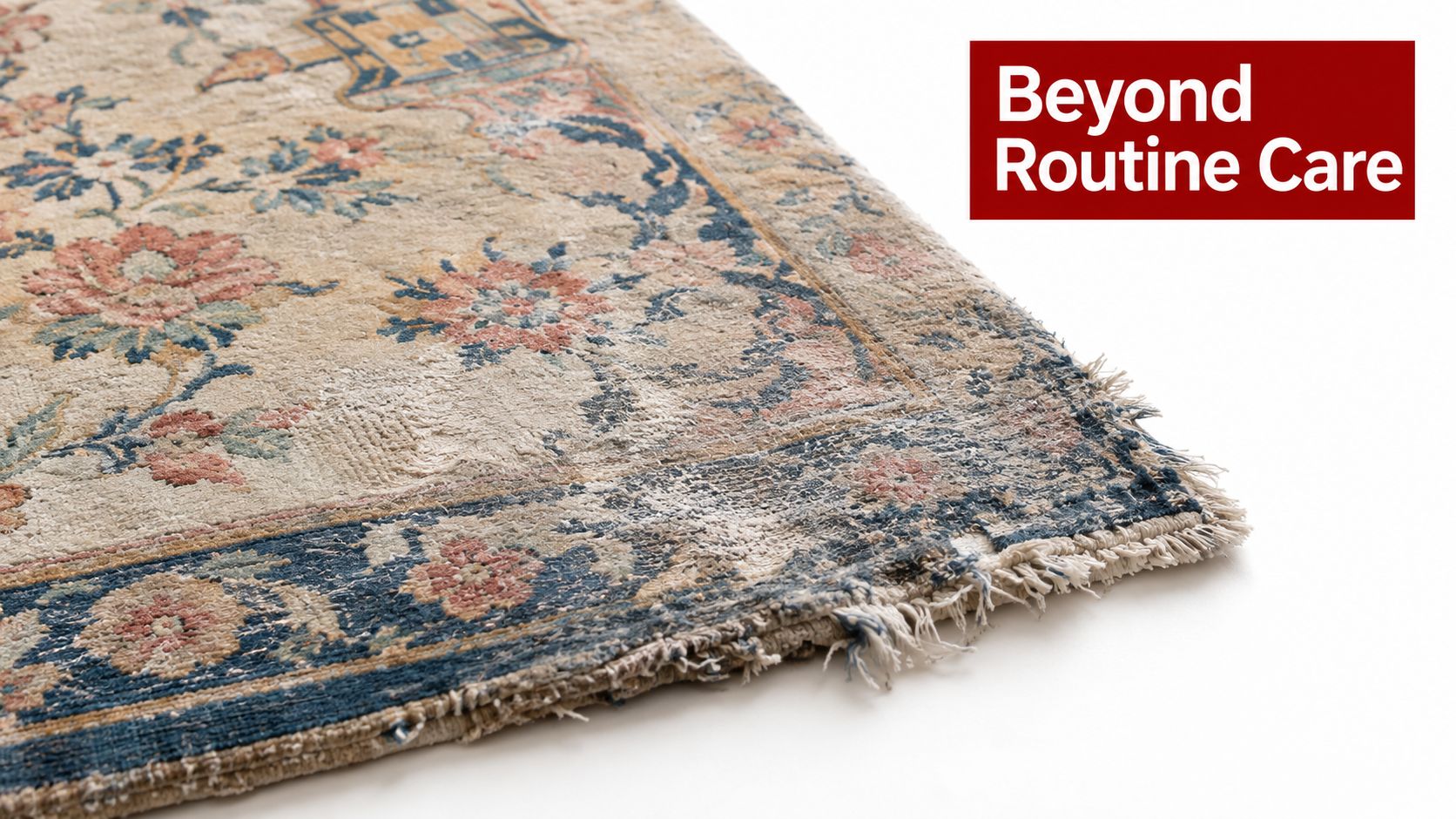
- Silk pile: Silk doesn't tolerate rough handling. Even mild scrubbing can crush sheen and disturb the surface.
- Natural-dye instability: If color transfers to your towel during blotting, stop. More water won't fix that.
- Active pet contamination: Surface deodorizing won't remove what soaked into the base of the rug.
- Water damage: Appliance leaks and burst pipes don't just wet the face. They threaten the foundation.
- Fringe loss or edge weakness: Cleaning stress can worsen unraveling.
- Moth or dry-rot signs: Washing a structurally weak rug without planning can open holes and tears.
Why pet and water problems escalate quickly
Urine and flood-style moisture have something in common. They both travel farther than homeowners think. Once saturation reaches the lower structure, the rug needs extraction, flushing, and complete drying.
Professional-style cleanup advice after heavy saturation consistently emphasizes full moisture removal and complete drying. Even general household pet guidance notes that fans can help speed drying and reduce mildew risk after urine cleanup, as described in this piece on dog urine stain cleanup and drying.
If the rug smells stronger after you tried to clean it, contamination probably moved deeper instead of leaving the rug.
This is the point where DIY stops being frugal. It becomes expensive.
Scheduling Rug Pickup and Delivery in Birmingham
Once you know the fiber, the stain type, and the structural risk, the next move should be obvious. Don't wash a true handmade rug in place. Schedule pickup and get it to a facility that can dust, wash, rinse, dry, inspect, and return it properly.

What a Birmingham homeowner should expect
A proper intake call should cover the basics right away. The cleaner should ask what the rug is made of, whether it's handmade or machine-made, what happened to it, whether there's pet contamination, and whether you've already applied any products.
Then the home pickup should be scheduled with a real arrival window, not a vague promise. For busy households in Birmingham and nearby cities, that matters. It also helps when the company can coordinate gate access, porch pickup details, or apartment entry instructions.
Before booking, it's smart to review how a dedicated rug delivery service works so you know what handling and transport should look like for a large or delicate piece.
How to prepare before pickup
Do three things before the technician arrives:
- Photograph the problem areas: Stains, discoloration, fringe issues, and worn corners should be documented.
- Make note of past cleaning attempts: If you used a spray, vinegar, or rented machine, say so.
- Clear a path for removal: Handmade rugs should be rolled carefully, not dragged through the house.
If the rug is part of a larger move or estate transition, it's also worth reading about insuring heirlooms for a move so valuable textiles and furnishings are handled with the same level of care.
One last reality check. The oriental rug market was valued at about USD 1.148 billion in 2024 and projected to reach USD 1.681 billion by 2032 at a 5.7% CAGR, with another estimate placing it at roughly USD 1.257 billion in 2024 and USD 1.796 billion by 2031, according to this oriental rug market forecast. These rugs are not a niche throwaway item. They sit inside a large, durable asset category, which is exactly why careless in-home cleaning makes so little sense.
For Birmingham homeowners, pickup and delivery isn't a luxury add-on. It's the practical way to protect the rug from the moment it leaves your floor to the moment it goes back down.
If your handmade rug in Birmingham has a stain, odor, dull traffic lane, or signs of deeper contamination, Rubber Ducky Rug Cleaning handles pickup, facility washing, controlled drying, stain and odor treatment, and return to your home. To schedule service or review local options for Asian rug cleaning, visit Rubber Ducky Rug Cleaning Birmingham.