Using a household chemical like hydrogen peroxide on your area rug is a significant gamble. For residents in Birmingham and throughout Alabama, what seems like a simple, go-to stain remover is often a direct path to irreversible damage. As a powerful oxidizing agent, it chemically alters everything it touches, meaning it can't distinguish between a stain and your rug's delicate dyes. This reaction doesn't just address a spot; it can strip color, weaken delicate fibers, and cause permanent harm to your valuable rug. At Rubber Ducky Rug Cleaning, we specialize in protecting your investment with professional rug washing services that deliver superior results without the risk.
Understanding The Dangers Of Household Chemicals On Rugs
Before you consider a DIY solution for your area rug, it's critical to understand what powerful chemicals actually do to intricate fibers. Hydrogen peroxide, for example, isn't a gentle cleaner. It works by aggressively breaking down organic compounds through oxidation, and it simply can't tell the difference between a pet stain and the dye in your prized Oriental rug.
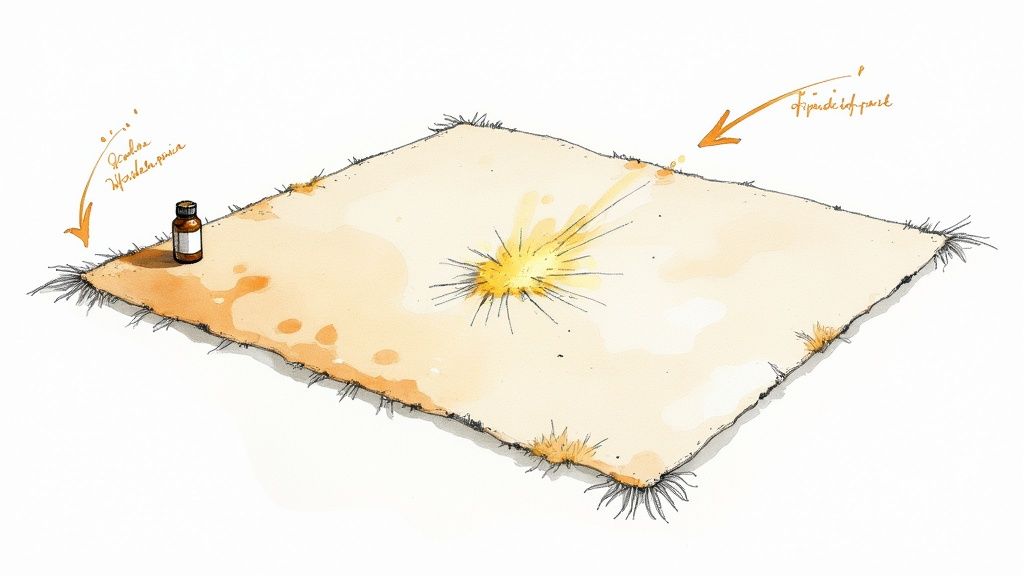
For homeowners in Birmingham, Hoover, and the surrounding Alabama communities, what seems like a quick fix can instantly become a permanent, costly mistake. This is why our expert rug washing process is designed to be both effective and completely safe for your rug's specific materials.
The Science Behind The Damage
The bleaching action of common household chemicals is precisely what makes them so hazardous for fine textiles. The chemical reaction permanently alters the structure of the dye, leading to ugly fading and discoloration.
Here’s a breakdown of why DIY chemical treatments are a poor choice for your rugs:
- Irreversible Color Loss: The most common damage we see is permanent bleaching. The chemical strips the dye right out of the fibers, leaving a faded or whitish spot that’s often more noticeable than the original stain.
- Fiber Weakening: Natural fibers like wool and silk are especially vulnerable. The oxidizing process makes these fibers brittle, which leads to premature wear, thinning, and even holes over time. You can learn more about these delicate materials in our guide on how to clean wool rugs.
- Permanent Yellowing: With certain fibers, particularly wool, a harsh chemical can trigger a reaction that results in permanent yellowing. This often happens when the residue isn't completely rinsed out and gets exposed to light and air.
The standard 3% hydrogen peroxide solution you buy at the store is far from safe for a valuable rug. Even at this low concentration, it poses a significant risk.
A Professional's Take: At Rubber Ducky Rug Cleaning, we would never use an unpredictable household chemical on a client's rug. Our trained rug cleaning specialists understand fiber composition and use controlled, pH-balanced cleaning agents designed to target stains without compromising your rug's integrity. We provide professional rug cleaning services for Birmingham, Hoover, Vestavia Hills, and communities throughout Alabama.
Below is a quick reference guide that illustrates the risks for different rug materials.
Risks Of Household Chemicals To Common Rug Fibers
This table highlights why a one-size-fits-all chemical is a poor choice for the diverse materials found in area rugs.
| Rug Fiber Type | Risk From DIY Chemical Use | Professional Recommendation | Risk Level |
|---|---|---|---|
| Wool | High risk of permanent yellowing, color loss, and fiber brittleness. | Use pH-neutral, wool-safe cleaners and a full immersion wash. | High |
| Silk | Extreme risk of weakening fibers, causing them to dissolve or break. | Requires specialized, gentle cleaning; absolutely no harsh chemicals. | Severe |
| Cotton | Moderate to high risk of color bleaching and fiber weakening. | Professional cleaning can safely remove stains without fading. | High |
| Synthetics | Lower risk, but can still cause color fade on certain dyes. | A targeted professional cleaning is safer and more effective. | Medium |
As you can see, the potential for damage far outweighs any potential benefit, which is why professional expertise is always the safest route for area rug cleaning.
Why Professional Methods Are Safer
Our entire process is built on a deep understanding of rug fibers and controlled cleaning techniques. Unlike the gamble you take with household products, we start with a thorough pre-inspection to identify your rug's material, construction, and dye type. This lets us select the precise, pH-balanced solutions needed for a deep, safe clean.
Homeowners from Mountain Brook to Vestavia Hills trust us to protect their investments. Our professional rug washing facility is equipped to handle everything from delicate Oriental rugs to durable synthetics. We don’t just spot-treat; we perform a full immersion wash that gently removes dirt, stains, and odors from the entire rug, foundation and all.
This controlled environment also ensures every cleaning agent is thoroughly rinsed away, preventing any lingering chemical residue that could cause problems down the road. For reliable, professional rug cleaning services throughout Birmingham and the broader Alabama region, skip the DIY chemical risks. Contact Rubber Ducky Rug Cleaning for a solution that guarantees a truly clean and undamaged rug.
Why A DIY Spot Test Is Unreliable
We’ve all heard the advice: "Test your cleaning solution on a hidden spot first." It sounds like the responsible thing to do, and homeowners across Birmingham, from Homewood to Trussville, feel like they've done their due diligence after a successful test.
The problem is, this common practice often gives a false sense of security. When you’re dealing with a powerful oxidizer like hydrogen peroxide, a quick spot test can lead to permanent, heartbreaking damage on the most visible parts of your rug.
The Slow, Silent Damage
What you don't see is the chemical reaction continuing long after the spot feels dry. A quick check after an hour, or even a day, simply can’t predict the long-term effects.
The biggest culprit is slow-fade discoloration. Chemical residue left deep in the fibers keeps working for weeks, slowly bleaching the dyes as light and air hit them. That hidden spot that looked perfect can become a glaring, bleached-out patch in the middle of your sunlit living room a month from now.
Then there's the hidden danger of fiber weakening. The same chemical process that obliterates a stain also breaks down the delicate structure of natural fibers like wool. You won't notice it at first, but as you walk on the rug, those weakened fibers will fray and crush, creating a permanently worn-out spot that looks years older than the rest of the rug.
A client in Homewood once called us in a panic. She'd spot-tested a household cleaner on her prized Oriental rug, and it looked fine. Weeks later, that "safe" spot in the center of her living room had faded into a pale, obvious circle. The damage was irreversible—a permanent reminder of a DIY test gone wrong.
Why Professionals Test, Not Guess
At Rubber Ducky Rug Cleaning, our entire process is built on scientific certainty, not guesswork. We don't just dab a chemical on and hope for the best, because we know every rug is unique. Different dyes and fibers react in completely different ways, and a single rug can contain a blend of materials with conflicting needs. Our trained rug cleaning specialists know how to handle these complexities.
Here’s how our professional rug washing process gets it right every time:
- Expert Fiber Identification: First, we perform a pre-inspection to determine the exact makeup of your rug—is it wool, silk, cotton, or a synthetic blend? This tells us exactly what it can and can't handle.
- Dye Stability Testing: Before a drop of cleaning solution touches the front of your rug, we perform proper dye bleed tests that are far more sophisticated and reliable than a simple spot check.
- pH-Balanced Chemistry: We only use professional-grade, pH-balanced cleaning agents formulated for your rug’s specific materials. This guarantees safe, consistent results across the entire piece, with no surprises.
DIY solutions can be tempting, but the risks are very real. Hydrogen peroxide isn't the only household product that can cause unexpected trouble; many people ask us about other pantry staples. We break down the potential issues in our detailed guide on the risks of using vinegar and baking soda on rugs.
For anyone in Birmingham and the surrounding communities like Hoover, Vestavia Hills, or Mountain Brook, the surest way to protect your rug is to call in an expert. We remove the guesswork and the risk, giving your rug a deep, safe clean that protects your investment. Don't fall for a misleading spot test—let us handle it right from the start.
Why Household Products Are The Wrong Tool for Rug Stains
When you’re faced with a stubborn organic stain—a pet accident, a drop of blood, or a spilled glass of red wine—it’s tempting to reach for a household chemical. Countless online DIY guides tout these as miracle cleaners. But in our professional experience, this approach almost always creates a bigger problem, often turning a fixable spot into a permanent disaster.
For our clients in Birmingham, Hoover, and across Alabama, understanding why a common household chemical is a bad match for valuable area rugs is the key to protecting your investment.
The Truth About Pet Urine
Pet urine is incredibly complex and one of the most damaging things for a rug. It’s a chemical cocktail of urea, urochrome (which gives it a yellow color), and sharp uric acid crystals. A household oxidizer might lighten the initial yellow spot, but it doesn't solve the real problem.
Worse yet, the oxidizing reaction can actually "set" the urochrome pigments, permanently locking in the yellow discoloration. It does absolutely nothing to neutralize the uric acid crystals embedded deep in the fibers, which are the true source of that persistent odor that keeps coming back.
At Rubber Ducky Rug Cleaning, we see this all the time. Our professional pet stain and odor removal for rugs relies on a full immersion wash. We submerge the entire rug in a bath of specialized, enzyme-based solutions that break down and dissolve the uric acid crystals, flushing them completely from the rug’s foundation. It’s the only way to truly kill both the stain and the smell for good.
Red Wine and Other Pigmented Spills
Stains from red wine, coffee, and juice are notorious for their powerful pigments. Dabbing a harsh chemical on these spills is like playing roulette with your rug. While the product might attack the color molecules, it does so in a completely uncontrolled and uneven way.
Instead of lifting the stain, it often just bleaches the area around it. You end up with a faded, halo-like ring or a stark white patch that’s even more noticeable than the original spill. And once that color is gone, it’s gone forever. A professional targets the pigment in the stain itself, leaving the rug’s original dyes untouched.
This infographic really drives home how misleading a quick spot test can be. What looks fine at first can hide serious, long-term damage.
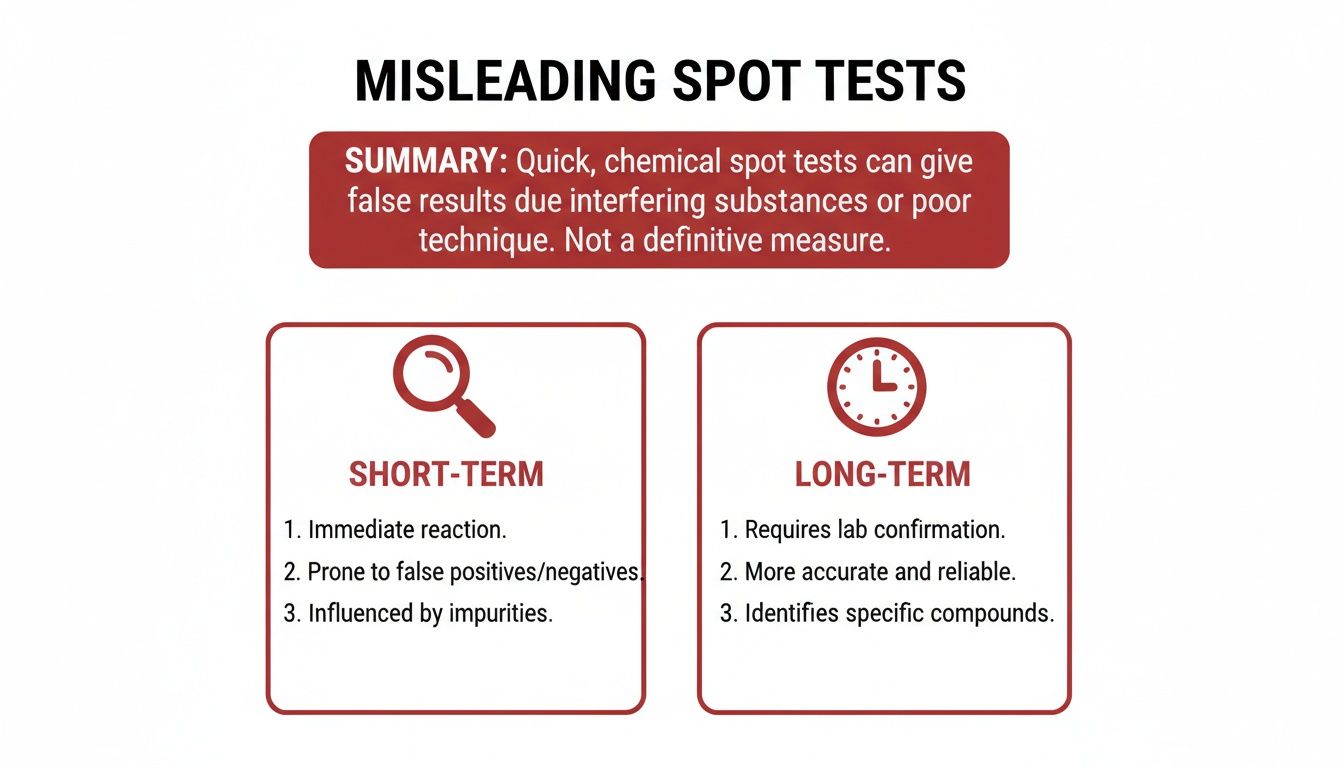
The key takeaway here is that a seemingly successful "fix" today can lead to creeping chemical damage that only appears weeks or even months down the road.
The Hidden Danger with Blood Stains
Blood is tricky because it contains proteins that start to coagulate almost as soon as they hit the air. When you pour a harsh chemical on it, the aggressive reaction can permanently set the proteins into the rug fibers and drive the stain deeper into the foundation, making it impossible to get out.
Our trained rug cleaning specialists in Birmingham use professional-grade protein digesters specifically designed to break down blood and other biological materials safely. It’s a methodical approach that dissolves the stain on a molecular level without harming delicate wool or silk fibers, ensuring a complete and clean removal.
There's a bigger safety issue here, too. The boom in DIY cleaning has led to more accidents with concentrated chemicals. As DIY bleaching trends grew, poison control centers noted a rise in calls about concentrated peroxide exposures. These incidents can cause serious chemical burns, highlighting the risks of using powerful products without the right training. You can find more data on these safety patterns and market trends on platforms like market.us.
DIY Stain Removal Risks Vs Professional Solutions
Ultimately, trying to treat complex stains with a one-size-fits-all chemical is a gamble. The table below breaks down the risks of a DIY approach compared to what our professional area rug cleaning services can do.
| Stain Type | DIY Chemical Risk | Professional Method | Outcome |
|---|---|---|---|
| Pet Urine | Sets yellow stains, leaves odor-causing crystals behind. | Full immersion wash with enzyme neutralizers. | Stain and odor are completely eliminated. |
| Red Wine/Coffee | Creates bleached halos or white spots; irreversible damage. | Targeted pigment removal agents, fiber-specific. | Stain is lifted without affecting the rug's dyes. |
| Blood | Permanently sets protein stains, drives them deeper. | Professional-grade protein digesters dissolve the stain. | Complete and safe removal from delicate fibers. |
| Dye Transfer | Bleeds colors, weakens fibers, creates new stains. | Dye-stripping agents and controlled color-run flushing. | Fugitive dyes are removed; original colors are stabilized. |
Each of these stains requires a specific, scientific solution—not a generic chemical. Our team, serving communities from Vestavia Hills and Mountain Brook to Tuscaloosa and Montgomery, has unfortunately seen the aftermath of failed DIY attempts more times than we can count.
A professional rug washing process is far more involved:
- Precise Stain Identification: We figure out exactly what the stain is to choose the right counter-agent.
- Fiber-Specific Formulations: The solution we use is tailored to your rug’s material, whether it’s sturdy wool, delicate silk, or a synthetic blend.
- Full Immersion Washing: Our deep rug cleaning process doesn't just spot-treat; it flushes the entire rug to remove the stain, odor source, and any residue.
- Controlled Drying: We dry rugs in a climate-controlled room to prevent any shrinking or warping, ensuring it comes back to you in perfect shape.
For any stain, big or small, the safest bet is always to call a professional. Before you grab that bottle of household cleaner, contact Rubber Ducky Rug Cleaning. We provide expert Oriental rug cleaning and professional rug washing services throughout Birmingham and the surrounding Alabama communities. Let us get it right the first time.
What Chemical Residue Is Really Doing to Your Rug
You’ve treated a stain and blotted it dry. The spot is gone, and everything looks great, right? Unfortunately, the real damage might just be starting. When you use household products, the biggest issue isn't the stain you removed—it's the residue you can't possibly rinse out yourself. This chemical residue stays behind, lodged deep in the rug fibers, and quietly creates a host of problems long after you've put the cleaning supplies away.
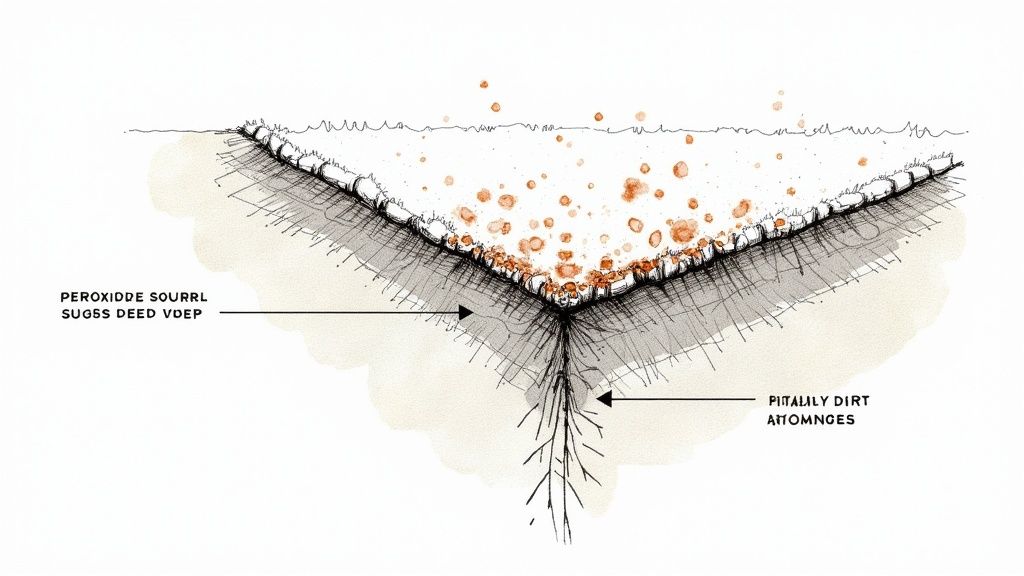
For homeowners all across Birmingham and the surrounding Alabama communities, what appears clean on the surface is often hiding a chemical problem that’s slowly destroying a valuable area rug from the inside out.
Why At-Home Rinsing Fails
Let's be realistic: rinsing a rug properly at home is basically impossible. A spray bottle and a towel just can't do the job. A genuine rinse has to force gallons of water completely through the rug's foundation and backing to flush away the cleaning agents and all the dirt they loosened.
When you just spray and blot, you’re leaving most of that chemical residue trapped in the dense weave of the rug. It doesn’t just evaporate—it sits there and continues to interact with the fibers, day in and day out.
The Slow, Silent Damage to Fibers
One of the sneakiest things about leftover chemicals is that their damaging work doesn't stop just because the rug is dry. With daily exposure to air and light, that residual chemical keeps on working, slowly but surely destroying the integrity of your rug’s fibers.
- Creeping Bleach Spots: The chemical continues to strip color from the dyes, leading to a bleached-out spot that gets noticeably worse over weeks or even months.
- Brittle Fibers: Natural fibers, especially wool and silk, become brittle and fragile. This leads to premature wear, breakage, and thinning, particularly in high-traffic spots.
A small area you treated for a minor stain can eventually become a permanently damaged, worn-out patch that looks years older than the rest of the rug.
The Sticky Resoiling Cycle
Leftover chemical residue creates another massive headache: rapid resoiling. Once they dry, many household cleaners leave behind a sticky, soapy film. This film is a magnet for dirt, grabbing onto new soil far more effectively than a clean fiber ever would.
We see this constantly. A client from Hoover will call us, frustrated about a small stain that keeps reappearing, but bigger and darker each time. In almost every case, the culprit is a sticky residue from a DIY cleaning attempt that has turned a tiny spot into a large, stubborn dirty patch.
This cycle of cleaning, leaving residue, and attracting more dirt is incredibly frustrating and ultimately ruins the rug. The only way to truly break the cycle is to have the rug professionally washed to strip out every last contaminant.
How Professionals Flush It All Out
At Rubber Ducky Rug Cleaning, our Birmingham facility is built to solve this exact problem. Our professional rug washing process isn't just a surface clean; it’s a deep, restorative treatment that purges everything from your rug.
Our method is designed to get a true, residue-free clean:
- Full Immersion Wash: We don't just clean the top. We submerge your entire rug in a specialized bath, letting our fiber-safe solutions work their way through every single fiber, from the tips right down to the foundation.
- A True, Thorough Flush: Using state-of-the-art equipment, we flush gallons of fresh water through the rug to completely remove all cleaning agents, dirt, and hidden chemical residues. This is the crucial step you simply can't replicate at home.
- Controlled, Safe Drying: Finally, your rug is dried in a climate-controlled environment, ensuring it retains its shape, softness, and structural integrity.
This meticulous process leaves your rug not just looking clean, but truly clean—soft, fresh, and completely free of any damaging residues. For homeowners from Vestavia Hills and Mountain Brook to Tuscaloosa and Montgomery, a professional deep cleaning is the only way to guarantee your rug is safe from hidden chemicals. Don't let a DIY attempt ruin your investment; let us restore it the right way.
When To Immediately Call A Professional Rug Cleaner
Sometimes, the smartest move you can make when faced with a nasty spill is to put down the spray bottle and pick up the phone. The urge to attack a stain immediately is strong. But for certain rugs and specific types of spills, a well-intentioned DIY effort with a household chemical can cause permanent, irreversible damage.
Knowing when to step back is crucial for protecting your rug's beauty and value. For homeowners in Vestavia Hills, Mountain Brook, and across Alabama, making that quick call to a specialist isn't giving up; it's the single best first step you can take.
Delicate And High-Value Rugs
If your rug is a cherished piece, don't even think about using household chemicals on it. The risk is just too high. If a spill happens on any of the following, your first and only move should be to call a professional rug cleaning service right away.
- Oriental or Persian Rugs: These beautiful rugs are often hand-knotted using natural dyes that can easily bleed and fade when exposed to harsh chemicals.
- Silk or Wool Rugs: Natural fibers are especially vulnerable. Wool can turn yellow and become brittle, while delicate silk fibers can be dissolved by aggressive oxidizers.
- Antique or Heirloom Pieces: The value here is all about originality and condition. One mistake with a chemical cleaner can completely tank its worth.
- Hand-Knotted or Custom-Dyed Rugs: The unique dyes and painstaking craftsmanship in these rugs are incredibly sensitive.
In these cases, you’re not just cleaning a spill; you’re performing a delicate operation. Our rug cleaning specialists in Birmingham have the expertise and material-specific knowledge to treat these textiles safely.
The Scale And Severity Of The Stain
A tiny drop of coffee is one thing. A whole mug of it soaking deep into the rug is a whole different ballgame. The size and depth of the spill are huge factors in deciding whether to attempt a DIY fix.
If you’re dealing with a large spill that has saturated the rug right through to its foundation, you can't fix that at home. The liquid gets trapped deep in the backing, becoming a breeding ground for mold, mildew, and odors that never seem to go away. The same goes for old, set-in stains. A topical treatment won’t lift them without causing collateral damage to the surrounding fibers.
For anyone looking for “professional rug washing in Hoover, Alabama,” or nearby areas, our facility is built to handle exactly these problems. A deep-soaking spill requires a full-immersion wash to flush the contaminants out of the rug's foundation completely.
When The Source Of The Stain Is Unknown
If you’re not 100% certain what caused the stain, grabbing a bottle of cleaner is a complete shot in the dark. You could be mixing chemicals or using the wrong agent for the job, creating a reaction that bleaches, discolors, or permanently sets the stain. We are trained to identify the nature of a stain before we treat it, so we always use the right tool for the job.
The global hydrogen peroxide market is massive—it's expected to hit around 7.4 million metric tons by 2030, partly because it's so common in household cleaning products. You can read more about the global hydrogen peroxide market and its growth trends on fortunebusinessinsights.com. While that makes it easy to find, it also means more homeowners are accidentally damaging their rugs by using it incorrectly.
The message is simple for everyone from Birmingham and Hoover to Tuscaloosa and Montgomery: when in doubt, don't risk it. Choosing the wrong chemical can be a disaster, which is why we explain why professional solutions are so different from the best rug cleaning products available to consumers. For expert care that protects your investment, call, text, or book online with Rubber Ducky Rug Cleaning.
Common Questions We Hear About Rug Stains
When a spill happens, panic sets in. It's totally understandable to have questions and want a fast solution. But reaching for a common household chemical often creates more problems than it solves, and can sometimes lead to permanent damage.
Here are some of the most frequent questions we get from clients around Birmingham, Hoover, and the surrounding communities. As rug cleaning specialists, we want to give you clear answers based on years of hands-on experience, explaining why our professional rug washing process is always the safest bet for your valuable area rugs.
"My Rug Is Synthetic, Is A Household Chemical Okay To Use?"
That’s a big gamble, even on synthetic rugs. While it's true that materials like nylon or polyester are tougher than natural fibers, many are still colored with dyes that can't stand up to oxidizing agents. You could easily end up with splotchy, faded spots that are impossible to fix.
A professional rug cleaner has an entire arsenal of pH-neutral and fiber-specific cleaning solutions. The very first step in our process is a pre-inspection where our team in Birmingham identifies the rug's fibers so we can choose the perfect—and safest—cleaning agent for the job.
"What Should I Do Right After a Spill If I Can't Use Chemicals?"
The absolute best first move is to blot, don't rub. Grab a clean, white, absorbent cloth and gently press down on the spill. Start from the outside edge of the stain and work your way in; this keeps it from spreading. Scrubbing just grinds the stain deeper and can fray the rug fibers.
If you're dealing with something thick like mud or food, use a spoon or the dull edge of a knife to gently lift off the excess. Once you've done that, your next best step is to call a professional. This stops you from accidentally making the stain permanent with the wrong product.
"I Heard Certain Chemicals Are Great for Pet Odors. Is That True?"
This is one of the most common myths we hear. A household chemical might knock back the smell on the surface for a little while, but it doesn't solve the underlying problem. Pet urine is packed with uric acid crystals that work their way deep into the rug's fibers and even its foundation. Surface treatments can't break those down.
For true, permanent pet odor removal for rugs, there's no substitute for a full immersion wash. At Rubber Ducky Rug Cleaning, our controlled washing method uses special enzymatic treatments that actually dissolve the uric acid crystals, flushing them completely out of the rug. It's the only way to be certain the smell is gone for good.
"Can a Professional Fix Damage From a Household Chemical?"
This is the tough one. Unfortunately, the kind of damage a strong oxidizer causes—like stripping color or turning fibers yellow—is almost always permanent. Once the dye is bleached out of a fiber, cleaning can't put it back.
In very rare instances, a rug repair expert might be able to do some color correction or re-dyeing, but it's a complicated and pricey process with no guarantee of a perfect match. That’s precisely why we advise against it so strongly. For homeowners everywhere from Mountain Brook to Tuscaloosa, protecting your investment means skipping risky DIY chemical treatments.
Don't gamble with the beauty and integrity of your area rugs. For expert, professional rug cleaning services you can trust across Birmingham and the greater Alabama region, give us a call. Rubber Ducky Rug Cleaning has the safe, thorough, and effective solution for even the most stubborn stains and odors. Call, text, or book online to get started.
Schedule Your Professional Rug Cleaning Service in Birmingham