Knowing how to clean an area rug at home can feel empowering. It saves you time, money, and keeps your investment looking fresh. But before you grab a scrub brush, there’s one thing you absolutely have to do: figure out what your rug is made of.
This single detail dictates every other step, from the cleaning solution you use to the amount of water it can handle. Get it right, and you’re a hero. Get it wrong, and you could be looking at a shrunken, faded, or permanently damaged rug.
This guide will walk you through the essentials for routine upkeep. For Birmingham homeowners, it’s just as important to know when to handle a small spill yourself and when to call a professional rug cleaning expert.
Your Guide to At-Home Area Rug Cleaning
With more of us investing in our living spaces, keeping those spaces clean has become a top priority. It's no surprise the residential area rug cleaning market has seen a big uptick. You can see the data on these market trends from Verified Market Research.
DIY methods are fantastic for tackling light soiling and fresh spills. But they can’t replace a professional deep cleaning, especially for delicate Oriental, precious wool, or antique rugs that demand a specialist’s touch. Rubber Ducky Rug Cleaning provides this expert service to Birmingham and surrounding communities like Hoover, Homewood, and Vestavia Hills.
When to DIY and When to Call a Pro
So, how do you know if that spill is something you can handle or a job for an expert? Making the wrong call can lead to disaster—think bleeding dyes, warped fibers, or a stain that gets permanently set.
Before you start, run through this quick mental checklist. It’s your first line of defense in protecting your rug.
Rug Cleaning Safety Checklist
Think of this table as your go-to reference. It helps you quickly size up the situation and make a smart decision. For example, a little mud tracked onto a synthetic polypropylene rug? That’s a perfect DIY job. An old pet accident on a vintage wool heirloom? That’s a definite call for professional help.
| Checklist Item | DIY Safe (Usually) | Call a Professional |
|---|---|---|
| Rug Material | Synthetic fibers like polypropylene, nylon, or polyester. | Wool, silk, viscose, jute, antique, or hand-knotted rugs. |
| Type of Stain | Minor food spills, fresh dirt, or light foot traffic marks. | Set-in pet urine, large red wine spills, oil, or unknown stains. |
| Colorfastness | Rug passes a colorfast test (no dye bleeds onto a cloth). | Dyes are unstable and bleed easily upon contact with water. |
| Overall Condition | Rug is in good shape with no signs of fraying or damage. | Rug is old, delicate, has fringe damage, or shows signs of wear. |
| Equipment on Hand | You have a vacuum, soft brushes, and pH-neutral cleaners. | The job requires specialized dusting, washing, or drying equipment. |
When in doubt, always err on the side of caution. A small investment in professional cleaning is far better than the high cost of replacing a treasured rug.
For residents in Birmingham, Hoover, or Vestavia Hills dealing with delicate materials or stubborn stains, a professional service is the safest choice. At Rubber Ducky Rug Cleaning, we specialize only in rugs, ensuring your prized possessions get the expert care they deserve.
Getting Your Rug Ready for a Deep Clean
Before you even think about getting your rug wet, you have to do the prep work. This is easily the most important part of the whole process. Skipping these first few steps is the fastest way to turn a simple cleaning job into an expensive headache. Think of it as laying the groundwork—you’re getting rid of all the deep-down, abrasive grit that a surface wash will only turn into mud.
If you have the space, take your rug outside. Drape it over a sturdy fence or railing and give it a good, old-fashioned beating with the back of a broom or a rug beater. You will be absolutely shocked at how much dust, dirt, and pet hair comes flying out. That dry soil is sharp, and if you leave it in, you’re just creating an abrasive paste the second you add water.
Vacuum Like You Mean It—From Both Sides
After you’ve shaken out the loose stuff, it's time to vacuum. And not just a quick pass over the top.
Flip the entire rug over and vacuum the backing first. This is a pro-level trick that uses the vacuum's vibrations to dislodge stubborn, embedded grit from the base of the fibers, pushing it up toward the surface.
Once you’re done with the back, flip it right-side-up again and give the top a final, thorough vacuum. This two-sided approach is a non-negotiable step if you want a truly deep clean.
The biggest mistake homeowners make is pouring cleaning solution onto a rug that’s still full of dry soil. All you’re doing is creating a gritty, muddy paste that grinds away at your rug’s fibers during the cleaning process. Get the dry dirt out first!
The All-Important Colorfastness Test
Before a drop of cleaner hits the main part of your rug, you must do a colorfastness test. This tiny check can save you from a DIY disaster where the dyes bleed and completely ruin your rug's beautiful pattern. This is especially true for Oriental and wool rugs, which often use natural dyes that can run when wet.
Here's how to do it right:
- Pick a Hidden Spot: Find a small, out-of-the-way area, like a corner on the back of the rug where no one will ever see it.
- Use Your Cleaner: Dab a little of the cleaning solution you plan to use onto a clean, white cloth. Do not soak it.
- Blot and Wait: Gently press the damp cloth onto that hidden spot and hold it there for about 30 seconds.
- Check for Bleeding: Lift the cloth. Do you see any color transfer? Even a faint smudge of dye means your rug is not colorfast.
If you see any color on that cloth, stop right there. Do not go any further with your at-home cleaning. It’s a clear signal that your rug needs a professional touch from a specialized rug cleaning company. From Hoover to Homewood, smart homeowners know to trust the experts when dyes are unstable.
Know Your Rug’s Material
Finally, you need to know what your rug is actually made of. This is the single most important piece of information for a safe cleaning.
Check for a tag on the back—it should list the fiber content. Is it wool, cotton, silk, polypropylene, nylon, or something else?
The material dictates everything that comes next: the right cleaner, how much water to use, and the best way to dry it. Cleaning a tough synthetic rug is a completely different ballgame than caring for a delicate, natural-fiber wool or silk piece. Figuring this out is the key to protecting your investment and getting a fantastic result.
Choosing the Right Cleaning Method for Your Rug
Picking the wrong cleaning technique for an area rug is like putting a wool sweater through a hot dryer cycle—the damage is almost always permanent. Once you know what your rug is made of, the next crucial step is matching it with a safe and effective cleaning method. Each fiber has its own set of rules, and following them is the secret to a successful at-home cleaning.
Think about it: a homeowner in Homewood with a durable synthetic rug can get away with a much more aggressive approach than a resident in Mountain Brook trying to preserve a delicate family heirloom. This is where understanding the basics makes all the difference.
Cleaning Durable Synthetic Rugs
Synthetic rugs, usually made from materials like polypropylene (olefin), nylon, or polyester, are the true workhorses of the rug world. Built for high traffic and stain resistance, they are excellent candidates for a DIY cleaning project. For most of these, a simple water-based wash is all you need.
A gentle, homemade solution works best.
- Mix a tiny amount of mild, pH-neutral dish soap with warm water. Stay away from harsh detergents, which can leave a sticky residue that just attracts more dirt down the line.
- Apply the solution with a soft-bristled brush or clean cloth, working it gently into the fibers. Do not oversaturate it.
- Rinse by blotting with a clean, damp cloth until all the soap is gone.
Because they do not hold much water, synthetic rugs dry much faster than natural fiber ones. This incredible resilience is exactly why they’re so popular in busy homes all across Alabama, from Birmingham to Huntsville.
DIY Cleaning Solutions by Rug Type
This quick guide offers safe and effective homemade cleaning solutions for various rug materials. Always test any solution on an inconspicuous spot first!
| Rug Material | Cleaning Solution Recipe | Application Notes |
|---|---|---|
| Synthetic (Nylon, Polyester) | 1 teaspoon clear dish soap + 4 cups warm water | Apply sparingly with a soft brush. Rinse by blotting with a damp cloth. Avoid over-wetting. |
| Wool | 1 teaspoon wool-safe detergent + 4 cups cold water | Blot, never scrub. Use minimal moisture. Rinse thoroughly with a cold, damp cloth. |
| Cotton or Jute/Sisal | 1/4 cup white vinegar + 1 cup cool water + a drop of dish soap | Use a spray bottle to lightly mist the surface. Blot immediately. These fibers are prone to water stains. |
| Outdoor (Polypropylene) | 1/4 cup mild dish soap + 1 gallon of water | Can often be hosed down outdoors. Scrub gently with a soft brush and rinse completely. |
These simple mixtures can handle most routine cleanings, but remember that deep-set stains or delicate materials may still require a professional touch.
Special Care for Wool Rugs
Wool rugs are a beautiful investment, loved for their softness and natural durability. But they need a completely different cleaning approach. The lanolin naturally found in wool fibers repels stains, but harsh cleaners will strip it away, causing irreversible damage.
The two golden rules for wool are cold water and pH-neutral cleaners. Hot water makes wool shrink and bleed its dyes, while alkaline detergents make the fibers brittle and yellow. Never use ammonia or vinegar on a wool rug.
When cleaning wool, "less is more" is the mantra. Use as little moisture as possible and never scrub. Gentle blotting is the only safe way to tackle a spot. Rubbing too hard can untwist the delicate fibers, creating a fuzzy, distorted look known as "pile blooming."
Before you even think about getting a wool rug wet, you have to do the prep work.
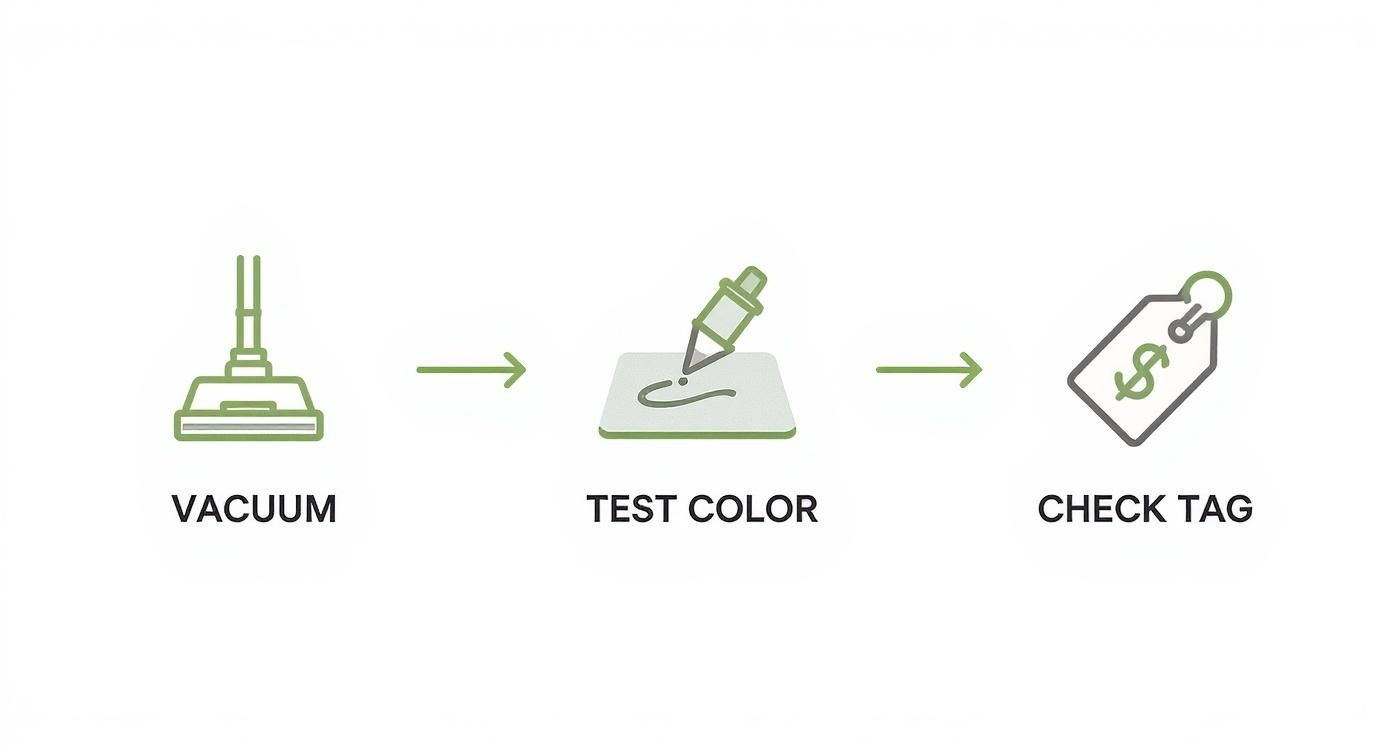
This process—vacuum, color test, and check the tag—is non-negotiable. Skipping these steps is asking for trouble.
The Delicate Touch for Oriental and Silk Rugs
Oriental, Persian, and silk rugs are not just floor coverings; they are works of art. With their intricate hand-knotted designs and vibrant natural dyes, trying to clean them at home is incredibly risky. The truth is, this job is almost always best left to professionals. Their complex construction makes them highly prone to dye bleeding, color loss, and structural damage.
If you absolutely must deal with a small, fresh spill, the key is to use almost no moisture. Gently blot the spill with a dry, white cloth to soak up as much as possible. Follow up by blotting with a cloth that’s just barely damp with plain water, working from the outside of the stain inward to keep it from spreading.
Never rub or scrub these fibers. The friction can permanently ruin the pile and break the delicate knots. Given how valuable and sensitive these rugs are, homeowners in Vestavia Hills, Pelham, and our other Birmingham service areas should always call a professional rug washer for these treasured pieces. You can learn more about what goes into professional care by reading our guide on Rubber Ducky rug cleaning in Birmingham.
A Word of Caution on Viscose and Other Faux Silks
Rugs made from viscose—also sold as art silk or bamboo silk—are a unique challenge. They have a beautiful, silk-like shine, but the fibers become notoriously weak when they get wet. Viscose acts like a sponge, causing the fibers to swell, lose their texture, and often turn a dingy yellow once they dry.
Worse yet, viscose is extremely prone to permanent water stains. Even a small spill of plain water can leave a mark that’s impossible to remove. For these reasons, attempting to wet-clean a viscose rug at home is a recipe for disaster.
How to Handle Common Rug Stains
Spills are going to happen. It's just a part of life. But a permanent stain on your favorite area rug does not have to be. Acting fast with the right technique is your best defense, whether you're dealing with a pet accident in Homewood or a spilled glass of red wine in Mountain Brook.
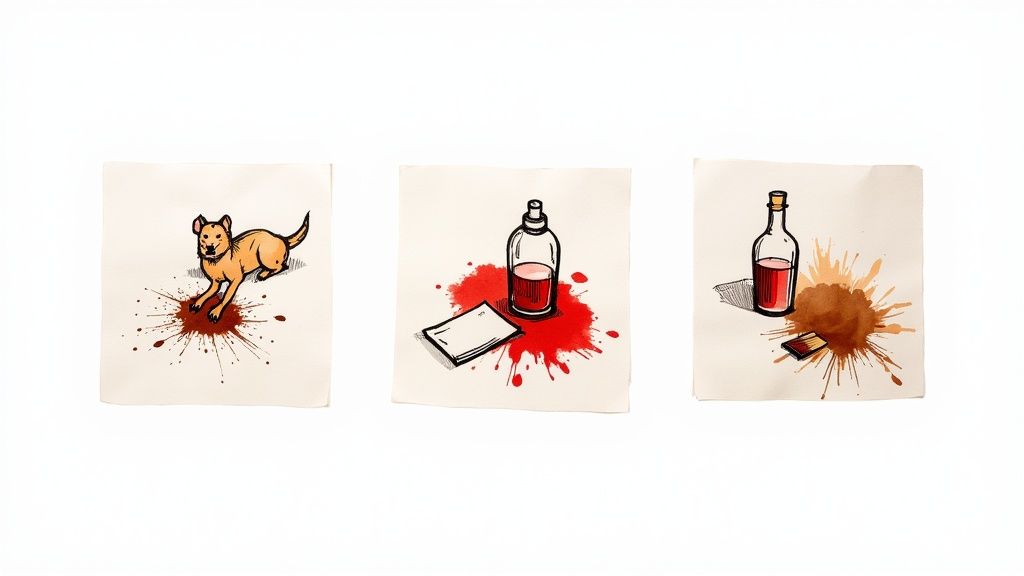
The number one rule is to blot, never rub. Scrubbing a fresh spill grinds the mess deeper into the rug fibers and can cause them to fray. You’ll end up with a fuzzy, damaged spot that looks even worse than the original stain. Always work from the outside edge of the stain inward to keep it from spreading.
Tackling Pet Accidents and Odors
When it comes to pet urine, your everyday household cleaner is not going to cut it. That lingering smell is caused by uric acid crystals, which do not dissolve in water and will stick around long after the visible spot is gone.
To knock out both the stain and the odor for good, you need an enzymatic cleaner. These are lifesavers. They use beneficial bacteria that produce enzymes specifically designed to break down and literally consume the proteins and uric acid in pet waste.
Here’s the right way to use one:
- First, blot up as much fresh urine as you can with a clean, dry towel. Stand on it if you have to.
- Spray the enzymatic cleaner liberally over the spot. You need to make sure it soaks deep enough to reach the rug padding, just like the urine did.
- Let it sit. Do not rush it. The enzymes need time to work their magic—this could be a few hours.
- Once the time is up, blot the area dry with another clean towel.
This is the only method that truly removes the stain and odor, preventing your pet from returning to the scene of the crime.
The Red Wine Spill Response Plan
Seeing red wine hit the rug can feel like a slow-motion disaster, but fast action can save the day. Time is your biggest enemy here, as the pigments want to set into the fibers immediately.
Your first move is always to blot. Grab a thick, absorbent white cloth and press firmly. Keep switching to a clean, dry section of the cloth until you're no longer pulling up any red.
Under no circumstances should you rub the stain. All rubbing does is push the wine deeper into the rug's pile and can permanently damage the fibers, making the stain impossible to remove.
After you have blotted everything you can, you can treat what is left. A simple mix of equal parts white vinegar and cool water works wonders. Lightly dab the solution onto the stain with a clean cloth, then blot it with a separate dry cloth. Just repeat the dab-and-blot process until the stain disappears.
Removing Coffee and Grease Stains
Coffee and grease are two other common culprits, but both are completely manageable if you know what to do.
For a fresh coffee spill, start by blotting up all the excess liquid. Then, mix up a simple solution: one tablespoon of white vinegar, one tablespoon of mild dish soap, and two cups of warm water. Use a clean cloth to apply the solution, blotting gently until the stain lifts.
Grease or oil stains require a different approach.
- First, use a dull knife to scrape off any solid material.
- Next, cover the stain with an absorbent powder like cornstarch or baking soda. Be generous with it.
- Let the powder sit for at least 15-20 minutes. It will work to pull the oil right out of the rug fibers.
- Vacuum up all the powder.
- If any mark is left, use a small amount of a mild dish soap and water solution, then blot it clean.
While these at-home methods work great for many common spills, some stains are just too stubborn or risky for a DIY fix. If a stain will not budge—or if you are working with a delicate wool or Oriental rug—calling a professional is your safest bet. Experts in cities like Tuscaloosa, Montgomery, and across Alabama have the right equipment and know-how to tackle tough stains without damaging your investment.
Drying and Finishing Your Rug Like a Pro
You have done the hard part, but your work is not finished once the rug is rinsed. How you dry your rug is just as critical as how you wash it. Improper drying is the number one cause of mold, mildew, and that musty smell that screams "DIY job gone wrong." Getting this final phase right makes all your effort worth it.
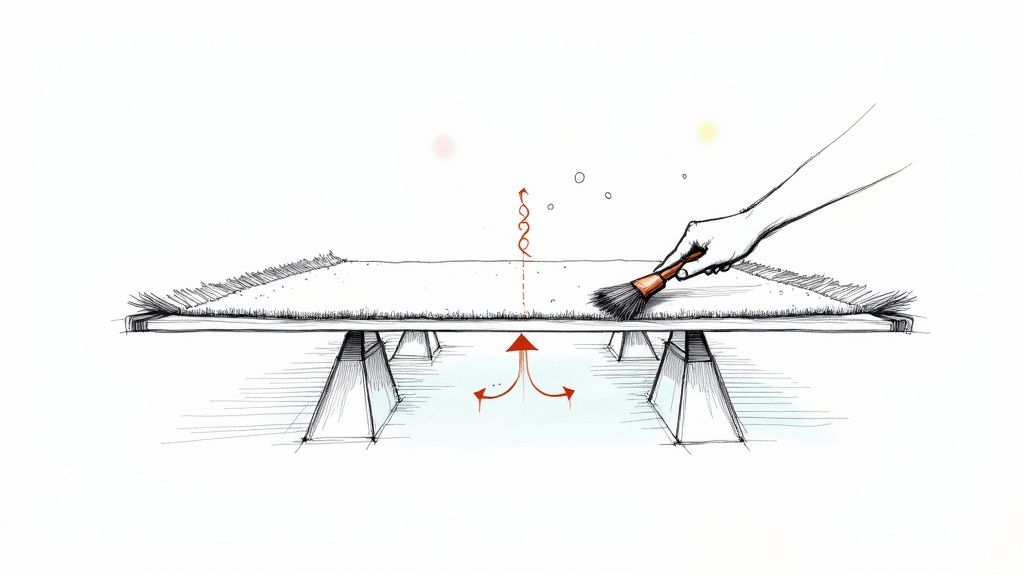
The secret to a perfectly dried rug is simple: maximize air circulation. A damp rug needs air hitting it from every single direction—top, bottom, and all four sides—to dry evenly and quickly. A rug left flat on the floor will trap moisture underneath, creating a perfect breeding ground for mildew and potentially damaging the floor you’re trying to protect.
Setting Up for Success
First things first, get that rug off the ground. Find a clean, dry spot, like a garage or a spare room with good ventilation, and prop the rug up on sturdy, non-staining supports. Cinder blocks, plastic sawhorses, or even a few patio chairs work perfectly for this. This one step allows air to flow freely underneath and will dramatically cut down your drying time.
Next, get the air moving.
- Bring in the Fans: Position a few fans around the rug. You want them blowing air across the entire surface, not just pointing at one spot.
- Add a Dehumidifier: If you're drying the rug indoors—especially in a humid climate like ours in Alabama—a dehumidifier is your best friend. It will actively pull moisture from the air, making it much easier for the rug to release all that water it's holding onto.
This combination of elevation and active airflow is the closest you can get to professional drying methods at home.
A common mistake is draping a heavy, wet rug over a single clothesline or deck railing. This creates a hard crease and puts all the weight on one narrow strip of the foundation, which can easily stretch and distort the rug’s shape—especially with natural fibers. Always support the rug's weight as evenly as you can.
A Special Note on Wool Rugs
While elevation is great for synthetic rugs, you have to be extra careful with wet wool. Wool can absorb up to 30% of its own weight in water, making it incredibly heavy and fragile when soaked. Never hang a soaking-wet wool rug vertically. The sheer weight of the water will pull on the foundation fibers, causing them to stretch, warp, and lose their shape for good.
For wool, the only safe way is to lay it completely flat on an elevated, breathable surface, like a clean screen or a mesh frame. This supports the entire rug, allowing it to dry evenly without any risk of distortion. Proper drying is a huge part of what makes professional care so effective, which is a key step in the process of professional rug cleaning in Birmingham AL.
The Final Touch
Once your rug is 100% dry—and I mean bone dry to the touch all the way through to the backing—it is time for the finishing touch. The washing process can sometimes leave the rug’s pile looking a bit matted or flat. To bring back its original softness and texture, you need to groom it.
Grab a soft-bristled brush (nothing too stiff that could snag the fibers) and gently brush the pile in its natural direction. This lifts and fluffs up the fibers, restoring that plush, uniform look. If your rug has fringe, use a wide-tooth comb to gently detangle and straighten out the tassels. This little bit of extra attention is what separates a pretty good result from a truly great one.
Common Questions About Cleaning Area Rugs
Even with a great guide, it is natural to have a few questions before you start a big project like cleaning an area rug. Getting the right answers can mean the difference between a great result and a costly mistake. We hear the same questions from homeowners all over Birmingham, from Homewood to Hoover, so we have put together the answers right here.
How Often Should I Deep Clean My Rug?
This really comes down to one thing: foot traffic. Your weekly vacuuming is essential maintenance, but a full-on deep clean is a different beast entirely.
- Low-Traffic Areas: For a rug tucked away in a guest room or formal living space, a good wash every 12 to 18 months is plenty to handle the dust that settles over time.
- High-Traffic Zones: The rugs in your entryway, hallways, and main family room are the workhorses. They see all the action. These need a deep clean at least once a year—maybe even twice if you have a busy household with kids and pets.
Sticking to a schedule does not just keep your rug looking good; it actually helps it last longer by removing the tiny, sharp particles of grit that wear down the fibers.
Can I Use a Carpet Cleaning Machine on My Area Rug?
This is a huge one, and the short answer is almost always no. While it seems like a quick and easy fix, those machines are built for wall-to-wall synthetic carpet, not the more delicate construction of an area rug.
Rental or home machines can blast too much water, use aggressive rotating brushes, and have powerful suction that can cause serious damage to rugs. On natural fibers like wool or silk, you risk dyes bleeding everywhere, fibers getting distorted, or the whole rug shrinking. And if your rug has fringe? Forget about it. The machine will chew it up in seconds.
It is much safer to stick with the gentle, hands-on methods we have outlined or trust a professional rug cleaning company.
What Is the Best All-Purpose Homemade Cleaner?
When it comes to a safe, general-purpose cleaner that works for most synthetic rugs (and some colorfast natural ones), simple is always better.
Mix just a tiny amount—no more than a teaspoon—of a clear, pH-neutral dish soap into a bucket of cool water. This solution is gentle enough to lift dirt without leaving behind a sticky film that just attracts more grime later.
A word of caution: keep vinegar away from wool, as its acidity can damage the fibers. And no matter what you use, always perform that colorfastness test first. It’s a non-negotiable step.
When Is It Time to Call a Professional?
Knowing your own limits is probably the most important skill in any DIY project. While at-home cleaning is great for regular upkeep, some situations are best left to the specialists.
It’s time to call in a pro when you’re facing:
- Delicate or Antique Rugs: Materials like silk, jute, viscose, or any hand-knotted Oriental rug are just too fragile for DIY experiments.
- Serious Pet Damage: If you have multiple old pet urine stains, an expert is the only one who can fully neutralize and remove the uric acid crystals deep in the rug's foundation.
- Stubborn, Set-In Stains: Think ink, old wine, or oil-based stains that just won’t budge. Professionals have access to treatments you can't get at the store.
- A Rug That Is Not Colorfast: If your rug failed the colorfastness test, any attempt at water-based cleaning will turn into a blurry, runny mess.
- Visible Mold or Mildew: This points to a much deeper moisture problem that requires specialized sanitization to handle safely.
Trying to tackle these on your own can cause damage that can't be undone. To see exactly what separates a home cleaning from expert care, check out our guide to professional rug cleaning in Birmingham Alabama.
For rugs that need more than just a surface clean, Rubber Ducky Rug Cleaning provides specialized, professional rug washing services for homeowners throughout Birmingham and the surrounding Alabama communities. Call, text, or book online today for a free quote.