To clean a wool rug right, you need to remember three things: vacuum gently without the beater bar, blot spills the moment they happen, and only use a mild, wool-safe cleaner. Stay far away from harsh chemicals, soaking the rug with too much water, or aggressive scrubbing—those are the fastest ways to permanently damage the delicate natural fibers.
Understanding Wool Rug Care
Wool rugs bring a certain warmth and character to homes all over Birmingham, from historic houses in Bessemer to busy family homes in Hoover. But those natural fibers need a specific kind of care to prevent shrinking, felting, or dye bleed. This guide will cut through the noise and give you a clear, practical plan for taking care of your wool rug.
The unique structure of wool is what sets it apart from synthetic fibers. Each fiber is coated in lanolin, a natural wax that gives it built-in stain resistance. When you hit it with harsh, high-pH chemicals, you strip away that protective layer, leaving the rug brittle and wide open to future stains. A gentle, pH-neutral approach isn’t just a suggestion; it's essential for keeping your rug looking and feeling its best for years.
The Basic Cleaning Workflow
Before we get into the nitty-gritty, let's look at the big picture. Cleaning a wool rug properly follows a simple, logical flow.
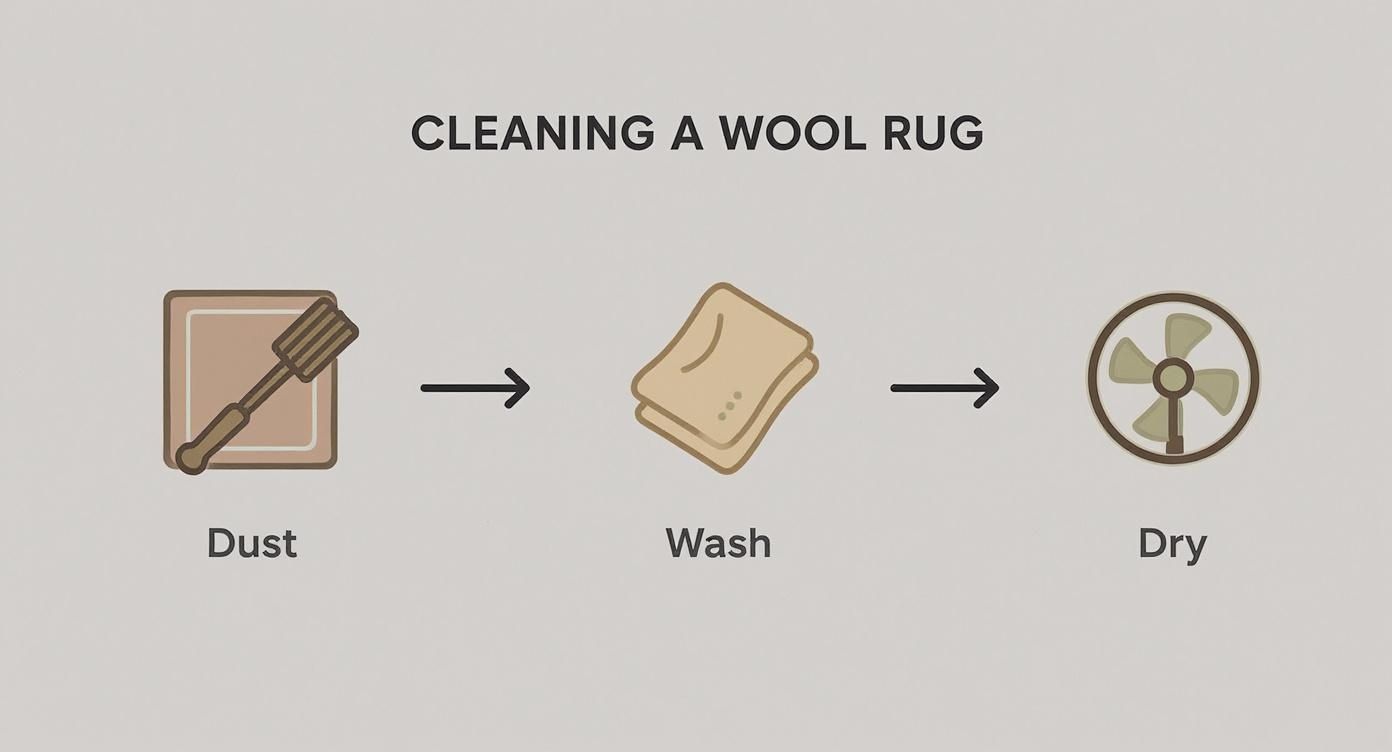
This process really boils down to three key stages: get the dry soil out first, follow up with a gentle wash, and finish with a careful, controlled drying process to prevent any damage.
These rugs are incredibly popular for a reason. In fact, industry reports show that wool rugs make up a massive 38.5% of the global area rug market revenue, which just goes to show how many homes rely on them. With so many out there, using the right cleaning methods is crucial to avoid expensive mistakes.
For homeowners in Mountain Brook, Homewood, and all over the Birmingham metro, knowing how to handle your wool rug protects your investment. This guide gives you the foundation for great at-home care, but sometimes, a rug needs more than a surface clean. To see when it’s time to call in the pros, you can check out our guide to professional rug cleaning in Birmingham, Alabama.
Whether you're in Pelham or Vestavia Hills, having the right game plan ensures your rug stays a beautiful centerpiece. At Rubber Ducky Rug Cleaning, we offer expert, rug-only services across the entire Birmingham area, including Tuscaloosa and Huntsville, for those times when your rug needs a professional touch.
Wool Rug Cleaning Do's and Don'ts
To make things even clearer, here’s a quick-glance table summarizing the most important rules for cleaning wool safely. Think of it as your cheat sheet for protecting your rug.
| Action | Do (Safe Method) | Don't (Risk of Damage) |
|---|---|---|
| Vacuuming | Use a suction-only setting or disable the beater bar. | Never use an aggressive beater bar; it can fray fibers. |
| Spill Treatment | Blot immediately with a clean, white cloth. Work from the outside in. | Avoid scrubbing or rubbing the spill into the fibers. |
| Cleaning Solution | Use a pH-neutral, wool-safe cleaner or a mix of mild dish soap and water. | Never use ammonia, bleach, or high-pH alkaline cleaners. |
| Water Usage | Use minimal water; just enough to dampen the area. | Avoid saturating the rug, as it can cause shrinkage and mildew. |
| Drying | Air-dry flat, away from direct sunlight. Use fans to speed up the process. | Never hang a wet wool rug or use high heat from a hairdryer. |
Sticking to the "Do" column is the surest way to keep your wool rug looking fantastic. The "Don't" column is a list of common mistakes that can lead to irreversible damage, so it's best to avoid them entirely.
Here’s What to Do Before You Even Think About Washing Your Rug
Jumping straight into cleaning a wool rug with water and soap is one of the fastest ways to cause permanent damage. Before a single drop of cleaner touches those delicate fibers, a little prep work can mean the difference between a beautifully refreshed rug and a faded, fuzzy mess.
This isn't just busywork—it's the most critical phase of the entire process. For homeowners everywhere from Pelham to Gardendale, taking these initial steps protects your investment by preventing common disasters like dye bleed and fiber damage.
Give Your Rug a Thorough Inspection
First things first, lay your rug out on a clean floor in a well-lit room. Get down on your hands and knees and really look at it. You’re searching for any trouble spots that could get worse during cleaning.
- Spot any Damage: Are there frayed edges, weak spots in the foundation, or any small holes? Cleaning adds stress to the fibers, so you need to know where the weak points are before you start.
- Identify the Stains: Make a mental note of every spot, spill, and heavily soiled area. These will need special attention before the main wash.
- Check the Backing: Flip the whole thing over. The foundation tells a story. Look for any signs of brittleness, mold, or mildew that could signal a bigger problem.
Pay close attention to the manufacturer's tag. It's often tucked away on a corner of the backing. This little tag is your best friend—it might have specific cleaning codes or instructions that tell you exactly what products and methods to avoid for your particular rug.
Get All the Dry Grime Out
You’d be shocked at how much dry soil, sand, and grit a wool rug can hide deep in its pile. If you add water to that, you're not cleaning—you're just making mud. This makes the rug harder to clean and can leave a crunchy, stiff texture once it dries.
The absolute worst thing you can do here is grab your regular vacuum and use the spinning beater bar. That aggressive brush is designed for tough synthetic floor coverings, but on wool, it will tear, fuzz, and break the delicate fibers.
Here are a couple of much safer ways to get the job done:
- Vacuum the Right Way: Use a suction-only setting or a bare floor attachment. Move gently across the rug, always following the direction of the pile. Then, flip the rug and vacuum the back—this vibration helps shake loose all the deeply embedded grit that’s been hiding for years.
- Go Old-School with a Rug Beater: For a truly deep dusting, take the rug outside. Hang it over a sturdy clothesline or railing and give the backside a few good whacks with a rug beater or even the handle of a clean broom. You won't believe the cloud of dust that comes out. It’s incredibly effective at loosening compacted soil.
Test for Colorfastness—This Is Non-Negotiable
Before you let any cleaning solution near your rug, you absolutely must do a colorfastness test. This five-minute step can save you from the permanent heartache of watching the beautiful, vibrant dyes in your Oriental or heirloom rug bleed into the lighter areas. We’ve seen this happen far too often with the colorful rugs found in homes across Vestavia Hills and Mountain Brook.
Here's how to do it right:
- Find a small, hidden spot on the rug—a corner that sits under the sofa is perfect.
- Mix up the cleaning solution you plan to use and dampen a clean, plain white cloth with it.
- Press the damp cloth firmly onto the test spot and hold it there for about 30 seconds.
- Lift the cloth and check it for any hint of color.
If you see any dye on that white cloth, stop immediately. Your rug’s dyes are not stable, and wet cleaning will create a blurry, ruined mess.
A failed colorfastness test is a clear signal to call a professional. At Rubber Ducky Rug Cleaning, our team serves all of Birmingham and surrounding cities like Tuscaloosa and Montgomery with specialized techniques to safely clean even the most delicate, dye-sensitive rugs without risk.
Spot Treating Stains Like a Pro
Spills happen. But a permanent stain on that beautiful wool rug in your living room? That doesn't have to be the outcome. Whether it's a pet accident in your Trussville home or a tipped coffee mug in Alabaster, acting fast with the right technique is your best defense. This is your playbook for tackling common messes and protecting your rug's natural beauty.
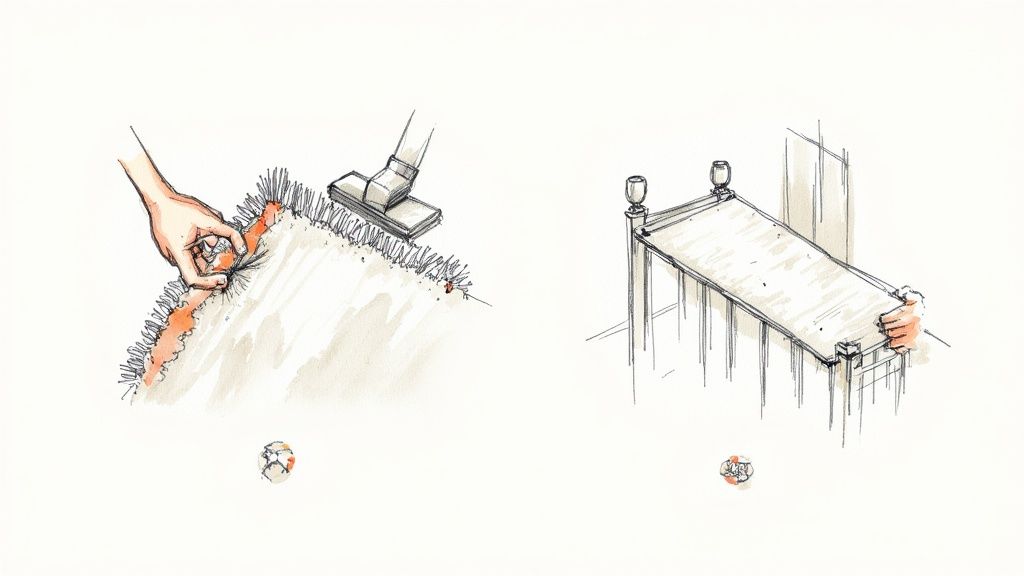
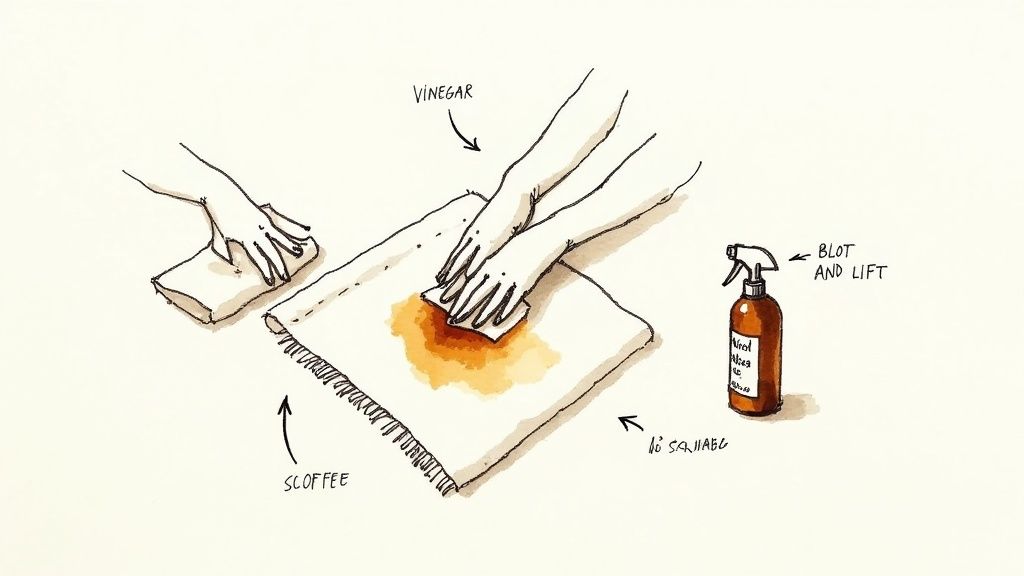
The absolute key to successful spot treatment is speed. Wool has a natural coating of lanolin that gives you a brief window to act before a spill soaks deep into the fibers and sets. Always remember the golden rule: blot, never scrub. Frantically rubbing a stain just grinds it deeper into the pile and can fray and permanently damage the delicate wool fibers.
Essential Spot Cleaning Supplies
Before a spill even happens, it’s a great idea to put together a small spot-cleaning kit. You don’t need harsh commercial chemicals—in fact, those can strip the lanolin from your rug, leaving it dry and brittle. Simple household items work best.
- Clean White Cloths or Paper Towels: White is crucial. It lets you see if you're actually lifting the stain and guarantees no color from the cloth transfers to your rug.
- A Bowl of Cold Water: Never use hot water. It can set protein-based stains like blood or pet urine, making them almost impossible to remove later.
- Mild, pH-Neutral Dish Soap: A clear, unscented dish soap is a safe bet. Think a few drops, not a big squirt.
- White Vinegar: This is your secret weapon. It’s a gentle acid that helps break down many common stains and neutralize odors without harming the wool.
Tackling Common Wool Rug Stains
Different messes require slightly different game plans. Here are the methods we use for some of the most common stains we see in homes from Homewood to Huntsville.
For Coffee, Tea, or Juice Spills:
- Blot Immediately. Use a clean, dry white cloth and press firmly on the spill. Absorb as much as you can, working from the outside of the stain inward to keep it from spreading.
- Mix a Gentle Solution. A few drops of mild dish soap and one tablespoon of white vinegar in two cups of cold water is all you need.
- Dab and Blot. Lightly dampen a new cloth with your solution and gently dab the stained area. The goal is to treat the stain, not soak the rug.
- Rinse and Dry. With a third cloth dampened with plain cold water, blot the area to "rinse" out the cleaning solution. Finally, press a dry towel into the spot until it's as dry as possible.
For Pet Urine Stains:
Pet accidents need an extra step to tackle the odor-causing uric acid that lingers.
- Blot Thoroughly. Get up as much of the urine as possible with paper towels, pressing down firmly to reach the base of the fibers.
- Neutralize with Vinegar. Mix a solution of one part white vinegar to one part cold water. Lightly spray or dab it onto the spot. The vinegar is essential for breaking down the uric acid crystals.
- Blot Again. Use a clean cloth to gently blot up the vinegar solution.
- Apply Soap Solution. If a stain is still visible, use the same mild dish soap and water solution mentioned above, dabbing gently.
- Rinse and Dry. Finish by blotting with a cloth dampened with plain water, then press with a dry towel to absorb all remaining moisture.
For deep-set pet urine odors that have soaked into the rug's foundation, a professional immersion wash is really the only way to completely flush out the source of the smell. DIY methods can sometimes just mask the odor temporarily.
Dealing With Red Wine or Mud
For Red Wine Spills:
You have to act fast on this one. After blotting, some people have success applying a little club soda, which can help lift the stain with its carbonation. Another effective method is a paste of one part white vinegar to three parts water. Apply it, let it sit for a few minutes, then blot it away.
For Mud Stains:
Here’s the one time you wait. Let the mud dry completely. Once it’s hard and crusty, you can gently break up the larger pieces and vacuum them away with a suction-only attachment. Then, you can treat any leftover discoloration with your standard vinegar and soap solution.
The global market for area rugs, including wool, was recently valued at USD 51.7 billion, showing just how important these pieces are in our homes. But cleaning them without professional know-how is risky. Industry experts estimate there's a 20-30% higher risk of damage from DIY cleaning attempts because wool fibers are so sensitive to water temperature and pH levels, which can cause shrinkage or color bleeding if not handled perfectly. You can discover more insights about the global rug market and its care considerations on gminsights.com.
While these at-home methods are great for minor spills, significant or stubborn stains are best left to the pros. For homeowners across Birmingham and surrounding Alabama communities like Pelham and Vestavia Hills, Rubber Ducky Rug Cleaning provides expert, rug-only stain removal services. Call, text, or book online for same-day service.
Giving Your Wool Rug a Gentle Wash
Sometimes, spot treatments just don't cut it. When your whole rug needs a refresh, a careful, gentle wash at home can make a world of difference. For homeowners in Vestavia Hills and Homewood looking to tackle routine upkeep, this kind of wet cleaning can bring life back to dull wool fibers without causing harm.
Think of this as a surface-level clean, not the deep, immersive wash a professional provides. Still, it's incredibly effective for brightening up a rug that’s seen better days.
The entire process boils down to one simple rule: less is more. Less water, less soap, and less aggressive scrubbing are your best friends here. You want to clean the surface of the pile without soaking the rug's foundation, which is a fast track to mildew, strange odors, and warping.
Choosing the Right Cleaning Solution
First things first, you need the right tools. Stay far, far away from harsh household cleaners, ammonia, or anything containing bleach. These high-pH chemicals will strip the natural lanolin right out of the wool, leaving the fibers brittle and even more susceptible to future stains.
Instead, you’ve got two great, safe options:
- A DIY Mild Soap Solution: Grab a bucket of cold water and mix in just a few drops of a clear, pH-neutral dish soap. The water should feel slightly slick, but you're not looking for a mountain of suds.
- A Wool-Safe Shampoo: You can also buy a cleaning product specifically made for wool rugs. These are formulated to clean effectively while respecting the fiber’s natural oils and structure.
No matter which you choose, always do a quick colorfastness test on a small, hidden spot. A few seconds of testing can save you from turning a vibrant rug into a blurry, faded mess.
The Surface Washing Technique
With your wool-safe solution ready, it’s time to get to work. The key is to be methodical to get an even clean and avoid damaging the fibers.
Find a clean, flat surface to work on—a patio or garage floor covered with a plastic tarp is perfect. Grab your bucket of cleaning solution and a soft sponge or cloth. Dip the sponge in the solution, then wring it out until it’s just damp. No dripping!
Gently wipe the surface of the rug, always moving in the direction of the pile. A good way to think about it is like petting a cat; you want to smooth the fibers down, not ruffle them up. Wiping against the pile can push dirt deeper and cause the delicate fibers to felt or tangle. This technique lifts away surface grime without waterlogging the rug's foundation.
The biggest mistake we see homeowners make is leaving soap residue behind. Any leftover detergent acts like a dirt magnet, attracting fresh dust and grime almost immediately. It’s also what makes rug fibers feel stiff and crunchy after they dry.
Rinsing and Removing Residue
Believe it or not, the rinsing stage is even more critical than the washing stage. This is where you remove not only the dirt you just loosened but also the cleaning solution itself. Getting this right is the secret to a soft, truly clean finish.
To rinse, dump out your soapy water and refill the bucket with plain, cold water. Take a fresh, clean cloth, get it damp, and wring it out completely. Now, go back over the entire rug, again, working only in the direction of the pile.
This blotting and wiping motion pulls the soap residue out of the fibers. You’ll probably need to rinse your cloth and change the water a few times. Keep going until the cloth comes away clean and totally free of suds.
Yes, it takes some patience, but it’s the key to getting that professional-feeling result. For those tougher jobs with deeply embedded grime, especially in high-traffic homes in areas like Trussville or Alabaster, this surface wash might not be enough. That's when a professional service like Rubber Ducky Rug Cleaning becomes essential for a true deep clean that at-home methods just can't achieve.
How to Dry Your Wool Rug Without Damage
Getting your rug washed is only half the battle. How you dry it is just as critical, because getting this last step wrong can ruin all your hard work. Improper drying is a fast track to mildew, musty odors, and a permanently warped or buckled rug.
For homeowners from Bessemer to Fultondale, a little patience here goes a long way. Rushing the drying process is the quickest way to undo everything you just accomplished.
First, Get the Excess Water Out—Safely
Your first instinct might be to wring out a soaking wet rug like a dishrag. Please don’t. Twisting and wringing the heavy, saturated fibers will stretch, break, and permanently distort the rug’s foundation. Instead, you need a gentle approach to squeeze out as much moisture as possible before air-drying even begins.
Here are a couple of methods that actually work:
- The Squeegee Push: Lay the rug completely flat on a clean surface. Using a clean floor squeegee with a soft rubber blade, gently push water out of the pile. The key is to always move in the same direction as the fibers, never against them.
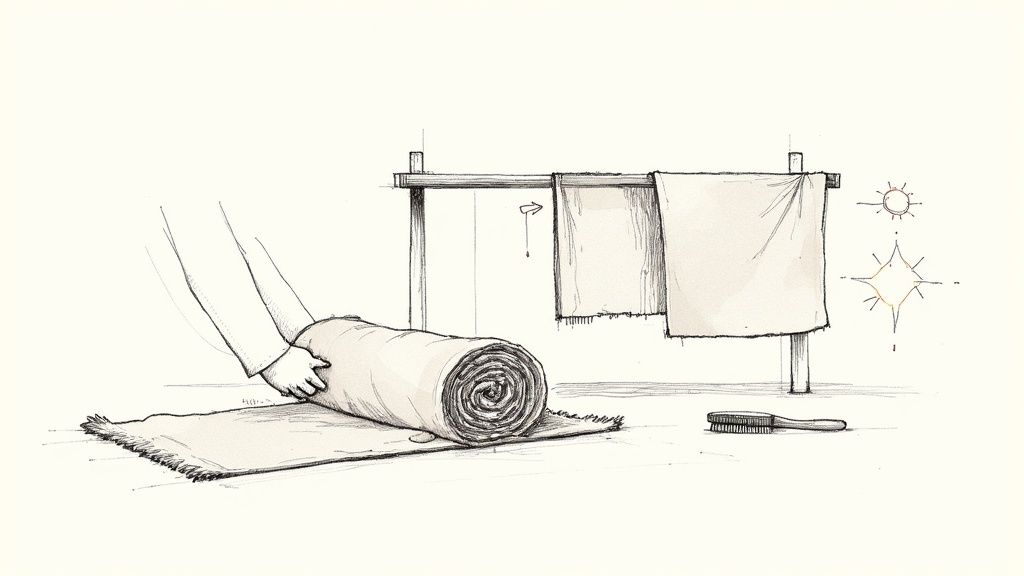
- The Towel Roll: Grab a stack of thick, clean towels and lay them over the entire surface of the rug. Starting at one end, roll the rug up as tightly as you can with the towels inside. Use your body weight to press down on the rolled rug, forcing water into the towels. Unroll, swap out the damp towels for dry ones, and repeat if the rug still feels saturated.
This step is non-negotiable. Getting the bulk of the water out first dramatically cuts down on the total drying time, which is your best defense against mildew.
The Right Way to Air-Dry Your Rug
Once you’ve removed as much water as you can, it’s time to let the air do the rest. The goal here is simple: promote consistent, even airflow around the entire rug.
Whatever you do, never hang a wet wool rug over a line or railing. Its own weight when waterlogged is enough to stretch the foundation completely out of shape, leaving you with permanent ripples and distortion.
The ideal setup? Lay the rug flat on an elevated, ventilated surface. Think a set of clean patio chairs, a couple of sturdy sawhorses, or even specialized drying racks. Elevating the rug allows air to circulate underneath, which is crucial for ensuring the front and the back dry at the same rate.
Keep the rug out of direct sunlight and away from intense heat sources like heating vents or radiators. It might seem like a good way to speed things up, but direct heat can make wool fibers brittle and can even cause lighter-colored rugs to yellow. Instead, use fans to create a gentle, steady breeze across the room to help the process along.
Groom the Pile for a Perfect Finish
As your rug starts to dry, you might notice the pile looks a little flat or matted down. A quick grooming session is all it takes to bring back that soft, uniform texture.
While the rug is still just slightly damp to the touch, use a soft-bristled brush to gently brush the pile in its natural direction. This simple action lifts the fibers, keeps them from drying in clumps, and ensures your rug feels as good as it looks once it’s fully dry.
The entire process can take anywhere from 24 to 48 hours, depending on the thickness of your rug and the humidity in your Birmingham-area home. Be patient. Before you even think about putting it back on the floor, make absolutely sure it is 100% dry through and through. A damp rug is a recipe for mildew and can cause serious damage to the flooring underneath.
When to Call a Professional Rug Cleaner
While the DIY methods we've covered are fantastic for routine upkeep and tackling minor spills, some jobs are just too big—or too delicate—to handle at home. Knowing when to put down the sponge and call in an expert is the key to protecting your beautiful wool rug from permanent damage.
Sometimes, a situation just demands the specialized equipment and deep-cleaning knowledge only a professional rug cleaning company can offer. Think of it as the difference between a surface wipe-down and a true, restorative clean that gets all the way down to the rug's foundation.
Signs It’s Time for an Expert
Certain scenarios come with a high risk of damage if you try to tackle them yourself. If you run into any of the following, it’s a clear signal to trust the pros.
- Deep-Set Pet Odors: When pet urine soaks through the pile and into the rug’s backing, surface cleaning only masks the smell for a little while. The uric acid crystals get left behind, and the odor always comes back.
- Delicate or Antique Rugs: Heirloom, silk, or antique Oriental rugs often have fragile fibers and unstable dyes. A professional will know exactly how to clean them safely without causing colors to bleed or fibers to break down.
- Significant Water Damage: After a flood or a major leak, a rug needs a lot more than just drying. Professionals perform a controlled wash to prevent mold, mildew, and the permanent warping that can ruin a rug's shape.
- Stubborn, Set-In Stains: Old red wine, ink, or grease stains have had time to bond with the wool fibers. DIY solutions often aren't strong enough and can even lock the stain in permanently.
Wool rugs are a huge part of the home decor market, making up a 38.5% share of global area rug revenue. But their delicate nature means mistakes can be costly. In fact, some studies show that up to 30% of owners who try a full DIY deep clean report some kind of damage, like shrinkage or color loss. You can read more about the global area rug market at databridgemarketresearch.com.
The Professional Advantage: Immersion Washing
The secret weapon for a professional rug cleaner is a process called immersion washing. Unlike surface cleaning, this technique involves submerging the entire rug in a specialized, pH-balanced wash bath. It’s a gentle but incredibly thorough process that flushes out all the deeply embedded soil, allergens, bacteria, and odor-causing gunk from every single fiber. A sponge and bucket just can't compete.
This method allows for a complete rinse, ensuring no sticky soap residue is left behind to attract new dirt. It’s the only way to truly restore a rug’s softness, brightness, and freshness from the inside out.
For homeowners in Birmingham, Hoover, and surrounding Alabama communities like Tuscaloosa and Montgomery, Rubber Ducky Rug Cleaning offers this expert, rug-only service. Our trained technicians understand the unique needs of wool rugs and are equipped to handle the toughest jobs safely.
If your rug needs more than just a surface clean, you can learn more about our professional rug cleaning in Birmingham AL. Call, text, or book online for a free quote and let us bring your rug back to life.
Your Wool Rug Questions, Answered
As rug care experts serving Birmingham and the surrounding Alabama communities, we hear a lot of the same questions from homeowners. Here are our straightforward answers to the most common things people ask about keeping their wool rugs looking their best.
How Often Should I Actually Clean My Wool Rug?
For a wool rug in a high-traffic spot—think a living room in Homewood or a busy entryway in Vestavia Hills—a gentle vacuuming once or twice a week is a must.
But for the deep-down dirt and grit that vacuums miss, you really need a professional deep cleaning every 12 to 18 months. That’s what removes the embedded soil that wears down fibers over time.
Can I Just Use My Carpet Cleaner Machine on It?
We strongly advise against this. Standard machines designed for wall-to-wall synthetic flooring are a wool rug’s worst enemy. They blast the rug with too much water and often use high-pH detergents that are way too harsh for natural fibers.
This combination can strip the wool of its natural lanolin, leaving it dry and brittle. Worse, the excess moisture can lead to mildew, dye bleeding, and even shrinkage.
Is Steam Cleaning a Safe Alternative?
Absolutely not. Steam cleaning is a death sentence for a wool rug. The intense heat will permanently damage the delicate protein structure of the fibers. You’ll end up with a rug that feels stiff, looks matted, and may even shrink right before your eyes. Always, always stick to cold water cleaning methods for wool.
What’s the Best Way to Get Rid of Pet Urine Odor?
If you catch it right away, you have a fighting chance. Immediately blot the spot (don't rub!) and then lightly spray it with a mix of one part white vinegar to one part cold water. The vinegar helps neutralize the uric acid crystals that create that persistent smell.
However, once urine has soaked through to the rug’s foundation, that odor is locked in. At that point, only a professional immersion wash can fully submerge the rug and flush out the source of the smell for good.
The natural structure of wool makes it incredibly resilient, but it is sensitive to heat and harsh chemicals. Always test cleaning solutions on an inconspicuous area first and prioritize gentle, low-moisture techniques to protect your investment.
Proper care is the secret to a long life for your rug. To see how we handle these challenges, you can read more about Rubber Ducky Rug Cleaning in Birmingham. We’re proud to serve clients from Tuscaloosa to Montgomery, providing expert care for every type of area rug.
For a professional clean that protects your investment, trust the experts at Rubber Ducky Rug Cleaning. Call, text, or book online for convenient pickup and delivery in the Birmingham area. Get your free quote today at https://www.rubberduckyrugs.com/birmingham.